Home » Jazz Articles » Interview » Andrew Drury: The Cool Thing About Improvisation
Andrew Drury: The Cool Thing About Improvisation

Getting deep into improvisation has made me relax. I
 A few months ago I went back to Suquamish Elementary. Located on the Port Madison Indian Reservation, I hadn't been back since I was a student there 30-plus years ago. Nixon was president then. His black and white portrait photo greeted students at the main entrance. I'd look up at his face and zero in on that Pinocchio nose. Some kid had thrown a glob of putty smack in the center of the photo, on the tip of Tricky Dick's schnoz. It stayed there for years. No one ever bothered to lance it off. Otherwise, my old elementary school, a one-story corridor of classrooms with a gym attached, looked the same, only smaller.
 They had added some portable rooms on the blacktop where we used to play four-square and tetherball. As I walked toward one of the portables I could hear yelling and screaming and laughter above what sounded like a hailstorm. Then a bell rang, the pounding stopped and a stream of kids rushed out the door, followed by a guy with long, curly red hair.
"Andy, good to see you.
"Hey man, it's been a while.
Andrew Drury and I went to high school together. He was a year ahead of me. We weren't close friends or anything, but we'd both played drums. He could really play, where I just messed around. Andy's best friend at Bainbridge High was another hot drummer, Mike Sarin. Who knew then that Andy and Mike would move to New York to pursue careers playing jazz and free improvisation?
When class starts up again there are about 35 nine and ten year olds seated in a circle—a green plastic five-gallon bucket wedged between each pair of feet—palpable anticipation on their faces. Andy passes out pairs of sticks and soon the volume in the room resembles a jet engine before take off.
"Please don't hit anyone with your drumsticks, he cautions. "Watch me and do what I do!
 Seated in the middle of the circle, he executes a quick single-stroke roll. The kids pound on their buckets. He stops. They stop. He plays the carpet, the chair, the inside of his bucket, the handle. The kids echo him, half a second behind. He beats out a three-stroke rhythm, then four strokes, five, developing patterns, adding rests. The kids follow as best they can. Then he picks a student to lead the group, then another, and another, out of a sea of waving hands. What to play? Play anything! A few get stuck, freeze up. A few come up with original ideas. All are ecstatic with the noise, freedom and energy of drumming. Andy ends the workshop with a solo. He chooses four buckets and begins to play fast, alternating speeds, rhythms, dynamics. Children watch with open mouths as if they can't believe their ears.
"Man, those kids were really getting into it, I confess after the final bell sounds.
"How did you get the idea to do that?
"I kind of fell into it. I graduated from college without any marketable skills. I didn't know what to do, so I looked in this Connecticut State Arts Commission book that had a list of 25 non-profits and I phoned up everyone of them and said 'This is what I do. What do you do? Give me a call.' Of course nobody called, except for one. They needed a music teacher at their summer camp for blind kids in Bridgeport, who could also drive a bus. I had no interest in kids, or teaching. I was much too up in the clouds. I had greater ambitions. Kids, forget it, you know. I was a terrible teacher at first, just because I didn't know what to do. I rehearsed with the kids and made a band. They didn't care how long we rehearsed—these kids were really eating it up—so we'd rehearse for four hours, and I'd get paid.
Outside, we circle round the playground to the parking lot. There at the bottom of a hill I ran full speed, caught grasshoppers in milk cartons, hung upside down on the monkey bars. The bars are still there. Gone are the see-saws.
"How about we take my car, I suggest, walking over to the driver's side. "You talk and I'll drive.
"Sounds good, he says with a nod.
I start the engine and pull out onto Park Ave. Then a left on Geneva Street under a canopy of fir tree branches.
"For a couple of years I was pretty bad in the classroom, Andy continues. "But after I got back from my travels and moved to Seattle, I started to figure out how a couple things could work. I really tried to be true to what I think is valuable as an artist, subverting the institution of the school with that artistic approach. I think I started to find a place for myself, where I was giving something that kids weren't getting elsewhere. I had this repertoire of exercises and stuff and I think teachers saw that it was cool.
 "The copy-cat game is a good ice-breaker, says Andy. "I try to get away from, 'Hello, I'm a musician, and when we make music, it starts with the right hand and the left hand.' I want to inspire people from the beginning, and drumming on a bucket is as untechnically-daunting as music can get. Basically, kids are really receptive to the language of drumming, so I start doing some beats with them, and you know, just take them along, and get them to start creating. The kids are like, oh, this isn't some fake construct that usually happens in school. We're actually making music here. It becomes real for them on a much more meaningful level than they often experience in school, because a lot of the music that we do, making noise, is not permitted.
We turn north on Miller Bay Road past a patchwork of leaning fences and dirt drives.
"You and Mike took drum lessons in high school, right?
"Yeah we did.
"Who did you study with?
"Dave Coleman, Sr, says Andy. "Beautiful cat. I'd go to the basement of his house in West Seattle and there was drum paraphernalia hanging from the ceiling. He'd taken photographs of all these great musicians. Dave was probably 60 at the time. He was a Swing era drummer with a very open mind who'd lived in Los Angeles and played with Billie Holiday. He used to sub in Sid Catlett's band when Sid would want to go chill with the audience and stuff. He turned me and Mike away from the high school big band aesthetic, and told us to check out Max Roach and Jack DeJohnette. It was powerful stuff to contemplate as a 14-year-old in this white, suburban kind of conservative culture that I was in. I really needed that. I was lost and searching, and that gave me one thing to hang on to that I really started to pursue.
"Dave would recommend shows around town, Andy continues, "music so far over my head. At Cornish College I heard Julian Priester and Gary Peacock, Jack DeJohnette. I heard Air at the Pioneer Cultural Center. Mike and I were the only people there under 30. We were these punks. I didn't now what the hell the musicians were doing. The opening band was Fred Anderson and Hamid Drake, who went by the name of Hank Drake. I remember there was this hippie there with this really long frizzy hair that brushed over my face when he sat down. His name was Heritage. And then some nun with cat-eye glasses selling brownies. It was really funky. And the music was so out.
"Dave told me, 'Oh, you got to hear Steve McCall, this guy's really hot,' Andy concludes. "So we did. We checked out a lot of different groups. And the thing was, even without necessarily liking it, I knew they were great musicians. So when I went to hear Julian Priester and Gary Peacock, especially when they went out of time and got more textural, it really was kind of lost on me, but they looked so serious. I could see what the drummer was doing, I totally related to that, and I could hear Gary Peacock with his beautiful sound playing these really cool ostinato patterns. It was deep, you know, I was getting on the vibe on many levels, just absorbing sounds.
At the intersection of Miller Bay and Gunderson we drive past the old farm house. "That's where I grew up, I say, tilting my head to the left. Andy turns to look, but before I can get a chance it's gone.
"You did some workshops with prisoners, right?
"Yeah, through a non-profit, the Connecticut Prison Association.
"You mean the state pen?
 "Yeah, Cheshire State Prison, they were all maximum security says Andy. "The prisons were actually very hostile to what I was doing because I was treating prisoners as human beings. Basically the prisons I worked at in Connecticut were very segregated. It was the Latinos, the blacks and the whites—these guys wouldn't mix. The Latinos all wanted to play salsa, so on their day I'd bring conga drums, claves, Latin percussion and we'd just jam. I was kind of the house conga player for these guys. Then the black guys all wanted to play hip hop and rap. Somebody had a drum set, and I would lay down the beats and these guys were just thrilled out of their minds. These were the most appreciative group of participants I've ever had by far—white, black, Latino—they were thrilled to have this three-hour chunk once a week.
There were some incredibly talented people too, finishes Andy. "I remember this one guy beat-boxed, making these sounds, and I was like, man, I'm out of my league. The white guys all wanted to play country and rock. They'd want to play Journey tunes. It was really obvious to me that the most important thing that I could do was give these guys a chance to do something of their own, no matter how much I knew about music or how to teach, it would have been presumptuous for me to come in with the attitude like I'm going to teach you guys something. A couple times I met people on the outside. I'd be walking down the street and I'd hear, 'Hey, drummer!' 'Oh yeah, Hartford Community Correctional Center. We did that workshop!'
The road to Indianola zigzags all the way to a pier that looks out on Puget Sound. To the southeast is Seattle. Dead ahead across two miles of water sleeps Bainbridge Island.
Allan Villiers was our music teacher at Bainbridge. Tall, funny and passionate about music, he towered over his orchestras, arms pin-wheeling at the elbows, setting the tempo, counting off time. Our high school jazz band was smokin' with Jay Webster on alto, David Yearsley on piano, Mike and Andy fueling the rhythm section. Still, the two drummers quit their senior year. They figured out how to graduate a semester early by doing Independent Study, which the counselors never told you about. Andy gave a presentation on the congas, got credit and got his diploma. He couldn't get out of there fast enough.
 Heading south, Miller Bay Road turns into Suquamish Way, the site of Chief Seattle's grave. During the Chief Seattle Days in August my parents would take us to watch the powwow. Indian dancers soaring across the sky like the eagle, bursting from the river like the salmon, rearing up to greet the dawn like the bear. Tribal elders in a circle beating the big drum, singing to the Great Spirit.
"When I'm playing free improvisation, Andy explains, "I'll use basically one drum, a floor tom. I'll scrape at it with a sliver of bamboo skewer, or I'll use a steel dust pan and put it on the drum, so when I hit it with a vibraphone mallet it resonates with the drum, creating harmonics with the drum head. And when I slide it around those harmonics are manipulated. You get these different frequency things happening. I'll use a child's violin bow on cymbals placed on the drum, and there's interaction between the resonance of the drum and the harmonics of the drum head and these different materials, and the materials themselves as they are amplified and filtered through the drum.
"Getting deep into improvisation has made me relax, Andy continues. "I'm more open to everything going on in the room and how I fit into that sonically. Spatially, I have to deal with a new set, and the sounds are different too, so there's an element of surprise because it's usually too cluttered to replicate. There are accidents, like a cowbell sitting on a side of a cymbal on a drum. I'm not the kind of person who would want to go back and try to document, okay, I did this technique by doing this. I'm more like, throw it on there and see what you can find. It's intuitive, and the surprise element I really value a lot. I compose to try to generate a group energy that will surprise and motivate listeners and players to experience something beyond the ordinary.
"I want people to taste something that exists beyond the limits of the mundane, Andy concludes, "with its pettiness and dampening of vision. I want to connect with a much more expansive notion of how to experience time and space and life on earth with groups of humans—it's trying to make the most of what we have. On other levels I'm just trying to make something beautiful and something amusing to me, trying to not kill or rip-off anybody, trying to use my abilities for peace.
Right on Geneva, left on Park. We pull into the school's empty lot next to the portables. A blue, evening mist filters down the hill to the playground, blurring the geometry of the monkey bars, cloaking the tops of evergreens in darkness.
Andy gets out, ducks his head through the open window. "That's one of the cool things about improvisation, he says. "There's kind of a whole do-it-yourself ethos. Generally, people don't like it when they hear it, so the only people doing it really love it.
Since 1989 Drury has led over 100 junk percussion workshops and residencies in schools, museums, Indian reservations, community theaters, prisons, festivals, with people with physical challenges, and in rural villages in Guatemala and Nicaragua. He was Millennium Project artist-in-residence with the Oneida Nation for six months in 2000. Other projects include Drury's music for dance, which has been presented at Oberlin College's Dance Theater Workshop, On the Boards in Seattle, and elsewhere. His Earth Solos are an ongoing series of site-specific drum solos performed and photographed in desert, prairie, mountain, and industrial settings in eight states in the western US. Drury is active as a composer, improviser and side person, having performed with Wadada Leo Smith, Wayne Horvitz, John Tchicai, Glen Moore, Curtis Hasselbring, Wally Shoup, Jack Wright, Mike Bisio, Peggy Lee, Dylan van der Schyff, Brad Shepik and Chris Speed, to name a few. Andrew's current trio features pianist Myra Melford and saxophonist Briggan Krauss. He lives in Brooklyn, New York, with his wife and son. Andrew Drury was born in 1964 in Bellevue, Washington, and grew up in the Seattle area. He began playing drums at age 12 and began exploring the piano in his home a few years later. At Wesleyan University in the 1980s he studied with Ed Blackwell, Bill Lowe, Bill Barron, and writer Annie Dillard while earning a B.A. in American Studies.
Selected Discography with comments from Andrew:
Reuben Radding, Fugitive Pieces (Pine Ear, 2006)
AD: This is essentially free improvisation. This isn't jazz by most standards even though we all play jazz in other contexts. I don't play drum set on this recording, just floor tom with percussion. This is the first recording of mine publicly available of this kind of improvisation, more Europe-oriented, free improvisation.
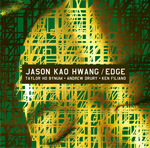
Jason Kao Hwang, Edge (Asian Improv, 2006)
AD: We're playing at the Vision Festival in NYC in June. I love this band and Jason's writing.
Andrew Drury/Jessica Lurie, This Is What It's Like to Be (Self-produced, 2005)
Laura Andel, In::tension" (Rossbin, 2005)
AD: This is closer to New Music than anything else I can think of, with a lot of rock, Japanese text. Three drummers, 3 guitars, vocals w/ electronics, 2 keyboards, cornet.
Various Artists, Just Drums II (Fever Pitch, 2005)
Andrew Drury Sextet, A Momentary Lapse, (Innova, 2003)
AD: When I wrote the music for A Momentary Lapse I wanted to incorporate some ideas I associate with classical music—certain kinds of harmonies, 2-5 part counterpoint, instrumental textures, ensemble structures—into my ensemble music. My ensemble music, people say and I pretty much agree, has a circusy energy with a rhythmic approach to melody that originates in my experience as a drummer. I wanted to continue in that direction but more fully realizing the harmonic and ensemble ideas I had.
This music is very composed compared to a lot of music I listen to, but I do like to juxtapose composed passages with very open-ended free improvisation. I love the musicians I work with. I basically provide a springboard and some water and I know if I do my part then they'll make the dives interesting. The actual notes, though they are the primary thing I'm working with and obsess over, are sort of secondary. We had two rehearsals and two days in the studio. Though recorded in New York, this was kind of the culminating expression of my Seattle years in the '90s.
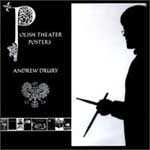
Andrew Drury, Polish Theater Posters (Red Toucan, 1998)
AD: Red Toucan went bankrupt when this was being released. @#$@%! Still, people who've heard it like it. It got some good radio play, and made Steven Loewy's Top Ten for 1998.
Photo Credits:
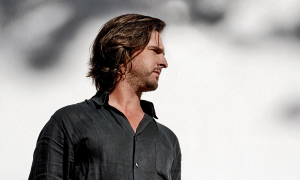
Top Photo: Caro
Bottom Photo: Frank Rubolino
< Previous
Sea Of Lead
Next >
Sangam
Comments

Tags
For the Love of Jazz
 All About Jazz has been a pillar of jazz since 1995, championing it as an art form and, more importantly, supporting the musicians who create it. Our enduring commitment has made "AAJ" one of the most culturally important websites of its kind, read by hundreds of thousands of fans, musicians and industry figures every month.
You Can Help
To expand our coverage even further and develop new means to foster jazz discovery and connectivity we need your help. You can become a sustaining member for a modest $20 and in return, we'll immediately hide those pesky ads plus provide access to future articles for a full year. This winning combination will vastly improve your AAJ experience and allow us to vigorously build on the pioneering work we first started in 1995. So enjoy an ad-free AAJ experience and help us remain a positive beacon for jazz by making a donation today.

Giveaway

Days remaining: 4