Home » Jazz Articles » Interview » Charles Gayle: Always Reaching
Charles Gayle: Always Reaching

At some point in the set, I put a mask over my eyes...so people can look at something. Then I can't see anything. It's hard to judge the keyboard at all. It's to create another music. It pushes me.
 Charles Gayle's life and art must certainly inspire anyone choosing to look at it. A humble, articulate man who laughs easily, he's seen more than his share of hard times. Yet now, at 65, his creative arc takes the upswing as critics and audiences begin to catch up. A highly original saxophonist, Gayle resumed his piano studies in the last decade and has released his second collection of solo piano performances, Time Zones. At times playing with enough force and ideas per finger to suggest a blues drenched Conlon Nancarrow piano roll, the tour de force opens another window on his powerful inspiration.
 All About Jazz's Rex Butters caught up with Gayle to talk about how he came to the instrument, and how in many ways he views it as separate and distinct path from his work on saxophone.
All About Jazz: Time Zones is your second solo piano record?
Charles Gayle: Right.
AAJ: Did you have an affinity with the piano as a kid?
 CG: My family just insisted that I take piano at 7 or 8 years old. I don't know what I had an affinity for, but we all like music somehow, whatever bag it is. No, they just said I'm going to play piano, so at least I'm going to have that in my hip pocket if I need it. That's the way they felt. Initially, when I was a kid they just felt in those times, it's nice to have something else you might be able to turn to. I didn't have a choice about that.
AAJ: Did you hear a lot of jazz around the home?
CG: Well, not exclusively. I mean, jazz was there, what they called popular music: doo wop, or whatever the people were doing at that time. We had Billy Eckstine, Count Basie, jazz, piano players, "Fatha" Hines, that kind of stuff. We had some of the popular music of that time that we had in the neighborhood. I guess you call them black records. Dinah Washington, Nat King Cole, that was in the house. Louis Armstrong.
I was about 12 or 13 years old and I started to really get into jazz, started really paying attention to it as I got a little older. I wanted to find out how they did what they did. They played "How High the Moon," and I didn't know how they got all those notes out of it. So I worked on it. I figured it out, somehow, on my own. I kept working on it. It wasn't a particular method, except to see how the people soloed, and to get an understanding of that through bop, and I don't want to say ragtime, but Louis Armstrong was still around then. It just sort of happened—eventually playing jam sessions.
AAJ: How did you pick up wind instruments?
CG: Two ways. I told a guy I'd out play him in six months. I started out on alto. The other one was, I started to get into it really heavy going to jam sessions, about 18 years old. When you got to jam sessions, I eventually discovered that once you got up from the piano, you couldn't play no more if somebody else sat down. And then I discovered that the horn player stood up all night. I said that's not going to happen. It's true. I really checked that out. So I went to saxophone. I tried trumpet. I was bad. The other reason was I challenged a guy who was playing, a friend of mine. I don't know why I told him I could beat him in six months. But I put that on the table, then I really started getting into it.
AAJ: And did you beat him in six months?
CG: Nope. He wasn't that advanced, but I didn't get it. I have to admit, I didn't get it.
AAJ: Were you on alto long?
CG: No, actually I switched to tenor right away. There was an alto available, and that's what I started playing, and I hung with it a year and I went to the tenor. When I was out on the streets I played alto a lot. But I went right to tenor. One of my friends gave me a tenor.
AAJ: At that time you were playing bebop?
CG: All bebop. That was it. In the '50s, that's all they played.
AAJ: When the new thing came in, that sounded good to you?
 CG: There is a misconception about this new thing. The new thing came in, a couple people played it, but it wasn't to jump on. A lot of things were changing at that time. Ornette was the first one out there, but he wasn't the first one to play that music. I would say he was the best representative as far as it being worldwide, because he was great. But what happened was in the late '50s, there was a sort of a movement going on in the African neighborhoods, the social rights movement. And it started to change the music. Now, that's just my interpretation of seeing and growing up in all of that. And some of the freer music, not completely free, was in the church, and it was also in the bars, some of the blues bars when they were letting it all hang out. It wasn't exclusively that music because it was blues, but they'd always have some free parts in it.
I heard some people play it before it became national. I think a lot of people in different cities can say that. But if you want to put it that way, I was in it from the jump. Even playing bop I was freeing up. I knew the changes, I could play, but I was still playing free. I mean I could insert freedom in there, I'll put it that way. I know a trumpet player who played when we were growing up and he come to jam sessions, and he couldn't play a note of them tunes, and he was free and played. Of course, people wanted to get rid of him, but he did. I knew a drummer who was doing it. They weren't into Ornette or nobody. I'm sure they knew him, but it was about them. Most free players couldn't play changes. When the music did switch, most of them really didn't play changes. A lot them went straight to playing free. It became a music in itself.
AAJ: Did you find many people to play with at that time?
CG: No, but I was branching out. I played two musics. I would play straight, you know, piano bars, playing on gigs. I would play piano, sometimes bass. If I had a gig or situation to play free, I'd play free. It was basically me and two other people playing free where I came from. We were a trio, and then eventually we got this trumpet player and he played free. It became a quartet. I came to New York in the mid-'60s, got some gigs, got to know people. I worked with Eddie Gale, Ronnie Boykins. I found Rashied Ali. We hooked up a few times. We were running together.
AAJ: When you were living outside, did you get access to a piano at all?
CG: No.
AAJ: When did you get back on the piano?
CG: When I'd go to gigs I'd play a little piano, but I didn't have any chops at all. I just sat down and played, probably shouldn't have. I'm the first to say it. I started to get a little more into it about the time that first solo record came out, five or six years ago. I started to look at piano a little more. I still don't have a piano. I have a keyboard. When I finally got inside out of that lifestyle and finally found an apartment, then the Knitting Factory asked to make a record, and I actually I wanted to get the record out, which was maybe a little premature, but I wanted to push myself to play piano. I said, well maybe if I get something pretty good, it'll give me the thing to go on and then I'll keep on pushing for it. I can't just keep waiting around.
I don't know, in a way that might be short changing people when you do things like that, but I just had to do it. I apologize to anyone who doesn't like it. I didn't mean to do it like that, but I had to do something. I was also thinking about when I get older what I'm going to do and I've reached it. So whether I was going to be playing saxophone and if not, I would have the piano ready. That motivates me to do it.
AAJ: Given the performances on Time Zones, you must have played a lot since then.
CG: I have a chance to practice, I have to say. I have a nice keyboard. It's a little weighted. It feels close to how a piano feels. I practice the best I could, considering I practice two instruments. It's coming. I don't know where it's coming or if it's good or bad, but I'm trying to work at it. To get back in it, I listened to players from the '40s and the '30s, and some in the '50s. Just to get the homework done, just to play catch up. I don't even know if people consider me a pianist, so I don't know what to say.
 AAJ: Do you play piano with groups anymore, or do you mostly play solo?
CG: All the gigs I've had since the first record have been solo. I wanted to be a solo pianist initially. When I started playing it was my goal to do that, only because "Fatha" Hines and Tatum and James P. Johnson could play like that, and I said, well, I'll do it. That was my goal four, five, six years ago to be a solo pianist. I also know that would limit me playing clubs, but I don't even know how practical it is to think like that now, or even if I'm good enough to be a soloist. But it's going to go where it's going to go. I'm not holding on to that so tight. We'll see what happens.
AAJ: On each of the tracks on Time Zones you embody the whole history of jazz from James P. Johnson, to the blues. You take it out, you bring it back.
CG: I don't want to sound like I'm copying everybody. Maybe I need a little more time to make it totally personal. I like that. There's a way of playing. I know I could use a style that wouldn't relate to any of that and it would sound so completely personal and hopefully original, but that doesn't mean it's going to be good.
AAJ: Yours is a very original sound.
CG: I love that kind of music, and that's what I want to do. It's blended, but I love the blues, stride, speed, no speed, dissonances, all of that. I'm trying to churn it around, make a music out of it myself. I'm going to continue to do it the best I can because I love that kind of music. I really do. It just swings for a second, then it walks. I can't get away from it, and I'm not going to try. So that's it.
AAJ: You've played recently with Henry Grimes and Sirone. Any thoughts on those two giants?
 CG: Great, great, great, great players. They're completely different. Sirone is living in the wrong country. He needs to be in America. Sirone muscles the bass. He's probably the strongest bassist, besides William Parker, in the world. I don't mean he's trying to just exhibit strength, but he has that and plays it like it's a toy. But he stays in physical shape to do that. He really attacks the bass. He's not about just hanging. Grimes plays it more than attacks it. And they both can go anywhere, anytime.
AAJ: And William Parker?
CG: He's different than both of them. He's busy. He's great. He's strong. His mind is working completely all the time. Grimes can be a little more laid back, even Sirone, but William is absolute forward motion. He can wear you out, too. If you play with William and just go for it, you have to be very strong to play with him. I mean that. If he's going to push you and you're going to push him, you've got to be physically strong to do that. It's a good thing to have fun and challenge each other too. Like a jam session, to go at each other while you're playing and then that brings out some other music. Sometimes people do it and sometimes they don't. That's their prerogative.
I like to do that sometimes, but that's from the old school, to just take a person on and say let's go for it then. I was playing one time with Sirone—we were playing over in Europe. It was just a duo. People were making noise. He started playing something and it was forceful, and everybody shut up. He was so strong with what he was doing, he made everyone be quiet. A lot of times you do that when you're playing soft, but he just went through the crowd because he wanted them to be quiet. He didn't say anything. He just played them quiet. And I said, whoa, that's all right. I'll always remember that.
AAJ: With your playing, it's like you have 10 ideas going.
CG: Sometimes I have to watch that. I don't know if it's too much or too little. Sometimes when you sit home and you do things, and you get ready to do it, and you say I've got everything under control and you don't. I don't know if I have anymore thoughts than anyone else. That's for other people to decide. I'm trying to do something, and it's a lot. It doesn't have to be busy, but it's always a lot. I want technique that you can't even question—technique being fast, not just style. Clear and clean, even be slow and be clean, but I absolutely want all that movement and thoughts and try to put it all together.
It's hard, and I don't know if it works or not. I just go with it. It works better for me than to not go with it. I want to take chances and not have everything down because sometimes I play blindfolded. At some point in the set, I put a mask over my eyes, and then put an exotic mask on so people can look at something. Then I can't see anything. It's hard to judge the keyboard at all. It's not a gimmick. It's to create another music. It pushes me. It would push anyone. You're just blind. You don't know what you're going to do. You don't know where your fingers are going to land, and so therefore, you have to create something out of that. Now, if a person is normally blind, they develop a style in certain parameters where they know where the piano is. You can play the blues without seeing it because the piano has patterns. Once you go past the first eight notes, the second eight notes are the same. That's a feel process. But this way, playing free, it develops another music. I don't know if it's good or bad, but I'm going to do it just to change up now and then. So who knows, if it's not interesting, I won't do it.
AAJ: You've always been highly independent. Any idea where that comes from?
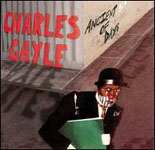 CG: If I have to give credit to anyone, it's my parents. They were independent thinkers. Maybe everybody is, but I know them best of course. They spoke their mind in a very peaceful way, not afraid. They told me to think for myself. I don't do this to be independent; I just don't see how you could not be. It's just natural for me to be the way I am. It's not for show. The clown, the mask, the drums—it's just like drinking water to me. I put on a clown nose because I thought that this will strip you of your ego. I didn't do it to look funny. It's just me.
AAJ: Any more piano projects in the works?
CG: I have discussed one with Tompkins Square Records. It might be with a group. I'm thinking of a few things. One might be with a trio. I would like to one that's not related to clubs, some type of theatre. I have some things I'd like to take to a stage that you can't do in clubs. It might be more appropriate in some kind of space that isn't a club. Everyone plays trio, but the only one I've heard that was different, really different, was Ahmad Jamal, that was a different kind of trio. There was a lot of rhythm and different stuff going and I learned something from that. I don't want to have a regular trio because that's been done a lot. It's been done well and I certainly don't want to do what everyone else is doing. I'm working on it now, and I don't know if I'll come up with something clear and good enough to put up there, but I'm going to try. I don't want a regular trio. If it's going to be regular, I don't want to play because that's not digging deep enough for me. I want everyone to listen. I'm an old man. I don't know what to say.
 AAJ: Well, you play like you're young at heart.
CG: I am a kid. There is the kid in there, and I want him to stay in there for a while. It's a privilege for me to play, considering what people have to go through in life. It's a privilege and an honor to be able to play music, and travel and do things you just don't get a chance to do in life. There's enough musicians who have passed that have been here to push you to the edge, and to motivate you and keep you going. The level of music is so high considering people who were here and passed on that you can't quit. I don't think I'll ever reach it, but maybe it's best that I don't feel like I can and keep trying.
Selected Discography
Charles Gayle, Time Zones (Tompkins Square, 2006)
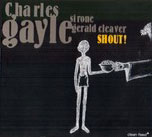
Charles Gayle, Shout! (Clean Feed, 2005)
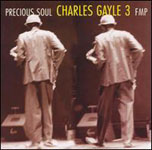
Charles Gayle, Precious Soul (FMP, 2001)
Charles Gayle, Jazz Solo Piano (Knitting Factory, 2001)
Charles Gayle, Ancient of Days (Knitting Factory, 2000)
Charles Gayle, Daily Bread (Black Saint, 1998)
Charles Gayle, Unto I Am (Victo, 1995)
Charles Gayle, Abiding Variations (FMP, 1993)
Charles Gayle, Touchin' on Trane (FMP, 1991)
Photo Credit: Tony Rodgers
< Previous
Raivolution
Next >
Live At Jazz Standard
Comments

Tags
For the Love of Jazz
 All About Jazz has been a pillar of jazz since 1995, championing it as an art form and, more importantly, supporting the musicians who create it. Our enduring commitment has made "AAJ" one of the most culturally important websites of its kind, read by hundreds of thousands of fans, musicians and industry figures every month.
You Can Help
To expand our coverage even further and develop new means to foster jazz discovery and connectivity we need your help. You can become a sustaining member for a modest $20 and in return, we'll immediately hide those pesky ads plus provide access to future articles for a full year. This winning combination will vastly improve your AAJ experience and allow us to vigorously build on the pioneering work we first started in 1995. So enjoy an ad-free AAJ experience and help us remain a positive beacon for jazz by making a donation today.

Giveaway

Days remaining: 11