Home » Jazz Articles » Interview » Lee Rocker: Road Tested, American Made
Lee Rocker: Road Tested, American Made

That
Rocker's stock in trade has been the American roots music rockabilly pretty much since the day he first picked up that upright as a teenager on Long Island, NY. He hooked up with local musicians Brian Setzer and Jimmy McDonnell and, collectively inspired by the primal genius of Carl Perkins, Muddy Waters and other legends whose country music and rhythmic blues simmered in the cauldron of fledgling rock and roll, they formed a roots-rock band of their own. Jimmy McDonnell went on to become Slim Jim Phantom and the band became The Stray Cats.

Lee Rocker and his best friends (courtesy of www.leerocker.com)
The Cats' cathartic mix of roots-rock music and punk-rock energy was like nothing else in the rock and popular music scenes of 1980, and their American album debut, Built for Speed, held the #2 position on the Billboard album chart for 26 weeks and was kept from the top spot only by Michael Jackson's ubiquitous Thriller.
Lee Rocker and his bass never really left the road, even after those Cats had scattered. In between performing with such roots-rock legends-turned-friends as Carl Perkins, Dave Edmunds, even legendary Elvis' guitarist Scotty Moore, he performed and recorded as a front man for groups of his own, consistently true to his musical roots—the roots-rock music of rockabilly.
Does he sometimes hear that his music simply copies styles from a bygone era—that rockabilly is an anachronism (jazz musicians who play swing can hear the same question.)? "My whole take with everything I do is, I don't try to recreate anything, he suggests. "I think it's just a pointless thing, to do that. To me, it's more about putting your own stamp on it and doing things your own way, and not trying to create—this probably applies to jazz as well—music as a museum piece. 'Okay, this is how they did this then, I'm doing this song...' Well, hell, then, that's a good reason not to do it that way!
This past January, Rocker released his debut recording for the venerated Chicago blues label Alligator Records. Racin' the Devil captures the energy of his current working band with drummer Jimmy Sage and guitarists Buzz Campbell and Brophy Dale. "I like to do something different on each album I do, he says of this project, which took more than a year to complete, "and this is by far the most diverse CD I've ever done.
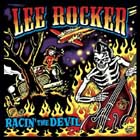 On Racin', Rocker explores the entire breadth of rockabilly, from "The River Runs, steeped in sweet country music as pure and potent as a jug o' backwoods moonshine, to "Rockin' Harder, into which guitarists Buzz and Brophy drop Chuck Berry buzz saw riffs classic and hot, to the swing instrumental "Swing This that ends the set.
It's also full of songs from a life long-lived on the road, most notably "Rambling and the travelogue "Texarkana to Panama City ( "Carolina, Georgia, Tennessee/ These are places that you really just got to be/ Alabama, Louisiana, Mississippi/ From Texarkana to Panama City... ).
In addition, Rocker and crew roughhouse the Stray Cats' mega-hit "Rock this Town and "Running From the Hounds from the Phantom, Rocker and Slick album Rocker cut with Cats drummer Slim Jim Phantom and David Bowie lead guitarist Earl Slick. Updating "Town's lyric to "I put a quarter into that can/ But all they played was techno, man provides a mischievous twinkle. Perkins, highly regarded among rockabilly's founders, is feted with a boot-stompin' twin-guitar rave up of his relatively obscure tune, "Say When.
"This is the best record I've ever made, Rocker says. "I worked harder on this record than any other I have done. I took my time with it and squeezed and twisted all I could out of the band and myself. After squeezing and twisting, Rocker spoke with AAJ in the following interview.
AAJ: When one thinks of rockabilly, the name that most immediately comes to mind is Carl Perkins, and the sound that comes to mind is full of guitar twang. But what about musicians other than guitar players? Who were some of the great rockabilly bass players, for example, or piano players, that inspired you?
LR: I don't think there's been anyone else that I know in rockabilly who was an upright bassist that fronted a band. I would say the closest in my mind, someone who I really idolize and is a hero of mine, was Willie Dixon. A blues artist, of course, and a songwriter and singer and record producer and upright bassist. He was a cat who besides doing his own stuff and all the Chess stuff, played with Chuck Berry and kind of walked the line between a lot of different forms of American music.
AAJ: How about your favorite pianist?
LR: Johnnie Johnson.
AAJ: You took cello lessons when you were a kid. So many kids take lessons for a while and then give their instrument up. Why do you think you didn't just quit?
LR: I loved it and I really just think that it's in my heart always. It's just something that I really always connected with. My parents are both classical musicians: My dad is solo clarinet with the New York Philharmonic for 58 years and my mom is also a classical musician. I come from a long line of musicians, my grandfather played jazz saxophone, and I always loved it. It's kind of a family business to a degree, you know? So I grew up with all kinds of music, from classical music to jazz to rock and roll of course, I grew up in the '70s. I played cello, I played electric bass, and then the records that really hit me and just moved me was stuff with upright bass. It was a real natural kind of progression from where I started and then electric to kind of move over and end up on the upright.
AAJ: That progression does make sense, but here's something that does not make sense: Why do three teenagers who form a band around the idea of playing roots rock and roll move to London in 1980?
LR: Well...it all worked out well...but it wasn't a matter of brains or a plan, I've got to tell you that. I was 17. The other guys in the band were 18 and 19. We were a pretty successful New York band playing the joints of the day—CBGBs and Max's Kansas City, all those places out in the suburbs—and when June of 1980 hit, the summertime, we just wanted to do something different and saved up some gig money and flew to London to see what would happen. And we never came back. Had a record deal very quickly, after a couple of months—I think within six months there was a record out—and it just went. It was a fantastic, fantastic experience, a fantastic life. But it definitely wasn't planned out.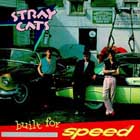 AAJ: For those who weren't paying attention, or perhaps were not around, how would you describe the pop music scene of 1980? And what do you think the Stray Cats tapped in to, that made your music so popular?
LR: I think that, you know, it was a mixed time, and I've got to say that the London music scene was starting to heat up. There was great stuff starting in the early '80s with The Clash and hopefully us in the Cats and The Pretenders and a couple of other bands.
I think the US scene was really bad and that was part of the reason why we left. There was a lot of overproduced synthesized kind of...it was the end of disco, the rock bands had become synthesized and these giant production acts kind of stuff and...
The Stray Cats, it's real music. It's real instruments. It's no machines and it's about passion and energy and playing well. That's the one thing that we always really tried to do—not tried, but were—was to be musicians. I think there were a lot of bands out there that really weren't musicians.
AAJ: A lot of punks seemed almost proud of the fact that they weren't musicians, that they couldn't play.
LR: And the thing I like about punk rock is the energy and the passion, but they can't play. When you start to deal with stuff more in terms of roots or Americana or rockabilly, you've got to be able to play. But it's got that same intensity.
AAJ: Your No Cats solo record (Solid Discs, 1998) features, as guests, Leon Russell and guitarist Elliott Easton. One can sort of connect rockabilly music to Russell's, but how does the lead guitarist for The Cars end up on a rockabilly record?
LR: I've been lucky to work with a lot of great players. You know, it's a small world out there in a way. Leon, I had met...I was doing some shows, I know Willie Nelson over the years, and Willie was doing some West Coast dates that were Willie Nelson and Leon Russell. I wound up being on the bill at a couple of those gigs. I've always been a huge fan of Leon's, had never met him before. Went down to the sound check and started talking to him. He's got this great left hand on the piano and he was playing some stuff at sound check and I said, "Wait a second, could you do me a favor? Play what you're doing with that left hand for a second. I wanted to see where he was putting the bass thing, it was kind of New Orleans-feel stuff. I grabbed my bass and we started to mess around and we became friends. So he played on that record and we wrote a song together, "Screaming Hunger . He's a great guy.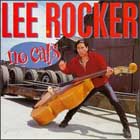 AAJ: And Elliott Easton?
LR: Believe it or not, I know him since I'm a kid, and we grew up in the same hometown. Yeah, he lived about three or four blocks away from me.
AAJ: Your album Lee Rocker Live (J-Bird, 1999) features a great medley that runs together songs by some real "roots rock legends: "Big Boy Crudup, Bill Monroe and Jerry Reed.
LR: Ah, Jerry Reed, "Eastbound and Down.
AAJ: What does the music of those artists, and others like them, mean to you?
LR: It was really fun and it kind of evolved over a little bit of time, you know? "That's All Right and "Blue Moon of Kentucky are songs that I've done on and off since I started, from Elvis doing them on the Sun Sessions. I played some of those songs with Scotty Moore and DJ Fontana, with Carl Perkins, it's just part of the vocabulary in a way.
And Jerry Reed, I always have loved his guitar playing and just his whole vibe. He's a maniac, it's hysterical. He's a monstrous player. It has that great harmony solo from "Eastbound and Down, and we just kind of threw that thing in the middle. We've messed around with putting Jerry Reed in the middle of a few things: Once in a while, though we haven't recorded it, but live we'll do "Mystery Train and then about halfway through we just kind of slip into "Guitar Man. It's perfect.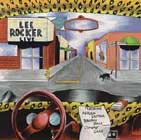 AAJ: There's a Carl Perkins song on the new record ("Say When ). Was it an obvious choice to you, or did you work a couple out and then decide on this one, or...?
LR: I worked a lot with Carl before he passed away, we did a lot of different things together. He was a great friend and a hero and obviously very "ground zero with rock and roll. And a great songwriter, a great guitarist, and I had done a Carl song on a couple of albums in a row.
This song was one that I had never heard before and I don't think was ever released. I found it, I was on tour in Europe, picked up a giant box set that I think Bear Family had put out on Carl Perkins. So I'm on the road a lot and throwin' in these CDs and I come across this track, I think it was two or three different takes of it. I'd never heard it. I don't think it was ever released, at least in the States. I don't think it was released anywhere, from the history of it. It's a '60s song, "Say When.
I wanted to do it, I loved the feel so we kinda messed around with it, we do some dual guitar stuff again, played around with it and really made it our own, with a tip of the hat to where it came from.
AAJ: How did you hook up with Alligator Records?
LR: I've known about Alligator since I'm a kid. They've always been on my radar screen because they're one of the few labels that I think really has an identity. When I was growing up I hit the record shops in New York and down in the Village because you could get good stuff, you wouldn't find anything good on Long Island. So, going into the city, shopping, just so many great blues records.
So I was always aware of it, that it was always the real deal stuff. So over the years, sort of, I've been in touch with them a few times, they called me about a few different projects that didn't happen. More recently, I was doing a festival in Spain that Koko Taylor was also on. Koko and I did a shoot for a Spanish newspaper, we hit town, a lot of the Alligator folks were there, and it sort of got us back in touch.
It seems like a great thing to try for both of us. I've been really happy, they're a great label. They're the first label, maybe ever, that can really say they know the lyrics to the third verse of the fourth song. It's cool that they're about music, they're not just counting beans somewhere.
AAJ: Speaking of this new record , that leadoff track needs to be cranked up and turned out loud!
LR: Yeah, "The Girl From Hell.
AAJ: A couple of your other favorites from this new record?
LR: "Runnin' From the Hounds is a track that I wrote a lot of years ago and went back to re-cut it, I cut it in 1985 the first time. Going into the record...it was a song I had always loved and wanted to do again, though it doesn't really fit what I was trying to do with this record. But it's a great vehicle for Brophy Dale, one of the guitar players in the band who is a fantastic slide player. I'm always looking at what all of the musicians I'm working with, what's in their arsenal, kind of. So I kind of leaned toward that, 'Ooh, this would be a nice way to do it.' So I think I'm real happy with that.
"Swing This...
AAJ: That is the last song?
LR: Yes. It's the instrumental.
AAJ: I kept waiting for your bass solo and it finally showed up here in the last song. Why did you wait until the last song?
LR: Yeah, I'm not big on solos. I'm liable to do one or two a night. But that's a track I really had fun doing. It is a swing number. I guess it's a little snide in a way, the title, in terms of the whole commercial swing thing that came through a couple of years ago. A little Les Paul-like, I think, in terms of the harmony. Just a fun little number, it's great to do that one live. Jimmy Sage, the drummer, gets to play some really great stuff on that.
I'd say "Race Track Blues is more than a lot of things on this record more firmly kind of rooted in rockabilly. Everything's rooted in rockabilly, but what I do with it is, like we were saying, it's not a museum piece; you don't blow the dust off of it and recreate something. But this does have its roots firmly in that. I was at the horse races a couple of years ago, out in San Francisco at a race track, and I don't know how the hell I wound up at a race track, I'm not a race guy, but I went there and was just kind of amazed at the whole scene, just the sound, people kind of running around and stuff, and wrote down not a song but a couple of pages of stuff I had seen and thoughts...and lost it. I lost those pages. Then a couple of years later, I go, "Oh, shit, that's right!, and ended up putting it together into a song!
AAJ: You're a guy who could easily be described as someone who was born to the road. It seems to follow that you must have seen some pretty insane stuff. Could you share a funny moment or two from the road?
LR: Oh, man, there's so many...from either getting left or leaving someone at a truck stop when someone wasn't keeping track of who left the bus and who didn't, which happened a lot, especially before cell phones, to just the gig after the gig sometimes, when you would just kind of get together and play. I remember one time we were on tour with Dave Edmunds and his band. Somehow after the gig we decided that we were going to set up in the hotel bar and do another gig. I just remember his keyboard player at the time, who's gonna remain nameless, so we were playing and he was playing piano and he had fallen asleep on the keyboard. So we decided that he was playing piano through osmosis. He was sounding great.
But there's a million things. It's a great life. I've been on the road for twenty-five, twenty-six years now.
AAJ: The new record also mentions a lot of cars?
LR: I love cars. I've had a couple of great cars over the years. I'm looking around for something now—a buddy of mine says he's got a '59 Cadillac to show me. I recently had a 1970 Chevelle Supersport with a 396, that was a lot of fun.
AAJ: When it eventually happens and you pass through those pearly gates, what's the car that's waiting for you in heaven? If you got only one?
LR: I would say a car I had a couple of years ago, which was a '59 Ford Skyliner. That's the car with the hardtop retractable roof. I had one that actually worked, which is really a rarity.
AAJ: You're on the road for the time being, or you're back from the road, or...?
LR: I'm heading back out again. I just finished the West Coast and Midwest, I leave next week for an East Coast tour, and I'm pretty much on the road quite a bit between, well I would say between now and August but for the rest of this year, really. There's always the new stuff, what's going on at the website.
Selected Discography
Lee Rocker, Racin' the Devil (Alligator, 2006)
Lee Rocker, Burnin' Love: The Best of Lee Rocker (Harder Than Normal, 2004)
Lee Rocker, Upright and Kickin' (Raucous, 2003)
Lee Rocker, Bulletproof (33rd Street, 2003)
Swing Cats, Swing Cat Stomp (Cleopatra, 2000)
Stray Cats, Rockabilly Rules: At Their Best Live (Essential, 2000)
Hot Rod Lincoln, Blue Cafe (Hot Rod Lincoln, 1998)
Lee Rocker, Lee Rocker Live (J-Bird, 1999)
Lee Rocker, No Cats (Solid Discs, 1998)
Carl Perkins, Go Cat Go (Dinosaur, 1996)
Lee Rocker, Atomic Boogie Hour (Black Top, 1995)
Lee Rocker, Big Blue (Black Top, 1994)
Dave Edmunds, Closer to the Flame (Capitol, 1990)
Phantom, Rocker & Slick, Phantom, Rocker & Slick (EMI, 1985)
Stray Cats, Rant 'n Rave with the Stray Cats (EMI, 1983)
Stray Cats, Stray Cats (Arista, 1980)
Photo Credit: Courtesy of Lee Rocker
< Previous
Happy Time
Next >
Parallels
Comments
Tags
For the Love of Jazz
 All About Jazz has been a pillar of jazz since 1995, championing it as an art form and, more importantly, supporting the musicians who create it. Our enduring commitment has made "AAJ" one of the most culturally important websites of its kind, read by hundreds of thousands of fans, musicians and industry figures every month.
You Can Help
To expand our coverage even further and develop new means to foster jazz discovery and connectivity we need your help. You can become a sustaining member for a modest $20 and in return, we'll immediately hide those pesky ads plus provide access to future articles for a full year. This winning combination will vastly improve your AAJ experience and allow us to vigorously build on the pioneering work we first started in 1995. So enjoy an ad-free AAJ experience and help us remain a positive beacon for jazz by making a donation today.

Giveaway

Days remaining: 7