Home » Jazz Articles » Interview » Franz Koglmann: Viewing Jazz through Other Arts
Franz Koglmann: Viewing Jazz through Other Arts

Jazz is... a creation of the Twentieth Century, maybe the greatest of that century, but it
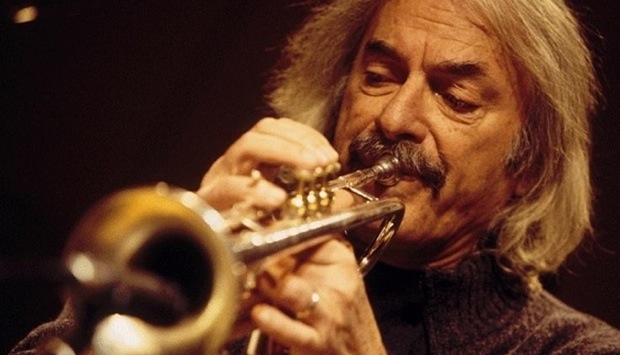
 The music of Viennese composer/trumpeter/flugelhornist Franz Koglmann sounds like no other. He manages to marry his love for the West Coast cool jazz with elements from European modern and classic music composers, especially Franz Schubert, Alban Berg and Anton von Webern. His thematic compositions, recorded almost solely for the Swiss, Basel-based HatHut and for the German, Frankfurt-based Between the Lines labels, are complex. Quite often ironic and melancholic, always playful, detached from sentimentality but still very emotional, and usually demanding.
 The ideal Koglmann listener has to be open-minded and well-versed with modern poetry, visual arts, films, philosophy, architecture and popular culture, and one that is fascinated with the multiple intertextualities in these forms of arts. A Koglmann listener would reject the strict genre definitions that legions of Wynton Marsalis' neo-conservative disciples are trying to lock jazz into them, and indeed, Koglmann is a blunt critic of the Marsalis phenomenon.
I spoke with Koglmann in Jerusalem, two days after his performance in the Tel Aviv Jazz Festival. His partner, Ingrid Karl, the director of the Wiener Musik Galerie, assisted throughout this interview.
The Beginning
"My first influences were my mother, who was a singer in a choir, and my grandfather, from my mother's side, who was a very good accordion player who came to Vienna from Prague. My mother was also at a choir when I was a child. So I started to play accordion at the age of five, classical oriented, but I heard a lot of dance-style music, in the style of Glenn Miller; I heard Louie Armstrong two times live in Vienna.
"The wish of my parents was that I'll have a normal profession so I learnt to be a book binder, but at the same time I started the trumpet at the conservatory in Vienna, in a very classic way. There was an important musician at this time in Vienna, the pianist Friedrich Gulda, maybe the best one who played Mozart, and he played jazz. This was the first time that I saw a musician who played classical music and jazz. He was a great influence for me and for a lot of my colleagues. For Gulda, jazz and classical music were not opposites, they were part of a one world.
"As a young trumpeter I played on one hand a lot of classic music, especially in churches, all the masses every Sunday, Haydn, Mozart's Requiem. And on the other hand I played a lot of jazz oriented dance music, in ballrooms and bars. Mostly I was the arranger of the band and every week I had to transcribe the newest hits for the band.
"Then the conservatory founded a jazz department, and I was one of the first students. We learned a lot of bebop and arranging for big bands, for example in the way of Neal Hefti, who was one of the great Count Basie, Atomic Mr. Basie. In 1972 I went to the States because I wanted to consult a famous teacher for brass instruments in Philadelphia, Donald S. Reinhardt, and at time I saw a lot of famous musicians in New York, Thelonious Monk at the Village's Vanguard; I sat in with Archie Shepp in Slugs. When I came back to Vienna I did not want to go back to the jazz department, where we learnt to copy all the American jazz. After my USA experiences I really wanted to stop copying the originals."
Flirtation with Free Jazz
 As an artistic director for the Between the Lines label, Koglmann managed to redeem his two out-of-print first solo records with the late saxophonist Steve Lacy and trumpeter Bill Dixon, for his own independent label Pipe, and re-release them as Opium. At that time, the beginning of the '70s produced these recordings, "hand-painted all 500 covers myself, placed an ad in the Jazzpodium journal and everything practically sold at once."
"I heard Lacy in Paris and was very impressed. I thought that it's time to make my own record. I asked Lacy, who did not know me of course, but was interested and came to Vienna and we recorded Flaps. I founded my own label, Pipe, because no label in Vienna was interested in releasing my records. And from this point I did a lot of work with Lacy, the Opium For Franz record with Bill Dixon and later on for the Hat Hut label and we did many concerts and festivals."
AAJ: How did Lacy influence you? What was it about his attitude to music?
FK: What I liked as a player was that he played extremely clear lines, like a drawing. He absolutely separated himself the stupid jazz licks. He could play the licks, of course. He was an incredible modern jazz player, all the tricks and licks, but he forgot it. He learned a lot from Monk, but not as an improviser, only the themes, since he was the second saxophonist in the band and he played only the theme at the beginning and at the end. He learnt from Monk to go in his own absolute way. You can listen to his early records with Cecil Taylor, going out from the normal jazz licks. I liked the clearness. This became important for me, the essence of his thinking.
AAJ: How did you came across Dixon?
FK: For some years I heard some of his records, Winter Song, Intents and Purposes, the quartet with Archie Shepp. From all the free jazz trumpeters he was the most interesting to me, a little more than Don Cherry, maybe because of his lyrical sound and his way of composition as on Winter Song. I asked him to come to Vienna, and we recorded and played in Vienna. We never played together again, but we have met a lot in his workshops in the Wiener Musik Galerie, and he was very influential on young musicians in Vienna.
AAJ: Was Dixon's sound influential on your sound?
FK: Yes, of course, but not only Dixon. There are four or five players that I like the most. I like the sound of Chet Baker, Jack Sheldon, Tony Fruscella. I heard Art Farmer very often, because he married and lived in Vienna, so I heard him every week, but he played strictly, never experimenting, but in very good way, high quality.
I rented a nice apartment for Dixon, the first that he came to Vienna. He came to the apartment, took his trumpet out and played few notes and it was completely another world for me. His natural sound has nothing to do with his records. This was the first time that I heard his real sound and it was incredible.
AAJ: The sound of sax and clarinetist Tony Coe is almost integral in your recordings and it seems that he is complimenting your sound.
FK: He played on most of my recordings. He played on Henry Mancini soundtracks and was on the Pink Panther, but that's not the reason that I like him. The first jazz concert that I played in Vienna with the played the Francis Boland-Kenny Clarke Big Band including Tony in the reed section. I immediately loved his incredibly smooth lines. The first time we played together was with the Derek Bailey's Company in 1983, ten years after I heard Coe for the first time. Bailey and Coe recorded a record for Bailey's Incus label, Time (1979), and it sounded as if Alban Berg would have played the clarinet with Anton von Webern on the guitar. We asked Derek to take Coe, and he said OK. Coe is a great arranger and conceptualist. I know him very well, and exactly what to write for him. I think that I gave him a good context.
Disillusionment with American Jazz and Celebration of Viennese Cool
In 1983 Koglmann founded the Pipetet, his main musical (along with the Monoblue quartet) unit with a lineup that varies from octet to ensembles of more than twenty musicians, and began to synthesize his European influences and his jazz influences. Through the years the Pipetet featured guest soloists such as Lacy, Paul Bley, Misha Mengelberg and Ran Blake.
"This was part of my process to break away from 'normal' jazz. Mainly from the conservative jazz of the eighties, that was establishing jazz as a museum, Wynton Marsalis etc. It was not interesting for me from the point of view of art. Think that in the visual arts they would say that the last important step is Paul Cezan, and now we are copying Cezannnefor ever, ad infinitum. It's terrible."
Koglmann's most bold statement about his alienation from the Afro-American jazz was conceived during his recording A White Line (HatHut, 1989), which Koglmann dedicated to white jazz composers such as Bix Beiderbecke, Lennie Tristiano, Paul Desmond, Gerry Mulligan and Chet Baker. Koglmann wrote in his liner notes: "'Do Best White Bands Copy Negroes?' as the headline of a DownBeat title page from the '30s.
"The specific something that fascinates most jazz lovers has to do with swing, soul, and heated expressivity. Since all pertinent standards were set by black musicians, white musicians accepting these categories as supreme criteria naturally have to look for guidance to their black colleagues.
"My categories are different, however. With due respect to the achievements of African-American jazz, I prefer a rational/ geometric lucidity to emotional immediacy. I have a greater affinity for the expressions of a melancholy decadence than the spontaneous joy of improvising. I cannot see swing as the one and only saving criterion."
Koglmann added in later interviews: "my non-jazzy attitude is due the fact that my ancestors were not cotton pickers from Mississippi. It would be disingenuous to exhibit my 'groove' in a finger-snapping manner."
AAJ: What led you to the recording of A White Line?
 FK: Werner Uehlinger (HatHut impresario) asked what my next project was, and I said that I would be interested to find out if there exists a white line in the history of jazz. He said, The White Line, this could be a good title. I said that people will say that we are racists. Next day he said, let's call it, A White Line. We did the record and the next day I was the jazz Nazi, but I have to say that if this record had another title no one would have realized that it has to do with a white line. Anthony Braxton first had a problem with the idea, but after we discussed it he understood what I meant. Bill Dixon had never a problem with it.
AAJ: Do you regret that title?
FK: No. From a PR point of view it was not so bad. I'm sure that this was the idea of Uehlinger's.
AAJ: At that point you were aiming for the Third Stream, marrying elements from jazz and modern music...
FK: This was always interesting for me. From the beginning I had a great interest in literature, visual arts, films and so on, and I always saw one through the other. I understood more of music through good literature, sometimes more than through listening. I did a lot of works based on novels, pictures, films.
AAJ: Was it because jazz was not satisfying enough for you any more?
FK: Jazz is typically a creation of the twentieth century, maybe the greatest of that century, but it's finished more or less. That is my impression, but maybe I'm wrong. But jazz lives in other kinds of music, its influences, and this is the way that jazz goes on. Jazz, a priori, its development is finished.
Jazz is only part of my life. For me, Jazz is reflected in so called serious music and reverse. So maybe my music is not Jazz pure but today we are free of all dogmas and this kind of freedom I enjoy much more than every kind of strict styles. I am a traveller between worlds and my music uses up different influences. It is more interesting to combine jazz with elements of so-called serious music, because my own music is a combination of different influences—first, the composer Franz Schubert; second, the second Viennese school of (Arnold) Schoenberg, (Alban) Berg and (Anton von) Webern; and the third influence is the sound of cool jazz—Chet Baker, Jimmy Giuffre, Lennie Tristano. These three things, maybe, give the Koglmann line.
 AAJ: In your later compositions and playing you are not referencing any more the free jazz?
FK: You are right. Maybe I lost the so called free thing. I became a composer who likes to play trumpet and flugelhorn, with a strong affinity to the sound of the old Cool things. I don't know why. Maybe it's like old wine. Good old cool jazz is like a good Bordeaux.
The HatHut Label Years
FK: It started because Uehlinger wanted to do a record with Bill Dixon and he read in a magazine that I had recorded with Dixon. He called me and asked me if he can use my recordings and I said no, I'm not interested in that, but we can make a new recording.
I played in 1985 in the Salon du Jazz in Paris and Uelinger had a presentation of his label in the Salon. We invited him to my concert at the cultural forum in the Austrian embassy. It was the first time that he heard me live and after the concert he said to me, now it's the time to make a new record. Ich was my first record and from this point we worked for ten years. Werner is one of the most important persons in my life.
AAJ: Did he gave you a complete freedom with your own projects?
FK: More or less. We discussed each project and I have to say that he had a lot of ideas for projects. Some were good and some I modified a little; I liked those discussions. This is a good situation if you have producer. He has to do two things—first, to keep all the money things away from the artist, and tell the artist, do it; it's a hard way but don't think about it; second, the producer has to think in artistic ways, to discuss ideas with the artist, but to give him freedom to say no. In the ten years we had two or three really big fights and after the last fight I stopped working with him, but mostly it was a good thing.
AAJ: Do you know when the rest of your recordings for HatHut will be re-released? Do people ask you about out-of-print recordings such as Cantos I-IV?
FK: I don't know exactly. When disc are out-of-print for a long time Uelinger likes that people ask him for a re-release. Cantos I-IV from my point of view is my best record, one of my personal favorites, but no body was interested in it. The selling was incredibly bad, I don't know why. Maybe because it's too long, like a symphony, and people normally like to listen to the length of a pop song.
The making of O Moon My Pin-Up
 Koglmann's most ambitious project for HatHut was his last for the label, an outstanding interpretation and arrangement of Ezra Pound's "The Pisan Cantos LXXIV-LXXXIV," O Moon My Pin-Up. The eleven poems were written in 1945 when Pound was accused of high treason by the Liberators of Italy and interned near Pisa in a wire cage under the open sky. Jazz writer Peter Niklas Wilson wrote in the liner notes: "the poet—at least in some passages—opened the hermeticism of his thought, broke away from the mask-like quality of his language, and found his way to an unknown directness of expression, an immediacy of feeling, moreover to an attitude of humility.
"O Moon My Pin-Up is not a musical 'judgment' on Ezra Pound; it is neither a condemnation nor an apology. On the contrary, it's a sensitive reflection of the fragile polyphony of speech levels and inflections in Pound's poetry at the time of an existential crisis which is directly connected with the political events surrounding the end of the war."
"A good friend of mine Christian Baier brought this idea to use the Ezra Pound cantata. When I was very young I was interested in lyrics, and in Pound."
AAJ: Pound was also extremely provocative.
FK: Yes. He had, let's say special kind connection to the way of Nazi thinking, not so far away from T.S. Eliot. Baier is a Jew who is very interested in why high-level intellectuals, artists and poets fall with such ideas. This was the idea behind it. He wrote the libretto after Pound's Pisan Cantos. What is funny is that Phil Minton who played Pound looks similar to Pound. It was the first time that I composed for a choir.
AAJ: Were there any furious reactions as to A White Line?
FK: No. Pound is strongly accepted as a poet in spite of his political disposition. Maybe people could not realize what it was about or were not educated enough.
The Beginning of the Between the Lines Label
Koglmann was lucky enough to find a new label that he could develop according to his vision. Not only his musical vision—which brought to the label open-minded composers such as the American John Lindberg and John Emery, Israeli Yitzhak Yedid, and European such as Oskar Aichinger, Moritz Eggert and Hannes Enzlberger—but also the aesthetics of its beautiful digipacks, with the graphic art work of Jutta Obenhuber.
"The business manager of Deutsch Structured Finance, Paul Steinhardt, is a great jazz fan, more of intellectual jazz, and especially of my music but I had never met him before. He could not find any new recording of mine for two years. It was after I left HatHut. He found my phone number and called me and said that he like to invite me and my Pipetet to a presentation in his bank in Frankfurt. Ingrid asked him if he is sure, because it's ten to twelve musicians who come from England, Italy and America and it's three days of rehearsals, minimum, and the composition itself costs. He said, don't worry.
"I thought this is nothing. Ingrid made a calculation with a commission and rehearsal price, and he said immediately, yes. After the concert Paul said that he'll found a label. I said, 'don't do it, you can't sell the records.' It's only for few people, but he said that he understood the finances. And so we started Between the Lines, I brought the name. I was paid to be the artistic director. I brought ideas, some came from Paul. For some years we had a lot of money, real good budget. but it's changed now. The distributor Sunny Moon is the owner now, and the head of Sunny Moon, Volker Dueck, is also the management director now.
"Make Believe was my first record for Steinhardt. It is based on Jean Cocteau's novel Les Enfants Terribles. For me it was like meeting an early lover. As Cocteau wrote this book and his opium diary ("Opium: Diary of a Cure") he was listening to Jerome Kern's Show Boat musical. The idea to make musical scenes that combine elements from Show Boat."
 Erotic Strauss
"An Affair with Strauss was commissioned for the 100th anniversary of the death of Johann Strauss, the Younger. Strauss—if he is played really well, for instance if conducted by Carlos Kleiber—is very erotic, extremely. It's not erotic if it is badly played, for instance with (Herbert von) Karajan, boring. Strauss was a good composer and an interesting figure in the history of music because the Strauss dynasty was the founder of the music business. I asked Tony Coe to write something, and he always asked me if I knew the song 'Good Night Vienna,' an old English song, and I never heard it. So I said maybe you bring it to the Strauss context, so I wrote the arrangement, and in the studio I asked him to sing it."
Inspired by Marylin Monroe
 "First I had to deal with her as a historic person in Venus In Transit, that was a complex play by Beverly Blankenship, four or five stories at the same time and four or five composers. I was one of the composers for one of the stories, a completely crazy story about a young guy who breasts after his girlfriend has given him anabolics. I used two of Monroe's songs, and I had to listen to her recordings. I was never interested in these recordings before. She did not have an interesting voice. She was completely imitating a black singer from the '30s, Helen Humes, who recorded with Count Basie. The arrangements were not bad, especially 'My Heart Belongs to Daddy.' We recorded it in America."
AAJ: How was the work with the American musicians?
FK: Very good. Extremely professional. The bassist, Peter Herbert, is an Austrian guy, and he lives in New York, and he organized the studio, everything. I just came with Steinhardt money. I worked before with Mat Maneri, a really great player. The American players are extremely professionals. They wanted to do all in a short time, but good. We had two takes but we took the first. They took no intermission, always on top. If it would have started in Vienna after half an hour of rehearsal one of the musicians would say, I'm so thirsty, let's go to the bar. New York is completely the opposite.
 The reason why we started Let's Make Love is that some guys wanted to make a program and I don't remember where I read that Monroe had an affair with Yves Montand during the filming of George Cukor's Let's Make Love. I thought about an imaginary play about this affair. I thought that both are similar. They never composed their songs, all from other people. I never saw the film. I don't know what kind of music was in the film. Monroe was never important for me as a personality, just an idea for a project.
Koglmann Sells Out The Bridal Suite
"It was the idea of Klaus Nüchtern, a cultural writer in weekly magazine in Vienna. A Friend of him had a wedding and he asked me to write a twenty minutes arrangement of Burt Bacharach songs for the ceremony. I knew Bacharach songs. These songs are full with bitter-sweet melancholy and elegant in between sounds and I know them very well because a long time ago I often played them in ballrooms and bars. It was the "šeasy listening' aera. We recorded it in one day, we did not have much time. We did not play all the songs, all stopped somewhere. "Walk On By" is just a remembering of the song, freely improvised and only in the end a minor triad. Harald Tautscher from Lotus Records, the distributor of ECM in Austria, heard it and wanted to make a recording. But we did not go again to the studio, that's why is each song is played twice. When it was released it was sold out and now they are printing a second edition, but this is absolutely a side project."
 Future Projects
"There is third part in the trilogy with Christian Baier after O Moon My Pin-Up and the opera Fear Death By Water. I'm not sure at this stage what it will be. The city Sibiu in Romania will be next year the European cultural capital and they commissioned a chamber orchestra composition, around fifteen musicians. I'll use one of the Haydn symphonies composed for this city and the writings of the Romanian philosopher Emil Cioran (who was born in Sibiu) and recordings of his voice as a basis for this composition. For a festival in Tyrol this summer I am writing for a kind of a brass sextet with an American and Austrian musicians."
Selected Discography
Franz Koglmann, Let's Make Love (Between the Lines, 2005)
Oskar Aichinger/Franz Koglmann, The Bridal Suite (Handsemmel Records, 2004)
Franz Koglmann, Fear Death By Water (Between the Lines, 2003)
Franz Koglmann, Don't Play, Just Be (Between the Lines, 2002)
Franz Koglmann, Venus In Transit (Between the Lines, 2001)
Franz Koglmann, An Affair With Strauss (Between the Lines, 1999)
Franz Koglmann, Make Believe (Between the Lines, 1999)
Franz Koglmann, O Moon My Pin-Up (HatHut, 1998; re-released by Hatology, 2001)
Franz Koglmann & Lee Konitz, We Thought About Duke (HatHut, 1995; re-released by Hatology, 2002)
Paul Bley/Franz Koglmann/Gary Peacock, Annette (HatHut, 1995; re-released by Hatology, 2001)
Franz Koglmann, Cantos I-IV (HatHut, 1993)
Franz Koglmann, L'Heure Bleue (HatHut, 1992; re-released by Hatology, 2003)
Paul Play, 12 (+6) In A Row (HatHut, 1991)
Franz Koglmann Pipetet, The Use Of Memory (HatHut, 1990)
Franz Koglmann, A White Line (HatHut, 1989)
Franz Koglmann, Orte Der Geometrie (HatHut, 1988)
Franz Koglmann, About Yesterday's Ezzthetics (HatHut, 1987)
Franz Koglmann, Ich (hat Hut, 1986)
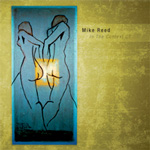
Franz Koglmann, Schlaf Schlemmer, Schlaf Magritte (Pipe, 1984; re-released by HatHut, 1992)
Andrea Centazzo/Lol Coxhill/Franz Koglmann, Situations (Robi Droli/Newtone, 2000; recorded 1978-1982)
Bill Dixon/Franz Koglmann/Steve Lacy, Opium (Between the Lines, 2001; re-release of Koglmann's Pipe label Flaps and Opium For Franz, 1973-1976)
Related Stories at AAJ
Between the Lines Turns Five
Franz Koglmann Interview (2000)
Between the Lines CD Reviews
Photo Credits
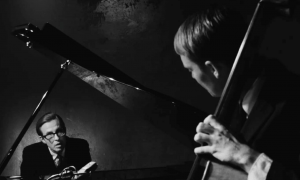
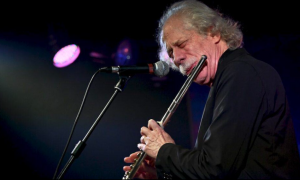
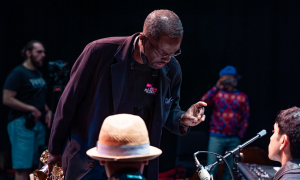
Top (at 2006 Tel Aviv Jazz Festival): Kabilio
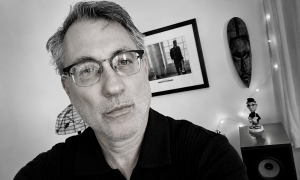
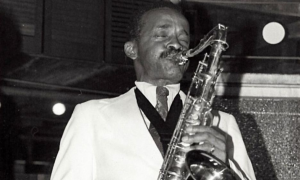
Middle (portrait): Ingrid Karl
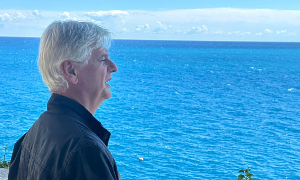
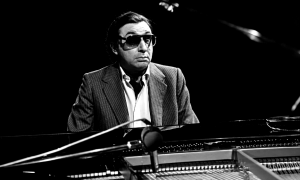
Bottom: Eckhart Derschmidt
About Franz Koglmann

Tags
PREVIOUS / NEXT

Become a Sustaining Member

Since 1995, All About Jazz has championed jazz as an art form and supported the musicians who create it. Over three decades, it has grown into one of the world's leading jazz resources, serving hundreds of thousands of readers, musicians, presenters and industry professionals each month.
Help Build the Future of All About Jazz
Your support helps us continue building All About Jazz for the next generation—expanding our editorial coverage, preserving jazz history, developing new community features and creating better ways to discover the music and the people behind it.
Become a sustaining member for as little as $20 per year and you'll immediately enjoy an ad-free experience along with access to subscriber features and future articles for a full year.
Together, we're not simply sustaining All About Jazz—we're building its future. Thank you for being part of the journey.