Home » Jazz Articles » Interview » Terje Rypdal: In A Miles Mood
Terje Rypdal: In A Miles Mood
Somewhere along the way I got 'Meditations' by John Coltrane. In the beginning, I didn
 Norwegian guitar icon Terje Rypdal surfaced more than three decades ago as a new guitar voice, but he strode out of the fields of rock music, not jazz. He was influenced a great deal by the electronic jazz/fusion of the late 1960s and early 1970s and his early work with the likes of saxophonist Jan Garbarek and renowned composer George Russell brought him to the eye of American listeners, through the ECM label with which he has been affiliated since 1970.
 Since coming onto the scene and recording extensively, he has influenced guitarists in the U.S. with his style that often seems to depend more on soaring sounds than the note-filled solos of Charlie Christian-influenced American guitarists. His searing forays glide over heavy rock-influenced synthesizers, or over backgrounds with classical voicings.
Rypdal, now 58, was well-known in Norway in the '60s, though still forming his style and learning. While most of the U.S. was unaware, there was apparently at least one U.S. listener to the rock and bluesy licks Rypdal was laying down at that time with a band called Dream. The young guitarist was a big Hendrix fan, and did an imitation of the legend's playing—and even his voice—on gigs. In the studio, the band cut an album in the late 60s called Get Dreamy, which featured a lot of the Hendrix music.
It seems Rypdal had a girlfriend at the time, "and she was going to meet a girlfriend in Sweden who was one of Hendrix's numerous girlfriends. So I sent a copy of the Dream album in hopes that it might get to Jimi, says Rypdal. All these years, he must have assumed it didn't make an impression—maybe never even reached his ears. But in June of 2005, Rypdal received a letter from a record collector in the Los Angeles area who had purchased Hendrix's private record collection the guitarist owned that was found in Great Britain, where Hendrix had spent time playing music. The Dream album was among the collected works, the collector said.
 The collector "sent me a facsimile of what I wrote. So I followed up and called. Not only did [Hendrix] get it—we didn't know if he'd thrown it away—but he brought it with him to London. And this guy writes: 'It's been well played.' That's nice to know about.
"I actually knew about [Jimi's] death before it was official, Rypdal adds. "Freddie Hubbard came [to Norway] from London and somebody asked me to pick him up at the airport. He had just heard that he was dead. That was two days before it was official.
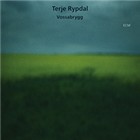
U.S. listeners have another chance to hear Rypdal with his latest ECM release, Vossabrygg, recorded in 2003 from a work commissioned by Norway's Vossa Jazz Festival.
In part, the music is an homage to Miles Davis and his seminal Bitches Brew album that shook up the musical world in 1969. The Norwegian title translates to "Vossa Brew, and apparently the title prompted beer brewers in that area to assume at first that they were being lauded. They weren't.
The electric music of Miles Davis is important to Rypdal and his longtime friend and associate, trumpeter Palle Mikkelborg. It was Mikkelborg who recorded the album Aura (Columbia, 1989) with Miles. Mikkelborg is the trumpeter on Rypdal's new disc. But the album overall "is a mix of many things, says Rypdal, and not just a Miles tribute.
He says at the end of 2002, before he got the commission, his agent Pål Gjersum gave him, as a Christmas gift, The Complete Bitches Brew Sessions (Legacy Recordings, 2000). "I almost didn't sleep that Christmas, listening to it, he says with a laugh. "When it came out (1969), it was also very important for me.
Some of the bass figures and things on Vossabrygg are very reminiscent of Bitches Brew, particularly the opening cut "Ghostdancing in which snippets of "Pharaoh's Dance from Brew come to the surface. "Even some quotations (are the same). That happened during the rehearsal. So it's more clearer [the connection] than it should have been, Rypdal says.
But, he notes with a chuckle, "I'm not trying to make Bitches Brew again.
 The guitarist says both he and Mikkelborg are happy with the project. "I don't think Palle wants to play like Miles. In fact, they got to be friends. Miles has been an idol of his. I think Palle has changed in maybe five or six years, especially in the use of all the pedals and things. His sound is different. This is a time to be respectful [not imitative], but that's more or less it.
"I played a concert with John McLaughlin (guitarist on Bitches Brew) in Switzerland a couple years ago, Rypdal continues. "I didn't know him, but I met him. He was very important to Bitches Brew.. It's an homage to Miles and that special period. McLaughlin had a lot to say to me as a guitarist. Since then, I met him several times. There are all these connections—apart from Coltrane, it's been maybe the most influential period, I think. So that's why I wanted to say something about that.
It's not the only recorded acknowledgement to Miles. Check out the opening to "Tough Enough from Terje Rypdal (ECM, 1971); or even parts of "Silver Bird is Heading For the Sun from Whenever I Seem To Be Far Away, (ECM, 1974).
Also on Vossabrygg are samples from Rypdal's long recorded history as a player, compiled by his son, Marius, who's listed as providing "samples, electronics and turntables for the recording. It's the first time Terje has worked with one of his children. A drummer in Norway, Marius uses samples derived from Rypdal's discography, especially "Ineo, for choir and chamber orchestra, from Undisonus (ECM, 1992). They are threaded through certain parts of the album, and Terje actually plays over some of the chordal movements he wrote a while ago.
"So that's very important too, says Terje. "He actually did some earlier versions without my knowledge. So I combined those things. It's a combination of all these things. And then what the musicians contributed is important of course.
 Rypdal cooks throughout the disc, both in a fusion style that befits the homage, and also on his extended ethereal musings, like on "Hidden Chapter, (definitely not a Miles-influenced exploration.), a song that starts off dreamy, then plunges into modern funk, displaying his son's electronic work. "Waltz for Broken Hearts/Makes You Wonder finds Mikkelborg in a Miles-ian mood. "Jungeltelegrafen has the Miles electric feel as well, but the music isn't a copy, as it's laced with turntable sounds and other electronics from the younger Rypdal that weren't used by Miles. The song becomes mellower as it moves on, but the trumpet sounds come from Miles' language.
"Those years were special, he says of the later '60s and early '70s. "I actually played almost all of Jimi Hendrix's first album live. I came through that area. Through Jan Garbarek, George Russell, I got more and more into [jazz]. Somewhere along the way I got Meditations by John Coltrane. In the beginning, I didn't understand it, but it's been very important for me because it has the openness in the music that relates to the best in rock. The end of the '60s and beginning of the '70s was a beautiful period. It was a rich period.
Of "Ghostdancing he says, "It's not all the time you enjoy what you have done, but this one I do. He noted there is some thought being given to taking the music of "Then [Eric] Clapton made the album with John Mayall [and the Bluesbreakers], Rypdal continues. "That was very important. Then I started to listen to all the British players. Jeff Beck did a version of "Jeff's Boogie. It's quite difficult. And then Hendrix came. I think guitar players listen to each other all the time and learn new tricks. I left a concert with Steve Vai. It was brilliant. It never stops. Some of his influences over time have included Eddie Van Halen, Wes Montgomery, Kenny Burrell, Charlie Byrd, and John McLaughlin. Rypdal started using Marshall amps during this period, but wasn't that familiar with them. He was trying to develop the guitar sound he was hearing. He had the good fortune of some help from a bonafide rock star. "We were in London recording in 1965 or 1966. Because of a friendship between our manager and Chris Blackwell, I was introduced to Stevie Winwood. He actually spent 10 minutes teaching me how to use a Marshall, which was very new at that time. We didn't have the knowledge. If he reads this, I would like to thank him, he laughs. "It was great. While playing, Rypdal studied composition under composer Finn Mortensen, and also began to study with jazz composer George Russell, whose work with modal music was a huge influence on the likes of Miles Davis and John Coltrane. Eventually, Rypdal began performing music that was linked to jazz, with a group led by Russell, and one lead by Garbarek, who had played earlier with Terje in the band Dream. Rypdal appears on Russell's Essence of George Russell (Soul Note, 1966) and Electronic Sonata for Souls Loved By Nature (Soul Note, 1969). Rypdal was more immersed in rock and pop, and had classical influences as well from his childhood. The idea of playing jazz was at first a bit puzzling. "I would have liked to play more standards and things, says Rypdal, "but had too much respect for it [to emulate it]. Here at home, from time to time, I play it. If I started to play jazz three or four years earlier, it might have happened. What happened was I used what I learned from Jeff Beck and the Hendrix thing. "When we started with Jan [Garbarek], I didn't know what to do, he recalls. "So I started to play like McCoy Tyner. The first album, I'm trying to be one of McCoy's hands. I'm thinking about chords that I knew and experiment with them. And then later, when we started at ECM, whenever we started to sound too much like somebody else, Manfred [Eicher, ECM founder/producer] would say, 'Find your own voice.' Without Manfred it might have gone another direction. He admits that at one point in the early '70s, "I didn't want to play guitar. I played flute and soprano saxophone, because I didn't get the sound I wanted. But something happened, and I said 'OK. Now it's here.' But it took a couple years to really search for it and get the quality. He says he played longer melodic lines, and gradually learned to control speed and incorporate that into his playing, as needed. A style that he found comfortable emerged, and it's one that has, in turn, influenced others. "I have another guitar friend, the guitarist from TNT [a Norwegian band], and he always says, "It not about the music. It's in your fingers.' Probably, that's part of it, combined with a good guitar and pedals that you like, and so on. Once we tried to use the same equipment, didn't touch anything, and changed guitar players, and it sounded very different. So that's a phenomenon. Rypdal was recording Garbarek's second album, Sart (ECM, 1971) and wrote a song for the recording. "There is something on the [original] Bitches Brew album, you can hear Miles whispering [affects gravel voice]: 'Keep it like that. Tight.' So I made a tune called that, in '71 I would guess. It was decided that it should not be on the album. I was very happy with it and probably showed some disappointment. So Manfred said, 'Don't worry. Don't worry. You can finish your own album.' That was how he started me as a leader. The guitarist says the long ECM association has been a boon to his career. "If I'd only been an artist in Norway [without ECM] it would be completely different. I was very lucky. We've [Rypdal and Eicher] spent so much time together that we are friends. It has meant a lot. It has been a living. I made a living off it, but it is very much due to Manfred. And other things. So Rypdal, a much-decorated musician in Europe for his playing and composing, including 1985's Buddy Prize, the highest honor granted by the Norwegian Jazz Musicians Association, has continued on a career that has been fruitful and allowed him to make a good living. Today, he lives in a rural area outside Molde, Norway, surrounded by the beauty of mountains. "I'm in the country. It's a place that has been in my family for a long time. I moved in first just for a summer place, and now it's regular. It's not too far to the airport from here, so that's OK. Molde has a nice festival. Miles played here a few years before he died. I've seen him live and also passed him once, but I didn't talk to him. But Palle really got to be friends with him. I know a lot about those meetings. Rypdal adds another Miles story. "A guy here had sort of a limousine and he used to pick up everybody from the airport. He picked up Miles and he immediately said, "Mr. Davis, I don't know much about your music. and Miles said, [in Miles imitation again]: 'What kind of car is this?' They became friends and had dinner and things. As for the music scene, Europe is a place where American musicians can find work they might not find in the states. Rypdal says it's not a bad market, but has dwindled. As for the future? "I'm expecting a call from Manfred, he said from his home on this February day. "I wrote a thing called 'Melodic Warrior' for the Hilliard Ensemble. They have recorded a lot of things on ECM, a British vocal ensemble. This piece is based on poetry of American Indians. I got a book from a friend of mine, translated into English. I got some fantastic lyrics, mostly to respect nature and so on. That will probably be the next ECM release. After that I'd very much like to make a real guitar oriented album again. I have a trio that is called Skyward, it started when the album Skywards (ECM, 1997) came out. I'm maybe changing our name. Then there are a couple commissioned works. So this year will be quite busy I guess. "There are ups and downs, he says of his musical career. "I've probably been more fortunate than most musicians, with ECM. It's probably the only record company that you can still get all the releases. If a few records don't sell so much, that's not important. So you have this continuity that's unique. Terje Rypdal, Vossabrygg (ECM, 2006) Photo Credits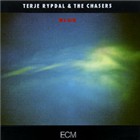 For Rypdal, the disc is the latest in a long line of ECM recordings and the latest document of a long musical journey that started in Oslo, where he was born. He studied piano at a young age and also trumpet for a time. On guitar, he is basically self-taught and he began playing in bands around town with that axe, which was emblematic of the rock scene in which hew grew up. In a group called The Vanguards, he played music of his early influences, the Shadows [guitarist Hank Marvin] and the Ventures. "I had a couple of lessons, Rypdal says. "But all my teachers, it ended up that we formed the first band I was in, The Vanguards. We played instrumental music in the beginning. I was about 14 when this happened. I could read music from piano playing. I could transfer that to the guitar. Before that, maybe I had four lessons or something.
  It was around this time he decided to forgo going to school for electrical engineering and plunge into music. "When this happened, Rypdal explains, "my father was a military musician conductor and he said, 'Please don't do this. It's a hard living.' But then everything happened quite fast, after the Dream period. At the end, even Jan Garbarek was part of the band. Then they asked me to join his [Jan's] quartet and at the same time George was living in Oslo, so I took a Lydian concept course from him, desperately trying to find out what we should do. Then I played in George's sextet, which had never been recorded before, and I got the trombone part. I think somebody had played valve trombone, [Bob] Brookmeyer or someone. These parts were extremely difficult, so I spent two or three months just trying to learn. That worked out OK. Not only from his teaching, but his music was very important.
 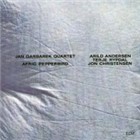 The first ECM album Rypdal appears on is Garbarek's Afric Pepperbird (ECM, 1970), though he had played on Garbarek's The Esoteric Circle (Freedom, 1969) before that and recorded one album of his own, Bleak House (Polydor/Universal Norway, 1968).
 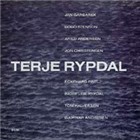 "Keep It Like That - Tight, can be found on Rypdal's debut as a leader on ECM, Terje Rypdal (ECM, 1971).
  "You could tour anywhere in the '70s. All of Europe and Norway. But it seems to me one-fifth of the clubs are left. That's a problem. The thing that's been more popular is the festivals. Europe is still a good market, especially during the summertime. But I don't know how it would be to start all over again. I would probably have to be a music teacher or something, together with playing. But there are new names out there [musicians]. I have no idea how they manage. They are playing in too many groups, to make a living.
  Thus far, there are no plans for a tour in the States ["Can you get someone to invite us? he joked]. "I haven't heard anything. But it seems this album, we already have quite a few nice reviews from England and so on. This band would probably cost too much to travel with. I would like to do more with my trio, actually. So, that might be possible. Because it would not be too expensive.
Selected Discography
Michael Galasso, High Lines (ECM, 2005)
Terje Rypdal, Selected Recordings :rarum VII (ECM, 2002)
Terje Rypdal, Lux Aeterna (ECM, 2002)
Terje Rypdal, Double Concerto (ECM, 2000)
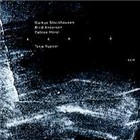
Markus Stockhausen/Arild Andersen/Patrice Héral/Terje Rypdal, Karta (ECM, 2000)
Ketil Bjornstad, The Sea II (ECM, 1998)
Tomasz Stanko, Litania (ECM, 1997)
Terje Rypdal, Skywards (ECM, 1997)
Ketil Bjornstad, The Sea (ECM, 1995)
John Surman/Karin Krog/Terje Rypdal/ Vigleik Storaas, Nordic Quartet (ECM, 1995)
Terje Rypdal, If Mountains Could Sing (ECM, 1995)
Ketil Bjornstad, Water Stories (ECM, 1993)
Terje Rypdal, QED (ECM, 1993)
Terje Rypdal, The Singles Collection (ECM, 1989)
Terje Rypdal, Blue (ECM, 1987)
Terje Rypdal, Chaser (ECM, 1985)
Terje Rypdal/David Darling, Eos (ECM, 1984)
Terje Rypdal/Vitous, Miroslav/DeJohnette, Jack, To Be Continued (ECM, 1981)
Terje Rypdal, Descendre (ECM, 1979)
Terje Rypdal/Miroslav Vitous/Jack DeJohnette, Terje Rypdal/ Miroslav Vitous/Jack DeJohnette (ECM, 1979)
Terje Rypdal, Waves (ECM, 1978)
Barre Phillips, Three Day Moon (ECM, 1978)
Edware Vesala, Satu (ECM, 1977)
Terje Rypdal, After the Rain (ECM, 1976)
Terje Rypdal, Odyssey (ECM, 1975)
Terje Rypdal, Whenever I Seem to Be Far Away (ECM, 1974)
Terje Rypdal, What Comes After (ECM, 1974)
Terje Rypdal, Terje Rypdal (ECM, 1971)
Jan Garbarek/Bobo Stenson/Terje Rypdal/Arild Andersen/Jon Christensen, Sart (ECM, 1971)
Jan Garbarek Quartet, Afric Pepperbird (ECM, 1970)
Jan Garbarek, The Esoteric Circle (Freedom, 1969)
George Russell, Electronic Sonata for Souls Loved By Nature (Soul Note, 1969)
Terje Rypdal, Bleak House (Polydor/Universal Norway, 1968)
George Russell, Essence of George Russell (Soul Note, 1966)
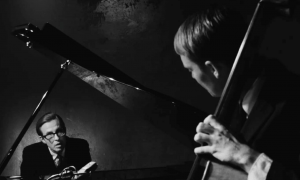
Top: Vidar Langeland
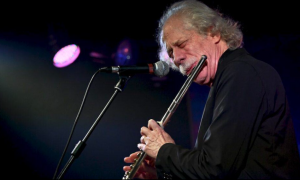
Center: Anne Lise Flavik
Bottom: Tom Martinsen
All photos courtesy of ECM Records
About Terje Rypdal

Tags
PREVIOUS / NEXT


Become a Sustaining Member

Since 1995, All About Jazz has championed jazz as an art form and supported the musicians who create it. Over three decades, it has grown into one of the world's leading jazz resources, serving hundreds of thousands of readers, musicians, presenters and industry professionals each month.
Help Build the Future of All About Jazz
Your support helps us continue building All About Jazz for the next generation—expanding our editorial coverage, preserving jazz history, developing new community features and creating better ways to discover the music and the people behind it.
Become a sustaining member for as little as $20 per year and you'll immediately enjoy an ad-free experience along with access to subscriber features and future articles for a full year.
Together, we're not simply sustaining All About Jazz—we're building its future. Thank you for being part of the journey.