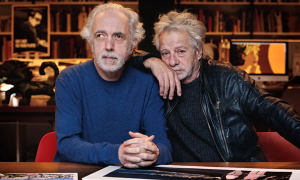
Home » Jazz Articles » Interview » Ken Vandermark: Raw and Refined
Ken Vandermark: Raw and Refined

It took me a long time to figure out that Cecil Taylor's music had conventionally notated material involved.
—Ken Vandermark
 Sometimes stumbling blocks and dumb luck can lead to a more satisfyingly final presentation than if everything went as originally planned. This was intended to be a phone interview from the outset, however equipment failures combined with difficult scheduling conspired to turn this into an email interview.
 Despite Ken's Herculean effort to key paragraph after paragraph into a tiny BlackBerry keypad, it became difficult for him to keep track and the written word (anybody's) lacks a certain visceral flavor of the personality behind the words. Fortunately Ken agreed to another phone conversation and as a result, the reader is now presented with two sides of Ken; one represented by transcribed spoken language from January 20, 2006, and the other appears as supplemental email Q&A. Email material predates the phone conversation and is indicated by "AAJ-e" and "KV-e" to help differentiate between what's what. Also of note; while I heard Ken very clearly during our phone conversation, our connection was such that Ken sometimes strained to hear me.
A tremendous "Thank You" to Ken for willing to see this interview through.
Sound and Texture
Personnel Changes
Making a Tour Happen
The Live Versus Recorded Experience
The Territory Band and FME
Listener Conceptions
Hoxha
The Paradox of Inspiration
Appreciating Dissonance and Chaos
The Rigors of Touring
Music with Hyphenated Feelings
Changing Subjectivity
Wynton Marsalis
Invention Versus Discovery
Beauty in Free Jazz
Who Do You Play For?
Radio
Selected Discography
Sound and Texture
All About Jazz: How did today's rehearsal go?
Ken Vandermark: Oh it was good. We're getting ready to work on a tour with the Vandermark 5 in North America and I've written some new pieces in the last few weeks to try on the tour, so we'll have a few more new things to present. It's real interesting having Fred [Lonberg-Holm] in the band and finding new ways to work with the group and the instrumentation; it's been great.
AAJ: Every member of the band is exceptionally versatile—switching from a percussive role to a more melodic one, and then into a textural mode at a moment's notice—and yet there's a consistent feel or approach that runs through your work.
KV: Yeah, the idea of the group in the beginning was to just have a small, or smaller, ensemble that could have the largest possible orchestral and stylistic possibilities. Even with the personnel changes that have happened in the last, almost ten years, that initial idea has really been true to the conception of the band throughout its history. So having Fred...the interest in asking him to join the group was connected to that. As a cellist and the way he approaches the instrument, the band can move into a lot of new music, chamber ensemble possibilities more dramatically than before. It also gives a chance to dip into, I don't know, more processed types of electronic sounds that Fred can deal with which we had to abandon when Jeb Bishop stopped playing electric guitar. So it's given us a very broad range of stylistic shifts that from piece to piece, or within pieces that in some ways is more dramatic than before.
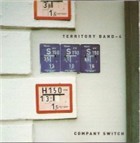
AAJ: In the opening of "Killing Floor," the first track on Territory Band 4's Company Switch, there's a sound that's hard to pin down. It might be a horn blown with extended techniques, or maybe a horn filtered electronically.
 KV: That's one of the interesting things about that particular group and why I want to have the ensemble be an electro-acoustic group. Because the way that Keven Drumm worked with the band in the initial stages and now Lasse Marhaug has been working with the band, their textural and sonic capabilities have a tendency just to almost unconsciously push a lot of the players into areas of sound that they maybe wouldn't normally gravitate to in a normal acoustic environment. And also, with the use of extended techniques...the horn players and the string players in the group, and blending that with the electronics, it does give this ambiguity about where the sound sources are that creates, maybe, an added level of tension to the way the music is developed and constructed.
AAJ: Have you ever taken heat for incorporating electronic into an otherwise acoustic band?
KV: No that's never been a problem. I mean, people have asked why I've chosen to do that and it's always been out of curiosity and expanding the, the pallet of sounds but no one's ever complained. In the earlier period of the Vandermark 5 there were certain people who weren't happy that there was electric guitar involved in the music, and then I think that even dissipated after a certain point. It was clear that I was interested in working in a broader range of ideas than whatever "free jazz" is defined as. But that was the only time that there was a sort of like, a criticism of like, well why...the band sounds like a rock band on this tune, this isn't jazz. Sorry but there's a lot of music to play and this is part of it. But as far as electronics go; no.
AAJ-e: There are times when your tenor and baritone almost sound like a distorted guitar. Do other instrumental timbres influence your sound, your personal conception?
KV-e: About half of the sonic possibilities on the reed instruments I play are associated with conventional pitch. That leaves a lot of room for other sounds. Why not explore them too. I'm extremely curious about different kinds of music, different methods of organizing sound. I want to integrate all of the things I hear that are exciting and find out if I can get them to work in an improviser's context. All of this means that trying to expand the range of timbral possibilities on the horns is just a natural extension of my musical interests, and those of the artists before me. class="f-right"> Return to Index...
AAJ: Why wasn't another horn man chosen to replace Jeb Bishop?
KV: There's a few reasons for that. One was when we decided to continue the group [Vandermark 5] after Jeb left, we considered the idea of whether the band should only be comprised of Chicago musicians or make it international potentially, you know, and work with people from outside of Chicago or even the United States. We decided it would be better to keep the group tied to Chicago just in terms of the potential to rehearse and work on material even if there weren't concerts scheduled or tours scheduled. Because even thought the group isn't playing in Chicago nearly as nearly much as it did when it first started, we've been able to get together and rehearse because the musicians are here, when they're not on tour. It just gives a lot more flexibility to organizing the music and learning it and, and checking things out.
 So when we decided to keep the group centered on Chicago, that led us to the idea of not having another horn player replace Jeb. It didn't make any sense to me to have another reed player join the group and there are some strong reed players in Chicago and to have a trombone player, there really wasn't somebody that came to mind that had the diverse possibilities that Jeb has in his playing. Jeb's a very, very strong player you know, he can read basically anything that I would write for him. He has a huge range of technical and melodic kinds of conceptions that he can apply, and the only other musicians in Chicago that play the brass instruments...at this point that would maybe be appropriate for a group like the Vandermark 5, are quite a bit younger and less experienced than Jeb was. Basically everybody in the band is almost a leader in their own right so we really felt the need to put somebody in the band that would not replace Jeb, but replace his abilities as an individual, you know. And that meant, that was part of the reason to move away from a horn player.
Considering keeping it to Chicago and considering who we're going to put in there, very quickly the idea of asking Fred Lonberg-Holm to join came up because he's really one of the strongest players on the scene in general, not just in Chicago but internationally. He lives here, he would add a real change to the band which has proven true since we've been working with him. Losing Jeb was very difficult but the changes have been extremely positive. I think I can speak for the whole band in saying that we miss having his involvement with the group. But if we're going to have to make a change like that, having Fred join has been quite successful and very exciting.
AAJ: And if another horn man was chosen instead, he'd likely have to manage insufferable comparisons to Jeb. Going with Fred was pretty shrewd.
KV: Thanks.
AAJ: I'm looking forward to hearing what Fred does with the band and I just know you've something up your sleeve that will surprise anybody who has certain expectations.
KV: Yeah well, that's the idea [laughs].
AAJ: Axel Doerner marked a return to the Territory Band with Company Switch. Did he relocate to Chicago?
KV: Well, I would say about half the band isn't based in Chicago, you know? There's a lot of players from Europe, Axel being one of them, but of course Paul Lytton, Paal Nilssen-Love, Lasse Marhaug and Fredrik Ljungkvist. There is a good percentage of the group that's comprised of Europeans, Per-Ake Holmlander for example, also from Stockholm like Fredrik. The idea with the Territory Band was to put a group together of players that were maybe the most interesting to me to work with in a large ensemble format no matter where they were from. Whether they were from Chicago or, obviously, Europe or any of the musicians that I knew, and not try and be restricted by any kind of limitations in terms of expense of putting the group together or distance—because initially the group was organized around the availability of the MacArthur prize money.
 That was definitely one of the things that the money was put to use for was developing the Territory Band project. Now that the money's gone, one of the creative challenges I have is trying to figure out how to continue working with the group on an on-going basis. Thankfully there have been ways to do that. The ensemble got invited to play the Dionysian festival in Germany in October and that led to a European tour and recording schedule which worked out quite well, with Johannes Bauer playing trombone with the group, and that worked great. And then in the summer of this year, August 2006, the band is planning on doing a project, with Fred Anderson as a guest artist with a group which would be the first time the group's ever done something like that. So I've been able to find ways to keep the thing moving forward, and that'll be an on-going challenge for me because I've got a lot of interest in continuing to explore a large format-type of organization and orchestration for the music. class="f-right"> Return to Index...
Making a Tour Happen
AAJ: It sound like it takes a festival invitation to make a tour happen.
KV: Yeah that's very true, I mean initially when the MacArthur money was there, I could bring the group into Chicago and we could rehearse and do some concerts with small groups and the large group, and do some recording. That was the way the thing started but in the future it's really going to be necessary to find ways to interest presenters who have some serious funding. I mean, the group runs around 11 or 12 people and they're scattered in Europe and in Chicago so it takes quite a bit of money just to get the travel organized. And on top of that you have the fees for the artists, for the rehearsal time and for the performance time—and recordings if that can work out—so there's no question that it takes a presenter with funding to do that and that usually means festivals.
This means work in the United States is quite limited because the festivals that present improvised music tend to be fairly conservative in their interests musical interests. The festival work I've done in North America has been in Canada, it's either been in Vancouver or in Victoriaville outside Montreal, but the festivals in the United States so far haven't really seemed interested in the kind of work I do. Which means the odds are good that the Territory Band won't have the opportunity to perform outside of Chicago anytime in the near future.
AAJ: That's a sad state of affairs, but I'm just glad you can keep the band going.
KV: [laughs] Yeah, at this point that's what I'm shooting for! So as long as I can do that, maybe there will be a change in the future where there will be more of a chance for the group to play in the U.S. class="f-right"> Return to Index...
The Live Versus Recorded Experience
AAJ-e: There's a set of unreleased recordings of you and Paal Nilssen-Love performing as a duo at Norway's Sting JazzKlubb in 2005. While reeds are typically mixed in front of drums, these recordings feature Paal up front and the result is phenomenal. With so many possibilities, how is instrumental placement determined in your recordings? Are they mixed with public expectation in mind?
KV-e: The recording you're referring to is a bootleg concert tape, not a professional document. Paal's up front because he was louder than me, we were playing acoustically and there are times when I can't match his volume level on the drum kit. With all the label releases I've been responsible for, there has been a real effort to present the band as it would sound live, balanced in a club. Those are the kinds of albums I prefer to listen to so I like work with that kind of presentation.
AAJ-e: What are your thoughts on bootleg recordings? Do they serve a purpose as, for instance, the Grateful Dead believe? Or do they potentially harm the artist?

Vandermark 5
KV-e: My attitude towards bootleg recordings is that if I get a copy on an equivalent format, and if I am asked for permission, it is okay to make a tape of a concert. As I've already mention, having examples of the music to listen to and to compare can only help build an understanding of the reality of working with the improvised music process. When I collaborate with musicians who disagree with this perspective, I have told people who have asked that it's not okay to record because I respect the artists who want to try and have more control over what's available. class="f-right"> Return to Index...
AAJ: Did your work with Peter Brotzmann's Chicago Tentet inspire the Territory Band's creation, or maybe a limitation within the Vandermark 5?
KV: The work with Peter in the Tentet...I wouldn't say that it inspired the idea of organizing the Territory band, I mean it's quite a separate thing and to me, the work with the Tentet is so individual that I don't really associate it with the other projects that I'm involved in, even though some of the musicians overlap. The work is quite different and [Brötzmann's Chicago Tentet is] defined in so many ways by Peter's band-leading skills and his interest in aesthetics. I'm really happy to be involved in that project.
Although it makes a lot of sense, and people have brought this up before that the Territory Band is kind of an extension of the Vandermark 5, that really isn't true either. My interest in working with those musicians, both in the 5 and in the Territory Band ensemble, is really because they're among the best musicians in Chicago that I can work with—the best musicians I can work with period, I shouldn't just limit it to Chicago—and so it's less an outgrowth of the Vandermark 5 and more an inclusion of those particular musicians because of the skills they have. I can see how people would maybe make that assumption based on the fact that those musicians are in both groups, aside from Tim Daisy. It really is connected to my interest in organizing music for a large ensemble. I mean if you listen to the music of Peter's Tentet or if you listen to the music of the 5, I think it should be fairly evident that the way the [Territory Band's] music is organized is considerably different.
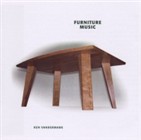 So I think it's more about pursuing those ideas that I might have and pushing myself to try to incorporate the broadest range of ideas I have, and that maybe...push towards looking for new solutions to the problem of writing music, or the issues of writing music for improvisers. It's less inspired by the way that the Tentet is organized although I would say that, you know the general inspiration I get from working with Peter in that band and in Sonore obviously affects the way I think about the music I play so there's no question that there's some kind of relationship. But it's less a direct outgrowth and more a parallel set of developments.
AAJ-e: Does the release of Cuts, which follows fairly closely on the heals of Underground's release, signal a shift in project priorities? Has FME [Free Music Ensemble] become a more important project than it was in the past?
KV-e: Since Underground was released in spring of 2004, the distance between it and Cuts is pretty standard for the way I work, documenting ongoing projects about once a year to illustrate their aesthetic developments. I have been trying to organize a system of bands that represent personal ideas about solo, duo (with Paal Nilssen-Love), trio (with FME), mid-size (with the Vandermark 5), and large ensemble (with the Territory Band) work for contemporary improvising units. So I don't think my priorities have headed in a different direction, they've expanded.
AAJ: It seems that FME is becoming more of a vehicle for compositions.
KV: Well, FME is really connected to...[takes a large breath] the compositional approach to that band is quite a bit different than any of the other groups I'm working with, and my interest in developing a sort of fluid modular approach to the writing where the different members of the group can affect the flow of the structure of the pieces as they go. It's been a really fruitful way of working and I would say that the compositional stuff is extremely important, but it kind of interfaces with the improvising differently than with, let's say the music of the Vandermark 5 or some of the other groups. And in that way, I think maybe the thing you're talking about, the compositions, I would say that they more dramatically impact the playing. It's more integrated in a flowing organic sense than it is with the Vandermark 5 or some of the other groups that I write for where the written material may set up a framework for playing, or may indicate shifts in direction of the pieces where as with FME, the bass can be the lead or the drums can be the lead, and all that kind of stuff can change rhythmically and melodically in a pretty radical way on the fly and from performance-to-performance. The compositions affect the material in a very different kind of way, if that makes sense.
AAJ: Yes, it does. One of the striking features of FME is how in listening to a particular piece, even though all three members are involved, a duet between horn and drums becomes the focus. But in listening to the same piece again, the focus seemingly shifts to a duet between the drums and bass—and yet it's the same piece of recorded music.
KV: Yeah, I think that part of the idea of the group is to try and reduce the hierarchy between...the perspective in let's say a lot of conventional groups, the drums are the timekeeper to simplify it, and the bass may be as part of the rhythm section and defines the harmonic framework of the music that's being played. With the FME group, I guess maybe in part it's been influenced by my interest in Ornette Coleman's music and his concept of Harmolodics, at least as far as I can try to understand it, about reducing this hierarchy or breaking it down anyway and reducing the specific role playing that happens so much in a lot of jazz, and to try to make the possibilities flow into each other more.
 AAJ-e: Your personal playing tends to be more lyrical or less abstracted with FME than in what you've accomplished with the Vandermark 5 or Territory band. Does your approach to playing change from one project to another? Is it a matter of conscience choice or is it something beyond design?
KV-e: In each situation my playing is directly affected by the material and by the players. So I don't take an intentionally different strategy in my own improvising from group to group, but the environment changes the musical choices I might make at any given time. The music I compose for each band has specific principles that lead the music into particular areas; otherwise I wouldn't work with so many different projects. The same holds true of the impact individual artists have on me; the way that Tim Daisy, Hamid Drake, Paul Lovens, Paul Lytton, Paal Nilssen-Love, and Michael Zerang, all play drums dramatically alters the way I play the saxophone or clarinet when working with them. Of course whether this leads to something more lyrical and less abstract is open to interpretation. class="f-right"> Return to Index...
AAJ-e: Indeed, different listeners come away with different impressions. While a work fully explained loses at least some of its mystery and wonder, does it trouble you if your work isn't understood in the way you intended? Listener interpretation does seem like a double-edged sword.
KV-e: There really isn't anything I can do to regulate how a listener hears the music, nor would I want to if I could. Part of the responsibility for the creative process is placed on the audience. In an ideal situation the listeners are willing to take open-minded risks when listening to what we do. When that happens, I feel confident that their impressions will make sense relative to whatever reference points they bring to the experience.
AAJ: Can recordings misrepresent what's going on in a band? I remember reading somewhere that Ornette was upset because his saxophone was mixed too far up front on one of the Atlantic albums. On a similar note, with Coltrane's A Love Supreme, Coltrane is recorded at a volume that puts him up front. But if you reduce Coltrane's volume on the left channel to balance with the drums, it's much easier to hear the whole band firing on all cylinders.
KV: It's interesting you mention the Coltrane and Ornette stuff in this way because I just got back from Boston doing some work with Luther Gray and Joe Morris, and Luther was talking about the same thing about the Ornette Atlantic records and the John Coltrane Impulse records in terms of the drum levels; that he found them to be significantly lower than they would be in reality. And certainly Elvin Jones was a very, very powerful drummer and I think that, in a sense that music was developed and performed in person, it was designed for that. You know it's not studio music it's performance music. And I think the live albums that exist of those groups can be very helpful in maybe perceiving the balance between the instruments maybe more realistically in some cases, as they would be in performance. I mean that One Down One Up recording that just came out, you look at the photographs of John Coltrane and Elvin Jones at that club, at the Half Note, basically playing right into each other about two feet away at the most. The volume of that and the blend of that is going to be, I think iquite a bit different than it gets represented on the records.
All that kind of stuff, for me personally, is interesting because the music that Coltrane was writing, I think without question, was developed with Elvin Jones' percussion playing in mind, his drumming in mind. That's why he ended up deciding on Elvin Jones, I mean he tried other drummers who are fantastic drummers, and he was obviously looking for something only Elvin Jones was able to provide. And later he made other changes to the rhythm section as his music changed so I think that the kind of density, the polyrhythmic characteristic of Elvin's playing, the volume of Elvin's playing, were all part of the aesthetic that Coltrane was dealing with and writing for.
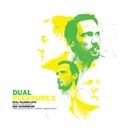 It would have been amazing for me to see that group play live and actually experience what it was and then, you know I could listen to those records and translate those experiences to the albums and maybe have a shorthand to the actual experience, you know what I mean?
AAJ: Oh yeah you're not alone, I missed out on live Coltrane too.
KV: Yeah, [laughs] a lot of us did. class="f-right"> Return to Index...
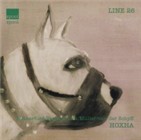
AAJ-e: How did Hoxha come about and does this project have a future? Why was the band named after Enver Hoxha?
KV-e: The band was put together by the bassist in the group, Torsten Mueller. I really hope that we can do more work together; the opportunity to work more with that quartet would be fantastic. Dylan van der Schyff was in touch about some possible work in Europe next spring, so we'll see. Torsten named the group so you would need to ask him for the full reason behind the ensemble's name.
AAJ: I caught Hoxha's Seattle show last year and one of the things that struck me was Paul Rutherford's extended technique, he had me sitting there with my jaw open. But this was less evident in the recording of the following night in Portland. In fact, it seems like the band was maybe going in a different direction than the night before. Could this have something to do with the recording's technical limitations?
 KV: Well, I think with that group, since all the music was improvised, the performances from night to night change pretty radically. The gig that you saw was quite a bit different in nature than the one that got released. And that's the thing with the recordings, even when you're working with material, composed material, pre-composed material—however you want to call it—the music changes a lot from performance to performance and I believe it should, otherwise the people involved aren't really trying to improvise. So there are people taking risks, musical chances and whatnot, if they're really pushing themselves. For example, if you listen to the music of the Mingus group with Eric Dolphy—the live recordings—yeah they're playing basically the same collection of tunes, but the way they re-investigate from night to night makes everything sound, not just fresh but it's like a new look on a similar set of material. When you're working with a group that's improvising from the ground up where everything is essentially spontaneous decision-making and all the structures are organized on the fly, to me the groups are going to sound quite a bit different from night to night if they're looking for different ways to play.
In that particular group I think we had maybe four concerts, maybe five concerts on that, on that trip on the West Coast in Canada and the U.S., and that was the first time the band had ever played. I mean, I'd never played with Paul Rutherford before, I'd never played with Dylan van der Schyff before, I'd played with Torsten a couple times many years earlier, so for me it was really walking into a brand new situation each night. Part of that meant, well what can the group be about? What can we do, what do we play, how do we change? So I don't find it very surprising that the music was so different from night to night. And for me personally, that's kind of the goal actually, whether I'm playing compositions or improvising completely.
I can understand on the one hand if you've seen the group and then hear the recordings and say, "hey, wow, there's a real difference here," and maybe for your own interests in the music, you found the performance that you saw to be more to your liking, I'm certainly not going to argue with that [laughs], but I think that a couple of things happen; one thing that's going on is that by seeing the group live and not to harp on this too much but, you're also seeing the interaction live. You're seeing, you're hearing not things through a recording, but the way they sounded acoustically in that room. The way the sound would travel around in that room, the way we looked, the physical actions connected to the sonic actions, and all these things—that's why I love live music. That's why I like to play and perform so much and do so many concerts because all that stuff is so fresh. The freedom to look for something new each night is the reason why I play the music I do. So that's one thing, I think that the live experience has such a big impact on the way the music is received. And then also, the nature of the recording that's been released. I'm sure the most interesting thing to me would have been if you could have seen both concerts. And the response and the perception of the music by seeing both of the concerts, I'd be very curious to see what your perspective on it was then, because some of the power I think you're suggesting on the concert you saw was connected to the live aspect of it. That's why I wish there were more chances for all these groups to play more than one show in a town.
AAJ: Some of the subtleties, the nuances that went on that night, I suspect they just wouldn't translate to recordings. You only have so many decibels to work with and you're bound to lose some of the details that you'd hear in person.
 KV: I agree. I've spent a long time listening to the music I'm working with, playing it, seeing it live, listening to it on albums, and it's taken me years to try to appreciate the way the music gets organized by members—you know, the people who play completely free music, and start off understanding the music of Evan Parker or Derek Bailey. It took a long time to get to it to where I could hear it as I hear it now with a sense of understanding. I think that with completely improvised music, the signposts, the reference points for people who are maybe more familiar with the mainstream of jazz, the things that they're going to connect to are not self-evident off recordings. In a live situation however, a lot of the relationships that they would see in a more conventional, let's say jazz performance, are there too. They can see the, the visual communication, the cause and effect, the transfer of information in a way that's very difficult to assemble from only hearing a recording. And I know for a fact that the music that's been in an unconventional and pushing boundary lines was...it was always easier for me to get to the experience when I could see it live. It was much quicker for me to receive the information and make the conceptual shifts in my thinking necessary to get to the music, and then I can go back and listen to the recordings and get a lot more out of them. And that's after spending a lifetime listening to this kind of music, you know.
So I think that the subtleties you're talking about in terms of a live performance, there's a lot to that and I think with music that people are unfamiliar with, the more times they can see the thing live, the better off they're going to be—to realize how essential the basic characteristics of music are to music that's freely improvised or music that's organized by compositional techniques that are set up before the performance. class="f-right"> Return to Index...
AAJ-e: While spiritual searching fueled John Coltrane's Meditations, Peter Brötzmann's Machine Gun drew inspiration from the horrors of war. Yet there's something of a similarity in each other's sound and approach. How can such disparate means produce somewhat similar ends?
KV-e: The broadness of this question encompasses the fundamental workings of art. The things that inspired Coltrane have meaning, but I think that their impact can only be understood to a certain point. I believe his act as any artist was to translate experience and idea into sonic expression that has had meaning cross-culturally. The same holds true for Brötzmann. Meditations is much more than what inspired it, so is Machine Gun. Parallels in expressive tools make more sense when the cause isn't compartmentalized to simple effect.
AAJ-e: Would it be fair to say that despite some similarities, a key difference between the two recordings has to do with extra-musical context? Requiring an understanding of Coltrane's and Brötzmann's inspiration and methodology apart from the works themselves? On the other hand, since sources of inspiration and influence are so many, can there be such a thing as "extra-musical?"
KV-e: I'd say the key differences are aesthetic. If you analyze Meditations and Machine Gun from their structural standpoints, it's clear how different they are musically, even if there are some superficial similarities regarding the use of split tones on the sax, intense percussion, etc. For me, the extra-musical elements may be of interest, and may have had immense impact on the thinking of the musician who created the material, but the most important thing is how it sounds and how it works. There are many, many examples of lousy art that's been inspired by sincere interest in important events, just as there are examples of incredible art that's nothing more than a creative act.
AAJ-e: During Albert Ayler and Archie Shepp's rise to notice (if not fame), it was said that free improvisation took its impetus from anger and was protest against inequality and injustice. Is there a danger that the more abrasive elements in today's free improvisation might be seen only as an "angry" music separated from its primary relevance?
KV-e: To clarify, Ayler and Shepp's music was not free improvisation, it contained pre-composed themes and elements that they and the members of the groups used to build their improvised music. The association that some people made with this music being "angry," seems pretty simplistic to me. There was a lot more going on, from an artistic standpoint, a cultural standpoint, and a political standpoint. Equating dissonance and volume with anger is two-dimensional, and ignores all of the conventional beauty also portrayed by their musical expression. In some ways our society has changed in the last four decades and in cases of equality certainly not nearly enough. The faults in interpreting Ayler and Shepp's music superficially forty years ago apply to the understanding of today's music too. class="f-right"> Return to Index...
Appreciating Dissonance and Chaos
AAJ: With free music, music that plays with dissonance and chaos, there's an appeal to it. It's not just noise, it has purpose, but I have trouble expressing what the appeal is—especially to my wife.
KV: This is somewhat related to some of the stuff we got into in the email discussions. It depends on what people are looking for in terms of a musical experience. If you're looking for a musical experience to kind of confirm what you think you know, then what you want to hear is going to be a lot different than somebody who wants to have their expectations surprised. I think most people to be honest...my impression based on what is considered to be top 40 radio...aren't really interested in creative music. And you know, I think there's creative pop music too, it's not an elitist stance at all. There's great music in every kind of form and genre, it's just a matter of trying to figure out how to try and listen to it. Based on what is considered to be popular music today, I would say they're not really going to be interested in hearing something that's different than the status quo.

Free Music Ensemble
Free improvised music or whatever we want to term it, isn't going to be received by lots of people...it's not selling tens of thousands of records or whatever, it doesn't surprise me at all. It doesn't mean that that music isn't filled with incredible beauty and amazing melodic ideas, that it isn't filled with things that anybody who is curious about music couldn't find exciting. I just think a large part of it is preconceptions about what challenging music is or isn't. If you mention the idea of creative music, or improvised music, or jazz or free improvisation to anybody who had any kind of interest in music in a broad sense, most of them will immediately say, "Well, I don't care about that," and I think that's because of preconceptions.
In my personal experience I've found that all kinds of people have been really, really interested and excited by the music I play if they're able to see it in a live context. Again it comes down to the live experience, and I've had this happen so many times in so many different countries that it's not a fluke that music like I was working with Dylan, Torsten and Paul Rutherford made sense to the people we played it to. It's music, I mean from my standpoint the music I play is meant for people, it's not meant for an esoteric art experience that isn't for everybody. The issue is to defeat preconceptions and try to convince people that they should take a chance to hear something they haven't heard before. And for some people, you're right. They're not interested in something that sounds like an unconventional melody, they don't want to hear something that doesn't have, you know, a standard 4/4 backbeat to it. They don't want to hear something that isn't played only by electric guitars and electric bass or whatever and has like a pop singer in front, you know?
But there are a lot of people I think, who are really interested and curious about music that also have preconceptions about the kind of music I play, and the people that I work with. And I think many of those people, if they have a musical curiosity, I think they would really respond and be excited by the kinds of things we're working on. That's why some of the more, some of the real creative, let's say rock musicians, have an interest in the music we're doing. You know people like the Dutch group The Ex worked with a lot of the Dutch improvisers. People like Han Bennink and Ab Baars and whatnot, because they were openly curious people from a musical standpoint and they work with an aesthetic that's in some ways quite unlike what the ICP Orchestra does, but they saw a creative connection between these things and that, to me, is the thing that's interesting; that there isn't just a set of boundary lines between the music I play and every other kind of music that's out there. I think that there are a lot of constructs that set up boundary lines and categories, and preconceptions, and that's to keep things, for lack of a better word, in sort of a status quo position now. Things are a lot more fluid than that and I think more people, more listeners would realize it if they were able to experience the music live. In a lot of cases they can't.
 I tour a lot but very rarely do I get to the West Coast of my own country 'cause of the issue of distance and cost, just the cost of getting there. When I tour it's normally in the Midwest, South, Northeast and in the eastern part of Canada because I can get there by car with a band. And that means, you know, more than two-thirds of the states are places that I don't play. You can't, obviously, blame the listener for not being able to see the music live if they can't [chuckles] get to it. class="f-right"> Return to Index...
< Previous
Van Gogh by Numbers
Comments

About Ken Vandermark
Instrument: Saxophone
Related Articles | Concerts | Albums | Photos | Similar ToTags
For the Love of Jazz
 All About Jazz has been a pillar of jazz since 1995, championing it as an art form and, more importantly, supporting the musicians who create it. Our enduring commitment has made "AAJ" one of the most culturally important websites of its kind, read by hundreds of thousands of fans, musicians and industry figures every month.
You Can Help
To expand our coverage even further and develop new means to foster jazz discovery and connectivity we need your help. You can become a sustaining member for a modest $20 and in return, we'll immediately hide those pesky ads plus provide access to future articles for a full year. This winning combination will vastly improve your AAJ experience and allow us to vigorously build on the pioneering work we first started in 1995. So enjoy an ad-free AAJ experience and help us remain a positive beacon for jazz by making a donation today.

Giveaway

Days remaining: 11