Home » Jazz Articles » Interview » Jamie Saft: Experience Transcending the Speakers
Jamie Saft: Experience Transcending the Speakers

 Quite often the busiest ones are the ones behind the scenes. Musician, producer and sound engineer Jamie Saft is one of those figures on the Downtown New York music scene. He operates his own Frank Booth studio in Brooklyn, where many of the Tzadik label releases are recorded; he plays and records with such prominent leaders as John Zorn's Electric Masada, Bobby Previte's new band Coalition of the Willing, Dave Douglas' Keystone ensemble and Jane Ira Bloom's quartet.
 Saft has played in the past with such diverse acts as composer John Adams' opera I Was Looking at the Ceiling and Then I Saw the Sky, Laurie Anderson, Elysian Fields, Anthony and the Johnsons and Groove Collective. On all these projects and many others he presents a stylistic versatility that blends elements of reggae, dub, metal, blues and surf rock with more sophisticated forms of jazz. His multi-instrumentalist capabilities are intertwined with his affinity for vintage instruments such as the Fender Rhodes, mellotron, MiniMoog and other analog synthesizers.
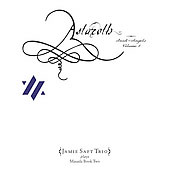
Last year Saft recorded the first installment of John Zorn's second Masada songbook, Astaroth, Book of Angels Volume 1: Jamie Saft Trio Plays Masada Book Two. This was Saft's first release as a leader in three years and his first as leader of a piano trio, but Saft promises more interesting releases including a second one by his piano trio, this time covering Bob Dylan songs, and the debut of his new band, The Jamie Saft Blues Explosion.
Based on an email interview, Saft speaks here in his own laconic way about his background, his ongoing work with musical partners Zorn and Previte, his distinctive sound as a player and about future plans.
The Beginning
 I was born in Flushing, Queens, NY, 1971. I studied piano from age three and studied classical piano extensively with technical guru Burton Hatheway from age seven. I grew up listening to Stevie Wonder, Bob Marley, ZZ Top, AC/DC, Bob Dylan, Prince, James Brown, Pink Floyd, Sly. I began playing professionally during high school with regular gigs at jazz clubs with small ensembles, big bands, and many solo piano gigs. I also played with rock and funk bands. I went to the same high school as Charles Ives in New Haven, Connecticut. I completed a double degree program at New England Conservatory and Tufts University. I studied with Joe Maneri, Cecil McBee, Paul Bley and Geri Allen, and then moved back to New York in 1993.
Playing John Zorn's Masada Song Book II
Book II is a clear extension of John's first book. Hundreds of tunes which are transformed by the composer/performer on the spot into various forms. As with the first book, John writes music for musicians, not just for the composer. So the pieces have many different forms that could come out of these gestures. Each piece only takes up half of a page, but there is so much music in three lines.
Our piano trio record came out of years of discussion between Zorn and I. Zorn had wanted an acoustic piano trio record from me for a long time, but my interests have been more in electric music for many years, so we needed to find a context in which a "Jazz Piano Trio record had meaning for me.
Then John wrote the new book of Masada tunes and suddenly there was a huge new body of work, some of which Zorn had written with my piano trio in mind. John's music has a great deal of resonance personally, spiritually, and musically for me. Zorn and I were born a few blocks from each other in what was a very Jewish neighborhood in Queens and we have that heavy New York Jewish connection. So with the new book, there was the context for a piano trio record that really meant something to me. Not just another retread of old standards or trite covers of modern rock tunes, neither of which I want anything to do with. But modern original Jewish music written by one of the heavies.
Working with John Zorn
It's been an honor to be a part of the Zorn/Tzadik scene. I met John through Harvey Pekar and Dave Douglas, both of whom got Zorn a record Cuong Vu and I had made called Ragged Jack which John put out on Avant in 1997. After that he started calling me for studio sessions as a pianist and keyboard player. I played on records like Taboo and Exile (Tzadik, 1999), The Gift (Tzadik, 2001), many, many film scores, and many other releases.
 Playing in Electric Masada is a blast. That is a true super band—the level of musicianship is off the charts. Everybody is kicking everybody's ass all over the place. It's intense.
And being part of the Radical Jewish Culture (RJC) series in so many different ways, as a composer, artist, musician, engineer, producer—I believe will stand as some of my most important work. The RJC series is chronicling modern Jewish music in our time. In hundreds of years, the RJC series will stand as the greatest document of great Jewish music from our generation.
My two solo records for the RJC series, Sovlanut (Tzadik, 2000) and Breadcrumb Sins (Tzadik, 2002), are the purest expressions of my connection to Judaism and Jewish Music that I could articulate. They are made of my experience as a Jew in the modern world—raised as much on dub reggae and metal as on Torah and Jewish Music—these musics are all one to me.
New York is the place where all these cultures smash up against each other. I've tried to reflect that experience in those records. I have no interest in retreading on old Jewish Music or Klezmer. Leave that to the scholars and my 78s. The records on the Radical Jewish Culture series, at their best, truly reflect a new Jewish Music.
Stylistic Versatility
I've always tried to play as many different instruments as I could. Drums, bass, guitar... I even played French horn as a youth... So all styles and types of music were relevant for me. Good music is good music, period. It is neither a conscious choice nor a necessity. It is the reality of music. Dividing music by genres only trivializes the music. Great art speaks for itself and doesn't need these divisions.
Vintage Instruments
For me these instruments have never gone out of style. I got my first synth for my Bar Mitzvah and was interested in electric music from a very early age, so the sound of the Fender Rhodes, mellotron, clavinet,Hhammond, Moog...those were the sounds I was raised on.
 Since I fed on rock/produced music, not the purer folk styles of my parents, to me music always had loud guitars, squealing synths, weazing mellotrons, bashing drums. So that is my point of reference for all my music. Whether as a composer, engineer, or producer. I embrace all sorts of studio sounds—capturing natural sounding field recordings should be for purely acoustic music, be it jazz, folk, or music of the world. I'm interested in creating something the listener can experience that transcends the speakers.
Think Pink Floyd.
Working with Bobby Previte
Bobby Previte hired me for some of my first tours as a sideman when I first moved to New York. We've been through the trenches and back, and after so many years of playing together we are still changing and developing. I played on a number of his records including Latin For Travelers' Dangerous Rip (Enja, 1998), Weather Clear, Track Fast's Too Close to the Pole (Enja, 1996) and his Miro record, The 23 Constellations of Joan Miro (Tzadik, 2002). As a sideman I've been learning from Bobby since day one. Bobby Previte truly loves to make music, whatever it is.
We just finished his newest record Coalition of the Willing (Ropeadope, 2005), which I co-produced and engineered for him. It's the culmination of years of playing Bobby's large book of tunes and Bobby's desire to do studio versions of these tunes. The album is very seriously ass-kicking and features the virtuoso guitar styling of Charlie Hunter as well as other great musicians.
Bobby is also playing in my new project called The Jamie Saft Blues Explosion. We've been playing around town working out a bunch of new music of mine that is steeped in Texas Blues meets Black Sabbath. I switch between organ and guitar and Jonathan Maron of the Groove Collective is playing bass with us. Look for a new release from this project by the summer as well as a fall tour in Europe and more U.S. dates.
Bobby and I also have a new Doom project called the Beta Popes with notable lunatic and metal maniac Skerik on vocals. Beta Popes has a live release in the can coming out soon and a studio record almost done too.
More Future Plans
 I've recently completed a Doom Dub record I did with Merzbow, coming out in the next few months on Caminante. I've also been doing a bunch of film scores and TV score work, including original scores for Murderball, an award winning film about the quadriplegic Olympic rugby team, and God Grew Tired Of Us, a documentary about the lost boys of the Sudan, currently showing at Sundance. I have a number of other film scores coming out soon too.
And I'm also working on a record for Tzadik called The Jamie Saft Trio Plays Bob Dylan, which will have a number of special guest vocalists on it. This is a very important record for me; just as with Zorn's Masada Book II music, I have a deep connection to Dylan's music. I'm very excited about doing this. It's been in my mind for many years.
Selected Discography
Jamie Saft, Music from the film Murderball (Commotion, 2005)
Jamie Saft Trio, Astaroth, Book of Angels Volume 1: Jamie Saft Trio plays Masada Book Two (Tzadik, 2005)
Electric Masada, At The Mountains Of Madness (Tzadik, 2005)
Dave Douglas, Keystone (Greenleaf Music, 2005)
Jane Ira Bloom, Like Silver, Like Song (ArtistShare, 2005)
John Zorn, Filmworks XVI: Workingman's Death (Tzadik, 2005)
Cyro Baptista, Love the Donkey (Tzadik, 2005)
Electric Masada, 50th Birthday Celebration, Volume Four (Tzadik, 2004)
Wadada Leo Smith, Lake Biwa (Tzadik, 2004)
Dave Douglas, Freak In (RCA/ Bluebird, 2003)
J.A. Granelli & Mr. Lucky, Gigantic (Loveslave, 2003)
Jamie Saft, Breadcumber Sins (Tzadik, 2002)
Jamie Saft/Jerry Granelli, The Only Juan (Loveslave, 2002)
John Zorn, IAO (Tzadik, 2002)
John Zorn, Cobra (Tzadik, 2002)
John Zorn, Filmworks XII: Three Documentaries (Tzadik, 2002)
John Zorn, Filmworks XI: Under the Wing (Tzadik, 2002)
Frank London, Scientist at Work (Tzadik, 2002)
Bobby Previte, The 23 Constellations of Joan Miro (Tzadik, 2002)
Cyro Baptista, Beat the Donkey (Tzadik, 2002)
John Zorn, The Gift (Tzadik, 2001)
John Zorn, Filmworks X: In The Mirror of Maya Deren (Tzadik, 2001)
J.A. Granelli & Mr. Lucky, El Oh El Ay (Loveslave, 2001)
Oren Bloedow and Jennifer Charles, La Mar Enfortuna (Tzadik, 2001)
Vivian Sisters, Vivian Sisters (Avant, 2001)
EZ Pour Spout, Don't Shave the Feeling (Loveslave, 2001)
David Gould, Adonai in Dub (Tzadik, 2001)
Jamie Saft, Sovlanut (Tzadik, 2000)
John Zorn, Filmworks IX: Trembling Before G-D (Tzadik, 2000)
Chris Speed Trio, Iffy (Knitting Factory, 2000)
Cuong Vu, Bound (OmniTone, 2000)
Elysian Fields, Queen of the Meadows (Jetset, 2000)
John Zorn, Taboo and Exile (Tzadik, 1999)
Peter Epstein, Staring at the Sun (MA Recordings, 1999)
Peter Epstein, The Invisible (MA Recordings, 1999)
Jerry Granelli & Badlands, Crowd Theory (Songlines, 1999)
Jerry Granelli & Badlands, Enter, A Dragon (Songlines, 1998)
Bobby Previte's Latin for Travellers, Dangerous Rip (Enja, 1998)
Jamie Saft/Cuong Vu, Ragged Jack (Avant, 1997)
Bobby Previte's Latin for Travellers, My Man in Sydney (Enja, 1997)
Bobby Previte's Weather Clear, Track Fast, Too Close to the Pole (Enja, 1996)
Holly Palmer, Holly Palmer (Warner Brothers, 1996)
Photo Credit
Peter Gannushkin
About Jamie Saft

Tags
PREVIOUS / NEXT

Become a Sustaining Member

Since 1995, All About Jazz has championed jazz as an art form and supported the musicians who create it. Over three decades, it has grown into one of the world's leading jazz resources, serving hundreds of thousands of readers, musicians, presenters and industry professionals each month.
Help Build the Future of All About Jazz
Your support helps us continue building All About Jazz for the next generation—expanding our editorial coverage, preserving jazz history, developing new community features and creating better ways to discover the music and the people behind it.
Become a sustaining member for as little as $20 per year and you'll immediately enjoy an ad-free experience along with access to subscriber features and future articles for a full year.
Together, we're not simply sustaining All About Jazz—we're building its future. Thank you for being part of the journey.