Home » Jazz Articles » Profile » In Memoriam: Derek Bailey
In Memoriam: Derek Bailey

I don't think it's done any good for free improvisation, generally speaking, to be coupled with jazz.
—Derek Bailey
 Arguably one of the most significant developments in music in the 20th Century was the breaking down of the idea of musicianship; expressiveness surpassed finesse as the reason for playing an instrument. And, arguably again, it was Derek Bailey who was a primary instigator of this evening of playing fields.
 Which in a sense is to damn the British guitar phenom—who died on Christmas Day, 2005—with high praise. Bailey was a remarkable talent, a dexterous player who could maintain several linear threads of pure abstraction at a time and knit them into a coherent, deeply personal statement. But he did so in a language that seemed inclusive, even inviting, as if to say, "Come along, pour your soul out on the strings like me, you can do it. Of course, you couldn't, not really, but that's a different story. For what Bailey peddled during a career that spanned six decades was not technique—not the ability to play Villa-Lobos or to compose great somethings—but to be so completely in the moment, to pull notes from his heart and from the ether and to make the listener intimately there, with him.
And this was the revolution of the 20th Century, the one that Derek Bailey didn't start and likely didn't mean to perpetuate but nevertheless epitomized. Thelonious Monk: "That's The Way I Feel Now. John Lennon: "Be Here Now. You gotta see it to believe it, you had to be there, wish you were here. The charisma of Sinatra, Elvis Presley's bump and grind - concerts weren't cell-phone photo-ops, they were shared experiences. And the experience wasn't a recreation of Shakespeare or Sibelius, it was the hip, the new, the now, the excitement of what had never been done before. Punk mattered because the time span between being in the audience and being on stage was about two months, the walls were gone. Bailey inspired a similar feeling of freedom of expression. You couldn't do it like him, not really, but that wasn't the point.
The genre of music that most embraces that freedom in many peoples' eyes is jazz—a form Bailey started in and, even while playing at various times with the likes of Steve Lacy, Paul Motian, Tony Williams and Pat Matheny, spent much of his career trying to disassociate himself from. With his typical, understated grace, Bailey authored a book in 1980 called simply Improvisation, for which he interviewed classical, rock, raga and other musicians about the role of improvising in their music. The point—never overtly stated—was that improvising doesn't make one a jazz musician, and that the music Bailey played was not jazz.
 "I don't think it's done any good for free improvisation, generally speaking, to be coupled with jazz, Bailey told Nick Cain in 2000, in an interview published in Cain's online magazine Opprobrium. "But my view of jazz is that it died about 1956. It staggered on in some quite interesting ways into the early '60s, and then it was resurrected in a rather ghoulish manner in the 1980s. But this is also a personal thing. It was partly to do with my own dissatisfaction with it and my decision, around the age of 23, that I was never going to be Charlie Christian. Before that, I'd probably entertained delusions about being a great jazz player. I decided at that time that if that's what I wanted I should have started in a different place, at a different time, and maybe in a different race.
 The time and place Bailey started was Sheffield, Yorkshire, on January 29, 1930. His uncle played guitar and—along with those Charlie Christian records—was an early influence to his picking up the guitar. By 1950, he was working jazz club circuits in England, moving from town to town for extended pub gigs. His talent as a guitarist led to bigger gigs and eventually to meeting drummer Tony Oxley and bassist Gavin Bryars. In 1963, they formed the Joseph Holbrooke Trio, named by Bryars for an obscure British composer known as the "cockney Wagner who died in 1958. Though they earned little notice, they began exploring non-idiomatic improvisation together.
"We were aiming for the opposite of driving because everything was like that— this was the Oscar Peterson time—it was all about getting it on, as Tony used to say, Bailey told his biographer Ben Watson in 1997. "That's one thing we had in common. An impatience with the gruesomely predictable. Another thing we were interested in [...] was that we liked silences.
If not the very foundation, the Holbrooke trio was clearly one of the bases for the free improvisation movement that began to gain a commercial foothold in the 1970s. But Bailey wasn't one to take credit for starting a movement. Prior to Holbrooke, he had the occasional encounter with open improvisation, and speaking to Watson remembered an earlier experience, in Glasgow circa 1953: "Three guitars, Laurie [Steel], me and another guy individually retuned our guitars and ... played. The results? Can't remember. We didn't try it again. But that kind of exploratory episode, while uncommon, happened now and then, and my guess is that it has always happened. Nobody invented Free Improvisation.
During the explosion of music, jazz, rock and beyond, in the late '60s and early '70s—when corporate record labels had no idea what was going on and what might sell - a surprising breadth of records were being released. At that time, Bailey participated in a few major label sessions—notably Oxley's The Baptised Traveller (CBS, 1969) and 4 Compositions for Sextet (CBS, 1970). The new movement was getting noticed. Drummer John Stevens' Spontaneous Music Ensemble (with Bailey, saxophonist Evan Parker and bassist Dave Holland) recorded for Island in 1968 and Marmalade in 1969. In 1970, the fledgling German label ECM released a record by the Music Improvisation Company, with Bailey, Parker, Hugh Davies (electronics), Jamie Muir (percussion) and Christine Jeffrey (vocals). But that same year, CBS dropped Oxley's third record, and he approached Bailey to start a label. They secured financial backing and invited Parker to be a third partner. In a split that created a rift in the British improv scene and has been the source of rumors and speculation ever since, Oxley and Parker left the label within a few years. Bailey kept the business running for the rest of his life, and while he was featured on many of the releases - more than 50 in all—Incus is more than a vanity label. With his wife Karen Brookman, Bailey built one of the most important labels documenting free music in Britain.

But more than his place in history as an innovator and label head, what was of course important about Derek Bailey was his playing. He was a remarkable solo performer, challenging the listener the way that few—perhaps only Cecil Taylor and Roscoe Mitchell—can, with overlaid systems of logic and trains of thought that are harder to understand the more one tries. His playing can't be analyzed, only absorbed. And yet, Bailey didn't like giving solo concerts. From Cain's interview:
"To me, the way I play is the musical equipment I bring to the event. The way I play is what I'm going to work with. But the music, for me, is brought by the other people. There isn't any point in playing with somebody unless they're going to bring music. I'm sometimes accused of ignoring people I play with, which has always struck me as strange, because I find other people very necessary. I don't, for instance, like playing solo, and I'm not that interested in playing solo - doing it or listening to it, or anything. Although most of the gigs I get are solo. I kind of feel that what I do is not complete unless I'm playing with somebody else. They do more than complete it, they provide the basis for whatever we're doing. It starts with the other people.
While it would be a mistake to think Bailey ignored the people he played with, it's an understandable one to make. Bailey didn't set out to compliment his fellow players, not in the usual sense. He circled them, questioned them and sometimes stabbed at them, and made the listener hear them in a very different light. In his Derek Bailey and the Story of Free Improvisation from 2004 (which, despite its Marxist polemics is crucial reading), Watson wrote, "Like a truly interesting conversationalist, Bailey's guitar-playing does not flatter the musicians he plays with, or attempt to make them sound good in a facile way: he attempts to understand what they are playing by contradicting them. ... The source of his 'spikiness' is this interest in repartee; his negations are productive because they are grounded in musical comprehension of his interlocutors' logic.
Bailey continued to perform and record solo, however, up until motor neuron disease robbed him of the ability to play. His final release, Carpal Tunnel—issued by Tzadik just five months before his death—featured him not just unaccompanied but boldly exploring his debilitating illness. The first 10-minute track features Bailey speaking about losing muscular control in his hands as he plays (Bailey was fond of speaking and playing at the same time, and released a number of what he called "chats over the years). The five tracks that follow were recorded at three-week intervals, the suggestion being to document his deteriorating ability. Close listening does reveal a loss of finesse in the playing, but that's easily overshadowed by the emotive quality of the playing. As ever, Bailey's playing is arresting. It's not so simple as to be melancholy or celebratory. It resonates at a much deeper level, transcending lyricism and suspended in time.
In 1976, the magazine Musics asked 30 musicians to respond to the question "What happens to time-awareness during improvisation? While some answers stretched to more than a page of text, Bailey responded simply "The ticks turn into tocks and the tocks turn into ticks. Like his playing, Bailey lives on, existing outside of time.
Photo Credit
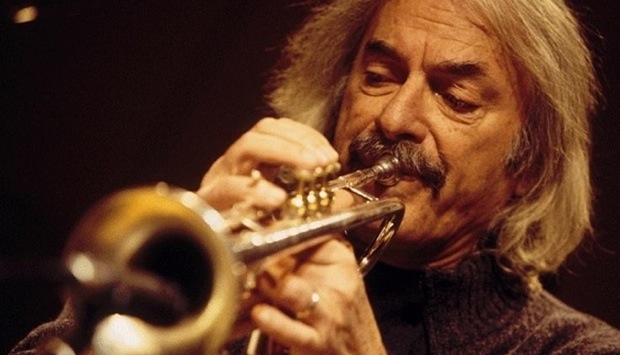
With Steve Beresford, Uithorn, Holland; 1977 by Gérard Rouy
Tags
PREVIOUS / NEXT

Become a Sustaining Member

Since 1995, All About Jazz has championed jazz as an art form and supported the musicians who create it. Over three decades, it has grown into one of the world's leading jazz resources, serving hundreds of thousands of readers, musicians, presenters and industry professionals each month.
Help Build the Future of All About Jazz
Your support helps us continue building All About Jazz for the next generation—expanding our editorial coverage, preserving jazz history, developing new community features and creating better ways to discover the music and the people behind it.
Become a sustaining member for as little as $20 per year and you'll immediately enjoy an ad-free experience along with access to subscriber features and future articles for a full year.
Together, we're not simply sustaining All About Jazz—we're building its future. Thank you for being part of the journey.