Home » Jazz Articles » Interview » Susmit Sen: From the Ruins
Susmit Sen: From the Ruins
Keeping up to the expectations of our audience does not come into play..we
 To give credit to Susmit Sen for the amalgamation of Indian Classical music with Western rock and jazz would be a serious understatement as the sound that emanates from the only folk-rock band in India is beyond categorization. Founder of the four-piece band Indian Ocean, and one of the leading jazz acoustic guitar players in India, Susmit Sen has come a long way from being just another name on the circuit to becoming a highly respected avant-garde musician of our times. Indian Ocean have released five highly commended albums to date, and the musical maturity gained in the last 15 years of music-making and touring has given way to soaring underground critical acclaim around the world.
 Sen is essentially self-taught, and has evolved a unique guitar style based more on scales than on chords. There have been musicians and music lovers trying to comprehend the style of his guitar playing and the sound of the band as a whole, where the purity of scales reign much like the style which forms the basis of Indian classical music. There's seldom a scale change, if ever, to alter the mood in a composition, perfectly wrapped by bass guitar and drums. The scales are oriented on the Indian style, where there's much more freedom of expression through varied note selections yet a disciplinary restriction of never leaving the realm of those notes.
 The combination of various notes in all their permutations has been passed down the hierarchy of Indian classical teaching through ages, each one having a significant name. There's an underlying philosophy that these combinations of notes or scales (Raag) have in evoking a particular mood. But, having said that, Indian Ocean is not an Indian classical band as their progressions are more rhythmic, and based on a western jazz/rock sound. There's much more to the style of Sen's playing and here he talks in-depth about what makes the unique sound of his guitar.
All About Jazz: To start with, how did you start playing the guitar?
Susmit Sen: My father bought a guitar for my elder brother from Mumbai when I was in late school. Being highly impressed by some of my brother's friends and my brother—who could attract a lot of attention by singing some popular songs of the Beatles, Bob Dylan and others—I let myself fall into guitar playing on my own. One day, as my father tells me, he found me playing "Jumping Jack Flash, originally played by the Rolling Stones, but I had heard it, at that time, played by Anand Shanker.
AAJ: Did it take a while to feel as if you had a voice on the acoustic?
SS: I still look for a voice on my guitar in each composition I compose and play. As I am a completely self taught musician my technique always falls short of my expectations /expressions. I actually press myself to practice and find new ways of improvising and expressing my feelings to give new compositions a fresh texture, to not be repetitive in my playing. I do improvise on stage as people think, but much of that improvisation takes place during the time I compose and complete the composition to give it an absolute feel.
This does not hold true for songs like "Melancholic Ecstasy and "From the Ruins, both on Desert Rain (Kosmic Music, 1997), others which are not recorded yet. I just woke up one day and played complete composition, later recording them with few minor changes here and there. It would not be true to say that I did not recognize a voice in my playing of the acoustic guitar at a very early stage of my playing when I picked up some technique. At this point, I am very happy with the mould (scale based) form of music, as that is my base, my origin, and my expression and there is a lot more to explore.
 AAJ: Did you always play acoustic guitar? How is playing acoustic guitar different from electric? Do you ever get a drive to change to electric guitar?
SS: I have always been an acoustic guitarist. I have played electric guitar on only one song —"After the War from Jhini (Kosmic Music, 2003)—with good amount of distortion. I think there is expressional variation in the attitude while playing the electric guitar. By and large, electric guitar players are more aggressive in their expressions due to the sheer sound of it. Technically one gets more sustain on an electric guitar and the action is smoother. To get a nice tone on the acoustic one has to have slightly higher action. I personally like the natural rounder tone of the acoustic guitar.
AAJ: How do you go about writing songs? Do you work on the lyrics first or the music? How do you deal with song variations?
SS: It is complex to say how our compositions come about. Initially all the compositions were mine and the band used to work out their different parts—each one giving there own ideas to beautify the compositions. Over the years, everybody started coming up with ideas for new compositions. When all the members like an idea then we work on the composition together. We don't finalize the composition till the time all of us are satisfied with it. Then we put it to the test in our live shows before we go in for the final recording.
Lyrics come into our songs in various ways. When we choose to use traditional lyrics either the original tune fits our composition or we weave a composition around it and give it our own expression. Mostly the tune is completed with the instrumentation and then our friend Sanjeev Sharma, who is a lyricist, writes the words to fit the time scale. Only three songs were composed around the lyrics—"Jhini, "Bhor and "Des Mera, all from Jhini.
 We don't have to deal with song variations, as we get tired of repeating tunes in a verse-chorus pattern and feel the need for change to express them more completely from a musical point of view.
AAJ: Do you use standard tuning for your guitar or is there some other tuning that you use most?
SS: I tune my guitar in an orthodox way, a whole note lower. So EADGBE become DGCFAD. This happened because I lost two of my early guitars as they got warped due to the extreme conditions of Delhi. This in turn might have added to the sound of my playing. It is also easier on the fingers.
AAJ: Tell us something about the scales that you use, songs where particular scales are used. How do you really approach creating a melody?
 SS: As my major influence has been Indian classical, my earliest compositions used the same scale throughout the song. As a result my initial songs sound similar to some ragas of Indian classical. Such as the song "Melancholic Ecstasy from Desert Rain, where I use a flattened seventh and has similarities to the raga "Bhageshwari and "From the Ruins, also from Desert Rain, where a flattened second and sixth in a major scale is used, similar to raga "Bhairon.
Over the years I have started jumping into completely different scales for my solos than the rest of the compositions. Such as the song "Nam Myo Ho, from Jhini, which starts with a simple major scale and changes to a scale, which has flattened second, no fourth and a flattened fifth, giving the composition a sudden melancholic twist which I thought was apt to express the feeling of the song.
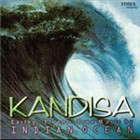
Then came compositions where the piece itself changed into different scales and rhythm patterns. Like the song "Kya Maloom from Kandisa (Times Music, 1999), which changes from simple major scales and a 7/7 rhythm to 4/4 and a scale similar to the raga "Todi.
Then there are songs where the scale changes a number of times along with the root note as well, without sounding harsh like on "Kaun, from Kandisa, and "Bharm Bhapke, from Black Friday (Times Music, 2004).
AAJ: That sounds fascinating. Tell us about any new techniques you plan to use in your future writing.
 SS: I don't like to call them techniques, just ways to approach a song. Right now I am working on a song that will probably use all twelve notes in an octave.
AAJ: Do you feel pressure to meet the expectations of your audiences with every new release and how do you come up with something that doesn't sound the same as before?
SS: Keeping up to the expectations of our audience does not come into play, as we do not keep the market in mind when we compose. Also we've found that if all of us like the composition then the audience likes it as well. When there are four highly critical band members working together then quality control happens automatically.
AAJ: Where do your song ideas come from?
SS: With four band members having vast amount of personal experiences and influences, it is practically impossible to pinpoint where the ideas for the songs come from. A whole lot of ideas get shot down even if one member of the band does not agree for whatever reasons.
AAJ: Let's talk about the recording process. Do you record with mics only, or you use a pickup sometimes?
SS: For our first albums I used toy pickups not even worth mentioning. As a matter of fact, on Desert Rain there is a constant slight buzz that can be heard on the guitar. Later I started using piezo pick-ups.
The Yamaha AG stomp is now giving me a nice tone in studio and the live shows but unfortunately I got this after our last album.
 AAJ: What's your solo repertoire?
SS: Apart from the first few compositions, which became part of the Indian Ocean repertoire in the very beginning, some of my solo projects were recorded for commercial projects. I do have material for more than an album already composed and I am looking forward to producing it.
AAJ: Which artists inspired you the most—what are the specific influences in your playing style?
SS: My main influence has been Indian classical music and I have had the pleasure of listing to some of the greatest musicians like Bhimsen Joshi, Pt Ravi Shankar and Ali Akhbar Khan Sahib, to name a few, and folk music from all over the world. Jazz like Woody Shaw, Return to Forever and Shakti.
AAJ: What are your plans for your next album?
SS: After Black Friday we are hooking up with some more producers to produce feature film music. Composing new tunes and songs is still on and we should hopefully have our next album ready by the end of the year.
AAJ: Looking back, how have things changed for the group over the years?
SS: I think the band has matured immensely over the years, in terms of skill, expression and exploiting the best form of each individual. What I regret is that due to popular demands in live shows we have practically stopped playing a lot of the softer and sensitive pieces in our repertoire. The tendency to always have a large sound is another downside.
Selected Discography
Indian Ocean, Black Friday (Times Music, 2004)
Indian Ocean, Jhini (Kosmic Music, 2003)
Indian Ocean, Kandisa (Times Music, 2000)
Indian Ocean, Desert Rain (Kosmic Music, 1997)
Indian Ocean, Indian Ocean (HMV, 1993)
Sen uses a Martin dreadnought guitar bought in 1985, a Taylor cutaway, bought about four years ago, a Gibson Epiphone semi-acoustic, and recently a Yamaha Silent Guitar, which has a frame but no body.
For processing he uses a Yamaha AG Stomp, which is specially designed for an acoustic guitar. The amp is a Howatt Stranger from Calcutta. He enjoys playing through amps like Fender Twin Reverbs, but his favorite is a Trace Elliot Trace Acoustic, meant specifically for the acoustic guitar.
About The Brazilwood Trio
Tags
PREVIOUS / NEXT


Become a Sustaining Member

Since 1995, All About Jazz has championed jazz as an art form and supported the musicians who create it. Over three decades, it has grown into one of the world's leading jazz resources, serving hundreds of thousands of readers, musicians, presenters and industry professionals each month.
Help Build the Future of All About Jazz
Your support helps us continue building All About Jazz for the next generation—expanding our editorial coverage, preserving jazz history, developing new community features and creating better ways to discover the music and the people behind it.
Become a sustaining member for as little as $20 per year and you'll immediately enjoy an ad-free experience along with access to subscriber features and future articles for a full year.
Together, we're not simply sustaining All About Jazz—we're building its future. Thank you for being part of the journey.