Home » Jazz Articles » Listen To This! » Brad Shepik Blindfolded
Brad Shepik Blindfolded

"Listen To This!" is relative to the popular "Blindfold Test" of Down Beat Magazine, with the added element of a musician-to-musician interview, as inspired by Drummer Art Taylor's book Notes and Tones (Da Capo 0526). The "blindfolded" featured artist is asked to identify the players and tunes they are listening to, as well as rate each performance on a scale of 1-5 stars.
Guitarist/Composer Brad Shepik was born in Walla Walla, Washington in 1966 and raised in Seattle. His first clear experience of being enthralled by music was hearing the Beatles' Abbey Road at the age of 5. At around 10 years old he began playing his father's guitar. He played guitar and saxophone in school bands and attended Cornish College of the Arts for two-and-a-half years, where he studied with Jerry Granelli, Julian Priester, Dave Peck, James Knapp, Dave Peterson and Ralph Towner.
In 1990 Shepik moved to New York, diving head first into the music scene. He quickly met like-minded musicians and became involved in the creation of several groups to form the nucleus of a loose collective of improvising musicians who were into experimenting and playing each other's music, as well as different folk music, including Balkan and Eastern European music. Out of this environment was born numerous groups which Shepik continues to perform with today, including Dave Douglas' Tiny Bell Trio, Matt Darriau's Paradox Trio, Pachora, and Joey Baron's Killer Joey. In 1991, guitarist Bill Frisell recommended Shepik to veteran drummer Paul Motian for his Electric Be Bop Band, which Shepik toured and recorded with for five years.
Shepik's own projects include the Brad Shepik Group (ex-Commuters) with two records on the Songlines label, and the Brad Shepik Trio with Scott Colley (bass) and Tom Rainey (drums), which has been recording on Knitting Factory records. The Brad Shepik Trio paid a visit to Seattle last year, performing at Tula's during the Earshot Jazz Festival, and Shepik recently returned as a sideman, performing with Mr. Lucky at The Tractor Tavern in Ballard. During this last visit, Shepik sat down for his first ever Blindfold Test.
 Artist: Pat Metheny/Ornette Coleman
Track: "Song X"
Recording: Song X (Geffen 1986)
Personnel: Pat Metheny, guitar; Charlie Haden, bass; Jack DeJohnette, drums Composer: Ornette Coleman
Brad Shepik: It's Song X. Pat Metheny. Can you turn it up louder? I like how they're just playing the whole time. It's like there's no solo really at the beginning, then there's a guitar solo. But that first part is really the most interesting part for me.
All About Jazz: The collective improvisation?
BS: Yeah. You can hear everything. It's cool. The guitar solo's like a little interlude and then back into the collective. Oh yeah. Is this "Endangered Species"? Is this that tune?
AAJ: It's "Song X."
BS: Yeah. That's great. I had that record when it came out. I listened to it a lot. I played tunes from that record. Still sounds great. It's amazing. It sounds, you know, full on joy. Great. I like the guitar sound too. It's not a sound that he used a whole lot on his records but there's some stuff like "Off Ramp" where he used that guitar sound. The bridge position pick-up of that synthesizer guitar that he used to play—it's great. He sounds amazing.
AAJ: Did you learn a lot from playing those tunes?
BS: Definitely. You know, I'm still learning from listening to it. It's been years since I listened to this record, but yeah. Learning the tunes and just trying to play them.
AAJ: I noticed when you play your tune "PM," it goes into that group thing---
BS: The collective thing? How the collective thing sounds depends on who's playing. It depends on the mix of how everybody's listening and what their tastes are and everything. So you get a different result every time with different players. For me, learning this stuff when I first heard it 20 years ago, it wasn't really the concept, it was just like "Wow!" just this indescribable fondness for the sound of it. Just attraction, you know? And then later you start to analyze it as the years go by. Why and how, and how to replicate it. But in the beginning it's just like, the sounds of the saxophone, and I can't really describe it. It's intense but it sounds like joyful music to me.
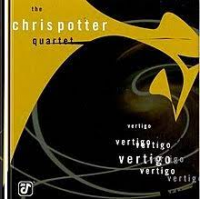 Artist: Chris Potter
Track: "Fishy"
Recording: Vertigo (Concord, 1998)
Personnel: Chris Potter, tenor sax; Kurt Rosenwinkel, guitar; Scott Colley, bass; Billy Drummond, drums Composer: Chris Potter
BS: It sounds like Chris Potter, one of his tunes. So it's probably Scofield or Adam Rogers playing, I haven't heard the guitar yet. It might be Kurt, 'cause he did a record with him too. Yeah, that's Kurt. It's probably that record Vertigo. Yeah, it's Kurt Rosenwinkel. It's cool. That's an old record. That's almost 10 years old I think, but you can hear Chris has been—where he came from, you know. I like his approach to composing. He always tries to do something a little different. It's great. Kurt, you can hear where he's coming from now, too. He's a great guitarist. I think it's probably Doug Weiss on bass or Scott Colley, Bill Stewart on drums.
AAJ: How would you say their sounds have changed?
BS: Just more developed. Everybody through their 20's and 30's, they're developing you know? Getting more experience and writing more tunes, and playing, performing more. I've seen Chris perform recently with different things. He's just light years form where this recording is. This is great but his new stuff is light years beyond that. Same way with Kurt. What they're doing now is far and away beyond that. Who were the bass and drums?
AAJ: Scott Colley and Billy Drummond.
BS: Scott has a nice round sound. It didn't really sound like Bill Stewart and I don't know Billy Drummond's playing that well, but I really like what he did on that track, changing it up.
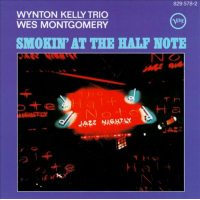 Artist: Wes Montgomery
Track: "No Blues"
Recording: Smokin' At the Half Note (Verve, 1965)
Personnel: Wes Montgomery, guitar; Wynton Kelly, piano; Paul Chambers, bass; Jimmy Cobb, drums Composer: Miles Davis
BS: That's Wes Montgomery, Smokin' at the Half Note. There's some amazing guitar playing on this record. There's all this communication between the thumb and the left hand when he's chording and all this articulation stuff that's just totally unique to him, you know. And the groove and the rhythmic feel of everything that he plays is just so in the pocket. But my favorite stuff is the trio stuff with the organ.
AAJ: Melvin Rhyne?
BS: Mel Rhyne, yeah. But I like this too. I have the other record Live at Tsubo which is good too. Johnny Griffin's on that one. I like that one. Everyone likes this one, but it's not really my favorite. I like it a lot. I love it. I mean he's one of my favorite guitar players, definitely. I kind of came to him late, too. It's probably just because I hadn't been exposed to him, but I sort of came up listening to the Jim Hall influenced guitar players and the more straight ahead guys; I'm talking like when I was 18 or something, like Herb Ellis, Joe Pass, those guys. And the Wes Montgomery stuff that I came across wasn't the really cool stuff like this, it was like "California Dreamin'" and I mean that's cool, but you know. So I kind of came to him late, but it's just really great—the sound and every-thing, and just the feel, the chords, the lines. It's a whole language of guitar playing and we both know there's a lot of people that just go that route; it's their whole world, you know. You can't fault 'em for that at all 'cause there's a lot there to explore, but there's a lot of other stuff, too.
AAJ: Do you think it's clich' to play some of those licks today?
BS: Well no, I mean, you have to divide the music from the actual technique of it, or the phrasing of it. If you just replicate somebody else's stuff then yeah, that becomes a clich.' Anyway, with the way the world is now there are some jobs in music where you need to be clich,' you know, that's what you're getting paid to do is play a clich.' That's not what I'm doing, that's not how I make my living. But what I'm saying is nothing's off limits.
AAJ: If you mean it, nothing's clich.'
BS: You know, it's like I would never try to imitate the way you speak. Not that you're not a cool person and I don't admire you, but I'm beyond that emulating thing like when I was 16, you know, and it was like, 'I want to be like him 'cause he drives a Mustang, and he's got'' you know what I mean? The same thing happens in music. You grow up and you're checking out these things and you have this inexplicable attraction to certain music for whatever reason. It becomes your whole world, and then as you mature as a musician and a person, you outgrow those things. Those things are too small for you at a certain point, you know. But nothing's off limits.
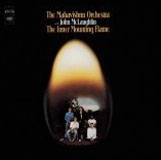 Artist: Mahavishnu Orchestra
Track: "Vital Transformation"
Recording: The Inner Mounting Flame (Columbia, 1971)
Personnel: John McLaughlin, guitar; Jerry Goodman, violin; Jan Hammer, key-boards; Rick Laird, bass; Billy Cobham, drums Composer: John McLaughlin
BS: This is Mahavishnu. Yeah, it's all the cats, man. That's a great track, man. I listened to it a long time ago. I never had this one, but I'm just a huge Mahavishnu and a John McLaughlin fan in general. I buy all his records that I can get, you know. One that I really like now is called The Lost Trident Sessions. It's like the last studio record they did that was never released.
AAJ: I've heard that.
BS: You've heard it? It rocks, right?
AAJ: Yeah!
BS: The trading with Jan Hammer, those sections where they're trading licks back and forth---
AAJ: "Sister Andrea," too. I really dig the Moog solo on that tune.
BS: That's a Jan tune I think, but those first couple tunes on there are just incredible. Nice track. Was that "Birds of Fire"?
AAJ: It was from "Inner Mounting Flame."
BS: "Inner Mounting Flame," OK. I gotta get that record.
 Artist: Miles Davis
Track: "Delores"
Recording: Miles Smiles (Columbia, 1966)
Personnel: Miles Davis, trumpet; Herbie Hancock, piano; Wayne Shorter, sax; Ron Carter, bass; Tony Williams, drums Composer: Tony Williams
BS: It's Miles Smiles. "Delores" I think is the name of the tune. (Listens to entire tune) Wow. Yeah, that's amazing. Miles Smiles , amazing record. I mean, it's incredible. It's, you know, what can you say about that? Tony, Ron—it's incredible! If you think about the elements that are happening at any one moment in the music, it's just Tony Williams and Ron Carter and a soloist, and there's so much going on, you know. What I mean is like a single melodic line. There's no harmony, but you hear all this stuff being implied from the rhythm, and what everybody's doing melodically. And at the end Herbie plays a couple of chords just to accent the last note of the phrase. But besides that, it's just lines. It's just like these incredible lines, and the rhythm. It's deep.
AAJ: That's the last tune, but do you have any closing thoughts, such as things you maybe wish I'd played for you?
BS: I thought you'd play me more guitar players or more weird stuff or try to stump me on the guitar thing, or maybe even like hip me to somebody new, you know, that I haven't checked out. Or play me some records that I've wanted to hear but haven't had the chance to get yet. There's a few of them.
AAJ: Such as?
BS: I haven't heard Adam Rogers' new record or maybe some obscure Lenny Breau that I didn't know or maybe some Ted Green or something. You know, some Tal Farlow that I haven't heard. Something I could go "Oh man, I gotta get that!" You know, but obviously 5 stars for everything!
Tags

PREVIOUS / NEXT
Support All About Jazz
 All About Jazz has been a pillar of jazz since 1995, championing it as an art form and, more importantly, supporting the musicians who make it. Our enduring commitment has made "AAJ" one of the most culturally important websites of its kind, read by hundreds of thousands of fans, musicians and industry figures every month.