Home » Jazz Articles » Interview » Marc Edwards: Free Jazz Drummer & Percussionist
Marc Edwards: Free Jazz Drummer & Percussionist
...there really is no free music. It is not possible in this dimension. Music is based on melody, harmony and rhythm. A musician can never get away from those elements completely.
 Who's Marc Edwards? Cecil Taylor fans may remember him as the drummer on the legendary 1976 album Dark to Themselves. Charles Gayle fans may know of him as the drummer on More Live at the Knitting Factory. And David S. Ware fans must remember him as the first drummer of the David S. Ware trio and quartet on Hathut and Silkheart records.
 Marc Edwards is what they call a powerhouse drummer . Here's a biographical interview put together through a series of long emails. Marc Edwards provides a lot of insight into this thing called free jazz, and eye-opening anecdotes about fellow players and life in this music.
Background
Getting Involved With Music
Free Jazz
Drum Rudiments and Warriors Drum & Bugle Corps
Meeting David S. Ware
Meeting Other Musicians
Live Music in Boston
Apogee
David S. Ware and Sonny Rollins
Cecil Taylor Unit
Developing a Sound
On Cecil Taylor
Personal Projects
Charles Gayle
Alpha Phonics
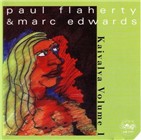
Kaivalya, Vol. 1
Spirituality
All About Jazz: Hi Marc, tell me about your background, musical and otherwise.
Marc Edwards: Hi Taran. My earliest recollections of music were hearing a variety of musical sounds while I was in the crib. My parents exposed us to classical, what is now called world music, music from the Far East - Chinese, Japan, India, Indonesia, etc., electronic music and other musical genres. The first jazzy sounds were those of Charlie Parker, Max Roach, Sonny Rollins and others. Later when I was older, I bought the record 3 Giants! (Sonny Rollins, Clifford Brown and Max Roach) and the music on that album was very familiar. It seemed like a case of déjà vu, but, that wasn't it. I was merely recalling the music I had heard while I was very young. I didn't get involved with music right away.
I was a normal kid preferring to go outside and play as is the case with most children or read comic books. Superman was always a favorite as was Green Lantern. I felt that if I had a little support, a magical ring like Hal Jordan, I could use my will power to change the world for the better. Every boy wants to be like his favorite superhero. This is a naive point of view that children tend to have, not knowing the harsh realities of the real world.
I have since learned that changing oneself is one method for producing changes in others. If I were a little boy today, I'd probably be admiring some of the superheroes in the current crop of feature films. Director Sam Raimi is doing a fantastic job with the Spiderman films. They're totally awesome. Mr. Raimi has gone from directing Xena in the past to Spiderman. That's impressive! I would be very happy if a creative Hollywood director could do the same for the Milestone Media comic books. Some of you will recall Static Shock that aired on the WB. Static was one of the books produced by this company.
From attending Sunday school we learned that a choir for young people was going to be created. Church officials asked parents to send their kids if they had singing talent. My brother and I did attend those rehearsals. We were so young we sang in the choir as sopranos. I do recall the choir master being impressed with our voices. He once said our voices were as pure as the driven snow to which everyone in the room laughed. After a while, I got tired of being in the choir and decided I had had enough of those Saturday morning rehearsals. We both left and began to pursue other avenues of interest.
AAJ: Other avenues of interest, such as?
ME: Next on the list was joining the Cub Scouts which led to the Boy Scouts and the Explorers. I enjoyed my time participating with these youth organizations. I also was involved with the YMCA during my early years. In fact, I attended the same YMCA that actor Wesley Snipes did years later, the one located in Harlem on 135th Street. He said he learned the martial arts there from what I read in a past interview. We lived one block away from the YMCA, and we were a short distance from the 32nd Police Precinct that's still there today. My parents moved from 135th St. to 158th Street. At this address, we had a larger apartment and much more living space. I met actor Demond Wilson since he live further down from us, not far from the infamous 30th Precinct on 151st Street. There was a major scandal at the 30th Precinct during the nineties. I believe the allegations were about police officers taking money from the drug dealers or selling drugs; something along those lines. I don't recall the details.
Let me tell you more about my parents. My stepfather loved jazz while mom preferred classical music. My stepfather told me that he used to go to the clubs to see Charlie Parker & Max Roach play. I didn't know that until shortly before he passed away. If you live in a city such as New York, it's not unusual to see your favorite celebrity walking down the street. I can always tell when a person's in show business. They have a different vibration than most working people. People in television tend to have a glow about them. They're not as stressed out as every day folks are and they always stand out among people walking on the streets. Sometimes everyday people look at me and think I'm a celebrity. If only that were true. If only someone could get a dedicated jazz channel on the air, things would get better for the artists that play free jazz. BET did attempt this, however their BET on Jazz isn't on the channel list for every satellite/cable provider. Television is the future of jazz. Why not? Everything else is on the air. We also need to be included on those popular ipods, itunes, and all those computer music downloads.
I left music for several years until I decided to try my hand at playing the violin. I did this for two years. I stopped practicing because I knew it would take many years before I could develop on this instrument. I couldn't improvise on the violin and that was the direction I wanted to go in. I moved on to working with wood in a different capacity, studying in a wood shop class. We were learning wood craft, making various items out of wood. I wasn't very good at it. When the band teacher, Mr. Rosenthal, came around asking if anyone was interested in learning to play a musical instrument, I saw this as an opportunity to get out of this class. Man, I was bored to death! class="f-right"> Return to Index...
AAJ:Tell me more about how you got involved with music.
ME: When the day arrived the following week, I headed to the auditorium on Tuesday. I wanted to learn the tenor saxophone, however, I had arrived late, and the section was already filled. The only opening was in the percussion section—drums. I decided it would be better to learn drums rather than go back to the wood shop class. Here I was mostly self-taught since Mr.Rosenthal played the trombone. He was an avid fan of the Big Band era. We played charts by Benny Goodman and other famous band leaders from that period. The band sounded pretty good if I may say so myself. We weren't able to improvise; however the band made up for it with lots of spirit and enthusiasm. We loved the music and we did our best to play it well. A classmate by the name of Russell Bailey was very talented on the tenor saxophone. Eugene McMorris was another extremely gifted musician. A classmate told me that his father was a musician. Gene had one major flaw; he would come to the rehearsals late. Eventually Mr. Rosenthal had to kick him out of the band. This remains one of the main problems for many musicians. They have no concept of how to get from one place to another on time. Eugene died some years later of a drug overdose.
The first year we played at the annual show with our parents in attendance. We smoked everyone that night. Another drummer, James Staton, did the honor of playing the drums for the Big Band. I was the backup drummer, in case James couldn't make it. James knew I wanted that spot so he made sure to attend every rehearsal. My presence did put pressure on him. Word was getting around that I was starting to play well.
AAJ:Why did your presence put pressure on James Staton?
ME: Some of the students were saying I should be the drummer for the Big Band. Everyone got to see me play for the opening ceremony for the weekly assembly held every Wednesday. We had to wear white shirts and ties on this day. I would play a march on the snare drum. On one occasion, I decided to jazz it up a little. I did it very well and many of my classmates enjoyed it. The vice principle spoke to me after the assembly. "Marc, I want the color guard marching down the aisle, not dancing as they approach the stage! Well, that put an end to that experiment. I never was able to improvise on the march from that day forward. I had to keep it very formal; after all, the color guard was bringing the American flag to the stage.
We would do the pledge of allegiance. Everyone in the room, students and teachers would recite those words. Today, I hear the courts aren't allowing this in schools. James was aware that the students liked my drumming and he heard the talk about students preferring me over him, to play in the Jazz band. He didn't like it, but, there was nothing he could do about it other than practice. He apparently didn't want to do that. Oh no, that's too much work. This is a mentality that I find prevalently among musicians. Everyone wants to be famous; however, few are willing to do the hard work to make it happen. Some get jealous if a band outperforms them and they walk around with a real nasty attitude. I view this as a form of laziness. Practice often and keep rehearsing with your band and you won't fall into this mind set.
I played for Mr. Rosenthal in the Classical Band. One teacher was visibly upset after our performance. We had numerous rehearsals while he was doing strictly classical music with half the number of rehearsals that we were fortunate to have, maybe less. Our teacher was a kind man. It upset him that we gave a superior performance compared to most of our peers that night. We weren't trying to embarrass anyone. The music clicked and both bands (the Classical and the Jazz Bands) swung like hell. The audience picked up that something special was happening. I continued to work with Mr. Rosenthal playing in the Classical Band. I was the main drummer in the percussion section.
I learned about the Manhattan Borough Junior High School Band through a letter they sent to my home. I auditioned and went home after it was over. I was in a state of disbelief when I learned that they wanted me. At the time, I wasn't a very good sight reader. I played with them for one year. We had a black conductor by the name of Mr. Booth. I couldn't get my hands on the vinyl record of this band. One of the percussionists in the band dated a classmate of mine, Alissa Gale. She did marry Wayne some time later. Wayne attended the same high school, however, he wasn't in the high school band. I guess he lost interest in playing music. Alissa did play trumpet in the high school band with me and Rodney Bacot. We played in our respective sections. I haven't seen her in many years.
I think of Alissa Gale and dancer Flemmie Kittrell often. Flemmie and I go back almost to the very beginning when I started attending school in New York City. Flemmie was a marvelous dancer even when she was in elementary school. Both ladies shared classes with me for years. When I went to high school, I was asked to audition for the All City High School Band. Again I made it; however, I counted my blessings. I knew I wasn't able to read music very well. I was the only black in the percussion section during the first year. I was joined by a very talented black percussionist during my second year with All City by the name of Luis Meade. I believe he was Cuban. Whenever the part called for crash cymbals, we let Luis do the honors. He was physically stronger than the rest of us. We couldn't match him when it came to picking up the two cymbals and making loud crashing sounds. When Luis did it, you'd get the impression that an angry God was looking down on the planet and he wanted to know what the bleep we were doing? Why had we disturbed the peace?
I met Edward Alex while I was in the All City High School Band. He was in the clarinet section of this talented group of young people. We hooked up again during my Berklee years in Boston. This time, Edward was playing alto saxphone. The last time I saw Edward was when my band was doing a gig at the Montreal Festival in June 1997. My band consisted of Sabir Mateen, Peter Mazzetti, and Hilliard Greene. We had played at the Knitting Factory as part of the Texaco New York Jazz Festival the previous night. Edward was in Montreal with his very attractive wife [a singer]. They came to see my band play at a small venue not far from the hotel we were staying. I saw Tony Bennett in the area where everyone went to eat as well as a lady whom I believed was an actress. I had seen her in the movie about He-Man. The film's actual title was Masters of the Universe. The woman may have been Chelsea Field. Anyway, this lady looked a lot like her and she had that celebrity vibe or so I thought. What was noteworthy about this gig is that it was one of the few times the jazz world ever got the chance to see and hear Peter Mazzetti live during a public show. This performance was also videotaped by the staff members working for the Montreal festival.
The other drummers were much better than I. They could read and play various percussion instruments. Brian Sales, an outwardly gay young man, played kettledrums [tympani] and piano. He was a very advanced musician and was studying at the High School of Music & Arts. He was also the percussion section leader. He used his authority wisely with Solomon's wisdom. His decisions were final and he was usually right. I don't remember him exercising poor judgment. He knew music very well, so, you couldn't fool him. I found myself in a minor dilemma when one of the percussionists wanted to play the snare drum part with me on one of the pieces. Brian asked us to play the part together. He listened and he understood my discomfort at Eric's request. Eric was dragging, playing slightly out of time. I was right on the beat, while Eric wasn't. Brian said, "Eric, let Marc play the part by himself. That's all that was required. It was a done deal. No yelling, screaming, or fighting. Not all leaders are as level-headed as Brian Sales. I had auditioned for the High School of Music & Arts, but I didn't make it.
I also met Victor Bablove, a talented drummer in the percussion section. He was the main inspiration, directing me to study with his drum teacher, Ted Reed, author of the famous syncopation book that most drummers use in their studies. Alan Dawson also used this book; however, he added various others exercises to the existing ones in the book for drummers to study. Those studies will improve any drummer's playing. I did play for Mr. Gabriel Kosakoff, the man who gave me the audition for the All City High School Band. I took a year off from the All City High School Band to study with Ted Reed the following year.
After I played for Mr. Gabriel Kosakoff during my second and final year, (we had finished the concert) he praised my performance. It was obvious that he was pleased with my work. He said how much he enjoyed having me in the percussion section. During the concert, I had played crash cymbals on a very upbeat composition. I missed only one cymbal crash. My music teacher was in the audience and she saw the expression on my face. She told me not to show it when I made a mistake. I was so emotionally involved with the part that I had put my all into trying to get it right. Another percussionist completely blew his part on the wood blocks. They were tuned wood blocks, each having its own pitch. I don't know how that happened. I guess he didn't practice his part. After Mr. Kosakoff praised my performance, I had to get something off my chest. I couldn't keep it inside any longer. I told Mr. Kosakoff that he himself had given me the audition for the High School of Music & Arts. He was stunned to hear this and he couldn't believe it. He turned a dark beet red color as he kept asking repeatedly, "Are you sure it was me, Marc? I nodded my head in the affirmative. Mr. Kosakoff had a real sad look on his face and he shook his head, realizing he had made a grievous error, by not letting me into this prestigious high school.
This school was also used during the filming of the movie, Fame, years later. David S. Ware tells me that he was in the area when they filmed some of the scenes from this movie. Mr. Kosakoff was very thoughtful. If you missed a rehearsal, he'd send a postcard saying "We missed you Marc. When I didn't get into Music & Arts, I made up my mind that I would show them the errors of their ways. I began practicing longer and harder. This fueled my intense drive to succeed on the drums. Most people would be surprise to learn that some of the students who attend Music & Arts go on to college and end up working day jobs rather than become working musicians, dancers, singers, or actors.
The highlight of working with this band was we played with the American Symphony Orchestra at Carnegie Hall. We did three performances with them during February and March of 1966. I would go home with a headache after each concert. The piece that we played was the "Overture of 1812 by Tchaikovsky. At the end of this long composition, it ends loudly with canons firing, just like on the battlefield. The percussionists couldn't use a canon in Carnegie Hall; instead, one of the percussionists would fire round after round from a shotgun into a barrel during the ending section. This section was once used by Quaker Oats to promote their Quaker Oatmeal product on television. I loved that commercial because of the exciting music.
After the performance was over, the percussionist who was using the shotgun would come out of the room. Neither the audience nor the members of the orchestra could see him during this portion of the show; however everyone heard what he was doing. One of the other percussionists would cue him when to fire each round. There was a slight delay but it did produce the desired canon effect. When he opened the door to the small room he was in and pulled the curtains back, this would allow smoke to flow unto the large stage. It was the loudness of the shotgun and the foul smelling smoke that would give me a headache after each performance. I will never forget that experience. The orchestra was playing one afternoon and many of the children in the audience were talking. The conductor stopped the orchestra, turned around to face the audience and told them to be quiet. They did and he resumed conducting the music. He didn't tolerate any nonsense while the orchestra was playing. The conductor was Mr. Jose Serebrier. Some of the orchestra members were shocked by the look on their faces. I guess this had never happened during past performances?
I did see the black conductor whom I worked with while I was with the Manhattan Junior High School Band after one of the shows. I said hello to Mr. Booth and he just grinned his approval. He was pleased that one of the kids had made good. Most musicians have some training in the area of classical music, however most jazz artists prefer to concentrate on jazz. It's a full time job to play jazz. The same is true for classical music. You have to admire musicians who can do both. This is one of the reasons Wynton [Marsalis] is very conservative in his jazz music. It is very difficult to play jazz and classical, especially on the same day.
AAJ: Would you care to elaborate on this?
 ME: I once saw Wynton attempt this feat playing with the Boston Pops on Public Television several years back. He did his best, however this was an almost impossible request. He played a well known classical piece for the trumpet with the Boston Pops Orchestra. Sarah Vaughn was on the bill also. She invited Wynton to come out and play with her band. Wynton struggled mightily. He was trying his best to get loose. He finally did get in the groove near the end of the song. The musicians in the future and beyond will be able to do this. Right now, this is a tall order at best for most jazz artists, playing classical and jazz. Jazz pulls your brains in one direction, while classical pulls it in the opposite direction. I prefer free jazz as this is my musical home. class="f-right"> Return to Index...
AAJ: How did you come to this thing called free jazz?
ME: The person who introduced me to free jazz was an unlikely source. One of my classmates in the high school band kept pestering me about visiting his apartment. He wanted to turn me on to a new form of music. I kept putting him off for as long as could until one day I had the time and I said "Yes, I'll visit your place and listen to this music you keep talking about. Rodney Bacot was one of the tenor saxophonists in the band. Since he was new to music, I didn't take his claims seriously. "What does he know? He just starting playing the horn, I thought to myself. Rodney was ecstatic that I was finally coming to pay him a visit. I spent an entire Saturday afternoon listening to the many ESP & Impulse records Rodney had. He put on one record after another. The person who made the biggest impression, of course, was John Coltrane. I was intrigued by the photo on his album, A Love Supreme . Because of his serious demeanor and talent, I decided to investigate this music further.
Coltrane didn't strike me as being crazy or foolhardy. I knew he was dead serious about this form of improvisation. I thought to myself, "A man like John Coltrane wouldn't abandon his traditional jazz roots for frivolous reasons. There must be something to this music. I don't understand it, but, I'll keep listening until it begins to make sense. By the time Rodney put on Sun Ra, I was nearly on the floor laughing. I said to Rodney, "Is this cat for real? Rodney assured me that he was. Rodney had played one of Sun Ra's ESP recordings, The Heliocentric World of Sun R . Sun Ra had his photo next to some of the great men of science. I thought he was quite a character. I did meet Sun Ra when we [the Cecil Taylor Unit] played at the Foxhole in Philly in May, 1976, also known as the New Foxhole Café, Penn University, Philadelphia, PA. Sun Ra was a well-read individual. He knew a lot about mysticism and other related topics. It was an education listening to him speak when David S. Ware and I ran into him on the streets of Philadelphia. He did come down to see us perform as did most of the members in his Arkestra. They were pleased with the Cecil Taylor Unit album Dark Unto Themselves. I got a kick out of observing their reactions during the concert.
Here's a comment I sent to Rick Lopez regarding this gig:
"Since we were in Philadelphia, Sun Ra attended at least one of the shows. I can't recall if he was there for all three nights. Many of the players in his band also came. They really enjoyed the music. These performances drew a sizeable crowd. A good audience helps to make things happen."
Rodney began visiting me at our apartment on 158th Street. We began mimicking what we heard Albert Ayler, John Coltrane and other musicians doing on their records. We didn't have the energy to stay out there long (that would come later when I started playing with Apogee) but when we did reached those musical heights, the whole neighborhood got real quiet. Even the dogs stopped barking when we started playing. When you play drums in an apartment in New York City, folks tend to take note. Drums have a way of getting everyone's attention. One of my neighbors told me, she thought someone was rolling garbage cans down the stairs when she heard my drumming. Ha! I was trying to recreate thunder and lightning. I did this during my tenure with Cecil Taylor and we would kill audiences night after night wherever we played. class="f-right"> Return to Index...
Drum Rudiments and Warriors Drum & Bugle Corps
ME: During my senior year in high school, I had been hearing about the Warriors Drum & Bugle Corps. For several years, musicians had suggested I try out for this group. Tenor saxophonist Russell Bailey stayed on my case about this. He would say, "Marc, the Warriors are very good. You should try out for them. You have the talent to make their drum line. I didn't have that many classes during my senior year so I went to the church on 155th Street, near Broadway and began to attend the long rehearsals. It took a while, but I did get a spot playing rudimental bass drum. I had to practice hard because playing outdoors required an entirely different level of loud dynamics. It takes physical strength to put out this amount of energy. When I heard my playing on record from one of the live competitions, I was surprised to learn that I was playing louder than my fellow rudimental bass drummer, Don. Don had worked with me, making sure that I learned all the parts for the pieces the corps would be playing that season. I stayed with the Warriors for one year.
Note I can be heard in the competition on The 1968 New York American Legion Championships, Volume One put out by the American Legion (Volume SCS-150). The back of the album cover states: March of Champions, New York State American Legion Convention, July 27, 1968, Syracuse, NY. This is strictly for drum & bugle corps enthusiasts. I have no idea where one would go to find this recording. Happy record hunting!
AAJ: Tell us about your drum instructor of the Warriors. I know he had to be very good. Rudimental drumming isn't easy to execute.
ME: You got that right. Rudimental drumming is a little of both: it can be very hard and some of it is easy. To answer your question, Robert Winslow, or Bobby as we called him, was said to be a child prodigy in this capacity. He had joined and played snare drum with one of the other drum corps. The word of mouth is that you had to be exceptionally talented to even consider trying out for this drumline. Bobby Winslow made that drumline and I hear he was sixteen years old. That was unprecedented. Most of the drummers in that drumline were older, perhaps in their twenties. The movie Drumline (2002) provides a taste of what it's like to be in a drum & bugle corps. I regret that I couldn't work with the Warriors longer. I was told that Bobby Winslow had gone to Africa and did drum studies over there. He would put those African rhythms in our parts.
Sometimes during a competition, the drum judges didn't know what we were doing. I saw one judge throw down his writing pad and pencil on the ground in disgust. He was so frustrated that he couldn't figure out what we were playing. During the final event of the season, which the Warriors won, Bobby Winslow's teacher of his former drumline was one of the drum judges. I did a slight infinitesimal hesitation during one of the drumline solo sections and you know what, he caught it. Only a master drummer could have caught that hesitation. He rubbed it in by looking me in the eye while he wrote a checkmark on his pad. "You demon, I said inwardly. "No one should have caught that, but he did. I'll leave you with another thought about drummers in drum & bugle corps. Many of the snare drummers can take down a lot of jazz drummers. I'm speaking in terms of technique. To be fair jazz drummers even the score by their work on the drum kit. Snare drummers from the marching bands can't touch us there. After leaving the Warriors, I began concentrating on playing free jazz. This was the year 1968. class="f-right"> Return to Index...
AAJ: That's when you started playing with David S. Ware. How did you meet him?
< Previous
East Coast Cool
Comments

Tags
For the Love of Jazz
 All About Jazz has been a pillar of jazz since 1995, championing it as an art form and, more importantly, supporting the musicians who create it. Our enduring commitment has made "AAJ" one of the most culturally important websites of its kind, read by hundreds of thousands of fans, musicians and industry figures every month.
You Can Help
To expand our coverage even further and develop new means to foster jazz discovery and connectivity we need your help. You can become a sustaining member for a modest $20 and in return, we'll immediately hide those pesky ads plus provide access to future articles for a full year. This winning combination will vastly improve your AAJ experience and allow us to vigorously build on the pioneering work we first started in 1995. So enjoy an ad-free AAJ experience and help us remain a positive beacon for jazz by making a donation today.

Giveaway

Days remaining: 7