Home » Jazz Articles » Interview » Annie Ross: Let Me Sing
Annie Ross: Let Me Sing

...it must have been wonderful if...you were just a fly on the wall with Rodgers and Hart and Cole Porter and George Gershwin and Jerome Kern. I can imagine one of them phoning up the other one and saying
 She may be best known as member of seminal vocalese group Lambert, Hendricks and Ross, but septuagenarian singer Annie Ross has also enjoyed a long and successful career are a solo performer, with over a dozen releases to her name. All About Jazz caught up with Ross to discuss her new record on Consolidated Arts Productions, Let Me Sing.
 All About Jazz: Your new CD is called Let Me Sing. Is that the reason you're still out there performing and chasing around the globe?
Annie Ross: Well, yes. Part of it. It comes with the territory. But I love performing. And there are so many wonderful songs that have never been sung to any degree except maybe years and years ago. And I think to let the people hear exactly what they're missing is important to me. And I love words. I always have. And to think when you contrast what's on today and what's going around. I mean, you can't understand the words. And I've spoken to young kids who say that it's not about the words, it's about the feel. Well, that's their take on it. It's not mine. And I was just saying to some one the other day—my God it must have been wonderful if your were in the inner circle or if you were just a fly on the wall with Rodgers and Hart and Cole Porter and George Gershwin and Jerome Kern. I can imagine them—because lyric writing is such a craft—I can imagine one of them phoning up the other one and saying "I've got it! I've found it! I spent all night but I found it! And that to me is what lyric writing should be. It should be a craft. That's what I find lacking today.
AAJ: So you need to keep showing everybody what it is.
AR: What a real song should sound like and should say.
AAJ: Well, I agree with you because so many of the things, the original material that some people are writing are not really songs. They're fragments. They don't have an AABA.
AR: I know. And the terrible kind of sloppiness in writing. To rhyme "sue with "loon. I really hate that.
AAJ: There is another thing. If you get a lyric, a really good lyric, whatever the writer meant you don't have to know. There's something that you can bring.
AR: Well, it's your interpretation of what he's written. I think one of the most terrific lyrics is "I Wish I Were In Love Again. "The self deception that believes a lie. What a great line. Brilliant.
 AAJ: I understand that you just came back from across the pond. And what were you doing across the pond?
AR: Well, my whole family was from Scotland. And I have grown to love Scotland. I really have. They have wonderful writers and directors and actors and producers and wonderful stuff going on. And it's funny, but when the BBC needs a Scot for a TV, they'll ring London to get someone to come up which is crazy because they've got them right there. I love the attitude. Glasgow is very much like New York. They're very up front. They'll tell you their opinion even if you don't ask for it. They have very dry humor. It's quite wonderful. I love the food because it's just great food. People don't know. Great food. So, a friend of mine who works for Cameron Mackintosh, the producer, talked about this for about six months. He said, "You know, there is a possibility that we may do a concert version of Follies. And I haven't got it together yet, but would you be interested? And I said, "Yes. I'd love to do it. So, it finally all came together and I finished work on a Wednesday and I took a plane. I was in Glasgow Thursday night. I got off the plane. I went to rehearsal. It was in the concert hall in Glasgow which is new, which has great acoustics. It was a 52-piece orchestra which made me cry. It was just beautiful. Are you familiar with Follies?
AAJ: Yes.
AR: Everybody in it was a professional down to their toes. They were all very big Scottish stars. The overture...ooh...and then I sang. I sang "I'm Still Here. And I just loved it. It's a great memory. And that's what I was doing there. I got on the plane and came home and then went to work at Danny's, which I love because it's "Hamish. It really is. It's a little room. I feel like I'm in my living room.
AAJ: I've got to say this, but you connect so with your audience. It's like you're singing to them in the middle of your living room or their living room.
AR: Letting them...not letting them but sharing things that I've loved for years.
AAJ: I love what you do with "One Meatball. It's such a fun thing. You should do "Frim Fram Sauce.
AR: There are a lot of Nat Cole songs that are great. I want to do "Meet Me In No Special Place and I'll Be There At No Particular Time. I should really get his composite. He recorded everything.
 AAJ: Yes. Basically, he was Capitol Records at the beginning. He was their chief artist for a very long time
AR: There's a story about how he rang up once and they used to answer by saying, "This is Capitol Records, the company that Nat Cole built. Or something like that. And he rang up and they had made a change to somebody else.
AAJ: He doesn't get billing any more. That's a funny story. But you probably have a lot of stories going back to when you were doing with Dave Lambert and Jon Hendricks, doing the Basie book. You were doing a lot of traveling then, too.
AR: A hell of a lot. You know, it was a long time ago and we played so many places and I'm trying to recollect as much as I can because I'm writing my book.
AAJ: Oh, that's wonderful.
AR: And I'm at the point now where I have to do a whole thing on Lambert, Hendricks and Ross. But one thing will remind you of another.
AAJ: There's so much stuff. It's hard to...
AR: It is. But someone will say something and I'll think, oh my God, I remember when...once, where was I. Chicago or somewhere. And you'll connect it from there.
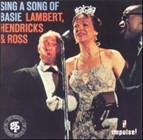
AAJ: I've got the Sing A Song of Basie LP. I've had it for years. You're sitting on top of the piano. There's all kinds of good stuff on there. And hardly anybody does what you do.
AR: They can't.
AAJ: How did that happen? How did you fall into that segment? Because it's a special niche.
AR: Well, I had written "Twisted. So I knew that style of writing lyrics. Jon had been writing lyrics forever. Davey had been putting down on paper, had been singing those kind of songs, with lyrics added. And I met Dave in the Village very inconsequentially. And I was at a friend's house and my friend said, "I'm waiting for two guys to come over. Maybe you want to stick around and see what they have to say. They have an idea to put Basie to music. My friend had a tiny, teeny record company. So Dave and Jon came over. They put on a Basie record and they started illustrating what they were going to do. And it looked fine and that was that. And then about two weeks later, I got a call from Dave, saying "We've hired these section singers and they can read every note, but they don't have the feel. They don't swing. And could you come over and coach them?
You can't do that. You just can't teach somebody that. In half an hour or even an hour. So I went down—and I think there were about 12—and I gave them some tips but it didn't work. It wasn't really in their nature. So they were subsequently finished and gone and the producer was going crazy because he didn't have a product and Dave, who, among many other things, was electronically interested in how things worked and why things worked said "Let's multi-track. I didn't know what it was but I said "Yes, multi-track. And when we learned the first track which was pretty straightforward and then the second track which was more complicated and so forth and so on. And one of the great moments of my life was standing in front of the speaker and hearing what we had done. I just knew that it was very special. That's how that came about.
I had no idea that could ever work interestingly because of the added tracks. Les Paul used to do a thing with Mary Ford and that was with mirrors.
AAJ: Yes, that was the first time they did multiple tracking.
AR: Yes. And I left to go to France because I love France, too. And I got letters from Jon and Dave saying "Come back. We have a manager. Blah, blah, blah. And we can work. And I thought "They're nuts. They're totally nuts. However, when I got back we did indeed have a manager called Willard Alexander who was very famous in his day. I was more show business minded than Jon and Dave. I said, "We have to try it out. We have to hone it. And so we took a Greyound bus up to somewhere, to a place that had been a bank. It was called the Bankers' Club. And Al Haig was playing also. And so we did the first set. And Jon and Dave said "We've got it! I said, "No, we haven't. It's terrible. We've got to work. We've got to rehearse. "No, no. I said, "Oh, yes, yes. So we did. And as we went on it got better and better and better until it was wonderful to work with them because it was very professional. It was interesting to look at. To the extent that we were playing Vegas. And they have the main room and they have the lounge. And we were in the lounge. And on the second night, they turned the mikes off because so many people were stopping to look and listen and it took them from the gambling. That was something. However...and we just kept working, working and working.
AAJ: But there was nobody else out there doing what you were doing. I remember when I was a kid, I memorized Flip Phillips solo on "Perdido from Jazz at the Philharmonic. I didn't sing any words to it, but I was still singing the arrangements. But nobody is doing that any more.
AR: No. There are a lot of young people, but they don't...well, we were unique.
AAJ: Absolutely. There's only one guy out there although Jon still works here and there. But there's only one person I know out there that's doing any kind of vocalese and that's Giacomo Gates.
AR: Oh, yes.
AAJ: But I don't know anybody else.
AR: No. I think there are a lot of kids that do "Twisted and "Farmers Market and stuff like that. But it's not the most popular form.
AAJ: I don't know if you've heard the Julliard Jazz Orchestra.
AR: No.
 AAJ: Well, they do concerts over at Juilliard and Alice Tully Hall and the year before last they did Ellington; the stuff he wrote after Billy Strayhorn died. And these are kids that weren't alive when Ellington was alive. But they were so into the music. And last year they got permission to do the Stan Kenton book. And nobody's doing that because he said, "When I die, the band dies with me. I don't want anybody to keep it going. They got permission to do it and these kids are really into the band, the arrangements. That kind of thinking. So you start to think, well, maybe there is somewhere down the line a future.
AR: Yes.
AAJ: That there are kids because....who's out there now that you think is anybody vocally.
AR: Shirley Horne.
AAJ: Well, Shirley's been around for awhile.
AR: I know. And there's a girl that I think is great called Gail Winters. She's wonderful. But apart from that, there's nobody that really gets to me.
AAJ: I was wondering because everybody is busy touting this one and that one, the other one. Well, I don't know what Norah Jones is doing on Blue Note anyway because she doesn't sing jazz ever. People like that. You know, the next great what??? The business has changed.
AR: Tell me about it.
AAJ: Well, in what way the most drastic to you compared to what used to be.
AR: The loss of originality. You know, the thing that's great about singers, great singers in jazz, you can always tell who it is. You know it's Lady. You know it's Dinah. You know it's Sarah. You know it's Ella. They have a style. And it's the same with instrumentalists. Most of the people now weren't alive when Dizzy or Clifford Brown or Miles were alive. Poor babies. So all they've got to go on are records and things like that. They never had the chance to see them live and that's such a terrible shame because that was all part of it. The whole atmosphere. I haven't heard that kind of originality. I mean you can have great instrumentalists that can play but, no, you can't say "that is so and so. You can say, "It's somebody who loved Dizzy a lot or yes, he plays very well but I couldn't tell you who it is. Because those people were innovators and they were creators. I remember I was living in Paris, the first time I ever heard Things To Come, Dizzy Gillespie. I felt like a freight train had gone by. And I said, "Excurse me, can you play that again? It's like listening to Art Tatum and saying, "I don't believe what he just played. Can you play that again? And the first time I ever heard Bird. Like a meteor.
 AAJ: It's funny but all of those guys learned from listening to other guys.
AR: Well, they learned from listening mostly to Pops. Louis Armstrong.
AAJ: But a lot of the pianists listened to Art Tatum. Almost everybody.
AR: Oh, of course. There's no way you could ignore Art Tatum.
AAJ: I have, I think it was the first album he ever did. On 78rpm. Erroll Garner. His first album. I think it won the Down Beat award that year. Before he found his left hand. And it sounds so much like Tatum. He drank from that well, too. And then he developed his own particular style.
AR: It really makes me furious the way people ignore Erroll Garner. They need to listen to him.
AAJ: Basically, and I'm sure you've found this what jazz is all about is feeling good.
AR: That's the way it's supposed to be.
AAJ: Even if you do the blues.
AR: Shoot. The blues is hard. The real blues. But Erroll Garner. There's a wonderful piano up at Nola's Recording Studios. That where he recorded with two telephone books.
AAJ: And he didn't read music.
AR: No, he didn't read. And I was talking to Martha Glaser and she said, "Do you read music? And I said, "No. And she said, "Well. Erroll didn't either. I said, "No. I think in colors. And she said, "So did Erroll. I said, "What! It's a name. I think synergy. Some term and painters did that. Painters thought in color. Caravaggio thought in color. Certain composers thought in color. Now, where does that come from?
AAJ: That's something you either have or....
AR: Boy, oh, boy. And those people who create like that. And there's only one Erroll Garner. There won't be another.
AAJ: I think a lot in colors, too, when I'm listening to things. Just like certain words have colors.
AR: Yes.
AAJ: Let's talk about a wordsmith. Stephen Sondheim.
AR: Okay. Difficult to learn. But, oh, "good times, rough times. I've seen them all, but I'm here. I'm still here. Plush velvet sometimes. Sometimes just pretzels and beer. But I'm here. I've stuffed the dailies in my shoes, strummed ukeleles, sung the blues, seen all my dreams disappear. Such a great song.
AAJ: You know, another song he wrote on the same scale. I don't know if you've done it. "The Ladies Who Lunch from Company.
AR: Yes. That's one of the great, great songs. But I could never do it because I can only hear Elaine do it. It's like trying to sing a song of Lady's. I hear Lady. You know, like "Good Morning, Heartache or "Hush Now, Don't Explain. Ooh.
AAJ: It's like when I saw Lady Sings The Blues with Diana Ross. What I kept thinking is they should have used the camera as Billie and not have anybody try to do her.
AR: No. It's funny. I was living in London and an English critic rang me and said, "There's a screening of Lady Sings The Blues. And I said, "Oh yes. And he said, "Well, you don't sound excited. I said, "I'm not. I'd like to come and see it. Well, from the minute I sat down, I thought that the only person I thought was really real was Richard Pryor. He was wonderful.
AAJ: He was very talented.
AR: I did Superman 3 with him. And he was one of the sweetest, most professional people I've ever seen. He was a delight to work with. And it's a terrible thing that happened to him.
AAJ: It's really sad. All the talent that's wasted.
AR: Hey, everybody chooses their own path. There are great things that he's done on TV.
AAJ: What are you going to do next?
AR: What am I going to do next. Well, I've got my book. And I'm going over to Scotland in a couple of weeks. There's a book there. It's called A Feel of Belonging. And it's a photographer that's done it and he gets various celebs and they pick a place that they love in Scotland and then they write about it. So my brother was in that first book because he was a very famous guy in Scotland. And I'm in the next book which has the launch on the 18th of October. So I want to go there.
AAJ: Are you going to do any singing while you're there?
AR: Maybe in a bar. No, I'm not. I'm just going to go and see a lot of good friends.
 AAJ: Well, they're very happy about you at Danny's from what I understand. So you can make a home there for a while.
AR: I would love it. I just love it because there's nobody to say, "Do this, do that, wants you to put in more. And it's a very receptive audience. I love it. And I talked to Blossom, you know. And she and I are friends for hundreds of years and she said, "Annie, when you think of the east side and all the fancy clubs and all the fancy prices, she said, "Danny's on 46th Street is great because you can do whatever you want to do. And I love that.
AAJ: Well, at this point in your life you should be able to do what you want to do. You've certainly paid enough dues.
AR: I've certainly rebelled enough so that I would never do something I didn't want to do. You know, Jon and I worked for a while together. But I have to do my own thing. That was then. Now is now. And I'm just having a great time. And that is what it's all about. If you're not happy doing it, don't do it.
AAJ: Okay. That's a good thought to end on. Thank you.
Selected Discography:
Annie Ross, Let Me Sing (CAP, 2005)
Lambert, Hendricks & Ross, The Hottest New Group in Jazz (Columbia, 1959-62)
Annie Ross, A Gasser! (Pacific Jazz-Capitol, 1959)
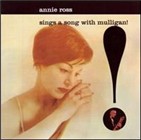
Annie Ross, Sings a Song with Mulligan (Pacific Jazz-Capitol, 1958)
Lambert, Hendricks & Ross, Sing a Song of Basie (Impulse!-Verve, 1957)
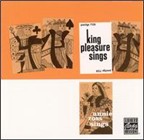
King Pleasure/Annie Ross, King Pleasure Sings/Annie Ross Sings (Prestige-OJC, 1952-54)
Photo Credits:
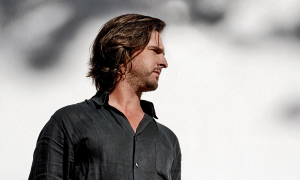
Top Photo: David Beyda
Bottom Photo: Jos L. Knaepen
< Previous
News From The Shed
Comments

Tags
For the Love of Jazz
 All About Jazz has been a pillar of jazz since 1995, championing it as an art form and, more importantly, supporting the musicians who create it. Our enduring commitment has made "AAJ" one of the most culturally important websites of its kind, read by hundreds of thousands of fans, musicians and industry figures every month.
You Can Help
To expand our coverage even further and develop new means to foster jazz discovery and connectivity we need your help. You can become a sustaining member for a modest $20 and in return, we'll immediately hide those pesky ads plus provide access to future articles for a full year. This winning combination will vastly improve your AAJ experience and allow us to vigorously build on the pioneering work we first started in 1995. So enjoy an ad-free AAJ experience and help us remain a positive beacon for jazz by making a donation today.Near


Giveaway

Days remaining: 6