Home » Jazz Articles » Profile » Indian Ocean: Deep, Vast, Free-Flowing
Indian Ocean: Deep, Vast, Free-Flowing
Despite the social meaning behind each of their songs, Indian Ocean refuses to be a political band.
 It's been five years since I first started listening to Indian Ocean. It's hard to believe that greater fame has eluded an impeccable and mature band that has been around for over 15 years with five albums under their belt. Labels are pointless, as the music stems from a rich cultural Indian background combining elements of Bengali sangeet, jazz improvisation, rock-laden rhythmic patterns, Hindustani classical music, Sufism and a melodic soul that's immediately recognizable.
What's interesting about their music is its purity, as well as their level of instrumental independence and magnitude and larger-than-life stage performance. They have performed around the world, to critical acclaim in cities including Edinburgh, Chicago and Tokyo.
Formed in 1990, the present line-up includes Sushmit Sen on acoustic guitars, Rahul Ram on bass and vocals, Asheem Chakravarty on tabla, percussions and vocals, and Amit Kilam on drums and flute. Following the demo tape they put out in 1991, in 1997 Indian Ocean released Desert Rain, dubbed the first live album ever to be released by an Indian band. It's essential listening for anyone who'd like to trace back to the early years of the band, performed live and with considerable improvisation.
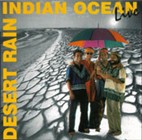 Indian classical music relies on a variety of scales that are used to create specific moods, and Indian Ocean's music is largely based on that tradition. "Desert Rain, the song, is splendidly evocative, with brief lyrics in Bengali. Sadly neither it or "Euphoria, which includes a three-minute vocal jam, are performed by the band these days. The entire album is excellent, and will appeal most to those into fast-paced rhythmic compositions.
The four musicians are mostly self-taught and their musical integrity and tightness arrives from years of playing together. Chakravarty is considered the leading vocalist on the Indian circuit and has remarkable range. Dubbed "the man with the golden voice and brought up in a rich cultural atmosphere of Indian music, Chakravarty showed his rhythmic spark at an extremely early age. A talented tabla player, he combines percussion and lead vocals with immaculate perfection; one of only a few able to handle vocal duties along with Indian percussion.
Sen's guitar work forms the basis of Indian Ocean's unique sound, a wonderfully distinctive acoustic approach where his purity of scale and strong melodic lines interweave impeccably with Ram's complementary bass melodies.
Bassist Ram—who has a PhD in Environmental Toxicology from Cornell University, and is a leading environmentalist—is more than a mere textural player. Instead, he's an equal member in the group's compositions, his bass lines often coming to the forefront and taking the lead. With a raw and powerful lead voice, Ram is the group's frontman, being most often the one to speak to the audience.
Kilam—the youngest member and the quietest on stage—is a textural drummer with a light touch. His style is heavily influenced by the Indian tradition, which incorporates using cycles of eight, ten, 12, 14, or 16 rather than conventional 4/4 or 3/4 meters. The combination of Kilam's drums and Chakravarty's percussion creates a unique sound for the band.
Indian Ocean's third album, Kandisa (Times Music. 2000), acquired cult status and established them as one of India's most original and creative bands. It was more commercially-oriented, a pop-ish and accessible sound, but still unique and different from their earlier releases. It was also their first proper studio recording and the sound is more vivid.
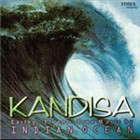 Kandisa's seven songs are a superior tour de force with lyrics from poets like Gorakh Pande and Indira Kilam. One of the album's strongest tracks is "Maa Rewa, a traditional folk song in praise of the sacred Indian river Narmada. There is a beautiful bass and drums solo and a superb tabla/drums jugalbandi. The title track is a Syrian hymn in praise of God, written in Aramaic. "Leaving Home is another beautiful track, the main theme being on the bass harmonics, with wordless vocals and Kilam's beautiful flute work. In an interview, the band said that vocals are considered like any other instrument, without being any more dominant. Sen's guitar work is consistent throughout, with crackling clean scale-based melodies.
The band left India for the first time in August 2001. They played their first concert abroad in London, and then went on to the Edinburgh Fringe Festival, where they played 18 concerts in 14 days. Nominated "Pick of the Fringe," they returned to that festival in 2002 and 2003. In 2002, the band played 37 concerts over four continents, including dates in New Zealand, the United States, United Kingdom, Japan, Australia and Indonesia. In 2003 they toured the UK twice, as well as Australia, Germany, Singapore, and Réunion.
After a long haul, the band released Jhini (Kosmic Music) in May, 2003. The album won the AVMax award for the year's best-produced album. It's a more mysticism-laden disc, and features the group singing in English for the first time on "After the War." The title track puts to music a poem by Kabir, the great Indian saint-poet of the 15th century. "Nam Myo Ho captures the moment of Gautam's soul awakening on his journey to becoming Buddha, the enlightened one. Other essential songs are "Bhor and "Des Mera, a tribute to India.
 In 2004 Indian Ocean composed their first soundtrack for a major full-length film. Black Friday, released in January 2005, is based on the 1993 Mumbai bombings. The album finds the band abandoning their conventional acoustic jazz style, moving in a more electric direction with saxophone, flute, clarinet, sarangi, brass, woodwinds and keyboards. It's a darker and more hanting album in contrast to their earlier albums, which were celebrations of life. The three songs with lyrics and six beautiful instrumentals are stylish, powerful and a sheer treat for fans of electric jazz.
Despite the social meaning behind each of their songs, Indian Ocean refuses to be a political band. They hate to attach brands or genres to their distinctive sound. Certainly the sound that they create is a result of their daily living in an urban setting, and a tribute to modernity.
Selected Discography
Indian Ocean, Black Friday (Times Music, 2004)
Indian Ocean, Jhini (Kosmic Music, 2003)
Indian Ocean, Kandisa (Times Music, 2000)
Indian Ocean, Desert Rain (Kosmic Music, 1997)
About Indian Ocean
Tags
PREVIOUS / NEXT


Become a Sustaining Member

Since 1995, All About Jazz has championed jazz as an art form and supported the musicians who create it. Over three decades, it has grown into one of the world's leading jazz resources, serving hundreds of thousands of readers, musicians, presenters and industry professionals each month.
Help Build the Future of All About Jazz
Your support helps us continue building All About Jazz for the next generation—expanding our editorial coverage, preserving jazz history, developing new community features and creating better ways to discover the music and the people behind it.
Become a sustaining member for as little as $20 per year and you'll immediately enjoy an ad-free experience along with access to subscriber features and future articles for a full year.
Together, we're not simply sustaining All About Jazz—we're building its future. Thank you for being part of the journey.