Home » Jazz Articles » Interview » Charlie Peacock: Accepting the Gift of Freedom
Charlie Peacock: Accepting the Gift of Freedom
I have these two qualities. I
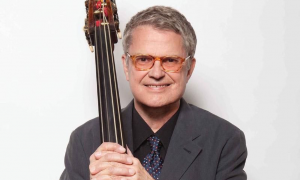
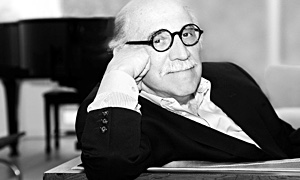
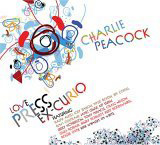
 Charlie Peacock's been in the music business for twenty-five years; his recordings as a solo artist and producer (Amy Grant, Al Green, CeCe Winans, Ladysmith Black Mambazo, Switchfoot) in the pop, gospel and alternative rock genres have sold millions of records. I'll admit I looked askance at his new jazz CD Love Press Ex-Curio—prejudiced by his background, I couldn't believe he could make an album of convincing music that incorporated improvisation. Still, the roster of musicians on the CD was impressive—Ralph Alessi, Kurt Rosenwinkel, Jeff Coffin, Joey Baron, just to name several—so I gave the CD a listen. It's very much to Peacock's credit that the quality of Love Press Ex-Curio immediately overwhelmed, and eliminated, any snobbish reservations I might have had about him. It's a fantastic record that successfully fuses acoustic and electric playing (Peacock's own piano and Fender Rhodes work is very much at the level of the other players), organic time and looped percussion, improvisation and studio editing. Peacock's not afraid of improvisation, nor is he reluctant to structure improv into concise and memorable songs—and the result's as unique as it is enjoyable. I spoke with Peacock at home in Tennessee.
All About Jazz: Let's start with a question so obvious you're probably already tired of being asked it. You've had an extremely successful career in the pop and gospel worlds as a producer and as a solo artist. At this point, I guess you could have continued that indefinitely or you could have gone into any area that interested you. Why a jazz record?
Charlie Peacock: In 1999, I was probably completely burned out on making pop records, so I started looking for an antidote to that. I'm one of these artists that really believes that you create and then you assess. On a very large scale, that might be three or four years of working and then you've got to take the entire month of December and just see if you're going in the right direction. So I've done that for the last twenty-five years pretty faithfully, and in '99 it was one of those assessment years, and the antidote for me was to get back to improvisation first. And so I got with my friend [saxophonist] Jeff Coffin, who plays with the Flecktones, and started just improvising with him—free improvisation. I wanted to get completely away from composition, pop song structure, and all of that, and just let my love of improvisation lead me to where the next steps were. So over several years, that started taking me into different areas, whether it was working on a duets record with Jeff or starting Love Press Ex-Curio. But that's how it all started.
AAJ: So this album, Love Press Ex-Curio, was tracked in two basic sessions; one was in New York City and the other was in Bellevue, Tennessee, which I assume is close to where you live.
CP: Yeah, it's at our house here.
AAJ: Were these sessions recent or were they done over an extended period of time?
CP: It started three years ago. It had been an ongoing project and when I started a new production company for developing pop artists, part of putting that business together was to have a development relationship with one of the independent distribution mechanisms. I had worked with Red—Sony Red at that time—on Switchfoot [the multiplatinum alternative-rock group Peacock produced] records, so I knew they could do a good job, and I made a deal with Red to release indie-level product. And then it was like, "oh, I can put this record out.
AAJ: So when did you do the basic tracks?
CP: I think they started four years ago.
AAJ: I wonder if, when you're dealing with a long-term project like this, and going back to tracks, and adding things to them—do you ever reach a point where you're saturated with the work and not even sure whether it's good?
 CP: Yes, definitely, and I think that that was one of the benefits of not working on a schedule for this sort of first go-around. I could relearn—or maybe, in some ways, learn for the first time what kinds of assessment skills I needed to sharpen to be able to pull that off. So it was a good R&D time for me, and I learned a lot through it. And now on my subsequent projects—I've got two more going right now—I'm giving myself deadlines. Because, you know, the whole rest of my career has been on deadlines. If you really become an active participant in the music business, then you only get that first record without a deadline, in a sense anyway, because you've been working on it your whole life. And after that, depending on whether you're producing or doing your own work as an artist, it could be every three months, it could be every year, every year-and-a-half.
AAJ: The tunes on Love Press Ex-Curio—not to suggest they are 100% composed, but were they written just before the sessions? Or were you writing in the studio?
CP: Some of them written for the sessions and some were written afterwards. It really depended on how that particular piece was coming together. All of the New York sessions had a lot of detailed parts written for them, and the Bellevue sessions were more born out of, say, one evening of a jam session.
AAJ: You play quite a bit of Fender Rhodes on this record, and there's a lot of your piano as well on the tracks. But really, your ultimate instrument here is the studio itself.
CP: Yeah, most definitely. You won't see me taking any five-minute solos, because [laughing] I would be completely bored by my own playing! To me, you've got be a real giant to be given that much real estate—and I think that maybe part of what people are liking about the record is the economy of the events as they're put together and how you get from one event to another. As opposed to a jazz record that has a head, and then a four-minute solo, an interlude and another four-minute solo. I always liken it to real-book jazz, and I stopped liking that kind of music about twenty years ago. I'm much more interested in what happens with improvisation and then what kinds of composition can be melded with that—with the improvisations.
AAJ: In terms of the studio, for this project anyway, how did you work? Were all the players in the same place at the same time? Or were you building the tracks up, and, say, adding the horns one by one?
CP: The bulk of it, 80% of the music that you hear, is all the musicians in the studio at once. It was important to me to do that; that was one requirement that I did give myself. I would risk that much. I wouldn't be the sort of auteur producer who is locked in a room with ProTools for three years, just tinkering with everybody's performance. I really wanted to risk playing with people, because that's what happens in pop music—progressively, over time, you risk that less and less as you attempt to buy these sort of microinsurance policies to make sure you succeed by commercial standards.
AAJ: You build a record.
CP: Yeah. And I wanted to get away from that. I wanted to put myself in a situation where things could just come completely undone. I also wanted to put other players in without a lot of control on my part—like, say, [drummer] Joey Baron. Whether he had played to tracks very much or not, I'm not sure. And part of our discussion in the beginning—because I brought prerecorded tracks for us to play to in New York—was him saying, "well, what do you want me to play? And I said, "I just want you to play what you hear. So don't feel that you have to hold something down in a traditional way or that you have to play completely free because the groove is already implied for you. So it was a challenge to other people, too, to interact with the electronic parts of it.
AAJ: You got a pretty fantastic roster of musicians to play on this record. I suppose trumpeter Ralph Alessi is as prominent as any of them; he's on both sessions and his lines are often central to the tracks.
CP: Uri Caine was the one who told me about Ralph. That guy is just a giant trumpet player.
AAJ: Yes, he's on a lot of great records lately.
CP: I think you're going to see him really rocket in the next couple of years. Number one, he's just as skilled as anyone on the planet. But his vocabulary's also very big and he's a very soulful player.
AAJ: I won't bore you by listing every musician who plays on your CD, but two players who seem incredibly important to how the music works are the two bassists: Victor Wooten on electric bass on the Bellevue stuff, and James Genus on acoustic on the New York material. Even during the more static, programmed sections, they add a real human warmth that is audible and palpable.
CP: That's great. That's what I was hoping for, because I like the repetition in the static parts—the ability to loop things. But I always try to combine some elements that were more random, a little more reckless and human.
AAJ: I'm going to ask you more about that. But first, let's talk about "When Diana Dances, the CD's leadoff tune. It's got a swaying elegance to it, and while it's not overcomposed, it's got—like many of your songs—a very memorable theme. It starts with a sort of Spanish vibe, with Ralph's trumpet and Jerry McPherson's spaghetti-western guitar, then goes into its trumpet/tenor theme. But that's just how it starts. Tell me something about this song.
CP: "When Diana Dances is no exception to this: in every case, these songs in their original form were considerably longer than they are. So part of my job, I think—and this is where there's a fine line between production and composition—is to recognize in someone's improvisation a repetitive theme, or a theme that ought to be heard multiple times, or expressed again. I think that when you hear the sections as they unfold—when it shifts to a new picture in a sense, to a new scene, to borrow from a film vernacular—part of the reason it does that is that's exactly what happened naturally in the improvisation. But it may have happened later or it may have been just a moment that then, from a composition standpoint, I took and capitalized on more. That's something I did over and over again as I was delighted by what someone was playing. As a producer or composer, I was saying, "oh, you should have stuck with that a little bit longer. So through the production process, I helped them stick with it a little longer. I'd sort of stay in those moods longer, or repeat things that maybe they had only played once. A bass line that had only been a snapshot of four bars ended up being eight bars.
AAJ: Composition by editing.
CP: Exactly. That's exactly what it is. It's responding to these long improvisations and saying, "if only or "what if.
AAJ: That's very interesting, because the first thing that struck me about "When Diana Dances once I started listening intently to it was how perfectly concise it was. It's only about six minutes long, and it packs a lot of content in a very enjoyably structured way.
 CP: See, this is what I do every day. When we get off the phone, I'll walk out to the studio. I've got a band in there that I'm working with, developing—they're working on their first record. And I'll listen to what they do, and just as I did yesterday, there's a good chance that I'll end up editing quite a bit of it. We'll talk through it, and wrestle through parts. It's much easier to do that with a band that's already spent time constructing their parts. But if I were to attempt to do that in a session with the world's greatest improvisers? Number one, some of them would be insulted by it. But secondly, it would take away from the aesthetic that's already been established and agreed upon. So it's almost better to do it after the fact; then it becomes a new surprise for people and they can say, "gosh, yeah. Now I see—that's great how you took that theme of mine and developed that further. But if I stopped the session a hundred times to say, "hey, you should do this and you should do this, it would completely cause the session to fall apart.
AAJ: Besides, if you did that, there's the danger that if you stop because you love that one trumpet phrase, then you're going to miss the other good one he plays ten minutes on.
CP: Absolutely. So this is how I've fallen into this methodology.
AAJ: "When Diana Dances has something I notice all over the CD, which is a really interesting and satisfying tension between organic drummer's time and more programmed, looping drum patterns. There's always a balance between them. Jim White's the drummer on "Diana. Were his parts cut up, looped, rearranged at all after the fact?
CP: Not on "When Diana Dances. It might be a composite of a couple of performances, but I don't think there's any looping or moving him around.
AAJ: I like how, on this tune, the time gets a little more abstract in the middle, then you have a breakdown with a repeating vamp just before Jim sort of pulls it into a straighter time with some great cymbal work just before the theme returns. You do something similar in "Super Jet Service, where the rhythm again breaks down into a programmed drum part. Any perspectives on this?
CP: Yeah. I think Jim seemed more conscious of keeping his own thing together over the course of playing with the electronica and looped sections. And that was fine for me. I just let him do that; I captured his performances and made a composite of them. With Joey, just because of the way he's wired as a musician—he would actually drop out sometimes and give me some space to work with. And I really loved that, and I loved the surprises of some of his fills, how incredibly reckless and crazy they are. That's great, to have that much tension between the static loop-type percussion and somebody playing things that would be dangerous to try to transcribe.
AAJ: Tunes like "Diana and "Super Jet Service have lots of layered keyboard parts. They're dense; instruments appear and disappear and rise and fall in prominence. "Bucketachicken might be the most layered of all. I think the record's mixed very well; it sounds great. If, say, "Bucketachicken hadn't been perfectly mixed, it would just be confusing. Do you have a sonic philosophy of mixing?
CP: Well, Richie Biggs, an engineer here in Nashville, actually worked on the final mixes. Shane Wilson did some as well, but there wasn't a hair out of place when these songs were turned in to mix. I had already kind of cast my vision for balances and all of that, gone through and wrestled over sections—going, "does it really need that texture? It's full enough and saying "no, it's adding just a little bit of top, I want to keep it as long as it's buried behind this other instrument. It's going to be the right mix. I had given all of those things quite a bit of thought already when I turned it in for mix.
AAJ: So your levels were going to completely set the tone.
CP: Yeah, this was not material that was worked on a lot with engineers. This was material that was cut with engineers and then I worked on it—so I was very personal with it. Everything had had a lot of questions asked about it before it got to the mix stage.
AAJ: I've listened to this record at home, in my car—and I think it's especially enjoyable on headphones. This is my headphone album of the year.
CP: That's great. You know, [guitarist] Jerry McPherson, who plays on a lot of country and pop records, is just a giant at that kind of ear candy thing. And he and I have worked on records for fifteen years, and we've always tried to sneak a little bit of this kind of stuff in on everything we work on. But I just think that Jerry can play anything, and it's one of the great secrets about musicans in Nashville—that they have these skill levels that are, well, not dormant, since they're using them in some way, whether working on them at home or just experimenting. But certainly not used to the degree that they could be.
AAJ: "Super Jet Service is the one song on the record you co-wrote, with Tony Miracle, whose vibes are so great on the tune, especially at the end. I like the song's intro with that quarter-note drum pattern. I'm interested in your piano playing here; you do some great comping over Ralph's trumpet. You could regard it as an autonomous solo—it's a real voice during Ravi Coltrane's lines as well. This is one of many places where your piano ornaments and plays around the horn parts. Any insights into this?
CP: Gosh, I don't know. It might be one of those things where maybe I'm more innocent just because I just kind of play it as I hear it. I did read one review before that referred to my "unorthodox comping style. [laughing] So I don't know. I guess I just get happy and excited with the music. In those cases, where we were improvising and playing with Joey Baron, who's such a joy to play with—I guess we were just having fun. It just seemed that that's what I should have been playing. But after reading that in a review, I was kind of paying attention to some other music the other day on the radio on a jazz station. And I was thinking, "yeah, I guess I was kind of overboard!
AAJ: Well, we jazz writers can get kind of hung up on notions. The word "comping just means playing guitar or piano alongside someone else's lines, and that can get very regimented. Maybe we can just avoid the word, and instead of unorthodox "comping, it's perfectly great "playing along.
CP: Yeah. I just saw it all as part of the composition. And maybe again, that's where my rebellion against jazz when I was younger took place: I always bristled at the notion that I had to obey rules. I understood the conventions of the form, but the thing that attracted me the most to jazz and improvisational music was the idea that you could make new rules.
AAJ: Speaking of piano—let's talk about your solo piano pieces on this record, "Dodo's Whim and "Frank the Marxist Memorial Gong Blues. These work very well as breaks between the other material. "Dodo is a little concerto with some dense clusters, but it's also got a melody I like very much. "Frank the Marxist is really sweet, with a gospel-y, spiritual quality. But both of them have been augmented with laptop, ambient effects, which are very sparse and very effective. I especially like them on "Frank the Marxist ; they're like ghosts drifting over and around your playing. What made you decide to treat these pieces in this way?
CP: These pieces were improvisations that I had recorded separate from the sessions. I kept thinking, "I love the way the piano is in the sessions that we cut in New York and I'm happy with that. But I just wonder if there should be some moments where piano is heard more closely, and kind of peeks out. So I had about ten of these improvisations finished and I went through those and chose the two that are on the record for various reasons. I did some sequencing of the album first with those pieces, to try to play with how they would work together, and maybe even have segues, whether some of Tony's and Jerry's bits might fit with that.
 So that's how it first came together, just playing with the sequencing. Once I believed in it, then I started to play with the electronica elements, to see if they would transition and again, remain believable. It seemed to work; I liked it. I even had one of those beautiful, happy accidents with one of Tony's pieces where it had been from a different performance—and when I draped it under the piano, it just came together completely. It was like all the right atonal stuff, all the right consonant stuff. Even some places with, like you said, the ghost thing, where things peeked through as if they had been written for that moment.
AAJ: I like the segueing; there's some nice crossfading from "Frank the Marxist into the drums of "Bucketachicken.
CP: If you like those pieces, the record that I'm working on now, finishing up for a February release, has a lot more of that. The basis of it is improvisation—piano and tenor sax improvisations with Jeff Coffin. And then Marc Ribot is our main guest on guitar. And I've sent Tony all those sessions and he's responded with stuff and sent it all back to me. And then I've been editing on that. It's still the Love Press kind of technique, but it's more intimate—kind of what you like about those piano pieces. It's that kind of blown up a little bit more. There are some woodwind orchestrations on it. It's a really interesting hybrid.
AAJ: Who's playing the woodwinds?
CP: Jeff. He's playing clarinet, bass clarinet and flute—overdubbing them.
AAJ: Those are great instruments.
CP: That's what I'm just having so much fun discovering—these combinations of orchestration that don't get to bump up against each other that often. Like four clarinets and a flute up against electronic elements. It's just gorgeous!
AAJ: "Bucketachicken is my current favorite song on the record. I love its guitar-vamp intro; it's so clean-sounding in contrast to those dubby, staggered horns that alternate with it in the theme. I also like its repeated, skittering guitar figure that recurs throughout the song—that's been playing in my head for the last few days.
CP: That's amazing how that can become a hook, huh? That was a tune that started as a jam between Tony, Kip Kubin—who was manipulating everything we were playing through an ARP 2600 [synthesizer]. He was taking a feed of what we were playing. I was playing Rhodes, Jerry was playing guitar loops, Tony was playing laptop. We built that piece as an improvisation and then immediately overdubbed over the top of it. I sang Jerry those guitar lines; they just came to me as soon as were done with the improvisation and we put them right on. That all happened super-quick. The next day Victor [Wooten] came in, sat with it, and provided the foundation and also picked up on that blues line, played with that. And then it kind of [laughing] grew from there! The ones that we did here in Bellevue—they were all started with that configuration of Jerry, Tony and I, with Victor coming the next day to do bass lines.
AAJ: Sometimes it's the small touches on these songs that fascinate. It's easy to say how great [guitarist] Kurt Rosenwinkel is on "Be Well Johnny Cash or how great its theme is—that theme's very busy-street-on-a-sunny-day to me. But I think I get the most from the way you end the song with that breakdown that fades out with some backward effects and that repeated drum pattern. It sounds so right, but I don't know why it does. CP: Well, probably because the tune didn't sound right before. I played around with the ending; it had a natural ending on it and it just didn't seem to give the listener the processing time of what had gone before. You know how that is sometimes when you're listening to a performance and you just think, "oh my gosh, that shouldn't have ended there. Or you're watching a film and you go, "it's over? So I kind of had that feeling about that improvisation, and so I kept playing with it, and finally thought "I just want to have this static loop that's got these ideas that are pulled from the song, so they suggest that, they bring the listener back into the content they've heard—but on the other hand, they bring in something new. I'll just let them fade on that, and that will give them time to process what has happened before. You know, this is the way a pop producer thinks. And maybe that's the uniqueness of my doing this, of having made hundreds of records and then being able to bring this to improvisational music.
AAJ: If there's anything else you might bring from that background, it's also how good your themes are. They're really memorable.
CP: That's something I struggled with, because I have these two qualities. I'm a populist and a rebel at the same time, so there's a part of me that's always wanting to make something new that's never been heard and a part of me that doesn't want to leave anybody out of the conversation. So there's always a tension and a struggle, and I wondered about the heads. I wondered, "are these too simple? Are they too singsong-y? Should I show more of my compositional chops? Then I just would think, "man, get over yourself! Leave them as they are!
AAJ: Well, they're not that simple.
CP: Sure, sure. But there is a level of jazz composition that is extremely sophisticated—say, if you take of [Michael] Brecker's records, or even the first Wynton Marsalis group records. Or some of Dave Douglas's compositions for quintet. Okay, there's a bar of 3/8, there's two bars of 4/4, there's a bar of 7/4. It's intense! It's like math. So I was trying to find some happy medium where it felt like it was sophisticated enough, but there's something people can grab ahold of. Because I felt like in the midst of all the improvisation, there just needed to be some anchors.
AAJ: What about the title of "Be Well Johnny Cash —is this your farewell to the Man in Black?
CP: Yeah, because I think that when I was working on that was when Johnny started getting sick and people were starting to wonder, well, is this that time when perhaps our greatest icon in Nashville is going to move on? We were having an event here at our house and Bono came here. So there was the idea that maybe Bono would want to have Johnny come to the event, so I had talked to a friend of his, Duane [Allen] of the Oak Ridge Boys, about bringing Johnny to the event, kind of escorting him and making sure he was okay. And I had a really great conversation with Duane where Duane said, "I got a really good feeling about you, Charlie, and I suspect Johnny will too.
[laughing] So I was thinking, "wow! Johnny Cash is going to come to my house; this is going to be so much fun. And he ended up passing away. But before that, I had already put this sentiment in the song title. It's kind of a wish and a prayer for him to be well. And I also thought there was something right about getting Kurt [Rosenwinkel] to play on it—to get this giant of guitar vocabulary playing on this song that was named after this iconic country artist. That's not even fair to call him a country artist, is it?
AAJ: I'm not offended by it. He's a Johnny Cash artist. They don't get more iconic than that guy—or much better. "Longing for Louis is a tune with a nice acoustic piano intro; there's more of that we-won't-call-it-comping around Jeff Coffin's and Kurt Rosenwinkel's parts—we'll just call it playing. The tune breaks down into that part that is almost free jazz after that bit of bass soloing from James Genus—you play a piano interlude with just a simple pulse, and eventually Ralph Alessi and Coffin play free lines. Very polyphonic, and maybe the jazziest part of this jazz record.
CP: You know what, I struggled with that song because I loved that section so much! I loved all of that more than I loved the song. We actually re-presented the head two other times in the original composition and really, up until the point to about a week before the mix, there was still another round of the head in that song. And I told Richie, my engineer, "man, something's just not right about that song. I took one more stab at it, it was one of those gut things, the blink phenomenon—I just said "this is it and I sliced and diced and there it was and I said, "it's unconventional, but I'm going to leave it like that because that's what works for me emotionally and musically. So that's how it ended up like that.
AAJ: You wanted the head to be as good as the stuff that it surrounded.
CP: Yeah. And it seemed that to repeat it again and again was just bowing to a convention that [laughing] no one was making me bow to! It's like, for crying out loud, if I'm not going to accept the gift of freedom that comes with this music, I'm a total wimp.
AAJ: You do have to ask yourself whose rules you're following.
CP: Yeah, and once I got rid of that, it all made perfect sense to me. And I think that without trying to do it, there's a lot of that kind of more cinematic, linear kind of composition where things don't have to return again and again to some familiar form. And it seems to hold up; it seems to still maintain your interest.
AAJ: "All or Nothing Grace is the last tune I want to discuss. It's beautiful, spooky—it starts with a piano vamp and there's a descending trumpet line from Alessi against it that recurs during the track. There's a dub feel to the track, and Ravi Coltrane plays a gorgeous solo. This is the album closer, and it's the sparsest thing on the record except for the solo piano stuff—there isn't the layered quality of the other tracks. I think this one's got a very spiritual vibe. CP: That one actually had more treatment on it and I took it out. Songs seem, based on the original improvisations, to have a temperament. They tell you [laughing], "you'd better stop trying to do things to me or I'm really going to get pissed off! And that seemed to be the song, of all the songs on the record, that seemed to feel that way. So I pulled some things out, put some more air around it. That seemed to be the right thing to do. And the sentiment—yeah, I've always loved that idea: the idea of "All or Nothing Grace was kind of a chant, a mantra, of Martin Luther's followers, and I liked that. It can't be grace if it has conditions on it. It's no longer grace; it's all or nothing. And so maybe that spiritual idea is infusing the music a bit.
AAJ: One thing I like about this album is its length—it's under fifty minutes long, like a vinyl album, which is still the ideal length for an album to me.
CP: Man, I think it is.
AAJ: Was there stuff recorded that didn't make the cut?
CP: Only one piece that I remember. I recorded a piece that was a free improvisation between Jeff and a drummer that he had been playing with, a fellow by the name of Tommy G. I was originally going to do a piano and string arrangement to it so that it would be almost like an Alice Coltrane piece—and then see if some electronica, some laptop stuff, would work with it. There was something about it that just didn't seem compatible with the rest of the material, so I didn't move ahead with it.
AAJ: I know that you're playing this stuff live—you're playing the Jazz Standard very soon. How's this going to work? Who are you going to play with?
CP: Well, for the Jazz Standard, it's going to be Jeff on sax and Maurice Brown on trumpet. You know Maurice? He's a young trumpet player from Chicago. Then Adam Rogers, the guitarist, hopefully will make the date. Matt Wilson is playing drums and Felix Pastorius, Jaco's boy, is playing bass.
AAJ: Will it sound like the record?
CP: Well, we played this record in Nashville and I had Jerry and Tony play, and they had all their original pieces from the record. So we got to hear what it would sound like like that. I'm still debating whether to take Tony to New York with me; we'll see, he's pretty busy working on records. He's not used to playing out very much. But yeah, every opportunity I can, I'm going to want to use Jerry and Tony, but this may not be a time I can. We'll see if Adam can pick up some of the things that Jerry was doing.
AAJ: How was playing in Nashville?
CP: It was great! And really rewarding that all the music worked live; I've done enough records to know that sometimes things that you think are so clever and interesting—they just totally bomb live. So the fact that we were able to have one rehearsal and it sounded like the record was really rewarding. I'm happy with the way it's going so far. It'll be a big test for me playing in the city; I'm used to having things a lot more together than this, you know—but the economics of the jazz world are so sketchy. It's hard to get everybody together to rehearse, to be well-prepared. I'm hoping that over the course of the next year, as I play with a number of people in different cities and kind of try this out, I'll be able to put together a band that I can count on and just commit to it financially to rehearse and play the music at the level I really want to play it at. AAJ: You've already told me about one of your upcoming project, which should be out in February. Anything else?
CP: Yeah, I'm working on what will be the followup, I guess, to Love Press; I just started on that. I did one session in New York with Ben Perowsky on drums, Felix on bass. Tony and Jeff were there for that session, and then I used a guitarist from Iceland named Hilmar Jensson, who's really, really great. He plays with—you know this drummer, Jim Black?
AAJ: Yeah, I especially like his stuff with Ben Monder.
CP: Jim has a group and Helmar plays in it. That's all the recordings I know of Helmar's. He's great—one of those guys where everything sounds upside-down. Really good player. Good gentleman, good hang.
About Charlie Peacock

Tags
PREVIOUS / NEXT

Become a Sustaining Member

Since 1995, All About Jazz has championed jazz as an art form and supported the musicians who create it. Over three decades, it has grown into one of the world's leading jazz resources, serving hundreds of thousands of readers, musicians, presenters and industry professionals each month.
Help Build the Future of All About Jazz
Your support helps us continue building All About Jazz for the next generation—expanding our editorial coverage, preserving jazz history, developing new community features and creating better ways to discover the music and the people behind it.
Become a sustaining member for as little as $20 per year and you'll immediately enjoy an ad-free experience along with access to subscriber features and future articles for a full year.
Together, we're not simply sustaining All About Jazz—we're building its future. Thank you for being part of the journey.