Home » Jazz Articles » Profile » Tatsuya Yoshida
Tatsuya Yoshida

...[they] let their amazingly intricate rhythmic patterns become the music--not that
—Eugene Chadbourne on Tatsuya Yoshida and The Ruins
 Six or seven years ago, a rumor started circulating on an Internet chat group dedicated to Japanese psyche and experimental rock. Tatsuya Yoshida—grandfather of Japanese punk and innovative rock—was playing gigs in jazz pianist Satoko Fujii's band. Questioning posts followed and, with verification, some figured it was just a passing fancy. Surely one of the fastest and most powerful drummers in avant rock wouldn't long be happy in the nuanced and subtle world of jazz.
 Yoshida is the founder and drummer of the seminal duo The Ruins, who since their first record in 1986—a self-titled 7 EP released by Trans Records—have been a focal point for new rock in Japan. Working with a string of bassists, Yoshida built a sound borrowing from the exactitude of progressive rock, short bursts of punk energy, the remarkable precision of so much Japanese music and an invented language (in tribute to prog legends Magma). "This group's unique basic instrumentation of drums and bass was no less than a palace revolt against the established role of the rhythm section, another rock revolutionary—Eugene Chadbourne—wrote for All Music Guide. "As if setting the basement servant headquarters aflame and then tromping upstairs to take control of the house proper, the two musicians let their amazingly intricate rhythmic patterns become the music—not that 'rhythmic patterns' is much of a description of what most of it sounds like, kind of like calling the Thames River 'water'.
 The band grew in popularity and got to be known in America with the Shimmy Disc reissues of their first two albums, 1990's Stonehenge and 1992's Burning Stone. Before long, they were making regular trips to the States and Yoshida had launched a record label, Magaibutsu. With his own imprint, Yoshida was able to pursue other projects, such as the odd little songs of Akaten (his duo with Acid Mother's Temple bassist Atsushi Tsuyama); Koenji Hyakkei, a larger and more overtly prog-inspired group; and numerous compilations of Japanese rock bands.
 Following the Shimmy reissues, Yoshida began issuing albums on John Zorn's Tzadik label, further advancing his Western world profile, like Four Ruins records (including a collaboration with British free improv legend Derek Bailey that brought Bailey more into their world than the other way around), two by the hard rocking Korekyojin trio and one by the a cappella group Zubu Zuva. By the point of chatroom jazzband rumors, then, Yoshida was well known, which made the stories all the stranger.
It turns out that partnership with Fujii wasn't short-lived. Their first recording together—Vulcan, with Fujii's husband Natsuki Tamura on trumpet and Takeharu Hayakawa (a regular collaborator with jazz-rock saxophonist Kazutoki Umezu, who also has a history with New York improvisers) on bass—came out in 2001. The disc was disappointing, with Yoshida's heavy drumming too loud in the mix. But since then, they have released two stronger quartet records and an excellent duo disc, Toh-Kichi, recorded live at the Festival International de Musique Actuelle de Victoriaville in Canada.
"His approach of improvisation is very different from jazz musicians, Fujii said while touring Europe with Yoshida last month. "He is a great improviser and it is big fun to play with him because his way to approach music is totally different from me and I am inspired many times. He strongly pushes things without any hesitation. Many improvisers use different colors so the music will not have 'extreme color', but Yoshida uses the exact same color so the music has strong garish color with a sharp shape.
 It also turns out that the Fujii quartet wasn't Yoshida's first foray into jazz. At the time they started working together, he had already been working in a quartet with pianist Masabumi Kikuchi, saxophonist Hayashi Eiichi and pianist Kano Misako. The same year Vulcan was released, the first record by the Slash Trio showed up. Working again with Kikuchi and adding bassist Masaaki Kikuchi, Slash were less structured than the Fujii Quartet, playing extended pieces with a touch of '70s groove.
 The Japanese magazine Swing Journal said, "Not totally depending on the form of beat, not forcedly accelerating to the maximum speed, they succeed in transforming the rhythm to the protean waves and vibrations. Yoshida has also worked in improv settings with Altered States guitarist Uchihashi Kazuhisa; a "prog improv group with Hoppy Kamiyama of Optical*8 and The Pugs called Daimonji; and Sanhedorin, a trio that includes guitarist Keiji Haino.
"My first interest is composition, Yoshida said, "but I also like to improvise with musicians who have good ears.
He distinguishes between improvisation—which has at times even been a part of his work with The Ruins—and jazz.
"I need to use a different approach when playing with jazz musicians, he said. "But it feeds back to rock improvisation. I haven't listened to jazz so much. I probably have only ten records of jazz. When I listen to records, I don't focus on drumming but focus on the music. My favorite drummers must be favorite composers, for example Christian Vander and Charles Hayward.  During the third week in December, Yoshida's improvisational skills will be on display at The Stone in Manhattan's East Village. He'll play duets with Zorn and a pair of pianists—Sylvie Courvoisier and Jamie Saft—as well as with the remarkable Japanese multi-instrumentalist Yoshihide Otomo. He'll also present some of his rock projects, using Trevor Dunn, Jon Madof, Ron Anderson, Shanir Blumenkranz and Timothy Dahl to fill out the line-ups.
"I'm excited to be playing with these musicians, he said. "I have never played with most of them. I don't have any thoughts about playing with them. I will just listen and respond.
Recommended Listening:
Satoko Fujii, Zephyros (NATSAT, 2004)
Satoko Fujii/Tatsuya Yoshida, Toh-Kichi (Victo, 2002)
The Slash Trio, Live at Motion Blue (Polystar, 2001)
Tatsuya Yoshida, A Million Years (Magaibutsu, 1997)
Ruins, Hyderomastogroningem (Tzadik, 1995)
Derek and the Ruins, Saisoro (Tzadik, 1995)
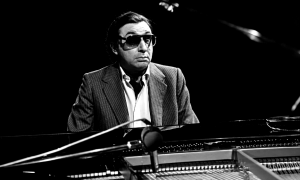
Photo Credit: Courtesy of Peter Gannushkin/Downtownmusic.net
Tags
PREVIOUS / NEXT
Become a Sustaining Member

Since 1995, All About Jazz has championed jazz as an art form and supported the musicians who create it. Over three decades, it has grown into one of the world's leading jazz resources, serving hundreds of thousands of readers, musicians, presenters and industry professionals each month.
Help Build the Future of All About Jazz
Your support helps us continue building All About Jazz for the next generation—expanding our editorial coverage, preserving jazz history, developing new community features and creating better ways to discover the music and the people behind it.
Become a sustaining member for as little as $20 per year and you'll immediately enjoy an ad-free experience along with access to subscriber features and future articles for a full year.
Together, we're not simply sustaining All About Jazz—we're building its future. Thank you for being part of the journey.