Home » Jazz Articles » Interview » Marc Johnson: Sweet Tone for Sweet Tunes
Marc Johnson: Sweet Tone for Sweet Tunes

You absorb the things that you like from these players and make it your own. Now I don
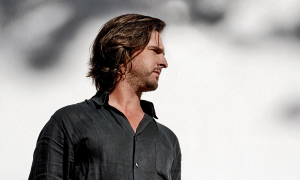
 Marc Johnson is an extraordinary musician, but recordings under his own name are infrequent. That can often be the case for people whose instrument is the contrabass. But for this musician, it seems more about making statements when the time is right.
 Johnson plays exquisite bass, with the luscious tone and great harmonic and melodic expression that came to the ear of most people in jazz during his two-year tenure with the legendary Bill Evans nearly 30 years ago. Even though Johnson had been touring with Woody Herman before that, the platform of the Herd's big sound wouldn't bring any bassist into the limelight in the way it could with a trio—let alone one of the most influential trios in jazz.
Not only does he continue to play fine bass with the likes of Eliane Elias, Lyle Mays and others, but his latest recording, Shades of Jade on ECM records is remarkable, rich in composition and in its improvisational nature. And the band is superb. It could garner attention in annual "best of polls.
Johnson and Elias are the composing stars of the album, and their playing is, expectedly, outstanding. Elias is a player of uncommon intensity and invention, who can also exhibit the graceful and whimsical. Adding his tone and improvisational skills on sax is Joe Lovano, matched by the estimable John Scofield on guitar, and pushed by the musical drumming of Joey Baron. Alan Mallet adds occasional organ. They have performed with each other over the years, and the combination of writing and cohesion of the group has made it special.
"I knew I wanted to work with this group," says Johnson, who is both laid-back and intelligent. "I had it in the back of my mind to give part of the project. I know a lot her compositions from working with her for so many years, although I didn't want to do a Brazilian record. Some of her ballads are just exquisite. I wanted to play some of those things maybe she hadn't recorded or wouldn't necessarily record on her own records, for instance.
"The personnel had so much to do with the writing, in a way. Once I established the players in the band, it becomes a sound in your mind. It's part of the creative process for me when I'm conceiving of music for a band. I like to take the players and imagine what that sound could be like, says Johnson. Duke Ellington might have smiled over that.
"In fact, Eliane had written 'Ton Sur Ton' some years ago with Lovano and Scofield in mind. I had been playing with them. I did about a year of touring and recording with Scofield's quartet in the early '90s and I've known Lovano for years. Some of my first professional experience was playing with Lovano in Woody Herman's band. I've kept in touch with him over the years. We're pretty good friends.
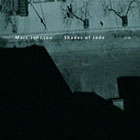 Johnson admits he is not an obsessive composer. "I don't do a lot of composing, even as an avocation. When I have a project to do I will go to the woodshed and work on some things for a period of weeks. Sometimes when an idea comes to me I'll jot it down to develop later. I don't make a steady practice of it, like composers do. But the tunes are good. It's not a blowing session or bebop blazer, but Johnson's experience is broader than that, his musical palette more colorful. He likes the time to be more free. His songs, and those of Elias, allow for exploration of an ethereal nature at times, as well as more direct and spirited paths.
The sweet Elias ballad "Apareceu is an example of her wonderful romantic side, expressed by the whole group. "Snow and "All Yours" are serenely expressive. "Blue Nefertiti by Johnson is a hip play on the famed Wayne Shorter title cut to one of Miles Davis' great works, slipping in parts of the melody with funkier bits, which Lovano particularly has fun with. "Raise kicks the tempo up and each soloist handles it nicely.
"I don't now what's mainstream anymore. These are really great songs and there's quite a few moments of improvisation. So in that sense it's a jazz record, says Johnson. "The only piece that really isn't improvised is the last piece ("Don't Ask of Me ) where I bow this Armenian folk song. The rest of the music is structured like what I would consider mainstream jazz: head, solos and head.
"I'm so happy the way it turned out. I was calm. A lot of record dates I've done I'm nervous going into the date. This was one that I was very comfortable. I think we've reached an age where we know what we're about as players. We can trust each other completely, and we just go and have fun playing the music, then pick the best take. It came out that way.

"Eliane and I and Joey Baron (drums) are so comfortable together. I've been playing with Eliane now for 15 years or more, steadily. Those kind of things that might make you nervous going into a record session weren't there, because we're so familiar with each other's playing. We just relax and get into the music. The sessions went pretty easily.
This elite bassist didn't start out on the instrument, but picked up piano, and later cello, as a child in Omaha, Neb. Johnson's father was a music educator at the high school and college level. Also a jazz fan. So Johnson was listening to Oscar Peterson, Bill Evans, Dave Brubeck, and Miles Davis on record. At the age of 15, Johnson moved with his family to Texas. He eventually went through the music program at the University of North Texas.
Switching to bass was perhaps a matter of fortune, and good fortune, as it turned out.
"The high school director was losing his bassist. He graduated. I was kind of a mediocre cellist, Johnson chuckles, "so he said 'Would you like to play some bass?' So he gave one to me to try out for the summer before the 10th grade started. My dad got me a private instructor and things kind of took off quickly.
At first, the youngster listened to classical players. "I heard some Gary Karr and I was in classical bass sections trying to play the classic literature, Beethoven, Mozart, and some solo literature for the double bass. Mostly transcriptions of other instruments. I listened to jazz, and I was in the high school jazz band. But my real jazz education didn't start until I entered university, he says.
Ironically, "I was listening to the Bill Evans trio a lot more intensely at that time.
It took Johnson a few years "to get some technique together on the instrument to get to where Ray Brown, Ron Carter and what some of the other bass players were doing could begin to make sense. And I made more sense of things as I played with other players in college.
"The Bill Evans trio was a big influence. Ron Carter was with Miles Davis' group. You can name so many bass players. ECM was fresh on the scene in the early 70s, so I was listening to a lot of their recordings, like Dave Holland and Miroslav Vitous. Eberhard Weber. Then the stalwarts: Ray Brown, Charles Mingus, Charlie Haden. Down the list, I pretty much heard them all and if I didn't study them I listened to them real intensely for periods of time.
"You absorb the things that you like from these players and make it your own. Now I don't even think about my influences so much. You get to a point where you just play. Those early years were fun years when you're developing. So excited listening to everything, like a sponge.
After college, Johnson was freelancing around the Dallas/Fort Worth area. Woody Herman called in the summer of 1977.
"The scene in Dallas had deteriorated to the point where the road looked good to me. There were some friends of mine in the band as well, in the rhythm section, so I took the plunge. I'm really glad I did because in a way it prepared me in a professional way for what was to come not too much later, he says. "A year later I was with Bill Evans."
Evans, one of the most influential pianists in jazz, had gone from working with the jazz greats, like Miles, to his preferred trio setting, for the most part. His trios not only had fan acclaim, but were watched by musicians who marveled at their cohesion, as well as personal style and statement. At age 25, Johnson got his chance to be a part of that world.
"It was really awesome. I knew I was going to audition for him. So while I was on the road with Woody, I had about 10 cassettes (of Evans' music) I was listening to, night and day, with my headphones, he says. "You get a lot of time to listen on a big band bus criss- crossing the country. I was steeped in his repertoire. I got the opportunity to sit in with him at the Vanguard (NYC).
 Evans "asked me what tunes I'd like to play. I had no trouble calling tunes. Philly Joe Jones was the drummer that night. It was fun. After that, he liked what he heard and asked me to participate in a couple more gigs. We went to Amsterdam to a recording session, a TV taping. after that, he hired me full time. That was in the spring of 1978. We worked together that summer with Philly Joe, then Joe LaBarbera came in late '78 or early '79. That was the trio until the end of his life [Sept. 15, 1980].
Evans was notably fond of his trio with bassist Scott LaFaro and drummer Paul Motian, and emotionally hurt when LaFaro died in an automobile accident in 1961 in western New York state. But he was admittedly rejuvenated with the Johnson-LaBarbera team, and the reasons for that are evident on records like We Will Meet Again.
"There was a really golden period for that trio, which was the fall of '79. It was really peaking right then, says the bassist. "I know Bill was in a good period, in a good way. Music was really central to his life again in these years that I was with him. When I joined the group, he was drug free. He was separated from his wife. I think he put a lot of his concentration and effort into the music. A survival mechanism, if nothing else.
"Joe and I were the happy recipients of his new-found dedication to his craft and his music. We were there to go on the journey with him. He was encouraging us to push the envelope. We were trying different things, different tempo modulations, chord modulations, different things that he hadn't been doing before. It was a lot of fun.
Johnson went on to play with people like Stan Getz, John Abercrombie, Jack DeJohnette, Gary Burton, Charles Lloyd, Lee Konitz and many others. He developed his own two-guitar group, with a unique sound, in Bass Desires with Scofield and Bill Frisell.
"I think, as a result of that association (with Evans), I had a degree of respect in the jazz community. I was still quite young, experience-wise. I had a lot to learn. I still do, in fact, he says with a laugh. "I was able to keep working with really great people, great musicians.
Aside from Evans, there were other influences that helped Johnson develop as a soloist and a musician that have helped him reach his status as one of the excellent bass players.
"I'd have to talk in terms of conception. For me, getting free in the time was really a big deal. Playing with John Abercrombie and Peter Erskine (in the 1980s) was a flowering time for me, in terms of getting more liberated. Playing over structures, but becoming really fluid within them so that it almost sounds like you're not playing on a structure. But adhering, not rigidly, but loosely, to structure. The integrity of the structure is there, but we're just obfuscating, so to speak. Playing freely. That conception is something I've tried to carry over into other music, other groups that I play in, if the music warrants it.
"Fortunately, I've been playing with great players that want to do that kind of thing. Piano trios and guitar trios and duets and things like that. The smaller the ensemble, the more freedom you can have to move laterally in the time.
 So, Johnson remains busy, performing concerts in various formats when he is not touring with Elias, his main working gig. He isn't on any steady teaching faculty, which many musicians do to augment their careers. "An occasional player will call me up. Mostly guys from Europe who get these study grants and come to New York for a month. They want to hang out and take a few lessons. I've been invited to do a couple of lectures at a jazz series at the University of North Texas in the spring.
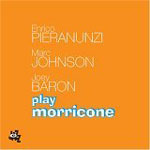
"I have a few people that I work with continually throughout the year. I'm busiest with [Eliane] out of choice because we just want to play together and be together. I've had a long association with a pianist from Italy by the name of Enrico Pieranunzi, we have a trio with Joey Baron. We've been playing together for over 20 years.
Johnson says some of the Shades of Jade music will be heard soon, though not with the entire band. "We're going to play as a quartet, with Joe Lovano, Eliane and Joey Baron at a club in New York, Dizzy's Coca Cola, Jan. 31 through Feb. 5. We have plans for Eliane, Joey and I to go out as a trio and play some of this music to promote Shades of Jade. We'll be in Europe for a couple weeks beginning in February, primarily Scandinavia.
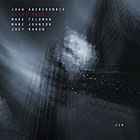
As for other projects: "I just started playing in a trio with John Abercrombie on guitar and Tomasz Stanko on trumpet. We just finished a concert in Germany and I'm traveling to Poland in early December to play with this trio. Also, I'm going to be with John Abercrombie's quartet, with Mark Feldman on violin and Joey Baron on drums. It's really great music. It almost sounds classical at times with the violin and the way Mark plays. The conception of the music is so open. It's a real fun ensemble for us to play in.
"I'll be doing some work next year with Lee Konitz, a tour from February into March and other dates later in the year. I've played with Lee off and on over the years. I've always enjoyed it. This will be a trio with bass drums and alto sax. Joey Baron on drums.
 Of the scene in general, Johnson says many musicians say they are fortunate to be working, with gigs not as plentiful as they were in years. But for him, business is good.
"I'm still busy, mostly in Europe. I think the market for jazz is still better in Europe than just about anywhere else that I've seen. I feel very fortunate, because I'm working as much as I'd like to be. I don't do long tours anymore. I'll do a lot of run-outs for a week or 10 days, four or five nights, something like that. Eliane, her thing is spread out over the year and I like that. It's my main commitment. So I fit the other things I'm doing between that. We're staying pretty active.
Selected Discography
Marc Johnson, Shades of Jade (ECM, 2005)
John Abercrombie Quartet, Class Trip (ECM, 2004)
John Taylor, Rosslyn (ECM, 2003)
Eliane Elias, Brazilian Classics (Blue Note, 2003)
Enrico Pieranunzi/Marc Johnson/Joey Baron, Plays Morricone (CamJazz, 2002)
John Abercrombie Quartet, Cat 'n' Mouse (ECM, 2002)
Enrico Pieranunzi, Jazz Roads (CamJazz, 2001)
Bill Evans Trio, Last Waltz, The Final Recordings Live (Milestone, 2000)
Marc Johnson/Eric Longsworth, If Trees Could Fly (Intuition, 1999)
Vince Mendoza, Epiphany (Zebra, 1999)
Marc Johnson, Sound of Summer Running (Verve, 1997)
Dino Saluzzi, Cité de la Musique (ECM, 1997)
Pat Martino, Night Wings (Muse, 1996)
Ralph Towner, Lost and Found (ECM, 1995)
Marc Johnson, Right Brain Patrol (JMT, 1993)
Lyle Mays, Fictionary (Geffen, 1992)
Peter Erskine, Sweet Soul (Novus, 1991)
Marc Johnson, 2 X 4 (Verve, 1991)
John Scofield, Meant to Be (Blue Note, 1990)
Paul Motian, Bill Evans (JMT, 1990)
Gary Burton, Times Like These (GRP, 1988)
Marc Johnson's Bass Desires, Second Sight (ECM, 1987)
Lyle Mays, Lyle Mays (Geffen, 1985)
John Abercrombie, Current Events (ECM, 1985)
Marc Johnson, Bass Desires (ECM, 1985)
Stan Getz Quartet, Live in Paris (Dreyfus, 1982)
Bill Evans, We Will Meet Again (Warner Brothers, 1979)
Woody Herman, Road Father (Century, 1978)
Photo Credits:
Top Photo: Jos L. Knaepen
All other photos: Robert Lewis
Note: Group Photo (Left to Right): John Scofield, Alain Mallet (standing), Eliane Elias, Joey Baron, Marc Johnson, Joe Lovano
< Previous
Shine Ball
Next >
Persephone
Comments

Tags
For the Love of Jazz
 All About Jazz has been a pillar of jazz since 1995, championing it as an art form and, more importantly, supporting the musicians who create it. Our enduring commitment has made "AAJ" one of the most culturally important websites of its kind, read by hundreds of thousands of fans, musicians and industry figures every month.
You Can Help
To expand our coverage even further and develop new means to foster jazz discovery and connectivity we need your help. You can become a sustaining member for a modest $20 and in return, we'll immediately hide those pesky ads plus provide access to future articles for a full year. This winning combination will vastly improve your AAJ experience and allow us to vigorously build on the pioneering work we first started in 1995. So enjoy an ad-free AAJ experience and help us remain a positive beacon for jazz by making a donation today.

Giveaway

Days remaining: 11