- 2,786Recommend It!
- 34,099views
Interviews
Prince Lasha's Inside-Outside Story
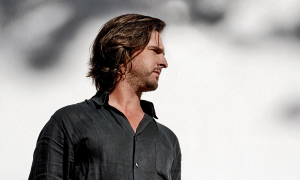
PL: Well, I recorded for Contemporary and ABC-Paramount and on down the line, and I just decided to hold onto my tapes because I couldn't get a recording date for $250,000 or $200,000 or even $100,000 at the time. I thought I'd hold on to all my work and see how it goes in the future. I had become successful in real estate and decided I would start pressing LPs for Birdseye Records. It had the head of the bird on it with the all-seeing eye, and from that point forward I had about thirty titles on tape. [What follows is Lasha's reading of the original Birdseye Records salutation] "Dear Jazz Listener: The artist's label, Birdseye Records, is pleased to release the Firebirds legendary jazz series. It covers the entire spectrum of jazz and the persons who play it. The true voice of serious music has come of age and represents a mature look at the chronological order. It should be a must for the student and the listening audience of the art form. It is one way to keep up with what is going on in the jazz world; festivals, concerts, radio performances and clubs, etc., an all-jazz bible for the working musician and listener. Impetus is on the state of acoustic jazz music in our time. We love itthe music represents a personal friendship to all humankind. Here it is by popular demand. We are pleased to have been a part of this from the beginning; it is a labor of love and as you and your friends play it, we hope you feel the same and enjoy playing it as much as we enjoyed putting it together for you. Birdseye wishes to close with one note, just one little note: give music as a gift to your friends. Musically Yours, Prince Lasha.
The therapeutic value of this music is very important, you know. It's just something I've always wanted to do; I started it very early and traveled around the world and kept all my tapes, and I'm mastering them now. I had mastered about six prior to departing to New York. As a matter of fact, I called the mastering room to see if I could get about ten more done in the next week or so. Birdseye is a great title for a label, though...
AAJ: I immediately think of Charlie Parker, but there are obviously other levels to it that you were thinking of.
PL: Right; when you look at a dollar bill, you see that pyramid on there? You know what's lying at the bottom of the pyramid?
AAJ: Well, I can't remember I don't have a dollar bill on me right now [laughing]...
PL: You'll see the eye on the top, but at the bottom you'll see all these spots lying around there. Those are all bodies from a war at the base of the pyramid. The bird's eye is the symbol of the pyramid; it's an all-seeing eye looking night and day. It has never closed or opened; it's always there, and this is very strenuous for the mind to take in.
AAJ: That's Osiris, right?
PL: Right. It's been there and will always be there. I'm putting the music under that, because I know it will always have its protection, in the collector's guide book or whatever. I thought I might as well get a good emblem for Birdseye Records, and that's what I came up with.
AAJ: This might be the first connection I've thought of between Charlie Parker and Osiris.
PL: If you look at it, around six or seven years BC, man was living much longer than we are today. They were closer to perfection than we are today, even though we're going to the moon. It's a different kind of perfection, because they were living almost a day because one thousand years is equal to one day for the Creator. It took him seven days, or seven thousand years, to create the earth. Not a twenty-four hour day. I've been studying the canon and writing from it all this time; listen to the Journey of Zoar, look at 607 BC and when they were building to go to outer space. What happened was that they got so high they confused their languages, and had to come back down to earth and disperse into different dialects. The only communication that man has at this hour that is universal is music.
I was performing with some musicians from South America; I was with Clifford Jordan and Sonny Simmons, and the other musicians were the Bossa Tres. We couldn't talk like you and I do, but we'd put the music there Monk's music, Trane's music, my music, all this music, but we couldn't communicate with the same dialect at that time. We did a beautiful album called The Bossa Tres [Jazz Tempo, Latin Accents, Audio Fidelity 1963]. We probably shared in some other things that they brought from South America [laughing], but you know...
comments powered by Disqus