Home » Jazz Articles » Interview » Jack Dangers: The Mind of Meat Beat Manifesto
Jack Dangers: The Mind of Meat Beat Manifesto
It
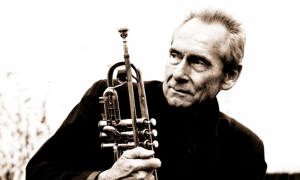
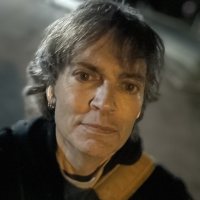
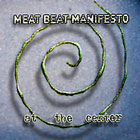
 After more than fifteen years recording, Meat Beat Manifesto leader Jack Dangers is something of an electronic music elder statesman. Early recordings like Storm the Studio (1989) and Satyricon (1992) got MBM tagged as, respectively, an industrial and electronica act, but Dangers has always followed his own path. The new Meat Beat Manifesto CD At the Center, released on Thirsty Ear's Blue Series, sees Dangers continuing the real-time, electric jazz explorations he began with 1998's Actual Sounds + Voices; it's one of the best albums of the year in any genre. I spoke with Dangers about the new CD, his upcoming Off Centre EP, the history of electronic music (a subject about which Dangers is both a scholar and enthusiast), the future of video sampling, and more.
All About Jazz: Let's start by talking about the new Thirsty Ear Meat Beat Manifesto CD, At the Center. This is something of a departure for you in that, while its textures and beats do mark it definitely as MBM music, it's very much a group record with flutist Peter Gordon, drummer Dave King and keyboardist Craig Taborn—all musicians associated to some extent with the Thirsty Ear label. It's not altogether unprecedented for you to work with other musicians; "Supersoul, from your 2002 RUOK album, has some live drumming from Lynn Farmer and, I think, bass guitar from you. But this new one incorporates a lot more live instrumentation than older MBM recordings. What motivated this recording project?
Jack Dangers: Well, I've worked on stuff like this on previous Meat Beat records. I don't know if you know the record Actual Sounds and Voices; there are a couple tracks on there which were done in the studio with Bennie Maupin and Pat Gleason, who used to do a lot of work with Herbie Hancock in the seventies. Bennie basically was the motivation for me to attempt to pick up a bass clarinet and make some noise out of it.
AAJ: Sure, I love his stuff in Herbie's Mwandishi band.
JD: Right. He played bass clarinet and flute. He did some solo records as well. I've always liked his work; I really liked it on the stuff he did with Herbie Hancock. I did some studio work with them back in '96, so it's not so unprecedented for me to work in that sort of style. I've always liked jazz and reggae; those are two of my favorite types of music, along with electronic music, like the more classical stuff—musique concrète, the stuff which came out of Germany in the fifties and France in the sixties. Etcetera, etcetera—it's a bit of a gamut if you throw it all together. Even on the very first Meat Beat album, and even in the band I was in before Meat Beat, I used to play soprano saxophone—until it got stolen at a show back in the late eighties. I used to use it more as a sort of noise instrument along the lines of Blurt, Ornette Coleman, that sort of style, but going through a noise gate and being triggered—a side chain triggering the sax from a beat or any other sort of a rhythmical trigger. You'd get this sort of very staccato-sounding strangeness. Again, just picking up an instrument and making noise of it.
 It probably started when I first heard Trout Mask Replica by Captain Beefheart. There's a bit of bass clarinet on there as well. So I picked one up twelve years ago, started playing with it. Recently I've sort of gotten into bass flute, mainly through seeing Hermeto Pascoal play a couple of times. So I've been playing that. And so I've always had these elements in my music. I sampled "Song for My Father by Horace Silver back when Meat Beat was supposedly this industrial band; that got some reaction at the time. I actually got the approval to use it, paid for it, all that sort of stuff. It was all above board! So I have always had these elements in the music—jazz elements, and dub. That's sort of been my musical life.
AAJ: You must have thought quite a bit about the instrumentation you wanted on this record. For example, Peter Gordon's flute is a very prominent component of this music, and, for that matter, so are Craig Taborn's keyboards. Was it the actual instruments or the specific musicians that motivated you on this project?
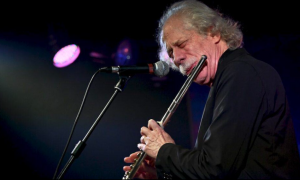
JD: It's a bit of both, really. I'd heard some of Peter's flute work on some remixes I did for one of the projects on Thirsty Ear for DJ Wally and I really liked his flute textures. So when it came to doing a record for Thirsty Ear, that was the first thing I sort of asked for—if he could play flute on it. Then I could bounce off of that with the bass flute. Craig and Dave more or less came in through Peter. I'd heard some of Dave's work and I'd heard a couple of things Craig had done and really liked his style. So it just seemed to sort of fall together. But yeah, the flute of Peter Gordon was definitely a main anchor—probably more of an anchor than what the keyboards were, to be honest with you.
AAJ: Let's take the song "Wild from the CD as a starting point. It's built around a bass clarinet vamp, and to me it has a kind of Bitches Brew vibe in its overall density. Taborn's playing, I think, Fender Rhodes and Hammond.
JD: He's playing piano and Fender Rhodes at the same time. It was great to be able to get that double texture. Actually, that came from his line on the Fender Rhodes; I just sort of followed it on the bass clarinet instead of the other way around. AAJ: So it's built around a Fender Rhodes vamp. Maybe it was your bass clarinet on the track that evoked Bitches Brew to me because, although it's not a leading instrument on that album, it's threading through the textures.
JD: Again, that's Bennie Maupin playing that.
AAJ: How is a song like this composed? Did it come out of the band actually playing together in real time or written and tracked in increments?
JD: A bit of both. The whole album was stretched over a period of a year. So we did the initial studio recordings. Then I had it here in San Francisco to send through some of the gear I've got hear and sort of take it somewhere else. But we didn't do the flute at the same time as the drums and the keyboards, so the flute work was put on afterwards. That's why it more or less follows—well, it's sort of vice-versa. Some of it follows the keyboards. Some of it was already put down as a scratch track—like melodies, sounds I'd had in the computer. So it was a bit of everything, really, over a long period of time as well. So you could go back and refine things, change things. We weren't working on it every day, you know; it was stretched over that period and I think it was good to have that luxury of being able to relax and not listen to it for a couple of weeks, then go back. Sometimes, especially if you're being pushed into a tour/album/tour/album—when you're in a contract with a label—you don't have that luxury of space and time.
AAJ: And it gets so hard to even tell if what you've been working on is good or not, I suppose.
JD: Yeah, it definitely turns into a routine. You've got to have this finished by this date because we're going into the rehearsal rooms, and you know—it becomes a bit of a manufactured machine at that point. I like the freedom this particular record gave me.
AAJ: On this same tune, "Wild, Dave King is playing live drums here, as he is throughout the album. Did then you loop them after the fact or cut them up, manipulate them in some way?
JD: Not generally, no. He's so incredibly tight. If you could actually see his drums as a wave form in the program I was using—compared to a click track, which we use as a metronome, it was pretty frightening to zoom in and see how precise it was. On some of the tracks, I might repeat a piece after sixty bars or something like that, but generally—not really, no. There's a couple of tracks where the drums were mainly an eight-bar loop or something, but then it goes into another territory. But on the whole, no.
AAJ: I'm very impressed with him—and a little surprised, just because he is so metronomic that I was convinced you must have looped him.
JD: On a couple of tracks, I definitely did that. But not through the whole song; there are no songs where the same loop is going all the way through. I think "United Nations, that has a short loop, but then it goes into this other place right in the middle. But most of the tracks were as-is, and I might have just faded them out for a breakdown or something like that. He's just incredibly tight.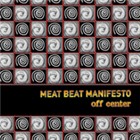 AAJ: "Wild seems like a San Francisco anthem with its spoken-word soundbite references to Pacific time and earthquakes.
JD: [Laughing] Yeah. That's actually going to be a single. It's coming out, I think, at the end of October. It's going to be on an EP called Off Centre, with three other tracks from the same session which aren't on the album and some live tracks from the last tour. So that's going to be an interesting little accompaniment to this.
AAJ: My favorite song on the CD is "Murita Cycles.
JD: Ah, that's actually my favorite, too.
AAJ: In its own studio-spooky kind of way, it's perhaps the jazziest song on this CD—certainly, it's Dave King's most traditionally jazz-oriented drumming on the album . There's an overall sense of anxiety and claustrophobia to the tune, but there's also a great deal of beauty.
JD: That's an interesting thing to say about this track because I feel the same way. It's got that claustrophobic sound—mainly, I think, because of Dave's brushwork. Brushes seem to do that; they give you the space, the sound of the room. It's named after one of my favorite films, a film which came out in the seventies. It was a student film about this guy's dad, who was a compulsive, obsessive collector of things. It's a really interesting film. I think you can get it on DVD now; it's by Barry Braverman.
 That's the story of the track—you've got to see the film. But musically, yeah, that one's my favorite. I like the drum sound on that. I think the drums work on it better than any of the other tracks. I think it's got the best flute work; Peter tends to sometimes bathe his flute in digital effects and I like to sort of have it clean and send it through old spring reverbs, things like that. So it's got that old sixties flute sound to it. Once again, the bass clarinet's more or less following the bass line, Bennie Maupin-style, like Bitches Brew and Herbie Hancock's Sextant. It's the obvious thing to do, especially if you're a bassist, you know: follow it along with another bass instrument.
AAJ: I think there's also a unison flute/piano phrase on that song that sounds very vocal.
JD: No, I'm doing a vocal on that! I'm doing the sort of quintessential sixties female spy vamp through a spring reverb, just doing a falsetto thing, following one of the instruments. Actually, I'm doing vocals on almost every track. They're just through vocoders. I'm a big vocoder collector. I've got like eight, really big, full-on vocoders [laughing]; they all sound different and I like to pump different things through them. Drums, anything. You can throw a drum beat in there and a string orchestra in the other channel, and what comes out in the summed output is something completely different. So all the electronic stuff on the record is all through vocoders; I didn't use any samples at all.
AAJ: I don't think anyone besides you is using vocoders nowadays in that way. JD: No. Everyone always goes to the vocoder thinking it's going to be the robot Kraftwerk voice, but electronic music basically started with vocoders when [Bell Labs research physicist] Homer Dudley took a vocoder to an exhibition in Germany in 1948. [Electronic music pioneer] Herbert Eimert was in the audience and that was the introduction of electronic music in Germany. And what those guys used to do back then would be to send different things through the inputs and what comes out sounds completely different—where the French school was more into pure, purest sound. Miking up instruments and using it in its pure form.
The Germans were all into changing the sound into something unrecognizable, and that was mainly through the use of vocoders. Then, of course, Kraftwerk were the first rock band to use a vocoder in any form. So the classic way to use it is by singing into it and playing a synthesizer, but you can sing into it and play anything through it. So I was doing some of that with Peter's flute and Craig's keyboards: chucking them into one channel and using my voice as an envelope. Yeah, I don't know a lot of people who really use vocoders in that way anymore.
AAJ: You've quite a variety of these vintage ones. Are they particularly unwieldy?
JD: Well, they're basically massive synthesizers without the controls because you're using natural sound as the envelope; you don't need a keyboard, you don't need envelope generators for them to be controlled by humans. They're controlled internally, they're all automatic. If you've got a 20-band vocoder, you've got 20 high-pass filters, 20 low-pass filters, 20 envelope followers and 20 envelope generators—and if that was set in a normal synthesizer package, the thing would be massive. But because you can chuck all that stuff into a box, vocoders tend to be quite small, but they're very, very powerful.
AAJ: It seems like you take a certain amount of pleasure finding various spoken-word soundbites to incorporate into your tracks, whether it's William Burroughs saying "towers, open fire on the song "Horn of Jericho on RUOK, or all the different voices that are having a sort of constructed philosophical debate on "What Does It All Mean? on the same album. On the new CD, "Want Ads One and "Want Ads Two use a 1957 recording of Kenneth Rexroth reading some very odd want ads. I have been particularly obsessed with one phrase: "I offer permanent space in a tomb.
JD: [laughing] I like "we stand behind our budgies! That was almost the album title.
AAJ: That would have been fantastic. Where'd you get this tape of Rexroth and, in general, what inspires your use of found vocals in your music?
JD: Well, it's not actually Rexroth. That was a typo that made it out on the first releases. It's actually Lawrence Ferlinghetti, the beat poet from the fifties; he used to run [bookstore] City Lights in the city. So that's actually him. The way those recordings came about was, I live just outside San Francisco in Marin County in a place called Mill Valley. Back in '99, a friend of mine bought a house in Mill Valley, and it turned out that this guy called Henry Jacobs used to live there. He released some records on Folkways in the fifties; he was a Bay Area deejay at KPFA. He was very open-minded—sort of the John Peel of his time. He'd play very, very strange music, whatever he could get his hands on, a lot of world music. And he also did these shows at the Morrison Planetarium in San Francisco: it was an audiovisual extravaganza called Vortex. It was all electronic; he had like thirty speakers and a big dome.
AAJ: He sounds way ahead of his time.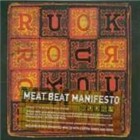 JD: Yeah! He worked with John Cage in the fifties. And this was the first audiovisual thing of its kind, really—they even went to the Brussels World Fair in 1958. So, he lived in Mill Valley and had a record label with Alan Watts, sort of a private label. Anyway, my friend bought this house that he had lived in. She was having some renovation work done on one of the rooms and the floorboards came up and lo and behold: there were 64 reel-to-reel tapes. I was the only person she knew who had a reel-to-reel player, so I went over there and got the tapes. I went through them and it turned out to be an old tape stash of Henry's.
I didn't know the guy at the time, but around a year later, got around to meeting him, because he's still in the area. He's like eighty now. I told him the story, and he told us how the tapes might have gotten there; there was a fire there, and they built over a part of the house, and at that point no one really cared—so these tapes were under the house for forty years. Now, they've recently come out on CD and DVD on Important Records. Me and Henry were on NPR a couple of weeks ago going through this very story, which was very strange—he hadn't been in a radio station in fifty years. So one of the tapes was labelled "Kenneth Rexroth and the recordings were what you heard. But they were mislabelled and actually turned out to be Ferlinghetti, who actually, a week-and-a-half ago, for the first time since 1961, went over to Henry's house. They met up and are going to be doing some stuff again.
AAJ: You're quite the catalyst.
JD: Yeah. It's great, these guys, who were inspirational to begin with, can actually get back and work with each other again. Lawrence is 86. Henry's 80, and they've got more life in them than what I have! They're amazing guys. But yeah, the whole spoken-word thing. I've always been interested in it as a genre; I've got a big collection. So I've always used soundbites and stuff. I remember [hip-hop producer/pioneer] Steinski came around my house once. He was one of the first guys to do that in the early 80s in hip-hop. He'd get little soundbites in there around his beats. Anyway, he was very impressed with my spoken-work section. I've always collected the records, just sort of a natural thing to do. Plus the whole aspect of this CD being part of the Blue Series on Thirsty Ear added that sort of jazz/beatnik/poetry slant, so I just checked through the want ads in these two tracks, and there we go. That's the story for those.
AAJ: The two actual tracks that have those want-ad soundbites—they've got very different instrumentation. "Want Ads One has drumming from King and, I think, your own acoustic bass playing, which sounds great. I know you play bass, but how long have you been playing acoustic bass?
JD: That is actually a sample. That is an Emulator upright acoustic bass patch and I'm playing the keyboard. I suffer from really bad arthritis, so I wouldn't be able to play an upright, to be honest with you. I have to resort to other means.
AAJ: Very convincing patch!
JD: I think so. I think it's a better sound than if I had a real one and miked it myself.
AAJ: "Want Ads Two is a whole different sonic spectrum. There's Taborn on, I think, Fender Rhodes—and some sort of musique concrète washing around that. I am curious how you created those sounds.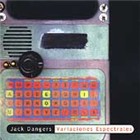 JD: Once again, being completely truthful—that's a lot of hiss! [laughing] You know, these really old recordings from 1957! And I managed to disguise that in the first "Want Ads track in an organic way because of the instrumentation. But the other recording was really, really, really hissy. And no matter what I tried to do to get rid of the noise, it just wasn't going. So I more or less smothered it in white noise of seashells, the sea coming in and out on the sand, those sorts of sounds. They were recordings I did and I slammed them in there for audio sweetening purposes. [laughing] One of the tricks of the spoken-word trade. But I like how when you don't know where you're going to go with the track—the track itself is dictating where it's going to go.
AAJ: "Bohemian Grove is another really unique tune.
JD: Yeah, that was my other favorite. That and "Murita Cycles.
AAJ: It's got a sort of Japanese flavor. I can't tell what instrument is playing the melody.
JD: That's an oud. So straightaway it gives you that Middle Eastern feel. Or Asian—Indian music uses similar instruments in a very similar way. Throw into that the bass flute, which I had going through a [Roland] Space Echo, with the Sound on Sound slowed down so that what was coming back [the Space Echo's a seventies device that uses analog tape loops] was like a pitched-down version of the bass flute, but in a very creepy, ethereal way that I thought really worked. So that gives it sort of an Asian wooden flute feel—even though it was a metal flute. But pitched-down, through the Space Echo, it sort of sounds like that.
AAJ:That track has a very composed feel to it. With that one, all the parts seem like they must have been written out. Is it true?
JD: As far as it goes when you're finding sounds. I record a lot of jams I do, and then I go back and spin through them like a deejay would—chuck them through a KAOSS pad delay, stuff like that. So only as much as going through pieces of recordings and seeing what's in key. The sort of music I do, you'd be wasting your time if you sat down and wrote it out in any type of notation, whether it was in normal western notation or some strange graphic equivalent. These programs you use these days do that automatically. Like what Stockhausen would have drawn out—"this is how the wave form should look —well, the computer does that automatically. Those guys were ahead of their time even in writing notation. Anyway, it serves the same purpose; you could print out a desktop picture of a waveform and that's your score. And the vocal recordings in that particular track are all shortwave recordings. I'm a big shortwave buff, so I like recording things. I've got a couple high end shortwave receivers; I can tune in anywhere in the world, and you get some interesting-sounding recordings which already sound effected because it's on shortwave.
AAJ: There's a weirdness that comes through that format; almost anything you hear on shortwave sounds odd. It seems inherent in the format.
JD: Yeah. John Cage was the first to pick up on that in his "Imaginary Landscape series. He did a bunch of shortwave pieces. Because it sounds electronic to begin with.
AAJ: "Shotgun! (Blast to the Brain) seems like a very perfect merger of more beat-driven, dare I say traditional, MBM groove—and the sounds of these very individual players, including you, again on bass clarinet. Somehow to me, it sounds like a track that would lend itself to remixing. Do you have any plans to present any of this material in the future in a remixed format?
JD: We're actually going to do a remix competition thing through Live. Nine Inch Nails did something similar. Do you know the program Live? It's a sequencing program and I sort of make all the parts available on their website and people can download them and do their own remix, send it back in, and we pick the winner. I don't know what the prize will be. A night on the town with me or something, I don't know [laughing].
AAJ: Well, they get the excitement of having their remix chosen.
JD: Anyway, that was one of the ideas—doing that track you mention. So [laughing] there'll be hundreds of remixes of it! More than just the usual one from me. But yeah, that one, it's got the parts that would deliver a good remix.
AAJ: Is this At the Center album a direction you're going to continue to explore as Meat Beat Manifesto or is it more of a one-off? JD: Well, it's going to be more of a one-off, because it's part of the Thirsty Ear Blue Series. All their releases, whether it's Mike Ladd or DJ Wally or whatever, they've got the very heavy jazz element. Now, this will be followed by the Off Centre EP. Once again, there are three tracks on that from the same session which no one's heard. So that's sort of following along in the same vein. But after that, I don't think there'll be anything like this.
I'm thinking about doing a drummer-only record/DVD of just drummers, all sampled visually and manipulated. That's the next idea still being formed. And that would be quite far from this, but it would include some of the same players—Dave King will be doing some of that. And I'm sure Craig will be playing some keyboards. But I don't think it would sound like this record. It would be definitely unique; I don't think there's anything like that: you pop in a DVD and you see the drum parts and you hear them, on three split screens, the three different drummers, whoever they might be. And then whatever musical instrument is playing along—you'll see the visual element of that; everything will be filmed while being recorded. No one's ever done that before.
AAJ: It sounds expensive.
JD: It does sound expensive, but I think you can get around that via using some of the new programs that are available now that weren't available like five years ago. Programs like Live—you can just chuck the audio in there and it would repitch it, map the tempo out, stuff like that. And then you go into another program to do the visuals. You can do that all on a laptop now! So that's what we're talking about doing. And it would be different than this record.
AAJ: I think that Meat Beat Manifesto touring band consists of you, Ben Stokes, Lynn Farmer and Mark Pistel, right?
JD: Yeah, that was the tour we did over here. We're going to Europe to do some dates, but it's just going to be me and Ben.
AAJ: What was the configuration of that touring group? Was Lynn Farmer on real drums?
JD: He was actually on V-Drums. But he plays them so well, in a way that you would never know. He's amazing. It cuts the time of doing a soundcheck and all that palaver in half. Yeah, I was a bit dubious: "V-Drums? Hmm, I don't know. Let's go to the expense of taking out a full drumkit. [laughing] Then you'd spend an hour-and-a-half miking it up and getting a good drum sound. But in the rehearsals, all the banks and pads which he'd programmed and the drumsets which he'd had up blew me away, really. AAJ: You were convinced.
JD: Yeah! Very impressed. They even look like real drums if you're in the audience. I don't know if you've ever seen. They look like drums; they even feel like drums. They're not like these 80s antiquated things.
AAJ: Not those pad things.
JD: No, no. Whole different world now. So Lynn was playing those, Pistel was running the software we use live, which is called Live. And me and Ben were running different bits and pieces and running the video samples. We do a lot of video sampling live, which is like the image and the sound together in time. We do it in I suppose you could call a classical way; a hop-hop way, where some of the things, you're going to obviously know who they are: Jimi Hendrix smashing his guitar up, Pete Townshend doing something, Miles Davis—we like to go the obvious route. Live, we can do that. We'd have a problem if were were going to try to release that as a DVD or whatever.
AAJ: Some problems with clearance.
JD: But if someone could have explained to people in the seventies what hip-hop was going to be in the eighties, they would have said, "oh, you're going to have a lot of trouble with that. And, you know, in some cases they did and in some they didn't; it's all about how many you're selling. If you're on the charts, you're going to get in trouble. If you're doing it for art, maybe not.
AAJ: I feel badly for people who, during that little period for hip-hop in the eighties, sampled and had hits, like Biz Markie—clearing samples hadn't even occurred to anyone, but they got sued by the people who owned the rights to the records they'd sampled, and got killed.
JD: Well, now in chart music, commercial hip-hop, it's nonexistent. No one samples anything anymore. It's these horribly played factory sounds, like a factory saxophone sound, on a [Yamaha] DX-7 [laughing].
AAJ: That's so mediocre and brutal; it makes me insane. It makes me feel like a reactionary, except that I was obsessed with hop-hop in the late eighties. So I was hip once, and I'm not against the art form. But when I hear something like 50 Cent's "Candy Shop, I can't believe how little respect I have for it. I just think it's bad.
JD: You think, "am I getting old?
AAJ: You definitely ask yourself that, and it is entirely possible. JD: Yeah, you've got to give yourself a little pinprick [laughing]. But [the eighties] were the golden age of hip-hop. De La Soul, Three Feet High and Rising, Public Enemy—the samples and the drum breaks. It was exciting. I worked with a band called EBN. Back in '92, '93, they did a cover version of "We Will Rock You by Queen. But it was all from visuals—it was a speech George Bush Senior did when they first went into the Gulf, the first Gulf War, and he was talking about Iraq. But they took the "'raq from "Iraq for "rock, so it was George Bush saying [assumes robotic, reassembled nasal George Bush Sr. voice] "we will we will 'raq you.
So it's obviously cut up, each word, but when I first saw that, I thought, "oh my god, this is just unbelievable! This is it! So I got to work with them; I did the only album they ever did. And Brian Eno worked on it, Grandmaster Melle Mel did vocals on it. It was a big deal at the time, but it was on TVT Records and they did such a bad job that it fell flat on its face. But ever since then, anyone doing anything with visuals in a sampling way always cites EBN as being the godfathers. And I've always worked with visuals live. When we do our live show we always have samples of things, films, obvious samples, which went in line with the music. Even some of the older songs of mine which people might know, like "Helter Skelter —I had visual samples from A Clockwork Orange, so whenever we played live, you'd see Malcolm McDowell screaming. So the live show we did this year was basically my whole life of watching television and films put into two hours [laughing]. It's all my favorite bits and pieces and my favorite sounds—just everything. When we go to Europe, it's going to be just me and Ben, and we do a slightly different show. But it's 80 percent visuals. The audio's attached to the visuals so there's music at the same time. AAJ: Is it more stripped-down due to expense?
JD: Yeah. We couldn't really afford to be taking everyone over there for that amount of time. If the shows were all in one line, it'd be okay, but they're spread out over a period, and we can't keep flying back here—so we've got to stay in hotels, you know. But when we tour back over here, we sort of missed the South last time, so we're doing something like 16 shows over here. That'll be the full setup. We always do different types of shows depending on where we are and what we're doing. Because we run the label Tino Corp., we've got lots of material—different types of shows we can do.
AAJ: Oh, yes, the Tino Corps record label. This is run by you, Ben Stokes and Mike Powell?
JD: Well, Mike helps out on the Tino's Breaks [the series of drum breaks for turntablists to use live]; we've done like five of those. We haven't brought one out in a few years. But primarily, the label is me and Ben. We run it and decide what comes out on it, and when we play live, it's me and Ben. We actually did a show over the weekend, so we're keeping busy.
AAJ: The label puts out mostly vinyl. But what's the philosophy, if any, behind what you put out?
JD: No real main philosophy. Just a label we set out so we could bring out anything we wanted, really. We were working with other labels, established labels, and they've got an office with people working there and they've got to pay their wages and stuff like that—so you can't step outside the boundary too far or you won't get signed or you won't get this or that. So both of us have had that through the years; Ben did a lot of music videos and it's the same sort of thing. So the two of us wanted a vehicle to put out stuff we wanted to do without it being touched by any industry hands. That's the primary reason for doing it.
AAJ: That's a good reason! You don't have to hear, "we love the album, we love it—you just need to change this, this, this, this and this.
JD: It's tricky! It's a weird business. They're investing money in you, or an album, or a campaign, whatever they want to call it, so you've sort of got to be aware of everyone's needs [laughing]. Otherwise you're just hitting your head up against a brick wall.
Visit Meat Beat Manifesto on the web.
Selected Discography
Meat Beat Manifesto, Off Centre (EP) (Thirsty Ear, 2005)
Meat Beat Manifesto, At the Center (Thirsty Ear, 2005)
Jack Dangers, Forbidden Planet Explored (Important, 2004)
Meat Beat Manifesto, Storm in the Studio R.M.X.S. (Tino Corp, 2003)
Jack Dangers, Variaciones Espectrales, (Instinct, 2002)
Meat Beat Manifesto, RUCK? (:/run, 2002)
Jack Dangers, Hello Friends! (Shadow, 2001)
Meat Beat Manifesto, Actual Sounds + Voices (Nothing, 1998)
Meat Beat Manifesto, Subliminal Sandwich (Play It Again Sam, 1996)
Meat Beat Manifesto, Version Galore (Play It Again Sam, 1995)
Meat Beat Manifesto, Satyricon (Elektra, 1992)
Meat Beat Manifesto, 99% (Mute, 1990)
Meat Beat Manifesto, Armed Audio Warfare (Wax Trax!, 1989)
Photo Credits
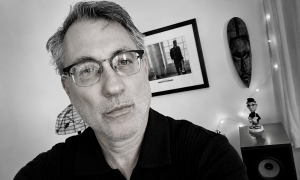
Top and Center photos: Peter Ellenby
Bottom photo: Anthony Pidgeon
Tags
PREVIOUS / NEXT

Become a Sustaining Member

Since 1995, All About Jazz has championed jazz as an art form and supported the musicians who create it. Over three decades, it has grown into one of the world's leading jazz resources, serving hundreds of thousands of readers, musicians, presenters and industry professionals each month.
Help Build the Future of All About Jazz
Your support helps us continue building All About Jazz for the next generation—expanding our editorial coverage, preserving jazz history, developing new community features and creating better ways to discover the music and the people behind it.
Become a sustaining member for as little as $20 per year and you'll immediately enjoy an ad-free experience along with access to subscriber features and future articles for a full year.
Together, we're not simply sustaining All About Jazz—we're building its future. Thank you for being part of the journey.