Home » Jazz Articles » Interview » Ken Vandermark: That Was Now
Ken Vandermark: That Was Now

I
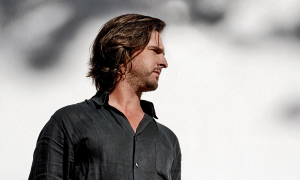
 For almost a decade, the Vandermark 5 has been the main outlet for the diabolically driven and creative Ken Vandermark. Spreading his involvement across at least ten active and demanding musical enterprises, Vandermark's main outlet still remains the V5. This year for the third time in its history the quintet loses a founding member, this time trombone titan Jeb Bishop, who also joined Vandermark in several of his side projects, as well as maintaining side projects of his own.
 Between trips to Iceland for performances with Peter Brotzmann's Tentet, and the mixing of a new Free Music Ensemble record, Vandermark graciously spent an hour cataloguing the progress of his various endeavours, including the future of the 5, his love affair with baritone sax, and where James Brown fits into his compositional conceptions.
All About Jazz: Any chance we'll be seeing you on the West Coast again soon?
Ken Vandermark: The West Cost is in the States, but it's almost as difficult financially to do a tour of the West Coast as it is to go to Europe, and there's a lot less gigs, which makes it kind of prohibitive. With funding circumstances in the states not nearly as good as they are in Europe at this point, it's kind of hard to swing getting out to the West Coast, unless there's some kind of festival situation. I just got a message, actually, from John Gilbreath who runs the earshot festival in Seattle and he's been trying to get me out there for a while in the fall, but I'm normally in Europe at that time. We could try to get that to work next year, I'll try to do a tour next year connected to that, and head south and try and get to California, and whatnot. I'd like to get out there more, there's some really great people out there to play to. It's a difficult swing.
AAJ: And how are the crowds in Oslo?
KV: Oh great, it's really one of my favorite cities. I love the place. It's really unbelievably expensive, but other than that it's a fantastic place. There's a lot of great musicians there, and the audiences are really opened minded and have heard a lot of stuff, and are really good people to play to.
AAJ: Is it a nice change for you, let someone else be in charge, playing in Brotzmann's band rather than your own?
KV: Yeah, yeah, I have to say Peter's a really great band leader. When we're in Europe in particular he deals with all the logistical stuff, so for me I get to be a sideman for a change. It's kind of a pleasure because I can just focus on trying to play as well as I can and not have to deal with all the logistics of the tour like I normally do. So, working with Peter is really great, really generous as a bandleader and as a person. He's great to play with. We had a tour of the Eastern United States, and were up in Canada in May, so we had about 11 gigs at that time, and couple more, so if we get a dozen gigs a year with a group that size, that's pretty good.
AAJ: It's amazing he's been able to keep that many musicians working for that long.
KV: It's a really, really strong testament to, if the music's good and the players have the right kind of attitude, almost anything's really possible to accomplish. I think, knowing a group that size, particularly trying to get to work in the States, no one's really making any money, but everyone's making some really great music and getting so much out of that experience. People ask about that, 'How can you deal with the finances with the kind of thing you do?' Sometimes, financially, it is a bit difficult. But if you take into account what we get from what we do, and think about different ways of looking at the idea of being paid, you know, we're pretty wealthy in a way. We play the kind of music we want with really great people who are also committed, get to travel and present things we do all around the world. I feel really fortunate to be able to do it.
AAJ: Do you ever get to take the Territory Band on the road?
 KV: Funny you asked that. A couple years ago we did the Berlin Jazz Festival, and played in Sweden, and Oslo. Now, we're going to back for the first time since then to Europe in October play a music festival. I thing we have five or six concerts, and we'll be doing a new recording while we're over there. It'll be the first extensive trip we've gotten with that group. Being able to hold that band together for several years now with that particular group of players is really great. There's been small changes in the line up but the core people have been really committed to working on it.
AAJ: Is the Chicago scene as hot as it was when you came up?
KV: Well, in a lot of ways it's a lot hotter than when I was coming up, because the situation then, there wasn't so many places to play. I kinda found the scene at the end of the '80s, beginning of the '90s to be a bit fractured in some ways. There were people in town playing but they didn't work together all the time. Now, the scene is so scattered around, but there's a lot more cross pollination than when I first got here and there's more places to play. There's the issue of what Fred Anderson's going to do with the Velvet Lounge, because he's gotta move. There's been some benefit concerts for him to try to get money to help him make the change, but I think the estimate was that he needed $100,000, and I think they've raised about $20,000, which is good on the one hand, but not nearly enough to pay for that change. So, he's still really optimistic about it and planning on making the shift.
Even with that sort of in jeopardy, and another performance space that's been important and may have to move or shut down, the scene is much more stable than it was when I first got here. Everything's always in flux. I think it points to the fact that the scene's pretty deep right now in terms of the age of the players, there's lots of musicians working and performing regularly who are in their 20's, then you've got people like Fred Anderson, Robert Berry, Von Freeman, in their 70's, maybe 80's now, that's a good feeling. People seem very motivated to try find ways to make performance possibilities work and happen. It's not all on one person's shoulders, that's really crucial.
AAJ: Anything going on with Spaceways, Inc?
 KV: Not really. It's kind of ironic, because Nate McBride's been living in Chicago for about a year now. It really gets down to the difficulty of trying to find and pin down Hamid Drake. I don't know if he's ever home, if he is he's probably hiding and trying to sleep. The guy works unbelievably hard, and most of that work is on tour. So, to try out new stuff with Spaceways, or DKV has been difficult just for trying to coordinate with Hamid, his schedule's so crazy.
Right now there aren't any plans, and that's why I'm instigating this new project in Norway, the Powerhouse Sound group. I really really love the funk and reggae genres of music and the possibilities that are there to try to coordinate stuff that would work in an improvising setting. So, this band is going to be a group designed to deal with those kind of rhythms and textures. That's part of the reason why that group got built, because I was extremely happy working with Nate and Hamid and the way that group worked, even as a trio. There was a lot we could get done. I don't want to leave that stuff finished, there's a lot more I'd like to try to explore with it, so I'm hoping the Powerhouse group will work out well that way.
AAJ: If "Knock Yourself Out from Alchemia is any measure, you still have a lot of funk in you.
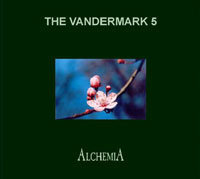 KV: Oh yeah, there's a lot there to work with. There's a lot of ways to work with those rhythms, and I think you can take on the energy and the construction of the way the time and grooves work, and not box the players into a very rigid harmonic and form sensibility, so it's so repetitious and so circular that it gets bogged down into an inability to express more than just a very limited set of materials. I'm really interested in trying to work with the ideas of what attracts me rock music, or reggae, or funk. And what, out of those things that attract me, can motivate a starting place for improvisation, as opposed to just a static platform for improvisation. There's a lot to do with that.
There's a lot of freedom in that music. Just recently I watched a tv transcription of James Brown's concert in 1968 in Boston the day after Martin Luther King was shot, and that music is so free in so many ways. There are certain things that need to be accomplished for the material to be realized, but if you watch and follow the music, a lot of the forms are really open ended, and they're not based on a specific number of repetitions. The cues are coming off how long James Brown chooses to dance. How long he likes someone's solo, or this or that.
There's a real sense of tension and excitement in the way the band has to follow Brown's direction, because without that it would go into cruise control. He's really guiding these flexible forms, and I'm really really interested in the way he constructs stuff, and the possibilities in that to do stuff in music that's even more removed from what people would consider dance music, taking some of those characteristics and qualities and putting them into a situation where people can really range improvisationally with those materials.
There's a film clip I saw of one of my favorite records of his, a live concert from 1971 Paris, called Love, Power, Peace, and there's a moment at the beginning of the concert where the band shifts from one groove to another groove that is very loosely, maybe metrically associated, but it's basically a tape splice. It sounds like it's maybe an edited record, but it's done in real time by the band, and the cue for the change, I watched it over and over to figure what he was doing to cue, and it looks like he's just shaking his head, maybe moving his arm a little bit, but it's clear that's the cue. And everybody in the band makes it. It's like he hides these gestures so that audience will be completely blown away by these shifts the band could make, even though they aware of what they were look for. The kind of theatre involved with him is pretty powerful.
AAJ: It's like he's playing the band.
KV: Exactly. It is an unbelievably disciplined and very focused, structured set of principles they're working with, and one of things I find so interesting about that Love, Power, Peace album, with Bootsy Collins, Catfish Collins, and a whole crew of people he fired right after that. It's the one time I heard the band take over. The band is so burning, James Brown is still directing it, but there's a point at the beginning of the concert where he yells out, "Hang on! It's like it's for himself, because the band is pile-driving. Bootsy looks like he's twelve years old playing this monstrous bass.
AAJ: Also on Alchemia are a couple of Rahsaan Roland Kirk suites. Big Kirk fan?
KV: Yes. I think it's interesting he had so much impact on the scene in the '70s, he was very very present. I think for whatever set of reasons when people talk about jazz histories, he just doesn't get mentioned as much as some other people. For me, in my own personal interest in styles of music and interfacing those different styles, he was doing stuff with soul music, funk, popular music, and integrating it into his own set of ideas thirty years ago. I think there's a lot for us to learn and explore. So, the arrangements I did of his music were a way to go directly to the source of that, to look at it and try to learn from it. But I think he's an amazing musician and an incredible composer. Some of his pieces are just incredible.
AAJ: People didn't take him seriously.
KV: I think you're right. You've got this problem where, ok he can do this thing where can circular breathe, he plays multiple instruments, he's almost like a Vaudeville character with the novelty of it. But he was also a real performer, in the sense of drama and theatre, which is a little different from your standard jazz performer who's more straight laced than Rahsaan Roland Kirk was. I think that's part of the problem with the things getting analyzed or considered.
Same problem happened to Sun Ra, even though Sun Ra gets talked about a lot more, I think there's a lot more people familiar with his music these days, or pursue his music these days in terms of listening to it. But if you look at the materials, there's no question Sun Ra was a great composer, great instrumentalist, great band leader, among all the other things he was doing. The whole sensibility about outer space, Saturn and all that stuff, which is part of the mythology around him, sometimes gets in the way of understanding what his music's about.
And I think the same thing is true about Rahsaan Roland Kirk. Say Rahsaan Roland Kirk, immediately people think, okay, he's playing a bunch of horns, nose flute, he never takes a breath, blah, blah, blah. But there's so many other things happening in his music. One of my favorite pieces that he wrote was "the Inflated Tear. Gorgeous, haunting and strange, fantastic piece of music which I think if you heard it today, three decades or so later, you'd be like, wow, what an original album.
As often as I can, I like to subjectively think I'm interested in music, and Rahsaan was a great composer and a great musician. Same thing with Sonny Rollins' material. Everyone talks about Sonny Rollins, and obviously he's one of the great improvisers in the history of the Music, but a lot of times he gets overlooked as a composer. When people do talk about his compositions, they talk about things that came off those records in the late '50s.
But he did all these pieces much more connected to the music I'm interested in, East Broadway Rundown, The Bridge, and these are things he built as well. Why not look at those too, and not just say he was one thing or another thing. It's much more complicated than that, and I think those complexities are fascinating. To say, 'what about Sonny Rollins the avant gardist?' is a worthwhile thing to ask about and look at. At the time, he and John Coltrane were really pointing the way for a lot of the directions of the music. I think it's easy to lose track of that these days. He's a master musician, his history is more connected to the tradition, but there's this thread that went through his music for years and years that doesn't get discussed very much, which I think, if not the greatest stuff he ever did, certainly parallel with it.
The stuff with Don Cherry, Our Man In Jazz, is an unbelievably forward looking recording. Sonny Rollins did that. All those things are why I look at certain people's music if I want to arrange them. What's going on and why are there all these other threads that are maybe not being considered. They're sound engineers, sound explorers.
It's like stories of Steve Lacy talking about Thelonious Monk and the kinds of chords that Monk would use on the piano and the technical sonic impact of the overtones and Monk's ability to control and manipulate those sounds. These are people who worked their whole lives to develop new perspectives towards what this stuff is about. It's not just a bunch of tones.
AAJ: Do Alchemia and The Color of Memory constitute a swan song for the old Vandermark 5?
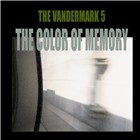 KV: In a way. I didn't think about it in exactly that sense, but in a way. It's the last music that will be recorded...there won't be more recordings with Jeb Bishop, so for that particular lineup, and then also the fact that Jeb had been with the group from the very beginning definitely was...I mean I had a meeting with the rest of the band and said, there's a couple of ways to look at this—one is to say Jeb leaving the group is the demarcation line for the band. He was there from the start, it's going to be impossible to quote unquote replace him. I don't want to just find some good trombone player and run through a repertoire. I'm just not interested in doing that. That's not what the band's about. It could be a logical place to say, hey, we've done a bunch of good work together.
But everybody in the band was very interested in trying to continue, and remain creatively vital, and keep our rapport. So the question became, what do we do?, who do we look to? After a lot of discussion the logical choice was Fred Lonberg-Holm. We start working with him as soon as I come back from Oslo and Antwerp. We start rehearsing and working on new material with him. So, in a way those recordings could have been the last statement of the group as a whole. But, they're definitely the last statement of the music I was writing for that lineup and with the idea of Jeb being in the band. It's definitely an important set of documents for me. That was the furthest realization of the ideas I had at that time for that group of people. Anything I'm doing from now on will definitely be done with new considerations, not least of which is the instrumentation, and with Fred, the kinds of things he'll bring creatively to the band.
AAJ: Was there a list of people you considered?
KV: We talked through the possibilities of how we wanted to consider the band. Initially the group played in Chicago all the time and we worked primarily in town, rehearsed every week, performed every week all year long for several years. As people's reputations developed, as the band's reputation developed, we did more and more work outside of town. The question we had was, if Jeb leaves, and we do want to continue, since we're working primarily in town, do we look outside Chicago? Do we look outside the United States? We talked through some different people, but the thing we came back to was, if we keep the group connected with Chicago, even if we're not doing concerts, if everybody's in town we can still work together and rehearse new material together.
Since we decided to do that, the list of people from town that made sense, that dramatically reduced it. Even though there's a lot of great players in town, the idea of having another reed player made no sense whatsoever. Jeb's a monster musician. Technically, he can play his ass off, he can read incredibly well, and he's extremely creative. He doesn't just play the same thing everytime he plays. He's really pushing himself all the time. He's very serious about all that and very individual. He's got his own approach to things. So we needed to find someone with that attitude, the attitude of a real improviser with a real individual personality, and with the skills to do a broad range of things. Put that into it, you cut down the list even more.
We needed someone who could be a bandleader in their own right. The idea of Fred came up and it made more sense than anything else we could come up with. Fred is established, he's worked with a huge range of people, can play tons of different kinds of music, the idea of having two reed players and two strings in the group was very interesting. Since Jeb years ago stopped playing guitar, a couple of things we lost was the possibility of having a larger rhythm section. A lot of the horn writing in later years was an attempt to keep different rhythmic possibilities going underneath soloists, so it wasn't just a string of horn solos. Having Fred in there able to comp and back soloists and create more rhythmic diversity and density is really exciting to me. Also, Fred's interest in using different kinds of effects and electronics will add a whole new set of parameters to the group, too. It's a really exciting choice, and the fact that Fred's interested, everyone in the band is really happy about it.
AAJ: You guys have a lot of history with the Territory Band, the Tentet, and the Flying Luttenbachers.
KV: That's the other thing about working with a player from town, there's a lot of history amongst the players here. Instead of starting at zero, you've got some ground there to work on, some ideas of what might be possible and take it from there.
AAJ: Is the band going to start over with a whole new book, or will you be modifying older compositions for the new lineup?
KV: My idea is to take The Color of Memory and rearrange those pieces for having Fred in the group, just because that's the newest set of compositions, and it'll give us a transition when we're touring with the album, and people will have a sense of what the music sounded like. That makes sense to me. Then I'll begin writing new material with those people in mind. That's actually what I'm most excited about, the practicality of trying to deal with the most recent record makes a lot of sense. It gives us a starting point, gets us off the ground quickly. The main thing is I want to be writing new music for the band, and really take advantage of what the capabilities are for that set of instruments and players.
AAJ: At the time of retirement, how many tunes did that band know?
KV: I think by the time we did the Alchemia box set, that was the working book. I think there was some stuff we didn't do that wasn't in the book at the time, but pretty much we wanted to play everything that we had. It's pretty close to about 40 pieces, I think. The number of tunes since the beginning of the band must be about 150 or more. There working book allowed to play two sets a night for five nights and not duplicate too many pieces, which says a lot about how hard the band worked to learn the material.
 AAJ: Are you enjoying playing more baritone?
KV: I don't know why, but I have a certain affinity to the horn. Maybe because as a kid I heard of lot of baritone players on recordings, Gerry Mulligan, Harry Carney. Maybe the sound, something about the tone. There's a lot things I'm attracted to that I'm able to get across with that instrument in ways that I can't with the other horns. It feels really really comfortable to me. It allows me moreso than with the bass clarinet, which has the same range, it's a louder horn so I can lay in on vamps and some rhythmic things in the bass and be heard in a way that isn't quite possible with the bass clarinet.
The group is designed to work as acoustically as possible. It's really good if we're setting up in a theatre or club, playing to 100-200 people, and not using a PA, it's pretty important to take in the technical consideration of what the instruments are able to do. At least for me, the baritone is superior for things of volume over the bass clarinet. Bass clarinet offers a lot of other things, the timbre and other things you can do which are quite different from the baritone. It's a great horn, I really really love it. There's a couple of things on The Color of Memory where I'm doubling the bass with the horn in a way that really pushes the stuff. I love doing that stuff with the Tentet and the Territory Band. There's something fantastic about having the baritone on the bottom, almost driving the group, or helping to drive the group from a rhythmic standpoint.
AAJ: Is the Sonore Trio active?
KV: I've actually been doing quite a bit of work with that group. We're going to attempt to do a West Coast tour with that group next year. We've been touring, we did a tour of Europe in February. We've been doing a lot of work in Europe. That group's quite active, and we're trying to figure out what to do for our next record because we have a bunch of tapes, live performance tapes that are really strong.
AAJ: With all the performances and recordings you're involved with, where's the DVD?
KV: I don't know, we haven't had anyone really want to do the DVD yet. There's a bunch of film footage of the Tentet, a bunch of stuff. Everyone's so crazy busy, slowly moving forward there's a process of trying to figure out how to coordinate the archive of footage and try to cut it into some kind of presentation. The thing that's interesting about the footage we've got, it's from every tour done in the states. So, there's something from 2000, 2002, November and April of last year, and there's footage of all the changes and developments within the band, personnel-wise and esthetically and it's on film!
The issue is trying to collect the footage and coordinate what to do with that. It's something I'm actually supposed to be working on now, to contact the people who have the footage and figure out the best way to get it. Because if can sort that issue out, there's people in town who have access to the equipment we would need to cut the film and organize it. The interest is there, it's just a matter of coordinating the materials. That's always the tedious part.
Visit Ken Vandermark on the web.
Recent Selected Discography
Vandermark 5, Color of Memory (Atavistic, 2005)
Vandermark 5, Alchemia (Not Two, 2005)
FME, Underground (Okka Disk, 2005)
Sonore, No One Ever Works Alone (Okka Disk, 2005)
Peter Brötzmann Chicago Tentet, Signs (Okka Disk, 2005)
Spaceways Incorporated vs. Zu, Radiale (Atavistic, 2004)
Vandermark 5, Elements of Style...Exercises in Surprise (Atavistic, 2004)
Golden Color Band/Ken Vandermark, Brooklyn Cantos (Squealer, 20040
Free Fall, Furnace (Wobby Rail, 2003)
Paal Nilssen-Love/Ken Vandermark, Dual Pleasure (Smalltown Supersound, 2003)
Vandermark 5, Airports for Light (Atavistic, 2003)
Ken Vandermark, Two Days in December (Wobby Rail, 2002)
DKV Trio, Trigonometry (Okka Disk, 2002)
Peter Brötzmann Tentet+2, Short Visit to Nowhere (Okka Disk, 2002)
School Days, In Our Times (Okka Disk, 2002)
Vandermark 5, Free Jazz Classics, Vol. 1 & 2 (Atavistic, 2002)
AALY Trio/DKV Trio, Double or Nothing (Okka Disk, 2002)
Peter Brötzmann Tentet+2, Broken English (Okka Disk, 2002)
Photo Credits
Top photo: Ziga Koritnik
Bottom photo: Josephine Ochej
< Previous
Romance and Revolution
Next >
Ir
Comments

About Ken Vandermark
Instrument: Saxophone
Related Articles | Concerts | Albums | Photos | Similar ToTags
For the Love of Jazz
 All About Jazz has been a pillar of jazz since 1995, championing it as an art form and, more importantly, supporting the musicians who create it. Our enduring commitment has made "AAJ" one of the most culturally important websites of its kind, read by hundreds of thousands of fans, musicians and industry figures every month.
You Can Help
To expand our coverage even further and develop new means to foster jazz discovery and connectivity we need your help. You can become a sustaining member for a modest $20 and in return, we'll immediately hide those pesky ads plus provide access to future articles for a full year. This winning combination will vastly improve your AAJ experience and allow us to vigorously build on the pioneering work we first started in 1995. So enjoy an ad-free AAJ experience and help us remain a positive beacon for jazz by making a donation today.

Giveaway

Days remaining: 7