Home » Jazz Articles » Building a Jazz Library » Tomasz Stanko
Tomasz Stanko

Stanko remains idolized in his native Poland, and he makes no bones about his debt to Komeda. Throughout his forty-year career there have been but two constants: an intensity in which every note is important, and an immediately identifiable trumpet sound, which, while starting from Miles Davis and Chet Baker, is distinctly his own and Northern European, if not Polish. His music can be dark and melancholy, making use of Polish folk themes, and filled to bursting with modern influences both American and European. Yet it is never maudlin and always cuts straight to the Soul of Things (ECM, 2002; see below).
These recordings reveal Stanko as a man of intense thoughtfulness who has created and played some of the most strikingly individual music ever recorded. What Stanko will explore next, no one, perhaps even Stanko himself, can say. Assuredly it will be instantly recognizable. In this respect, he has proven to be a quintessential jazz musician.
Note: the Polish releases listed below are available from Cadence on the web.
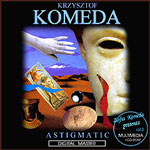 | Krzysztof Komeda: Astigmatic (Power Bros 00163, 1965) A self-taught pianist and composer, Komeda was not a particularly strong soloist, but his piano work controls the flow and pace of each piece from the background. His compositions have a strong feel of architecture, tying together simple melodic or rhythmic cells to create larger works with very strong dramatic effects. His music strongly evokes imagery, not surprising given his other musical life as a composer of film scores. The title piece is positively terrifying and riveting and sounds like nothing else. Stanko is quite recognizable from his slow vibrato and half-valving as he "speaks" freely in front of the shifting background. |
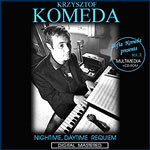 | Krzysztof Komeda Nighttime, Daytime Requiem (Power Bros 00159, 1967) "Nighttime, Daytime Requiem" was written in response to the death of John Coltrane. It sounds nothing like Coltrane's music (except for a time during a sax solo) and is not a homage. Through more than 27 minutes, Komeda controls time and the listener's interest through linking changing structures full of sadness and anguish of loss—coupled with anger at the meaningless of it all, but with thankfulness for the fact that Coltrane lived. Stanko's solo starts softly and ends up shouting at the darkness. "Ballad for Bernt," a gorgeous if unorthodox ballad, is dedicated to the tenor saxophonist Bernt Rosengren, who was with Komeda before Stanko. |
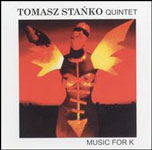 | Tomasz Stanko Music for K (Power Bros 00131, 1970) Stanko's first album as a leader is clearly dedicated to Komeda, but it is music for him, not by him: Free music within a compositional framework which sets up tension between these opposing forces that makes it click. One can hear Stanko's connection to Komeda's compositional thought and process, although the intensity has been taken to another level. The music absolutely burns from the outset in "Czatownik (The Ambusher)," and later in "Cry" as a repeated horn moan becomes the theme. The title work, "Music for K," a sixteen-minute paean to Komeda, echoes the music above, but with much more extroverted energy. |
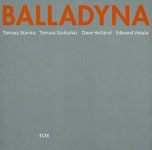 | Tomasz Stanko Balladyna (ECM 1071, 1976) Stanko's first recording for the ECM label; it would be twenty years until the next! "First Song" is characterized by a meter that constantly, subtly shifts. Holland and Vesala blaze as the anchors, but this essentially themeless music is held together by an audible structure that allows Stanko and Szukalski infinite freedom yet never devolves into mere blowing. This track is a wonderful example of how Stanko makes sense by allusion yet sounds free. "Balladyna" starts out as what sounds like a folk melody and mutates in a freeform exploration of pure sound and rhythm. Marvelous! |
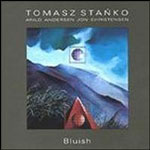 | Tomasz Stanko Bluish (Power Bros 00113, 1991) During the '80s, Stanko played with such people as Cecil Taylor and recorded for Polonia and other labels, but this is generally considered his next major release. The overall sound is smaller (just a trio) but Stanko is very exposed. "Daada" has an almost-predictable melody until it shifts away. "Bluish" almost swings when Stanko is playing, then breaks down during a meditative drum solo, only to pick up again. "Third Heavy Ballad" foreshadows the deep, intense mournfulness that later peaks in Leosia. |
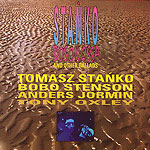 | Tomasz Stanko Bosonossa and Other Ballads (GOWI 08, 1993) The first appearance of the quartet documented on forthcoming ECM recordings. "Sunia" starts off slowly with a trademark Stanko line that goes nowhere and everywhere, interrupted by outbursts and shrieks. Bass and piano hint at the main motif until it finally appears as the grist for the next ten glorious minutes. "Maladoror's War Song" has everything Stanko and might present the one melody that he "has been playing his whole life." The beautiful "Morning Heavy Song" will be monumentally reworked for Leosia. |
 | Tomasz Stanko Matka Johanna (ECM 1544, 1995) Some of the most abstract music to come from Stanko. Each track is a musical "image" created from scenes of the movie Matka Johanna from the Angels by Jerzy Kawalerowicz, to whom the album is dedicated. Ranges from mostly percussion sounds to reworkings of tunes like "Maldoror's War Song," first heard on Bosonossa, to "Tales for a Girl, 12," which finds Stanko playing a line that makes sense without ever repeating itself. Do not start here to enter Stanko's world, but this music will help fill it out. |
 | Tomasz Stanko Leosia (ECM 1603, 1996) Possibly one of the most intensely beautiful records of the last decade. A gigantic suspension bridge, made up of the towers of the glorious opening, "Morning Heavy Song, and the haunting closer, "Leosia, surrounds the quartet performing in different configurations with a quiet intensity. The black and white etching of a empty road with a phone line seen at night in driving rain says everything about the overall mood which ultimately sees hope, but from the dark side. |
 | Tomasz Stanko Litania -The Music of Krzysztof Komeda (ECM 1636, 1997) In a departure from ECM's usual procedure, the liner notes feature reminiscences of Komeda by Stanko, Stenson, and others, and also from Manfred Eicher and Roman Polanski, for whom Komeda had written many film scores, including the one for Rosemary's Baby. Stanko writes that he prepared extensively by listening to the earlier recordings and that the essence of this music could only have brought to life by performers experienced with Komeda. A fascinating comparison to the early Power Brothers originals. |
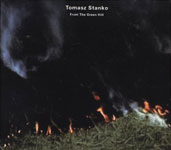 | Tomasz Stanko: From the Green Hill (ECM 1680, 1999) Using a different lineup (including John Surman on baritone saxophone and bass clarinet, Dino Saluzzi on bandoneon, and Michelle Makarski sparingly on violin), Stanko creates another masterpiece. The mood is again introspective and atmospheric, including the pieces written by Surman. "Litania," a chorale by Komeda, appears twice played on bandoneon, almost as tears. "Quintet's Time" has one of the most haunting motives ever written, while "From the Green Hill" could easily be movie music. Adjectives fail to describe this music adequately but time stops for 73 minutes, and it must be experienced. |
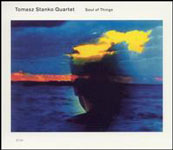 | Tomasz Stanko Soul of Things (ECM 1788, 2002) By the time this album appeared, Stanko had been touring with the other members of his working quartet for a number of years (since they were teenagers, actually); they appear on Balladyna (GOWI, 1999), music for theater by Stanko. The fact that he felt the need to tour and play small clubs says a lot about his commitment to this music. The music itself, consisting of thirteen untitled tracks, veers to the traditional, using some themes from his earlier work and Polish folk music themes. |
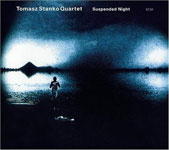 | Tomasz Stanko Suspended Night (ECM 1868, 2004) Constructed similarly to the Soul of Things and also in the traditional vein, the now much tighter and in-touch trio plays ten unnamed variations after "Song for Sarah." There is the feeling of controlled intensity, along with much freedom given to the trio, as Stanko plays less but totally controls the proceedings. (The trio made a separate record, entitled Trio, which in many ways was missing Stanko's spark.) Transcendent music by a master taking in new blood to possibly start the next phase of his illustrious career. |
About Tomasz Stańko

Tags
PREVIOUS / NEXT

Become a Sustaining Member

Since 1995, All About Jazz has championed jazz as an art form and supported the musicians who create it. Over three decades, it has grown into one of the world's leading jazz resources, serving hundreds of thousands of readers, musicians, presenters and industry professionals each month.
Help Build the Future of All About Jazz
Your support helps us continue building All About Jazz for the next generation—expanding our editorial coverage, preserving jazz history, developing new community features and creating better ways to discover the music and the people behind it.
Become a sustaining member for as little as $20 per year and you'll immediately enjoy an ad-free experience along with access to subscriber features and future articles for a full year.
Together, we're not simply sustaining All About Jazz—we're building its future. Thank you for being part of the journey.