Home » Jazz Articles » Interview » David Hazeltine: Modern Standards
David Hazeltine: Modern Standards
The idea that we can create jazz musicians like we create accountants, it's just not happening. I think the music suffers for that and I've heard evidence of that.
 David Hazeltine is now, and has been for over a decade, an omni-present force in the New York City straight-ahead jazz scene. Through the years, he's played piano and recorded with masters like Curtis Fuller, Jon Hendricks, Slide Hampton. Now with many recordings as a leader to his credit, he still plays many, many dates throughout the year and is as energetic and enthusiastic about the music as most players half his age (not to say that he's old, by any means).
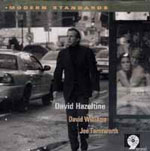
 To some, the concept of his new recording, Modern Standards, may seem a large departure from his earlier aesthetic of playing straight-ahead interpretations of standards and be-bop tunes, while throwing in a few originals with each set. Arranging and improvising on tunes by the likes of The Bee Gees and The Beatles may seem radical to the un-initiated. But it doesn't have to be. And if it is, that's OK too. Hazeltine has joined many modern players in the belief that much of the best pop music written over the last few decades is just as deserving to be interpreted by contemporary jazz artists as the pop music from the '20s-'40s. If not more so. Modern Standards is a welcome addition and Mr. Hazeltine took some time out of his busy schedule to talk about it with All About Jazz.
All About Jazz: I've had a chance to listen to a bunch of your music lately, mostly the new one, Modern Standards, which was really cool.
David Hazeltine: Thank you.
AAJ: Yeah. Looking over the titles from a lot of your [recordings] it looked like you'd maybe had a project like this in mind for a while: pop tunes played / arranged in a jazz context.
DH: Yes, well... I've put a Burt Bacharach tune on just about every one of the last, say, ten CDs or so that I've made. Burt Bacharach, I've been a big fan of his. There've been a few other little things that I've done... I guess you wouldn't call them pop songs, but maybe popular back when I was a kid back in the '60s or '70s.
AAJ: We're relatively close in age so I have maybe a similar relationship to some of that music.
DH: Ok, I see. Ok, good.
AAJ: I actually never really went through a phase where I was checking out Bacharach in particular. What is it about him that seems to get to you?
 DH: Beautiful melodies and traditional enough harmony. When I say traditional I mean in the same kind of ballpark as, say, Cole Porter, in the overall view of his tunes. But then he does very interesting, very Bacharach-ish kinds of things that take him out of that realm and make him a little more modern than say Cole porter or George Gershwin. So, I guess overall, he uses similar formats and phrase structures, and numbers of bars and so on. But then when you get down to specifics he has some interesting little things about his harmonic movements that kind of separate him from them and make him a little more modern. Like other composers—like Jimmy Webb. He's a guy I didn't get to on this project. I have the intention of getting to some of his music. I actually did a Jimmy Webb tune on The Classic Trio Meets Eric Alexander. We did "Didn't We." That was a popular tune in the '60s when I was growing up.
AAJ: That might be a little bit before my tyime. I'm not familiar with Jimmy Webb
DH: Yeah, Jimmy Webb wrote a bunch of tunes for the 5th Dimension like "Up Up And Away" and a lot of great tunes. He's another guy like Burt Bacharach—kind of starts out with the same formats as the traditional 20th Century American composers. But then he adds little things, little twists that actually make it sort of jazz-like. Now the interesting thing about Bacharach, he actually grew up here in New York in the '40s and '50s going to listen to Charlie Parker and Dizzy Gillespie. He talked about that in several interviews. So he's always had this jazz thing in the back of his mind. I think that's why it comes out in his music in a 'pop-ish' sort of way. It's not like I'd ever consider him a jazz guy or a jazz musician. But it comes out in his music in such a way that it's just open enough that I can mess around [with it]. I never record or play any of Bacharach's music like [he] wrote it. But I think one of the things that appeals to me is that it has so much space for me to mess around with it. You know, for me to get something else out of it.
As opposed to other music that I really like a lot. For example, Earth, Wind, & Fire is a group that I really love. I'm talking about music in the pop vein. I listen to them all them all the time. I know a lot of older jazz musicians who love it too, like Louis Hayes—older guys that you wouldn't think would listen to pop music. But everybody loves Earth, Wind, & Fire. But the problem is I can't do anything with it. It's so jam-packed full of stuff. Great harmonies, great rhythms, all this stuff is packed—it's very highly produced music.
I did one arrangement of an Earth, Wind, & Fire tune. But it was one of their simpler ones. In order to mess with the music, in order to make it my own, in order to arrange it and do something different with it, so it doesn't just sound like a cover of something that's already been done, it has to have some openness to it—not so much going on. I always feel, with an Earth, Wind, & Fire tune, if I eliminate something, it would ruin the tune. Or if I didn't do it exactly like they recorded it, something big would be missing. So it's hard to add anything to what they do, because it's so highly-produced, with so much going on.
That's the thing about Bacharach. The other composers I chose for this particular CD (Modern Standards)—I think that could be said of all of them. There's some relation back to the formats used by people like Cole Porter, George Gershwin, Kurt Weill, and an openness to it that allows me to insert jazz harmonies and do different things that are pleasant for jazz people to hear. So it's not just, "Oh, that's a Beatles tune, horrible." (Laughs) Not that Beatles tunes are horrible. But if you buy a jazz record and all of a sudden you hear some real simple triads, real simple chords being played, you might be a little disappointed.
AAJ: Right. Like starting to drink a glass of ginger ale, thinking it's ginger ale, and it turns out to be beer. It's just a shock.
DH: Yeah, right. Exactly, yeah.
AAJ: The thing about Bacharach going to see Parker and Gillespie early in his life—that's interesting. Maybe the harmony seeped in but his personality comes out strongly in the melodies. To me it seems like his melodies are very straight forward and simple, very personal...
DH: Yes.
AAJ: ...and combined with that harmony stuff it's probably really fun to play.
 DH: Yes, and he puts a stamp on all of his music. But again, the important thing about Bacharach's tunes that I've recorded (about one per record for the last eight or nine) is they all have that quality of being typical Bacharach. I think that if I just heard them, and I didn't know they were Bacharach, I could identify them. Like you said, it's a very personal thing and he puts his stamp on the music the way the melody goes with the harmony. Again, the point being that it's open enough for a jazz musician to [add harmonies], and for an arranger to try to develop it into something interesting as opposed to just a pop tune.
AAJ: Yeah. For me that seems to be the main modus operandi for this record, you taking these tunes and arranging them in your own way. Adding lines to connect parts of the tunes that maybe have a rest in melody, or putting in little rhythms or lines that the bassist cops with you.
DH: Yeah, that's right.
AAJ: That's real nice. When you decided on what tunes you wanted to do for this recording, did you play them with the group for a while to get a feel for how you wanted to arrange them? Or did you come in with stuff you knew you wanted to do?
DH: I came in with everything done. If you notice, there's a lot of space for drums. Like the Bee Gees tune. There's a drum solo every four bars...
AAJ: Let me just say that's my favorite cut on the record.
DH: Oh really, you like that one...
AAJ: Very cool.
DH: Oh good. Now, you probably knew the tune.
AAJ: Yeah, definitely.
DH: That helps. That's what I like about doing this project and will always like about arranging music. That's another thing about the 'modern standards' idea. I don't know how many people around today have a personal relationship with the tune "I Got Rhythm" for example, you know? I mean, not many. Because there's probably not many people alive still that remember how "I Got Rhythm.".. I never even heard "I Got Rhythm," the Broadway version. I have no idea what that sounds like.
AAJ: Right. We may have a personal relationship with it, but it's, like, five times removed from the original thing.
DH: Yeah. It's how Sonny Stitt plays "I Got Rhythm." I don't know how Gershwin sounds. But with these kinds of tunes I intend to do in the future... I think for people of my generation, older people and even younger people, it's a cool thing to make a connect for a jazz musician on this level of, "I recognize that. I remember listening to that tune when I was a kid," you know? How many people didn't hear "How Deep Is Your Love?" God, it was a huge hit! And the whole Saturday Night Fever thing, you know. And it's a beautiful tune, very sweet little tune. But to turn it into a jazz tune— that was one I kind of struggled with. What am I going to do with this thing? To me it was so in my head the way the Bee Gees did it, and beautiful, and I didn't know if I could do anything with that. Because I had it in my mind that a lot of people will know this and wouldn't it be cool to do this tune. I thought about doing it as a ballad... I just couldn't think of anything to do. Then I thought maybe I could do it as an 'up' tune and feature the drums or something. That'd be a way to wipe out all the clichés. Because I basically split up all the phrases with the drum fills.
AAJ: Right. You kind of elongated the phrase.
DH: Exactly. After doing that for a while, I heard the actual chorus of the tune [sings] 'How deep is your love, la la" just swinging straight ahead, no breaks no nothing, and played pretty much as they recorded it—harmony-wise. But what I wanted to say, to answer your question about coming in prepared, is that I've worked with Joe [Farnsworth] for so long that I know exactly how he'll sound when he does that. I record with him a lot with One For All and other trio stuff so it's easy for me to write for him. I don't know if I'd write that way for other drummers. I knew exactly how he'd fill up those spaces perfectly. I could hear it in my head.
I play a lot with David [Williams] too. With both those guys I knew, pretty much, how it was going to sound. There were no big surprises at the record date, for me, because I'd already conceived it in my head. They did exactly what I thought they'd do. However, I have to say that I was a little surprised. It sounded even better than I thought it would, swinging-wise, and the way they play so great. It's always surprising, in the way that a kid knows that Christmas is coming, but when it comes it's still a big surprise, you know? In that sense it was fresh. But I did come in with everything arranged. Except for the last tune, the Isley brothers tune. We kind of just played around with that. It was the last tune on the date. We just tried to get a little something different on that. But everything else, you can hear how it would have to be arranged.
AAJ: You mentioned stuff you wanted to do in the future. Are you thinking about doing more records that are based on music written by pop artists? Because I can think of so many that deserved to be covered—Paul Simon, Stevie Wonder, etc...
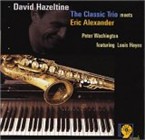 DH: Yeah right. Exactly. On that Eric Alexander Meets Classic Trio there's a Stevie Wonder tune, "Knocks me Off My Feet," which is from one of my favorite all-time Stevie records he made in the 70s called Songs In The Key Of Life. There are several tunes from that record I've always wanted to arrange and do. But it's a tricky business because... And this is the problem sometimes with highly produced pop records, there's so much in there already it's hard to know what to take out and what could be added because it's so perfect the way it is. Especially the way Stevie Wonder does his music. I mean he just keeps layering stuff in there and it's so right on the money, you know? I don't think I've ever heard anything that he did that I didn't like.
Yeah, I'd like to do some more Stevie. Paul Simon is another great idea. I've got a list of guys on my work table I intend to get to. I don't know if I'll do another Modern Standards in the near future. As a matter of fact Marc Edelman was talking to me yesterday about the next record and he'd like me to do something along the lines of 'Modern Originals' to be the follow-up to Modern Standards, but feature stuff I've written since there was no original music on Modern Standards, and usually I put original tunes on my CDs. But I wanted to stick with the format of tunes people would recognize. I wonder if there's any tune on there that's not recognizable. I guess people that would know Bee Gees and The Beatles might not know Sy Coleman and "Witchcraft." But I think they're not so disparate. Are they?
AAJ: "Witchcraft" is definitely in a standards vein, in my mind anyway. But that's the kind of thing where I'd assume everyone would have some kind of relationship to that tune. Again, it might be a couple times removed. Like, younger kids will probably recognize that melody, but they won't have that personal relationship like we had with the Bee Gees tune.
DH: Right, that's right. It'd probably be more like Frank Sinatra singing it, or something. But that's good enough for me (Laughs).
AAJ: Big time. So you do most of your records for Sharp Nine Records now?
DH: I record for Sharp Nine Records here in the States. I record for a Dutch label, Criss Cross, that's out of Amsterdam. And then I work for a Japanese label called Venus out of Tokyo. I just did my 5th CD for them called The Music Of Bud Powell. I arranged and played in a trio format about eleven or twelve Powell tunes with [drummer] Billy Drummond and [bassist] George Mraz. They did a really great job and I really liked that project more than I thought I would. Because it's one thing to play standards, other people's music, and do my own thing with it. But to make a whole CD of [one other artist's music]...
They really like this in Japan though. The first record I did for the Japanese label was The Music Of Bill Evans, so I did all Evans tunes. It's not so much my thing to do that. But whatever; it's something they like and something I can do. Then they wanted The Music Of Horace Silver. But it becomes increasingly challenging and difficult to put my stamp on other jazz pianists' tunes. Because, like the same problem with Earth, Wind, & Fire and those other kinds of things, they're already so rich with stuff. What am I going to add? What am I going to do? But Bud Powell was a little bit easier just because he was older. There were some opportunities for me to, sort of, modernize a little of the harmony. But I didn't want to do it too much because I didn't want to take away the character of Powell's music. I mean, it's so great.
AAJ: Well, especially since you're a pianist and all these guys you're talking about are pianists. It'd be another thing if it was a trumpet player doing a tribute to Bud Powell.
DH: Right, right. Exactly. I hope that Bud is still lying in his grave in the same position; He hasn't [rolled] too many times from me doing this (Laughs). And, of course, Bill [Evans] was long gone when I did that. But Horace [Silver] actually got a copy of the thing I did and called me up and raved about it. I didn't speak to him directly. He talked to my answering service and he was raving and raving about it. I was so excited to get this message. I wanted so much to get it off my service and onto a tape so that I could save this thing of Horace talking about my record of me playing his tunes. Wouldn't you know it, by the time I figured something out the thirty days they allow for the message to be in the saved mode expired. So I lost Horace saying this.
AAJ: That's too bad.
 DH: I thought about calling him back (Laughs). Saying would you please do this one more time. But it might be a little forced (Laughs). So this idea of playing other people's music, it's not something I like so much. So [Marc Edelman] wanted to do a CD of me just playing my stuff. I have to say, of all three labels I've mentioned, I probably have the best and most hands on relationship with Marc and Sharp Nine Records. He's the one I've recorded with the longest and he's been the most fair with me in terms of allowing me the freedom to do what I want and also letting me be involved in the project after recording it. You know, all the details: which takes, liner notes, artwork, this kind of thing. He allows me to be involved. Whereas with the other labels, not so much (Laughs).
AAJ: Yeah. The Criss Cross label... Some of the other records Marc sent me of yours... I'm interested in one particular recording studio they seem to use a lot, and the records all sound really good. It's called Systems Two.
DH: Oh yeah.
AAJ: Almost all the Criss Cross Records seem to be done there.
DH: Yeah. It's been done there in the last 6-7 years. He started at Rudy Van Gelder's in the late 80s.
AAJ: Marc, or the guy that runs Criss Cross?
DH: Actually, Marc did too. But the guy that runs Criss Cross [Gerry Teekens] started there in the late 80s at Rudy Van Gelder's. Then he moved to a studio in Manhattan called RPM. I did several there back in '95-'96—my first one or two for Criss Cross. Then he moved to Systems Two around 1998. Yeah, Systems Two is a very nice studio, state of the art. The only problem is it's way out in Brooklyn (Laughs). It's a little bit of a trek to get there but...
AAJ: Yeah. I just wanted to ask about that. All the records I get that are recorded at Systems Two sound to me like the guys there just let people play. You know, somehow it sounds natural, like the people are having fun playing. I don't know.
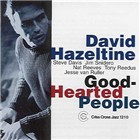 DH: That's probably true. Criss Cross has an engineer that comes along from Europe to do all the recording. Marc Edelman uses the engineers in Systems Two, the house engineers. They kind of have a little more flexibility in terms of... like I say, even at that point of the recording, I have a lot of say in how it sounds. In different projects I'm looking for different kinds of sounds. Nothing big or overwhelming. Things maybe people wouldn't even notice. With Criss Cross or the Japanese label, they don't involve me in that. They won't allow me to dictate too much about how it sounds. So I kind of like this idea that Edelman uses the house engineers and he gives me this kind of freedom.
AAJ: I read about a conservatory you taught at—a jazz studies program you started up. I wanted to know some of your thoughts on that type of learning situation as opposed to learning more out on your own, just private lessons. People have lots of different attitudes about that. It seems like you've maybe had your hands in both types of situations, you know?
DH: Well, it's interesting. I'm basically self-taught. I had some teachers, I went to music school, and I had classical piano teachers. In fact my major at music school was classical composition.
AAJ: That's relatively far removed from interpreting standards—classical composition.
DH: Right. But when I was twelve years old I studied with a guy for about two or three years who was a jazz organist, and he was my first and only jazz teacher really. I was very young and naive. I didn't know much about jazz at all. I started on organ and I was still playing organ when I met Will. His name was Will Green. He passed away not long after that. I was just getting turned onto jazz and liked things on a deep level. But I wasn't really ready to get into too many theoretical things. So he taught me in a very hands-on way how to play all these different songs. In a year I sounded pretty good, but I didn't know what I was doing. It wasn't really improvising, you know? But I was sounding good and I was doing what he told me. Later, after a few years of that, I started asking, "Why am I doing this? What is this actually?" And he would explain things to me. And then he passed away and I was kind of on my own again. So I had a lot of stuff he showed me that I kept thinking about.
But meanwhile, while I knew him, I started building a record collection and I started learning things from the records. He always encouraged me in that and told me it was an important thing to do. To be able to train my ears to be able to play what I heard. He didn't say, "You must transcribe all the solos," because that's what they do in a college program now. They say you need to transcribe solos and you need to do this and that. But at that point he just said you need to develop this ability to play what you hear, and in order to do that you should practice hearing stuff on records and then playing it on the piano. So I did it. He told me to do it so I did it. It was slow going at first. When I first got turned onto Charlie Parker at fifteen years old, that began the whole period of spending all my free time at the piano with a tape recorder, learning Charlie Parker solos. That was a big thing. In fact, spending the time cutting classes and practicing Parker solos is basically what I'm trying to say (Laughs).
So I had a very practical hands on, teach myself approach to my own education. But then, as I was doing that, I was also thinking for some reason, like an educator. I was writing everything down. I was very organized like that. I guess I was trying to figure out the logic behind what would make Charlie Parker play this way. Then as I got into more pianists like McCoy Tyner and Herbie Hancock, I was always asking myself, "Why are they doing this? What are they thinking about?" So I developed all these little theories and things and that's what I ended up teaching people, in the hands on way I could, at this conservatory where I developed the jazz studies program. I went about it [by studying and playing this music in a hands-on way] and then I, sort of in retrospect, figured out how to teach other people to do it. In that way I think it's a great thing. But I don't necessarily think that kids who start taking music in these jazz studies programs they have today... while they're really good, I still think they're only as good as the student who is personally involved. The idea that we can create jazz musicians like we create accountants, it's just not happening. I think the music suffers for that and I've heard evidence of that.
You know, there was nothing like that when I was a kid. If there would've been, maybe I could've been better faster. I don't know. You understand what I'm trying to say? I see advantages but I also see disadvantages. I teach at these Jamie Aebersold summer camps every year and I see a lot of kids with these big attitudes because, "Hey, I go to a jazz studies camp and I know all this stuff, I know this and that," and they can't play at all. In fact I rarely see someone who really has their stuff together involved in some kind of program like that. I meet these people [with their stuff together] here in New York or they'll somehow come into my life and they'll sit down and play, and I'll say, "Wow, you can actually play. What do you do?" And it turns out they do something else, have some other interest. But they do this on the side and they're self-taught. I don't know if I answered your question.
AAJ: Yeah... It's a real interesting subject and it's pretty candid what you're saying, which is good. I've heard a lot of the same sentiment from a lot of people. Whenever I speak with anyone who seems [to me] like they know what's going on, invariably the point gets made that you get out of it what you put into it, you know? A kid, or an adult, can't go to a jazz school and think that someone is going to force-feed them jazz knowledge or something. You have to really want it and you have to put a ton of work into it.
 DH: Yeah. And the bottom line is this: When you're talking about jazz music, first of all we're talking about music. We're not talking about something that's written down. And even though people want to keep making it that...even when Mozart was doing it, it was still music, you know? Even classical is still music. It's not really written down. The page doesn't mean shit. It's the way it sounds that means something. It's the sound in your ear. That's the thing about jazz that all these education people get so hung up about and confused about, I think. Because they want to talk about it like it's a science. There's a scientific side to it, and I have a scientific side to my brain that tries to organize it in certain ways and finds motivation in looking at patterns of things and it's very interesting that way.
But ultimately it comes down to sound and I think the education thing pulls people away from that sound thing. You get a bunch of guys knowing a lot of theories and a lot of things, but they're not told to focus on the way they sound. So they might know a lot and have a lot of background to talk about this crap, even write books about it, but they won't sound good when they play because they're not thinking about the sound, you know? It's an amazing thing that you can have people writing book after book on all this crap, all these words about how to play jazz coming from a person who can't play it at all. It's amazing.
AAJ: It's cool that you're in a situation, at least part of the year, teaching, because that's good stuff for people in school to be hearing. So that's good.
DH: Yeah. I try to be as honest as I can, and yet still... I don't want to be preachy against jazz education establishment at all. I think it's great. I just think that people need to go about it in the right way and really know what's involved in making music and that's what I try to tell these people. This two week camp I do for Aebersold in the summer is really great. I enjoy it a lot. I enjoy meeting these people from all over the planet and every kind of vocation; mostly adults. You know, part-time musicians and great and interesting people—doctors, lawyers, dentists, etc. It's fun to find out about them.
But it's also fun to make them go, "Ahhhhhhhhhhh." It doesn't have to be such a daunting thing to be involved in music. These jazz education people will have you thinking you've got to devote your life to learning exercises that are so difficult and pathetic (Laughs). When in fact all you have to do is listen, have fun, have a focus, and have somebody guide you and turn you on to a few little things. These people get such a kick out of it and that makes me happy.
I always leave these camps getting to know about two or three more people every year in the New York area that come to me for lessons once a month or every other week. And this is not what they do for a living. They just come in to learn a little bit more. It's cool. I enjoy that part of it. I would love to be involved in a university setting with more serious students and have a bigger impact on that educational setting. I'm not really railing against it but I think there are problems in it and I'd like to help fix some of those things.
AAJ: Sounds like you've got some ideas about how. There's something else I wanted to touch on. There's a point in your solo on "Witchcraft" from the new record where you start to play what people may refer to as a little outside of the changes or somewhat free-ish, open. It was a long phrase and it wasn't just kind of outlining chords and stuff like that. It had a real internal logic and at one point seemed to break away from the tune in one sense. But in another sense it was still right there with what the rest of the guys were playing. I liked it. I'm wondering if you've played more in that kind of style and what you think about some players that do more of that kind of thing.
DH: I do play that kind of style, in the proper context. That record [Modern Standards] to me wasn't necessarily the proper context. You'll hear moments of it here and there. But this is one of the reasons I came to New York and love living in New York, to be a sideman musician, not just a leader. To be involved in other peoples' recording projects because everybody writes different stuff and has different concepts. The free-er the better as far as I'm concerened when I'm the sideman (Laughs). I'm not saying 'out out' music. I don't know if I could handle a whole night of no tempos, no keys, no chords, no nothing. That might not be my thing. But free-er forms, and free-er expression within, at least tonal jazz as we know it, is something I really enjoy doing. Especially with other people's music. So, yes. the answer is yes (Laughs).
AAJ: Well... Anything you'd like to mention. Anything you'd like people to know about before we...
DH: Uh... (Pause). Let's see...
AAJ: Tell everybody to come out to Japan (Laughs. He's going there to play).
DH: Yeah, come on out to Japan. I'd like to add how I really don't like how the airline company is screwing me. They won't allow me to upgrade my ticket on my flight tomorrow. I with them as much as possible. I save all my points just for this reason. I go to Japan sometimes as much as three times a year and the flight is 14 hours. It's unbearable for me to sit in a tiny seat for 14 hours. So I save all my frequent flyer points so that when I go to Japan I can upgrade to business. The problem is the promoters buy the tickets and they get you the cheapest fare ticket. But the airline is not allowing me to upgrade this time. Put in a dig to them in the interview (Laughs). Just kidding. That's the only thing on my mind right now other than this interview is just... I hate them! (Laughs). But anyway, I appreciate the interview. Let me know when it's up there.
AAJ: Definitely will do that man.
DH: Thanks.
Visit David Hazeltine on the web.
Selected Discography
David Hazeltine, Modern Standards (Sharp Nine, 2005)
David Hazeltine, Close to You (Criss Cross, 2004)
David Hazeltine, Manhattan Autumn (Sharp Nine, 2003)
David Hazeltine, The Classic Trio Meets Eric Alexander (Sharp Nine, 2002)
David Hazeltine, Senor Blues (Venus, 2001)
David Hazeltine, Good-Hearted People (Criss Cross, 2001)
David Hazeltine, The Classic Trio, Vol. 2 (Sharp Nine, 2001)
David Hazeltine, Blues Quarters, Vol. 1 (Criss Cross, 2000)
David Hazeltine, A World For Her (Criss Cross, 1999)
David Hazeltine, How It Is (Criss Cross, 1998)
David Hazeltine, Classic Trio (Sharp Nine, 1997)
David Hazeltine, Four Flights Up (Sharp Nine, 1995)
Related Article
David Hazeltine: Making It Mean Something
Photo Credits
Color Photos by Ben Johnson
Black & White Photos by John Abbott
< Previous
We're Here
Next >
Spiritual Unity
Comments

Tags
For the Love of Jazz
 All About Jazz has been a pillar of jazz since 1995, championing it as an art form and, more importantly, supporting the musicians who create it. Our enduring commitment has made "AAJ" one of the most culturally important websites of its kind, read by hundreds of thousands of fans, musicians and industry figures every month.
You Can Help
To expand our coverage even further and develop new means to foster jazz discovery and connectivity we need your help. You can become a sustaining member for a modest $20 and in return, we'll immediately hide those pesky ads plus provide access to future articles for a full year. This winning combination will vastly improve your AAJ experience and allow us to vigorously build on the pioneering work we first started in 1995. So enjoy an ad-free AAJ experience and help us remain a positive beacon for jazz by making a donation today.

Giveaway

Days remaining: 13