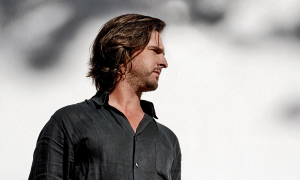
Home » Jazz Articles » Interview » Jeremy Pelt: From Classical, Perhaps One Day to Classic
Jeremy Pelt: From Classical, Perhaps One Day to Classic

For me, when I made that decision that I'm going to be a musician, this is all I do. This is what I've wanted to do.
How is it he could almost be pigeonholed into being "soft" because of one album done with a background of strings?
He says that did happen to him for a bit, but hopefully not for long because his new Max Jazz release Identity is out and it is helping to re-establish just what the title says. The music that comes out of Pelt's horn is who he is, background notwithstanding. And the new disk and new band are smoking.
Pelt's Close to My Heart, out in 2003, is an exquisite disk. But far from the sum total of what he is capable of doing. After all, since 1998 when Pelt started making the scene in New York City, he's played with venerable groups like the Mingus orchestra and with folks like Jimmy Heath, Frank Wess, Charlie Persip, Frank Foster, Ravi Coltrane, Winard Harper, Ralph Peterson, Lonnie Plaxico, Nancy Wilson and onward. Charlie Parker did an album with strings for something different—a different canvas to paint on—as did many others. Artists like to experience different things and see where it takes them.
Close to My Heart was his third release as a leader, and the California native enjoyed the trip. But even the strings record got an odd reception at times.
"The younger audience, that maybe isn't as mature in their musicality as they will be. Those are the types of people that were like, 'Oh man. What is this soft stuff with strings?' And you have the reaction from the older crowd, 30 or 40; they dig it because it sounds jazzy. Then you have the reaction from folks like my mother, that generation, that just loves that type of music," says Pelt.
"Then you have critics that love it and critics that, for some reason that hasn't been discussed, hate the inclusion of strings. For some wild reason they see it as you selling out because you added strings to your music. Meanwhile, I haven't gotten any richer off Close to My Heart, believe me."
He performed Close to My Heart in a lot of venues and it had a following. But he told his record label he was done with the experiment. It was about two years before Identity came out.
"I didn't want to be pigeonholed in a certain way, with people saying this is the guy playing with strings," he says. The music played well in London, and as his working band continued in other venues, it got hotter and started to morph, as good jazz music and good bands will do.
Then in July, the group played a pre-CD release party at New York City' Jazz Standard, where he had twice appeared with strings, both well received. "So I came back in there in July and brought the new band in there. The band has already evolved into a different sounding thing than the CD, in a lot of ways. We're still playing the same songs, but we've changed them around a lot. Some songs are a lot more intense. You play in a band long enough and you're working, they're bound to get that way.
"The first and second night at the Standard were, like: Wow. I didn't think anybody dug it. It was an older kind of crowd. 'OK, Jeremy's got a new one out. Let's hope it's like Close to My Heart.' Obviously, it's not like that. They were pretty much stunned," he says with hearty, knowing laugh. "Which was a bummer. Then the audiences started to get a little bit more hip and clapping. We were doing some borderline rock stuff at times. The first audience, there wasn't a single amount of applause until the very end of the set. And that was forced. They had to do something because we were going off the stage," he chuckles.
"That's why we need radio play, so people know what they're coming to hear. At least the arena of what they'll be hearing when they come and see the show."
What the audience will hear is smoking music, from the jazz tradition, but not afraid to veer away. It's engaging and should thrill jazz fans. It's unlikely anyone could be stereotyped at the age of 28 with only one recording with strings. But in today's world, packaging is common and people sometimes jump to conclusions. The only conclusion to be reached now is that Pelt is one of the finest young trumpeters on the scene and his band is a cooker.
The music on Identity also comes from Pelt's pen, which shows he's not just a trumpet player.
"I'm always composing. Just the act of improvisation is spontaneous composition," says Pelt. "But writing songs? I do it all the time. It's not a task. There are people, I suppose, that can sit at a desk and write something. But that's not how I operate. It just pops in my head and then I write it down, wherever I'm at. It's not like I have two hours set aside to just compose."
Pelt is the sole producer this time, though he considers himself the "silent producer" of his three other albums. The producers before "didn't know what the music was going to sound like . . . This is the first time it's actually come to the forefront that I'm the one producing."
Though young, the trumpeter didn't listen much to the music of the day: R&B and rap. It wasn't Duke Ellington either. He may have looked hip with his walkman and headphones, but the music jumping through to his ears was classical music. While he appreciates some of the classic soul music, Pelt says most of today's product is inferior, and he has disdain for many of the here-today/gone-tomorrow bands who were in the business to earn a quick buck.
That goes against the grain for Pelt. He is a dedicated musician and doesn't take the task lightly. His horn would sound otherwise if he did. It is the sound of a creative artist, exploring and honing his craft at the same time.
"I hate hearing musicians and actors say, 'Eventually, I'm going to drop out of the game all together and do something else.' For me, when I made that decision that I'm going to be a musician, this is all I do. This is what I've wanted to do. It makes you question whether their heart's in it."
"They say, 'We're looking for a hook.' Hook basically means money," he continues. "So every time you turn on a record, they have some lame-ass hook that's going to be the hook for the year, then they're going to fall off the face of the earth. I wasn't really that into it."
He heard some jazz vocals from his mother's record collection growing up—like Billie Holliday and Dinah Washington—but stuck with classical music and training. In high school, there was no classical orchestra to join. So Pelt got into the jazz band, which became his first real introduction into the music.
"What kind of cemented it as something I wanted to do was listening to recordings," he says.
In 1991, early in his high school career, Miles Davis died. Davis would go on to be a huge influence, as with many musicians. But young Jeremy wasn't exactly sure why just yet.
"I remember when he died in '91. That was around my first day of high school. I knew the name Miles. Just like the name Dizzy Gillespie. Those kind of famous names that you know, but you ain't really checking it out. So one of the upperclassmen came in and said, 'I think we should play "So What" in remembrance of Miles.' So we go ahead and play it. After that, I went to the store to find "So What" and I picked up the first CD I'd seen. I didn't find Kind of Blue . I didn't ask anybody. I just said: OK, this one has 'So What' on it. It happened to be Miles Davis at Carnegie Hall from 1961. That's what completely blew me away.
The band—Hank Mobley, Wynton Kelly, Paul Chambers and Jimmy Cobb—-had changed the sound considerably by then, as Herbie Hancock, Wayne Shorter, Ron Carter and Tony Williams would even more in years to come.
"And then I started to collect all the Miles. I eventually got Kind of Blue. You can listen to that record and not open your eyes, know what I mean? It's crazy like that."
Freddie Hubbard, Booker Little, Lee Morgan and Eddie Henderson are among other trumpets he listened to. As for the term "mainstream" jazz where those players came from, Pelt is respectful, but open. "I look for anything that's a learning experience and a challenging experience. I don't really like to deal with titles. Mainstream and this and that. It's whatever presents itself and how can I rise to the occasion."
He eventually went to Berklee School of Music in Boston. He had a fancy for film music scores (don't be surprised to see him do it one day). Upon graduation, the Big Apple called. He started gigging around, including checking out the Mingus band at the urging of fellow trumpeter Philip Harper, waiting for a chance to sit in and be noticed by Sue Mingus. He was.
Work grew steadier and his own recordings came to be, and Pelt is in a situation where he has attained a degree of critical success. Still, he knows there is a lot of work ahead.
Of the jazz scene, Pelt says "Recording-wise, there's only been a few people, that you can count on both hands, who have made a lot of money with a lucrative record contract. Most of the money that people are making is on the road. People are still attending clubs, though not in the droves they had been; jazz in particular. I think it's just one of those things that's a slope and it's going downhill. It has been for a while. But I think it will pick up once again. I do believe in it, but I'm forced to be positive about it."
He says jazz clubs and jazz projects are not money makers and that hurts the development of the music and musicians that have to eat and feed families. "One of the things that should definitely happen, is a lot of these stars that love jazz and that are making multi-million dollars of money should invest in something. Bill Cosby does the Playboy Jazz Festival. Someone should open a venue. That's something that can happen. Peter Jennings [the late ABC news anchorman] was a huge supporter of jazz. He had benefits at his house every summer. So I think that needs to happen.
"What's positive about jazz is that there are a lot of young kids coming up that are more than proficient at an early age, 15, 16 or 17 years old. They're coming up. They weren't coming up like that in the '80s. Schools are starting to have jazz programs... Go figure. People are cashing in on it.
The proliferation of jazz programs and the reality of the music business, is an irony not lost on Pelt. The schools are money makers and create a lot of teaching jobs that help musicians get by.
"When you think about it, these kids are going to these schools. And then for what? If you go to medical school, you learn and then you become a doctor and work at a hospital. You go to music school and learn, then you come out and you're going to be broke," he says laughing. "Because only a couple people make it. That's how it's designed. You can't have that many stars on the rise. Everybody's got to take their turn to get there."
"There are a lot of cats in this music, putting their hearts and souls into it. Everybody has aspirations. And when they come out, there's hardly any venues to go to. It's very competitive to get any kind of gigs at a place you want to play, because there's really no money. A lot of festivals are losing money. It's a very weird place that jazz is at right now in terms of the younger people coming up and trying to get into it.
"Once again, I'm forced to believe that it will change. But for that to happen, there's got to be generations into jazz. In order for it to have any kind of continuity into the future, there's got to be more young people that aren't even musicians, but are into the music. Because that's going to be the new generation. Cats that are into it that are 60, 70, 80 years old aren't going to be around for that long to preserve it, like they have been for 50 years."
Exposure is another problem. Pelt says many young fans see jazz as an older people's music, played by people not in their generation. It creates a situation where they don't try to listen or understand it.
With the music not on mainstream radio venues and not pushed by the powers that be in music—for reasons too numerous to mention—it's difficult for the art form to get into the consciousness of young listeners.
"I did a festival this last weekend in Ottawa, Mich. There was a lady and her daughter. We played, and they came up and bought CDs. Her daughter said, 'I don't like jazz. But this is good.' [laughter] I hear that speech three or four times a year. 'I can't stand jazz, but I like this.' They don't know, especially young people, that there's a whole lot out there (people from their generation.) People like myself. Robert Glasper. Orrin Evans. Cats out there are playing and they come from that same environment as the people who say they hate jazz are coming from."
Pelt's main focus now is to keep his band working and keep his name out there, which, again, is easier said than done in spite of his recognition among critics as one of the main trumpeters to keep an eye on. The music business, particularly owners of the major clubs, is still looking for the big names that will draw people. Developing young artists isn't the mindset at many venues.
"The hard thing, when it comes down to it, and you're trying to do things with your own band as a leader, the more you do sideman gigs, the more you're seen as a sideman," says Pelt. "When I came to the scene, I had at least five or six gigs that I was prominently featured on. There was the Mingus band, Lewis Nash band, Louis Hayes, Ralph Peterson, Lonnie Plaxico. I was in all these bands. It made me more visible, which is a good thing, especially if you're just moving to town. I have no complaints about that.
"After a while, you have to get rid of those gigs, because you have to take a stance where you're a leader now. If that means you have to stop doing the sideman gigs, that's something to consider. I tell a lot of cats the same thing. They had a lot of gigs too, and are trying to be a leader. I say, listen man. This is what you're going to have to do. Because they don't want to see you in a certain way, unless you make it known. If you've been to every major jazz festival, people know who you are. If you have CDs played on the radio, people are going to know who you are. That's the bottom line."
Pelt pushes on. Talent and resolve.
"I'm comfortable with this band. It's the kind of a band I want to keep for a while," he says, noting with optimism: "There are a lot more bands around that are showing longevity, as opposed to people going on recordings and just putting together a band (for the record)."
He hopes to continue recording his band, documenting his musical journey. "Every recording that you'll hear is that by the time the record comes out, there's already new music. More music already written."
Selected Discography
Jeremy Pelt, Identity (MaxJazz, 2005)Mingus Big Band, I Am Three (Sunnyside, 2005)
Vincent Herring, Mr. Wizard (HighNote, 2004)
Rene Marie, Serene Renegade (MaxJazz, 2004)
Wayne Escoffery, Intuition (Nagel-Heyer, 2004)
James Moody, Homage (Savoy Jazz, 2004)
Ralph Peterson, Test of Time (Criss Cross, 2003) Lonnie Plaxico, Rhythm and Soul (Sirocco, 2003)
Jeremy Pelt, Insight (Criss Cross, 2003)
Jeremy Pelt, Close to My Heart (MaxJazz, 2003)
Vincent Herring, All Too Real (HighNote, 2003)
Wayne Shorter, Alegria (Verve, 2003)
Jeremy Pelt, Profile (Fresh Sound New Talent, 2002)
Mingus Big Band Tonight at Noon: Three of Four Shades of Love (Dreyfus, 2002)
Ralph Peterson, Subliminal Seduction (Criss Cross, 2002)
Louis Hayes & the Cannonball Legacy Band, Dreamin' of Cannonball (TCB, 2002)
Rene Marie, Vertigo (MaxJazz, 2001)
Soulive, Doin' Somethin' (Blue Note, 2001)
< Previous
Emma Salokoski Sings Svenska Visar in...
Next >
Live in Milano
Comments

Tags
Concerts
Jun
28
Fri

Jun
28
Fri
Jun
29
Sat
Jun
29
Sat
For the Love of Jazz
 All About Jazz has been a pillar of jazz since 1995, championing it as an art form and, more importantly, supporting the musicians who create it. Our enduring commitment has made "AAJ" one of the most culturally important websites of its kind, read by hundreds of thousands of fans, musicians and industry figures every month.
You Can Help
To expand our coverage even further and develop new means to foster jazz discovery and connectivity we need your help. You can become a sustaining member for a modest $20 and in return, we'll immediately hide those pesky ads plus provide access to future articles for a full year. This winning combination will vastly improve your AAJ experience and allow us to vigorously build on the pioneering work we first started in 1995. So enjoy an ad-free AAJ experience and help us remain a positive beacon for jazz by making a donation today.

Giveaway

Eligible winners: 15
Days remaining: 4
Days remaining: 4