Home » Jazz Articles » Interview » Russ Johnson: Working on the Tightrope
Russ Johnson: Working on the Tightrope

For me, artistically it
 New York trumpet player Russ Johnson's got a substantial résumé as a sideman on projects with players like Curtis Fowlkes, Johnnie Valentino, and Jenny Scheinman, but he's perhaps best known as a co-leader with Ohad Talmor in the longstanding Other Quartet. The side projects demonstrate his astonishing versatility, sensitivity and a technique that is unsurpassed by any trumpeter working today; the Other Quartet does so as well, besides showcasing some of Johnson's fine compositions—even if Talmor writes the majority of the group's material. Johnson finally goes it alone as a bandleader/composer on his remarkable new OmniTone CD Save Big. I spoke with Johnson about his new album and group, his fascination with texture and flow, and a great deal more.
All About Jazz: I want to plunge right into talking about your new Save Big CD. First, I want to say just how much I love the rhythm section of bassist Kermit Driscoll and drummer Mark Ferber. I'm delighted that Kermit's recording more nowadays; I think he's a great bassist for a pianoless quartet. No matter what's happening on any of the songs, I hear him forging ahead. He's completely aware of the song but he never chains himself completely to what anyone else is doing.
Russ Johnson: I agree completely. He also works well in piano-led quartets. I'm doing a gig with him tonight with [pianist] Mick Rossi—the release party for Mick's latest record. He's one of my favorite musicians. When I was putting this band together, I wanted Kermit. I actually specifically wrote a couple of the tunes for him. I wrote "Saguache for him, and then I wrote the duo piece for him. He's obviously had that long association with Bill Frisell, but that was playing electric, and when he plays upright, there's just this earthiness which appeals to me. It might not be everybody's taste but it is absolutely crucial for that band. I'd known Kermit for a while before I put that project together; we'd played together in a bunch of different settings. He's pretty crucial—I did a couple of gigs he wasn't able to make in the beginning, and the tunes just did not come off the way I wanted them. He has the ability to be completely open. The way I write, I give the rhythm section a sketch, or an idea, or a figure. And then, because I trust them so much, I leave it up to them. And I feel I can trust Kermit to make musical decisions all the time. And it's good to see him getting out there—some of the press that I've been getting for this record has been very positive for Kermit, and it's nice to see that too.
AAJ: Now, you've worked before with drummer Mark Ferber in the Other Quartet, the group you co-lead with reeds player Ohad Talmor. Why'd you use Ferber for this record?
RJ: Well, Mark is one of the most versatile drummers in New York—on the planet, for that matter. So the Other Quartet, that's a little edgier because texturally, the sound of the band is completely different. There's no bass; there's guitar. But Mark is so versatile that I can hear him in any context. You just hook up with certain players and we have a really strong hookup. We play together in a bunch of projects: probably like four or five bands that work somewhat regularly. He also has the ability to drive the band but still keep it quiet. A lot of this music for me is textural—there's a sonic quality that I'm looking for. With him, I never have to overplay. With a lot of drummers, when they hit hard, it gets in my way—maybe with the way their cymbals sound or just the way they actually hit the drums. Mark is able to play as hard as he wants and sonically I never feel like I have to overblow. Which is something that's really crucial for me; I don't like situations where it gets incredibly loud for extended periods of time. And I like that timbral diversity too, and Mark's able to bring that pretty much to any project he's involved in.
AAJ: "Rhythm section is perhaps an inappropriate term here, since the four of you are often all working around an unstated pulse and even Ferber's drumming feels like another melody—but I think if there is a high point for this rhythm section on this album for me, it's "Constantinople. I'm also very interested in "Constantinople because it's got a very deliberate tempo, especially when the band first comes in after your unaccompanied trumpet intro. I feel that deliberate tempo gives the song an ominous quality it wouldn't have if the tempo were faster; then it would just be fun.
RJ: [Laughing] I think that's a pretty good statement. Yeah, harmonically, the way it's constructed as well, I'm borrowing on some Middle Eastern kinds of scales—so that kind of gives a little bit of that. But you're absolutely right. You know, I bring in the tempo, and I don't always bring it in exactly where I'd like it—and if it's too fast, the tune doesn't work. It changes character completely. It becomes almost happy, as you were saying. It completely changes it, and I wanted it to be that dark thing. But Ferber, his playing behind everything—getting back to what you were saying before about the rhythm section, and feeling odd calling it a rhythm section: I feel very, very strongly about that.
When I did the mix for the record, I specifically mixed the drums and bass way up front—equal to the horn players. It's a band; my name is attached to it because I wrote the music, but it's truly, truly a band. These guys are able to take what little thread I give them—I have vamps written out, stuff like that, and these guys are able to take it, shape it, make it their own, and give me the quality I'm looking for without me having to say anything to them. So as far as, like, a rhythm section, it's really four guys communicating. I don't like that "horn players out front, rhythm section in back —you know, guys taking their solos and then walking off the bandstand, forgetting about it completely while [laughing] the rhythm section's sitting there pounding it out for the next guy.
AAJ: Well, then you might as well just have a drum machine or backing tracks.
RJ: Yeah, sure. That's why I don't know how rhythm section players deal with playing jam sessions when there's, you know, forty guys up there playing way too many choruses. But the point is, I like to think that everybody in this band had equal say in what happens, in the direction. And there are certain things that happen relatively consistently when we play. But there's other times where the tunes sound completely different just because somebody's got an idea. One of the reasons I chose those guys is that trust thing; if they want to take it somewhere, I'm willing to go along for the ride—wherever they want to go.
AAJ: There's a lot of space in these songs on this record. I like how you're willing to not just slow down a piece, but bring it to a real halt. That takes some courage, since some listeners get confused or nervous if the tempo's not just rolling along. The most obvious example is "Saguache, which starts out with that easy groove before the solos begin—but you keep interrupting it with that Cootie Williams-ish plunger-mute trumpet phrase. It's really playful. The album's got lots of moments where the time goes from unstated pulse to no time at all, just space. Why do you like to do this?
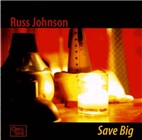 RJ: For me it's all about flow, and you can achieve flow with having steady pulse—no doubt. And the greatest players make that flow happen all the time. In this band, this project, I wanted that same flow, but I wanted the flow to be lasting. If you're speaking in conversation, there are times where the conversation speeds up, and times where the conversation slows down. Naturally, the rhythms when we speak, or when we do anything—we don't work at the exact same pace all the time. So with this, it was a question of creating some of those spots. In "Rapid Comfort as well, there's a totally unrelated time section. In that particular one, I wanted a stark contrast between the two figures, the two main sections. As far as "Saguache —when I wrote the tune, I was on a solo backpacking trip in Colorado. I was camped at 10,000 feet; I actually had my horn. And I was looking over this valley, and I was specifically thinking of Kermit. He's from Nebraska, and whatever that Midwest thing is [Johnson is originally from Wisconsin], I can kind of feel it, I can hear it—the wide-open spaces thing. And so when I wrote it, I wrote the two sections, and I originally wrote them in time. But it just didn't feel like it breathed the way I wanted it to. So I decided to play rubato in that second section—and it's different pretty much every time we play it, too; it's never the exact same tempo. But I was just trying to get, basically, a flow thing.
AAJ: You're going for a more organic flow that resembles our human metabolisms. The organic tempo—
RJ: Of life! Definitely. And that's one of my favorite things on the record, actually; that's why I put it first.
AAJ: I love the solo parts on "Saguache, too. You and O'Gallagher play pretty contrapuntally at times there, and when you're playing those parts, somehow it seems to turn the beat upside down. I'm not familiar with O'Gallagher's work. Have you played with him much?
RJ: He's my oldest friend. I went to Berklee for one year in the mid-eighties, and I met John—along with a million other great players. But he and I had a hookup; we met our first day there and we've now known each other for twenty years. He was the best man at my wedding. We have a thing. I mean, there are a few players, like Ohad Talmor from the Other Quartet—a few players you meet where you just have that hookup, and with John, it's incredible: no matter what we're doing, there's absolutely no thought that goes into it as far as intonation or phrasing or anything like that. We just happen to breathe in the same spot, and to attack notes and hear phrasing in the same way. And as far as the counterpoint part of it, that comes from being a good listener. When you're playing music that's as open as this is, if you're not intently listening—if you're worried about what you're playing rather whan what everybody's playing, it will die a very quick death! [laughing] And with John, he has the ability to play as many notes as anybody, ever, but he's really pared down his thing in this way and his listening is so strong. But there are times where we totally go for counterpoint. It's unstated counterpoint, obviously, but one of us will be playing long phrases and the other'll be playing short phrases. Or one of us will be ascending and the other will be descending. And there are times where we find that musical rub we're looking for and hang on to that—he's just an incredible musician. Great, great listener. He's my oldest musical associate and there's a lot of history there.
AAJ: You would never be confused for a bebopper, but you're familiar with its vocabulary, and "Figuratively Speaking is full of beboppish qualities—qualities that are then distilled into an Ornette Coleman sort of context. But you do something on the whole CD that's very bebop, and that's your use of unison parts—you and O'Gallagher—on the heads, the themes. The parts aren't harmonized, they're identical. You do this on "Saguache, "Figuratively Speaking, "Rapid Comfort, and you do it on Kermit Driscoll's composition "Reveille, too. Care to comment?
RJ: I specifically wrote it that way. There's a few places where I write harmony parts, and in other bands I write a lot more contrapuntal parts for the horns. But with John, our sounds blend together so well that it almost creates this other instrument. Our musical aesthetic is so similar in ways that it just—I don't want to say it forced me to write that way, but I wanted to get that thing where, when we play those melodies, when we play the heads, the blend is so good and the intonation is so strong that it sounds like this other instrument.
AAJ: A third voice.
RJ: Yeah, it sounds like a third voice. I play in a lot if different projects. I play with this woman Jenny Scheinman as well, a really great violinist. And one of the reasons I love playing with her in her band is that the trumpet/violin combination is not [laughing] standard front line. But she and I have a thing as well—it all comes down to listening and blending. And she and I can also create this unique kind of sound. And it's the same thing with her band and the way she writes; most of the time when she writes for the two of us, it's unison. And for my band, this was a project-specific idea.
AAJ: That was your Save Big compositional strategy.
RJ: Yeah. And for the Other Quartet—the music I've written for that—it's almost completely contrapuntal. It's different. Completely independent lines. But with this one, I was going for that thing that I get with John.
AAJ: Speaking of "Figuratively Speaking, there is, to me, a quality to your and John's solos there that's striking. They're so separate from each other; each one feels like a very different look at the same place—like two photos of the same thing taken from very different angles and positions.
RJ: I think you're on to something there. That's one of those stop-start tunes as well that has different pulses throughout it, and that's what I was going for. Everybody talks about Ornette, and I'm a huge fan; I can't deny my influences. Pretty much all of Ornette's music, the stuff with Don Cherry especially—it's incredible. And when I wrote the tune, I did want two completely unrelated tempos. John is free to choose the tempo on his solo. It usually tends to be up, because we've established a little bit of history with that. My tempo is pretty much set, because—without being too technical, I'm coming out of a rhythmic figure that sets up the time for mine. But then when I finish, John is free to choose where he goes—as long as it's not the same tempo I just played in! But you'd never have to tell him that. But yeah, it's supposed to be two different takes on the same idea. I like the way you put that. That's one of the only tunes on the record that straightout swings and I didn't want to just have the formulaic swing tune where you play the head, and just, you know, I solo, you solo, head out—that kind of thing. Actually, I wanted that to be the title of this record: Figuratively Speaking. That tune, that title speaks for the entire record for me; when I composed the music, it was all about figures and motifs—along with the tunes. It's not a typical record in that there are no 32-bar forms—I've never bothered to count measures [laughing].
AAJ: You're not working through changes.
RJ: Yeah, exactly. Even on "Saguache, that tune sounds so simple. But metrically, it's actually pretty complex. It sounds simple because of the way it's performed; the vibe is so laid-back that you don't realize that one measure's in eight, the next one's in six, the next one's in seven.
AAJ: Actually, all this music is tricky. It's complicated. It has different parts. It is sparse but precise music.
 RJ: When it's played well. I usually only do gigs with those guys or my other favorite players in New York. I tried to play it in some other contexts, and it hasn't worked. You have to have people that have the ability to play mixed-meter stuff effortlessly. And that came to me later in life; I was a bebopper until my mid-twenties. I was into Miles as a kid, then a whole Freddie [Hubbard] thing, then a Kenny Dorham phase—so I lived that music, but I don't [laughing] live in 1955. Anyway, these guys are all very comfortable playing any kind of mixed-meter thing or completely free. That's one of the things I'm proud of about the record; I think it's a pretty good combination of written music that can be quite complicated—and an openness that you can get when playing completely improvised music.
AAJ: "Precise makes it sound precious, but it's definitely not music that can be played loose. In fact, I think almost all the songs could be played wrong in a way that would make them not work. For example, Kermit's song "Reveille —it's not your tune, but the group still has that sound and it completely gels. All the four parts feel autonomous but fused, working around an unspoken pulse. But to me, it's completely delicate—one overplayed note and the melody would collapse.
RJ: 100% correct. You're good [laughing]. That's why I chose that tune. I'd played that tune with Kermit and the saxophonist from the Other Quartet, Ohad Talmor. We used to do a weekly gig at the Knitting Factory back when that was in vogue. We'd all bring tunes in. Kermit's really got to get his own music out there; he's a really great composer.
AAJ: That's such a great tune.
RJ: It's a beautiful tune! That's why I chose to put in on the record. I had other music written of my own, but that tune just spoke to me in such a way. And you're absolutely right about overplaying. It's so subtle but it's subtle and complex at the same time. But if you don't approach it with that delicateness, it will fail pretty easily.
AAJ: Okay, "Indonesian Folk Tune. Speaking of unison parts, you do something on this one that's effective and just plain cool. On this arrangement of this folk song, you play unison parts with O'Gallagher, but they go very slightly away from each other in time—it gives the music a kind of blurring effect, puts it in and out of focus. Tell me about this.
RJ: Well, that was the only other tune here that I didn't compose. I played it with John on a couple of other projects. And what we were talking about before about having a thing with certain players: with John and I, our unisons are so—well, I feel they're really good and I usually beat myself up rather than compliment myself. With John, that stuff is so strong that when we got to this piece—most of the time, it's written almost an eighth-note apart, then it'll go into unison, then there'll be half-step rubs. I have to give credit to Frank Tafuri from OmniTone; he said it almost sounds like a Vietnamese oboe. And I think that was a pretty good call. Again, I'm really attracted to sound and texture, and that tune has a really unique texture. And I didn't want John and I to improvise on that tune at all; it's supposed to be a feature for Mark and Kermit. So the head is basically this palette; we're setting up this collection of colors for them to react to once we've finished stating that melody. But it's composed down to the nth degree. Texturally, it's so different—and it's all about the sonic experience, about what you're getting from the sounds of the instruments rather than the the notes that are being played. They're totally secondary.
AAJ: Okay, "Duo. This is just that, a duo between you and Kermit. Initially, I declared to myself that this was totally improvised, but the more I hear it the more I don't think this is true. Yet I'm not sure which parts are written and which are improvised. I thought that the first half was improvised, then around the second half you introduce a more specific, written theme. Or there are motifs throughout that are composed and you're improvising around those. So give it away; tell me.
RJ: Quite a bit of it's written, actually. I haven't heard it in a while. But you were right; the first half is improvised. But when we perform it live, we either play the written music first or second. We never state that written piece of music more than once, and once we're into the written part, we play that in its entirety. So it's one of those things that will change from gig to gig. I do a lot of completely improvised music. I'm doing a set tonight at [John] Zorn's new club with Mick Rossi.
AAJ: Yes, the New Math project. You beat me to a question. I was going to ask how much of that duo album New Math with Rossi was improvised.
 RJ: Oh, it's all completely improvised. Nothing notated. So I really enjoy walking that tightrope. So with "Duo, Kermit—well, I hate to keep repeating myself but it comes down to being listeners and the reason you choose players for your band. Kermit is able to grasp exactly what I'm looking for and carry that over into the improvisation. In this case, it's before; it's the first half. But it's supposed to blur that line between written and improvised and Kermit is very, very adept at that.
AAJ: You're a technically great player, but there's a rigor and formality to your playing that makes everything sound composed, because it's never slapdash. You don't play a lot of licks and there's obviously a lot of thought going into what you're going to play. It holds together formally. In fact, a lot of it—"Duo in particular—has a real flavor of 20th century composed music.
RJ: I listen to that music and it's definitely what I am going for with that. The Other Quartet, I think, is also successful at blurring those lines between improvised and composed. But I try, on the contrary, to not be very thought-out. The not-playing-licks thing is conscious as well. I'm not saying I don't have my devices; we all do. We all have our own means of getting through music, but I've made a serious decision to not play standard licks. And as I was starting to talk about before, I like to live on that highwire where sometimes it will be incredible and sometimes you'll fall off and crash and burn. For me, artistically it's more satisfying when I'm on that tightrope. I'm willing to have it suck some nights and have it be magical other nights. If you're not playing over very strict chord patterns, chord changes—you have to be involved, in the moment. You have to be aware. I'm really trying to get away from the established way of playing. And sometimes it's very successful and sometimes it's not, but I'll live with that.
AAJ: Let's talk some about the Other Quartet, the group you co-lead with Ohad Talmor. Is this still a working band?
RJ: We've been on a little bit of a hiatus due to raising a couple of kids; Ohad has two and I had one two years ago. But we're actually trying to book something for next spring. It's a collection of great players. Obviously, [drummer Mark] Ferber. And Ohad—along with John O'Gallagher, they're my two closest horn-playing associates. And great friends as well. We will be getting back at it; we're trying to figure out exactly the approach we want to take with the band. That's a co-led band; the majority of the music is Ohad's. Some of the tunes are mine. But that band's basically been in existence for ten years. The last gig we did was about a year ago. And, you know, not that I'm on the map, but if I am at all, that band kind of put me there.
AAJ: That was your debut as a co-leader.
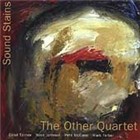 RJ: Yeah. And I have a hard time listening to myself, but I listen to Sound Stains [the Other Quartet's 2001 sophomore CD] and I think that's a really good record. I'm into bands; I'm not into thrown-together dates. Like with the Save Big record—that's a band, and we played twenty-five gigs before we recorded. The Other Quartet is a band. There's no change of personnel. If one of the guys can't do it, we don't do it.
AAJ: The personnels do differ between the first CD [13 Pieces, 1999] and Sound Stains. But the group on Sound Stains [Talmor, Johnson, Ferber and guitarist Pete McCann] is the definitive, still-existing version?
RJ: Yeah. And I love it. I think it's a unique band. I think we're going to try to hook up Europe for April of next year.
AAJ: I always hear a cinematic quality to the Other Quartet's stuff. Every song's a movie. The ultimate example is my favorite song from Sound Stains, Ohad's "Walking Leo. It's beautiful, very Ennio Morricone, and not just because of the guitar.
RJ: Definitely. I mean, that's a waltz, a simple waltz. Leo was Ohad's dog. That melody came into his head one day when he was walking his dog. It's a beautiful tune; Ohad is a brilliant composer. I'm doing the Jazz Standard next week with Lee Konitz's nonet and Ohad's doing all the arrangements for that. He's a brilliant musician.
AAJ: I love the arrangements on Sound Stains in particular. I don't understand how the arrangements make four instruments sound like more.
RJ: A lot of that goes to Pete, too. It's great writing, first and foremost; Ohad is one of the most brilliant composer/arrangers out there on the scene today. But plus, Pete McCann has the ability to create so many sounds and textures on his instrument.. So a lot of that's the writing and the right choice of players.
AAJ:McCann's so versatile. I'm not saying he only sounds like other players, but I hear Bill Frisell, Andy Summers, Thurston Moore—
RJ: Yeah, and he's into McLaughlin, the Mahavishnu shit—he can just shred! But he still has that sensitive side, too. On one of the tunes that I wrote, the intro—it's Pete, but I definitely hear Frisell.
AAJ: Are you talking about "Refraction ?
RJ: Yeah.
AAJ: That's a spooky tune. It's sort of a dirge, but with a Spanish feel during the trumpet section. That's a very enigmatic song.
RJ: I wrote that song completely on the piano. I don't play much piano, but I can bang out some chords. I played that on piano, and actually, my wife has a guitar laying around the house. I play zero guitar, but I tried to figure out what was playable on it. It's a very spooky tune; it's very contrapuntal. It's a mood piece. I'm really into writing mood pieces. I want to establish a certain vibe. And yes, it's a dirge. I really like that piece, actually.
 AAJ: And we must talk about Mick Rossi, who's another great collaborator of yours. You play on his great new One Block From Planet Earth CD and you two do a duo thing as New Math—and made a CD of the same name.
RJ: We were talking about versatile musicians. Mick is the keyboardist and percussionist with Philip Glass and his ensemble. He's an absolutely brilliant musician; he played with Carly Simon, Hall & Oates, Philip Glass, and all the downtown guys. He can excel in all those worlds. When we got together to do that CD—I'd played in his quintet a few times, and we had no intention of making a record. I was just going over to his house to play. And he slapped up a couple of microphones, and an hour later we had the record. It's completely improvised. Mick is a brilliant composer as well. His quintet music is very highly composed. But he also does completely improvised music and for that, we just did it in an hour. I don't think there was any editing. I think it's pretty much verbatim what we played. He's really a brilliant pianist as well. And the instrument makes a huge difference to him, so we don't get to work quite as much as I would like because it's really hard to find great pianos!
AAJ: Ain't that the truth. What I like about the New Math thing is that it seems—in forty minutes, in this improvisational framework—to include almost every kind of music that has ever existed. It'll sound Romantic, then twentieth-century-composed, then there's this barrelhouse piano thing, then some blues. It's really free music, in the sense that nothing is not allowed.
 RJ: Exactly. And I talked about Mick's various musical activities, but I play in contemporary music ensembles as well. I just did this big John Cage piece with the Merce Cunningham Dance Company at Lincoln Center. I'm doing a thing with Philip Glass's MATA Festival, I played the other night with the O'Jays—and I do various other types of gigs as well. And we both embrace all of those things. That record doesn't have distribution, unfortunately. But that's exactly the opinion I have of that record. There's one thing, when I listened back to it, that sounded like Poulenc. It's exactly what you're saying, there are so many different styles represented, and yet it's all completely improvised. There was nothing said. Nothing. I think one of us might have said, "you start. But [laughing] that's it!
AAJ: So you're constantly playing in different groups, and your discography as a sideman is already pretty huge. But what's going on with your own stuff? Save Big was recorded a while ago. Do you have any new stuff written or recorded?
RJ: I'm writing new stuff now. I have two projects in mind. I want to do another record with the Save Big band. I started writing some music for that. And I want to do another project, with a chordal instrument, bass, drums—either piano or guitar. If it were piano, the guy would also have to play Wurli or Rhodes or something like that. And I want to add saxophone to a couple things. I have what I think are the right players in mind; I just haven't written enough music. I go through periods where I write a lot and then I don't write for an extended period of time. Right now, I'm getting ready to, I believe, go into one of those writing phases. And for that project, I want to do something a little more song-oriented. Obviously, it's not going to be standards, but I want to write my version of contemporary songs. And I'm probably halfway through a book for the Save Big band; we'll definitely keep doing that because that's just so much fun.
Visit Russ Johnson on the web.
Selected Discography:
Save Big (leader) (Omnitone, 2004)
One Block from Planet Earth (Mick Rossi) (Omnitone, 2004)
New Math (with Mick Rossi) (Tone Science, 2004)
Shalagaster (Jenny Scheinman) (Tzadik, 2004)
Histoire du Clochard (Steve Swallow/Olhad Talmor) (Palmetto, 2004)
When It Comes Upon You (Touch Acoustra) (Lost Wax Music, 2003)
Rabbi's Lover (Jenny Scheinman) (Tzadik, 2002)
Sound Stains (Other Quartet) (Knitting Factory, 2001)
Reflect (Curtis Fowlkes & Catfish Corner) (Knitting Factory, 1999)
13 Pieces (Other Quartet) (Knitting Factory, 1999)
< Previous
Belladonna
Comments

Tags
For the Love of Jazz
 All About Jazz has been a pillar of jazz since 1995, championing it as an art form and, more importantly, supporting the musicians who create it. Our enduring commitment has made "AAJ" one of the most culturally important websites of its kind, read by hundreds of thousands of fans, musicians and industry figures every month.
You Can Help
To expand our coverage even further and develop new means to foster jazz discovery and connectivity we need your help. You can become a sustaining member for a modest $20 and in return, we'll immediately hide those pesky ads plus provide access to future articles for a full year. This winning combination will vastly improve your AAJ experience and allow us to vigorously build on the pioneering work we first started in 1995. So enjoy an ad-free AAJ experience and help us remain a positive beacon for jazz by making a donation today.

Giveaway

Eligible winners: 15
Days remaining: 14
Days remaining: 14