Home » Jazz Articles » Album Review » Hugh Hopper: Hopper Tunity Box
Hugh Hopper: Hopper Tunity Box

This year there are two projects: Soft Machine Legacy, which reunites Hopper, Dean and Marshall with guitarist John Etheridge; and Soft Bounds, which teams Hopper and Dean with pianist Sophia Domancich and drummer Simon Goubert, both from France. A live Soft Bounds album is already out, with a live Soft Machine Legacy release due out later this year, and a studio recording sometime in '06.
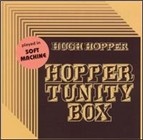
As Soft Machine evolved over time and various players left the group, individual contributions became clearer. When Hopper departed after the release of Six, it was because the group had ceased to be interesting to him. With the recruitment of reed player/keyboardist Karl Jenkins—who would take on more compositional responsibilities as time progressed—Soft Machine's vision of jazz-rock shifted away from Hopper's. His '76 release Hopper Tunity Box, recently reissued and available through Hugh Hopper's website, goes a long way to clarifying just what went wrong and why Hopper left.
While Hopper shares a disposition towards riff-based composition with Jenkins, their individual complexions couldn't be more disparate. Contrasting with Jenkins' safer, pentatonic-based writing, Hopper retains a more jagged angularity. He also leans towards layering more abstruse melodies and greater freedom in soloing. With Dean, reed player Gary Windo, and cornetist Mark Charig on many tracks, pieces like the darkly funky title tune, a chaotically insistent reprise of "Miniluv from Hopper's debut album 1984, and the gentle modal swing of "The Lonely Sea and the Sky bear a kind of weight that is at once more overt, yet at the same time somehow subtler and less opportunistic than where Jenkins was going with Soft Machine.
Hopper delivers a stunningly brooding version of Ornette Coleman's "Lonely Woman —the only non-Hopper piece on the disc—with Dean, Windo, and Charig playing the familiar melody over Hopper's searching bass and electronics. "Gnat Prong, the longest piece on the album, and the denser "Mobile Mobile feature muscular solos by fellow Canterburian keyboardist Dave Stewart of Hatfield and the North/National Health fame over Hopper's constantly shifting harmonic backdrop, making one wonder why Stewart didn't get out more often.
Because of its chronological proximity to Soft Machine, Hopper Tunity Box demonstrates what was lost when he left, but more importantly it draws a clear line to future projects including his Franglo-Dutch band that would record Meccano Pelorus, as well as current projects like Soft Machine Legacy and the freer exchange of Soft Bounds.
Track Listing
Hopper Tunity Box; Miniluv; Gnat Prong; The Lonely Sea and the Sky; Crumble; Lonely Woman; Mobile Mobile; Spanish Knee; Oyster Perpetual.
Personnel

Hugh Hopper
bass, electricHugh Hopper: bass, guitar, recorder, soprano saxophone, percussion; Elton Dean: alto sax, saxello on 4,6,8; Mark Charig: cornet, tenor horn on 4,6,8; Frank Roberts: electric piano on 4,5,8; Dave Stewart: organ, pianet, oscillators on 1,3,7; Mike Travis: drums on 1-5,8; Richard Brunton: guitar on 2,5; Gary Windo: bass clarinet, saxophones on 1,2,5,6; Nigel Morris: drums on 7.
Album information
Title: Hopper Tunity Box | Year Released: 2005 | Record Label: Culture Press
About Hugh Hopper
Tags
PREVIOUS / NEXT


Become a Sustaining Member

Since 1995, All About Jazz has championed jazz as an art form and supported the musicians who create it. Over three decades, it has grown into one of the world's leading jazz resources, serving hundreds of thousands of readers, musicians, presenters and industry professionals each month.
Help Build the Future of All About Jazz
Your support helps us continue building All About Jazz for the next generation—expanding our editorial coverage, preserving jazz history, developing new community features and creating better ways to discover the music and the people behind it.
Become a sustaining member for as little as $20 per year and you'll immediately enjoy an ad-free experience along with access to subscriber features and future articles for a full year.
Together, we're not simply sustaining All About Jazz—we're building its future. Thank you for being part of the journey.