Home » Jazz Articles » Extended Analysis » John-Carlos Perea: First Dance
John-Carlos Perea: First Dance

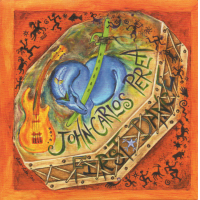
The answer comes in the form of John-Carlos Perea's First Dance. Perea—who plays fretted and unfretted electric bass—produced the CD and composed all but one of its cuts. First Dance is a testament to, and a statement of, Perea's identity as a modern urban Indian and his love of Coltrane's and Pepper's music.
Joining Perea are Mario Barrera on percussion, Chris Gonsalez Clarke on electric guitar, Elliot Humberto Kavee on drums, Enrico Del Zotto on alto sax, Hafez Modirzadeh on alto clarinet (as well as alto and tenor sax), and Francis Wong on soprano and tenor sax. This gathering of talents claiming the heritage of so many countries, ethnicities and musical traditions could give a whole new meaning to the concept of "world music.
Highlights are Perea's "Blues for My Blood Quantum and his rendition of Coltrane's "Naima. Perea deftly makes "Naima his own—remaining true to its spirit while transforming it into a jazz-infused expression of his Native American identity. (He told me once that "Naima is his window into the work of the late Native American saxophonist Jim Pepper, who frequently performed it and whom Perea credits as both a major musical influence and a role model.)
"'Naima' is one of the most beautiful love songs ever composed, Perea says; he also says that it reminds him of love songs played by Northern Plains Indians on cedar flutes. He opens his nine-minute rendition with a soulful, unaccompanied chanting of the "Naima melody that you may find yourself wishing would never end. Instead, after two minutes of chant, Perea picks up his bass and is joined by Kavee and Barrera on percussion and drums. An updated Trane-esque chorus of reed players is layered over the earthy rhythms, reminding us of the song's origins. When the horns suddenly drop out, we're treated to an extended percussion/guitar tour-de-force. The reeds return with the melody and ease the tempo down, grounding the listener (and, presumably, the musicians themselves) in a wholly satisfying manner.
With "Naima, Perea brings himself full circle. "My first experiences listening to jazz revolved around the music of John Coltrane, he recalls. "It was through his music that I first began to hear the parallels between American Indian music and jazz and how the two could function together at the same time.
In a different vein entirely, "Blues for My Blood Quantum conjures up visions of TV-Hollywood images of American Indians and, as Perea describes it, brings together "all the worst qualities of the more insidious American Indian stereotypes that have become accepted parts of our popular culture.
Modirzadeh gives the piece an unmistakably modern sound and feeling, in counterpoint to Clarke's almost-comic electric guitar riffs which provide a twangy TV-Hollwood backdrop. The piece is punctuated in unexpected spots with radio-show horses' hooves clip-clopping across the tongue-in-cheek, and yet deadly serious, landscape. Towards the end of "Blood Quantum, the tempo suddenly accelerates with Kavee interjecting a quick but decidedly Jewish hora dance interlude.
First Dance is a forcefully political CD, and yet a highly personal statement for Perea. The integration of improvisatory jazz and traditional ethnic musical forms can be a powerful weapon in the struggle to preserve cultural identity. For Perea, it's a choice he can't avoid. "By holding our American Indian identity hostage to popularly perceived stereotypes of 'purity,' he says, "we doom our culture to a quick death.
But works like First Dance will surely help relegate that "doom to the dustbin of history, to borrow a phrase from Leon Trotsky.
Track Listing
Opening Prayer; First Dance; Blues for My Blood Quantum; Naima; Three for Phil McGee; Closing Prayer.
Personnel

John-Carlos Perea
fluteMario Barrera
congasEnrico Del Zotto
saxophone, altoChris Gonzalez Clarke
guitar, electric
Elliot Humberto Kavee
drums
Hafez Modirzadeh
saxophone, tenor
Francis Wong
saxophone, tenorAlbum information
Title: First Dance | Year Released: 2005 | Record Label: Aerep Music
Tags
John-Carlos Perea
Extended Analysis
Bill Siegel
Aerep Music
United States
John-Carlos Perea: First Dance
PREVIOUS / NEXT
Support All About Jazz
 All About Jazz has been a pillar of jazz since 1995, championing it as an art form and, more importantly, supporting the musicians who make it. Our enduring commitment has made "AAJ" one of the most culturally important websites of its kind, read by hundreds of thousands of fans, musicians and industry figures every month.