Home » Jazz Articles » Album Review » John Surman: Way Back When
John Surman: Way Back When

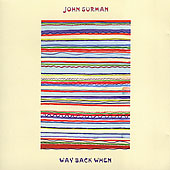
Nucleus would emerge in '70 with the seminal Elastic Rock (Vertigo) and Soft Machine would make the move from a post-Dadaist sensibility on Volume Two to the longer-form and more experimental classic Third the same year. However, a recently discovered recording by British saxophonist John Surman shows that the British jazz community had been melding jazz and rock at least a year earlier. Way Back When finds Surman on baritone and soprano saxophones, joined by John Taylor on electric piano, Brian Odgers on electric bass, John Marshall on drums and, on two tracks, alto saxophonist Mike Osborne. This one-day session was, in Surman's words, "a sort of 'farewell' jam session," held before Surman moved to continental Europe to join bassist Barre Phillips and drummer Stu Martin for the groundbreaking free jazz unit known as the Trio.
But while improvisation is the order of the day on Way Back When, the context is more direct, more structured, and certainly more overtly rhythmic. Surman's four-part "Way Back When" suite revolves around a simple theme that emerges to transition from the gentle yet insistent pulse of "Part One," to the more direct swing of the 6/8 "Part Two," the lightly funky "Part Three," and the more up-tempo "Part Four." Texturally the suite—along with Peter Warren's "Owlshead," which features a more developed form, and Surman's modal "Out and About," both of which feature Osborne—owes texturally to Miles Davis's In a Silent Way (Columbia, 1969), which had just been released, but it can be differentiated by a more outgoing approach to the improvisational aesthetic.
While Taylor and Osborne get the opportunity to stretch out, this is clearly Surman's date, with the leader taking the lion's share of the solo space. Even this early in Surman's career, it is clear that he had a distinctive voice on the baritone saxophone that extended its range beyond traditional limits, and a facile soprano approach that had some precedence in John Coltrane but, for all of Surman's ability to create his own wall of sound, was more consistently lyrical.
Way Back When fits comfortably within the Nucleus/Soft Machine purview and yet, for all its similarities, remains distinctive through Surman's voice, which was already well-developed at this stage. 1969 was also the year that Surman collaborated on John McLaughlin's classic debut, Extrapolation (Polydor, 1969), and one wonders if, had Way Back When been released in its time, Surman would have been catapulted to greater fame in North America.
Track Listing
Way Back When: Part One, Part Two, Part Three, Part Four; Owlshead; Out and About
Personnel

John Surman
saxophoneJohn Surman: baritone and soprano saxophones; John Taylor: electric piano; Brian Odgers: electric bass; John Marshall: drums; Mike Osborne: alto saxophone (5, 6).
Album information
Title: Way Back When | Year Released: 2005 | Record Label: Cuneiform Records
About John Surman
Tags
PREVIOUS / NEXT


Become a Sustaining Member

Since 1995, All About Jazz has championed jazz as an art form and supported the musicians who create it. Over three decades, it has grown into one of the world's leading jazz resources, serving hundreds of thousands of readers, musicians, presenters and industry professionals each month.
Help Build the Future of All About Jazz
Your support helps us continue building All About Jazz for the next generation—expanding our editorial coverage, preserving jazz history, developing new community features and creating better ways to discover the music and the people behind it.
Become a sustaining member for as little as $20 per year and you'll immediately enjoy an ad-free experience along with access to subscriber features and future articles for a full year.
Together, we're not simply sustaining All About Jazz—we're building its future. Thank you for being part of the journey.