Home » Jazz Articles » Album Review » Dizzy Gillespie via Harvey Limburger: Good Spirits: Harv...
Dizzy Gillespie via Harvey Limburger: Good Spirits: Harvey Limburger Plays New Music from Dizzy Gillespie

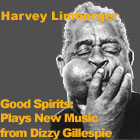
"I was in my room taking a break from practicing. I started fooling around with my Ouija board and the letters began to form strange words," writes Limburger in the liner notes. "'T-H-I-S-I-S-D-I-Z... U-P-L-A-Y-4-M-E,' the implement spelled out. It was like an urgent text message from the Other Side." On previous occasions, says Limburger, the spirit had introduced himself as John, or J.B., and he hadn't paid much attention, choosing instead to ask repeatedly whether or not ghosts had a word for nudity.
Diz's instructions were simple and clear: rally an accommodating quartet, plug in the four-track, and set the new music to tape. Trumpet in hand, Limburger began channeling the otherworldly vibes and recording during nightly sessions, always beginning at midnight and ending at first light. "Diz was—is—a perfectionist," he writes. "He wouldn't settle for anything less, even if it meant a hundred takes. Of course, I really didn't feel anything at the time, but afterwards I was always exhausted."
Good Spirits sees Gillespie returning to the bop style he helped pioneer. The opener and title track establishes the brisk, jaunty pace for the rest of the album. "The Quick and the Quicker" is a blazing fast, quadruple time slalom, zig-zagging bebop at its finest. "Grave Matter" puts a bop spin on the southern-fried groove of Mingus' "Better Get Hit in Your Soul." "Harping for a Horn" deceptively intros with the soft, angelic chords of a ballad and then suddenly bursts into a hellish free-for-all with all three sidemen doing their best to follow the bandleader.
At times Diz can even be playfully self-referential. "Gabriel's Groove" toys with the theme of "Manteca," and "Long-Distance Call" resurrects the head of "A Night in Tunisia" as a jumping-off point for his solo. On this record Gillespie is supported by the moderately capable George Wantanabe on bass, the slightly less capable Fred Blanski on piano, and the even less capable Howie Limburger, Harvey's brother, on drums. One wishes that all the performers were as inspired as the leader. Then again, finding musicians receptive to this venture might have been a difficult task given the nature of the recording.
So should we credit Limburger with such a first-rate performance or, strange though it might seem, Diz himself? Once again, perhaps it's best to refer to the liner notes. "This is not my record," Limburger writes in closing. "This is Dizzy all the way. This is his playing you're hearing, this is his album. I was only privileged enough to be chosen as the vessel." This has not, however, prevented a protracted legal battle between Limburger and the Gillespie estate over the rights to the album and profits.
Good news for lawyers—but also good news for jazz fans. The success of the album means that there may be future releases along these same unconventional lines. According to Limburger, Diz and his musical soulmate Charlie Parker are looking for suitable hosts for a planned collaborative project.

Track Listing
1. Good Spirits; 2. Gabriel's Groove; 3. The Quick and the Quicker; 4. Long-Distance Call; 5. Fifth Dimension; 6. Grave Matter; 7. Cloud Nine; 8. Harping for a Horn
Personnel

Dizzy Gillespie
trumpetHarvey Limburger/Dizzy Gillespie (trumpet); Howie Limburger (drums); George Wantanabe (bass); Fred Blanski (piano)
Album information
Title: Good Spirits: Harvey Limburger Plays New Music from Dizzy Gillespie | Year Released: 2005 | Record Label: hatNut

About Dizzy Gillespie
Tags
PREVIOUS / NEXT

Become a Sustaining Member

Since 1995, All About Jazz has championed jazz as an art form and supported the musicians who create it. Over three decades, it has grown into one of the world's leading jazz resources, serving hundreds of thousands of readers, musicians, presenters and industry professionals each month.
Help Build the Future of All About Jazz
Your support helps us continue building All About Jazz for the next generation—expanding our editorial coverage, preserving jazz history, developing new community features and creating better ways to discover the music and the people behind it.
Become a sustaining member for as little as $20 per year and you'll immediately enjoy an ad-free experience along with access to subscriber features and future articles for a full year.
Together, we're not simply sustaining All About Jazz—we're building its future. Thank you for being part of the journey.