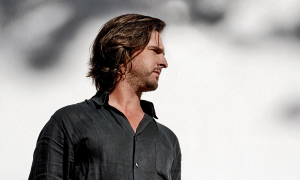
Home » Jazz Articles » Interview » Marty Khan Interview: About His Book "Straight Ahead"
Marty Khan Interview: About His Book "Straight Ahead"
I
—Marty Khan - Author of "Straight Ahead"
 Marty Khan, author of Straight Ahead: A Comprehensive Guide to the Business of Jazz (Without Sacrificing Dignity or Artistic Integrity) is widely considered to be one of the most knowledgeable, creative, committed and visionary professionals in the jazz business. A co-founder and Director of Outward Visions, Inc., a not-for-profit arts and education service organization founded in 1976, and 35+ year veteran manager, consultant, strategist, non-profit specialist, producer and passionately outspoken activist, he has worked extensively with artists like George Russell, the Art Ensemble of Chicago and World Saxophone Quartet along with non-jazz artists like Alwin Nikolais and John Zorn. He also conceived and directed The Coltrane Project of Philadelphia (1994-97). He has helped set up and/or consulted with over 100 not-for-profit organizations across the United States, has lectured on arts and business at numerous educational institutions and developed and participated in seminars created to better inform artists and arts professionals on how to avoid the traps and pitfalls of the arts business. As a freelance writer he has written many articles about the fine arts and jazz business as well as the music itself under his name and the nom de plume George Lane. He is also writing a book of short stories that take place in the jazz environment.
 In Straight Ahead Khan has created a book that contains indispensable information and advice for anyone looking to pursue a career in jazz on either the artistic or professional sides. With its emphasis on maintaining artistic integrity and personal dignity, Straight Ahead provides a clear-cut and pragmatic methodology for those musicians who desire to place their music above all else. For those who are more interested in the pursuit of career success and economic productivity, Straight Ahead offers extensive and invaluable information that will be referred to countless times during the pursuit of their career goals.
Steve Rowland: Straight Ahead is clearly the first book of its kind. Besides covering every aspect of business, it also conveys a deeper sense of what Jazz is all about. So, why did you feel compelled to step back from your normal business activities to write this book?
Marty Khan: For two primary reasons.
The first is because, like many of us "old-school" types, I've become increasingly distressed over what's been happening to Jazz over the past 20-25 years. Not just how its economy has become so polarized, and how it's become so trivialized and marginalized throughout society, but also in the attitudes and blurred vision of the musicians themselves. Especially in terms of the younger ones, upon whom the future of the music ultimately depends.
The second is to repay those musicians and individuals who reached out to me when I was learning the ropes.
SR: Who are you talking about?
MK: A lot of people. My musical teachers, Bill Barron and Sam Rivers. My "philosophical and sociological" teachers like George Russell, Makanda Ken McIntyre, John Carter, Lester Bowie, Betty Carter, Sonny Fortune and a lot of other artists for and with whom I've had business relationships. But also many musicians I met in clubs as a kid in my mid-teens who simply took an interest in a young fan, eager to learn. Arnie Lawrence, Jaki Byard, Robin Kenyatta, Marion Brown, Tony Scott and countless others, famous and obscure. I didn't have to chase and bug them to pay attention to me. They would approach me, obviously wanting to help me understand things that their elders had shown them. And not just musicians, but record store clerks who would approach me when I was browsing through the bins—not to sell me something, just to hip me to stuff. And deejays like Ed Williams, Alan Grant, Father O'Connor. Older fans, even some club owners and bartenders, and even business guys like Jim Harrison. It was like a vocation, a calling. Passing on an oral tradition. Cultivating a new member. I was blessed to come into the music during the final stages of that golden age.
SR: And you feel that's over, that you can't find that anymore?
MK: No, not completely. You can still find it in some places if you try hard enough. But I didn't have to find it. It found me.
SR: So how does your book intend to address that?
MK: I'm trying to renew that spirit. That passionate commitment to the profound values that are embodied in the legacy of this music. Those principles of love, spirituality, exploration, dedication, innovation, evolution and the steadfast desire to communicate it to the audience and other artists, in those same traditions of Duke, Bird, George Russell, Miles, Clifford, Monk, Mingus and in its most perfect form, Coltrane. And in everybody who they profoundly influenced.
SR: So, from the outset you intended it to be more than a guide to business?
MK: Unquestionably. But that's really the point of entry—the raison d'etre, if you will. Taking a page from the masters who inspired me, there's a message of spirituality and humanity within those structures of aesthetic enjoyment and compelling rhythms. I stress those same elements in the book.
SR: I suppose the key is in the title, particularly the parenthetical - Straight Ahead: A Comprehensive Guide to the Business of Jazz (Without Sacrificing Dignity or Artistic Integrity).
MK: As the great line in Citizen Kane goes: "It's no big thing to make a lot of money—if all you want to do is make a lot of money."
But you've got to live, got to eat, got to support the family and address the responsibilities. The money that Trane got paid allowed him to bring his message to that many more people. It's all reciprocal, and symbiotic. It's all about balance and order. The book is intended to display that balance, to offer the reader an opportunity to establish a personal circumstance of business sense and artistic integrity that is productive and realistic, and under one's own control of self-empowerment.
SR: Does that mean that this book is specifically designed for the uncompromising artist and isn't necessarily useful for the musician who's just looking to make a living or achieve big success in jazz?
MK: No, not really. For the musician who's looking to get a solid grasp of the business to pursue it in the standard manner—manager, record deal, gigs, bigger manager, better record deal, more and better paying gigs and so forth in an increasing spiral—all of the essential information is contained. How to get the most out of management relationships, record deals, performing opportunities, etc. There is a great deal of information about marketing, promotional and career development strategies that are ideal for the business as it's always been, is, and always will be.
But for the artist to whom the music is first and the career an essential and hopefully lucrative by-product, the contents of this book are absolutely indispensable.
As for those who take the information and spirit in which this book is intended, and use it to exploit or cause damage, I put a Sicilian curse on them. (laughter)
SR: Warding off Sicilian curses for the moment and getting back to your previous statement about your primary intentions of offering a new method of doing business, do you feel that's practical for the older musician, or is the book primarily intended for younger musicians and students?
 MK: Man, you've hit a raw nerve there. It's very painful to me, but I feel that this book will probably not appeal to older musicians, and even to many younger musicians who are already in the trenches. It really pains me to say this, but if I have a widespread reputation for one thing, it's for being a straight-talkin' mutha*****. (laughter) Seriously though, man, I wish I was wrong about this. There are so many people for whom I have enormous respect—and even love in some cases—who just won't or don't want to think about this stuff.
And realistically, if you've been playing professionally for 20, 30, 40 years, accustomed to looking for a manager or agent to execute the basic one-two punch of getting a record deal and gigging—or vice versa—it's got to be awfully daunting to consider reassessing and designing a new strategy. Set up a non-profit, take charge of your own career, market your own product? It's a helluva lot easier to take whatever comes along and bitch about how tough things are. Playing the music is challenging enough. Self-empowerment? Everybody claims to want it, but I find that it's usually just a position cats take in-between record deals and when gigs are thin.
And I can't fault them either. I mean, you see some punk with no credentials, no vision, not even any real peer respect sucking down big bucks, critical hosannas, artsy fartsy acclaim, commissions, awards and whatnot. How do you argue with the logic that says "If that no-playin' blah blah blah is makin' 20 grand a night, I should be makin' 40!" Or even 10 for that matter. But that logic just doesn't compute. Not today, man.
What cats fail to realize is that this isn't about them, or even about the musicians who are getting those gigs, those deals, that visibility on the hustle. You think Lincoln Center is about Wynton, or even about Jazz? It's about real estate my brother. It's about that 2.1 billion dollar building in Columbus Circle with its 450 luxury condos!
Wait, wait, wait. Coach needs to call a time out. My game's a half-court game now. Hard D, ball movement, open shots and solid rebounding. No more run and gun—even if I'm hitting all net on the wild 3s. (laughter)
SR: Before we call that time out, let's follow that last line of thought a little longer. You've written some very hardcore negative articles about the jazz and fine arts business in the past. Is this book along those same lines?
MK: You're talking about some of those pieces I wrote for the Pariah's Diatribes at the BirdLives website back in 99-00, right? Nah, it's a new day, man. There was an enormous amount of anger and frustration that had built up for a lot of years in those pieces.
SR: So have you softened your positions on those issues?
MK: Not at all. Just my methods of expressing them. I think folks got too caught up in the ferocity of the words. Those pieces were written in cold-blooded calm, a steady hand and an even voice. But people read them as screaming assaults. I got the feeling that they pictured me running around the desert naked, taking bites out of cacti and strangling rattlesnakes in between paragraphs.
SR: That's a pretty sobering image.
MK: We should recommend it to AA (laughter). Seriously though, I feel that people were just getting off on seeing the targets get blown up without paying attention to the real message. It's like folks who are into the avant-garde just for the screamin' and honkin', without trying to understand the context or absorb the spirituality, or to be able to differentiate between who can really play and who's just screamin' and honkin'.
SR: So you feel those articles were ineffective?
MK: Oh, no. They were effective. They just didn't accomplish what I'd intended. I've even heard from people who've told me how I launched personal attacks on this person or that one. But there weren't any. I would ask them for specific examples but nobody could ever give me one.
I think that some people reacted to those articles in the way I'd hoped—by thinking. But some of them may not have liked what they ended up seeing in the mirror I was placing in front of them. So they projected their own thoughts into my words and blamed me for where they ended up. I recognized that confronting these issues in that manner was like using fire to kill cockroaches. You may get rid of them but you'll probably end up burning down the house.
SR: So do you regret having written them?
MK: No, not in the least. It was a learning process. It was the first public writing I'd ever done, and I stand by every word of it. But there's a more effective methodology—and that's the approach I've taken with the book. Truth is Truth. But Richard Pryor and Lenny Bruce could hammer home the Truth much more effectively than some fire and brimstone preacher.
SR: There's a lot of funny stuff in the book, but I wouldn't call it a funny book.
MK: No, it's not. I use humor, but I also use numbers, logic, anecdotal examples, historical perspective and whatnot. I tried to make it an enjoyable and easy read, even if the concepts are challenging and the message strong. From the reaction I've gotten so far, it seems to have succeeded in that.
SR: I agree with that. But it's also somewhat overwhelming in its scope. I don't mean that in a negative way, but it covers so much territory in great detail. Do you really feel that one person can write as authoritatively as you do on so many aspects of the business?
MK: If that person has the direct experience in all of those aspects, sure. I'm not the biggest or most prolific manager, record producer, concert promoter, etc. But my credentials in each of those domains are considerable. To be honest, I can't think of anyone who can claim as much experience across-the-board as I can. Plus, the experience is all hands-on, and primarily in the eye of the hurricane, New York City.
SR: But you've been in Tucson, Arizona since 1994. Doesn't that make you something of an "outsider" now?
MK: I've always been an outsider. Angles of perception like mine don't exactly get you a good seat at the jazz-business-as-usual sushi bar. Not with the jazz daddies in the record biz or with the "advocacy" side either. And what exactly may I have missed being out of New York these past 10 years? The new state-of-the art, specially-designed-for-jazz Lincoln Center Mausoleum? Being out of the fray, but still heavily involved, informed and aware of what's going on, has provided me with a certain objectivity which I've tried to bring to the book.
SR: I noticed that while you are quite candid and forthright, you portray many of the professionals and business people somewhat sympathetically, or at least with understanding.
MK: More understanding than sympathetic. Look, I've, always been on both sides here. I've experienced the mistrust of musicians; the lack of understanding of my role and even my job; the hustle of getting my butt smooched and then called a jive-assed MF behind my back within a few seconds by the same person. I've also watched musicians treat decent, well-intentioned and competent professionals like shit and then suck up to some of the sleaziest low-lifes imaginable. I've tried to wrestle shotguns out of the hands of some musicians who insist upon shooting off their big toes and I have stood up for managers and agents who deserve it when being unfairly treated or slandered.
I'm a 100% unadulterated advocate for the musician and a major proponent of artists' self-empowerment. But that demands that the artist attain a certain level of knowledge, understanding, sensitivity and objectivity. There is no easier prey than a willing victim. There is no greater respect that you can give to someone than to be honest and straightforward in dealing with them—with the proper courtesy and humanity of course.
But bullshit is bullshit, slimebags are slimebags and self-serving, thieving weasels need to be called just what they are.
SR: That sounds like a bit of a segué. (laughter)
MK: Yours or mine?
SR: Your call.
MK: Let's talk about the world of jazz advocacy. (laughter)
SR: OK. You're really hard on jazz advocates, funders and the fine arts world in general. You seem to despise them more than record execs and clubowners. Why?
MK: Because they should know better and they try to make it seem like they do, as if they act responsibly and for the general good of the musician and the art form. The worst part is that this area should offer the greatest hopes of the holistic and systemic change that is so essential to the jazz economy. Instead we just get a new variation on the same ol' same ol'.
Look, decade upon decade of empirical evidence tells us what to expect from record execs, clubowners, festival moguls, hustling managers, duplicitous agents and so forth. If I'm hiking in the desert and I'm not careful enough to notice a rattlesnake's warning, or how to avoid their likely hangouts, I deserve to get bit. But if I encounter a fellow hiker, out there because he loves the desert, I have a right to not expect to be held up at gunpoint. I also have a right to assume he's not going to be stupid enough to spill my water supply or lurch into me so I get thrown into a cactus or rattlesnake lair.
Too many folks posing as advocates are cheap hustlers or clueless muthas who can cause enormous damage with misinformation, misrepresentation or the willingness to lie shamelessly in order to promote themselves or pick up some funding money. We've had 15 years of misguided, poorly-conceived and myopic funding programs that have tossed millions of dollars of facility-based funding into trickle down programs for jazz artists who are too far down the line to get much trickle. They stroke the funders and fine arts denizens, call them visionaries, and toss around worthless ideas that supposedly enrich the music, but do nothing for those who've dedicated their lives to playing it.
SR: That's a pretty harsh assessment. You can't possibly believe that all activists and advocates are that way?
MK: No, of course not. I know many, many honest, dedicated and hardworking activists who give selflessly of themselves. But these are not the ones who have the ears of funders. And many times they're too busy trying to stop the bleeding with band aids to come up with the large-scale ideas that are needed. Or even more so, to play the silly little mind games and ego-massages that are necessary to get the ear of some foundation official with the money to spend.
Funders and fine arts folks are incredibly ignorant about jazz—and most of them are quite comfortable right where they are about it. They're more comfortable with the appearance of caring than actually doing so. They choose to surround themselves with jazz advocates who won't challenge or disturb their notions. That's why Lincoln Center is so attractive to them. Big buildings, big salaries, big audiences—the American signs of success.
The jazz economy has big problems. Big problems demand big solutions. Big solutions demand hard work and heavy commitment. All that stuff stands in the way of posturing and hanging out. Slap another coat of paint on the sucker, douse it with perfume and call it progress.
Does that sound too angry and bitter and contemptuous? OK. Let's look at a simple example. All of the fine arts use 501(c)(3) non-profit corporations as their economic backbone. All of the major funding is given to 501(c)(3)s. Most of the major presenters, jazz societies, educational institutions and advocacy organizations are c3s. Yet none of them has tried to familiarize or assist jazz musicians in establishing or working within c3s. Mention it to any of them and they laugh. "Yuk Yuk. Jazz musicians running a non-profit. Yuk, yuk, yuk. Holding a board meeting? Ha Ha Ha."
You think classical composers, choreographers, dramatists and so forth are any more qualified to do so? Puh-leeze. It's just that they know it's the only way to play the game.
Then of course you have the other knuckle-headed response. "Well I don't make any money. I may as well go non-profit." Yuk, yuk, yuk.
SR: You refer to the 501(c)(3) throughout the book, recommending it heavily. But funding is getting harder and harder to get. Has this altered your thinking on the importance of utilizing one?
MK: No, it hasn't. Grants and funding are just one aspect of the c3 picture. The vehicle by its very nature is ideal for the creative artist, educator, composer, whatever. There are so many advantages and so few disadvantages. Everybody thinks that there is so much complexity and time consumption involved in operating a non-profit. And the world of jazz advocacy perpetuates that thinking. The reality is that the amount of time and work that needs to be put in can be entirely devoted to issues of career development, professional activity, investment and return, and all of the other elements that are supposed to be involved in achieving the artist's goals. The non-profit simply provides the best environment for that growth and development. It's the ideal structure to utilize team management. It enhances the potential for outside participation, the non-profit term for investment. It streamlines the artist's personal accountability regarding his or her financial activity. It offers a wider angle for visibility, in addition to the attention that the artist receives directly. It also allows the jazz artist to be taken more seriously, especially by the fine arts world. And it opens doors for funding potential that is not accessible in any other way.
Ultimately, it is the single most valuable resource toward self-empowerment. And that's why it's so discouraged. It is antithetical to the plantation mentality and paternalism that has always been the true backbone of the jazz industry.
SR: The book goes into extreme detail about the 501(c)(3) from set-up through reporting requirements. Are you really qualified to provide the information in such explicit detail?
MK: Conceptually, yes. From a purely legal standpoint, not entirely. That's why this chapter was written with the assistance of Lenny Easter, one of the foremost attorneys in the non-profit field and a professor at New School University. Lenny has been my non-profit guru for 25 years. He's set up hundreds of non-profits, including more than 50 through our organization Outward Visions—which he incorporated back in 1980 when he was Director of Volunteer Lawyers for the Arts. He fine-toothed every line of that section, making all of the appropriate changes, clarifications, warnings and whatnot, like the great lawyer he is.
That's also why that part of the book reads a little drier, I'm afraid.
SR: Why didn't you just refer the reader to other books in the field, as you did for music publishing and self-booking?
MK: Because those are written for lawyers and law students. This was written with the jazz musician and jazz professional in mind, and is focused on their particular needs and the related application. And it's all in question/answer format.
SR: You use the Q & A format a lot in the book. Are these questions that you get asked a lot?
MK: The only questions I've been asked a lot are: Can you get me some gigs? Can you get me a record deal? (laughter) I'm only half joking there. In reality, the 190 or so questions in the book are the ones I should be asked. Unfortunately too many musicians—and a surprisingly large number of professionals—don't have sufficient knowledge of the business to even ask some of the most basic questions. It's stunning sometimes.
SR: Like what, for instance?
MK: Like what's the difference between an agent and a manager? It's amazing how many musicians don't really know the difference. That makes it hard to even ask the more important questions, such as how do you balance a relationship between an agent and manager; how do you judge reliability and competence issues; the balance of responsibilities in dealing with promoters, record companies, other musicians and so forth. There are just so many issues involved in career development and the day-to-day activities of the professional life that slide by as the artist waits for the phone to ring, or chases down that elusive "yes" answer that delivers the necessary sustenance of income production. So I ask and answer the questions that musicians and professionals need to understand—whether they realize it or not.
SR: You've mentioned the book's value for professionals who aren't musicians a few times. So Straight Ahead isn't just aimed at musicians?
MK: Since I feel that this book will be used extensively on the educational level—in fact, we recently published a Teacher's Guide with Suggested Assignments from which I hope to develop a college level course in conjunction with Larry Ridley and the African-American Jazz Caucus of the IAJE. It's aimed at two types of student musicians: the ones who will become professional musicians, and the ones who, failing to do that, will become managers, agents, promoters, record execs and all of the other possible roles that will keep them involved in the music.
SR: I've heard you say many times how jazz professionals are all failed musicians. It's one of the very first points that you make in the book. Isn't it the same in all of the arts?
MK: No, not really. Sure, theater professionals probably acted in plays in high school and college. Editors and publishing house employees are also writers. Lots of kids study instruments in grade and high school, leading to an interest in the music field. Plenty of dance professionals first connected to the art form by taking dance classes. But there are so many areas of learning they can pursue to build upon those interests—arts administration, lighting design, technology, publishing and all sorts of business-oriented classes. There are also so many agencies and service companies related to those art forms where a young professional can work their way up a corporate ladder. In jazz study, it's all music-related; performer, composer—that's about it. The professional elements just aren't available in jazz education.
And the commitment demanded by the musical expression is so huge. Plus, I'm sure you've noticed that the passion for jazz, once it takes root, is quite intense; so, that commitment toward musicianship tends to remain with the individual. It's emotionally important to stay connected in one way or another. And since it's an emotional thing, all kinds of strange and twisted elements can be brought to the table. Think about it. Essentially this means that most, if not all jazz professionals assume their roles by default, not aspiration. That creates a pretty bizarre reality. It may be the only profession in which that situation exists. Now, combine that emotionally-charged condition with the musicians' usual tendency to draw a line in the sand of exclusivity and insider acceptance that's reserved only for other musicians, and which the professional is not allowed to cross, and you have a pretty volatile result.
SR: That's a pretty intense notion. You feel that this line exists?
MK: Unquestionably. I can say that from 35 years of direct experience and skilled observation. I'd say that the vast majority of musicians with whom I've interacted generally view the manager and agent - including myself - as something between a necessary evil and a thieving mutha...... And my personal reputation is actually one of considerable integrity. That stuff can really wear you down, make you bitter, and even create a willingness to become the exploiter. And these are the folks who represent the musician. Imagine what goes on with record execs, clubowners and promoters, who are clearly perceived as the enemy, despite all the stroking, ass-kissing and even groveling that goes down. That's what years and years of exploitation will produce—a sense of self-protection that has a lot of paranoia in tow. You band together and circle the wagons. But survival is necessary, so you posture, cajole, hustle or compromise to get by. A synthetic environment evolves that is absolutely antithetical to the principles of Truth, Humanism and Spirituality that are the core of the music. Eventually the economy and the essence of the art form itself begin to deteriorate.
SR: That's a pretty bleak picture you're painting, man.
MK: Look around. The economic environment and the music itself are in complete turmoil. No touring, no record sales, no vibrant scene, no new leadership, no innovative directions, no public visibility, no new audiences. And schools are spewing out legions of new musicians into the mix with little opportunity to express their art and get paid. It's a mess, man.
SR: But there are groups touring—and getting really well paid. How does that factor in?
MK: Sure. All-star aggregations doing tributes. The Lincoln Center Jazz Orchestra and some Marsalises—don't get me started—a few other big names sucking down enormous fees. Look at the Great Depression. The general illusion is that everybody went broke. But the reality is that all that happened was a major shift in the distribution of wealth. All the money that was lost by the multitudes went into the hands of the few.
Let's just look at Tucson, for example. In the 2003/4 season, our monolith facility, The University of Arizona presented three jazz artists on their series. The Preservation Hall Jazz Band, Branford Marsalis and Wynton Marsalis—and that guy for the 7th time in the 10 years we've been here. Don't get me started! (laughter) The lowest paid of them was Branford at $17,000. The next jazz gig in town pays around $1000—if you can get it . Mostly they're door gigs or under $100 per man. No economy can thrive in such a polarized environment.
This situation is being replicated all over the country, and actually being fortified by the various funding initiatives that are primarily benefiting presenters and leaving musicians out in the cold. It's tragic.
SR: There seems to be a feeling among many of its critics that everything wrong with jazz today is Lincoln Center's fault. Is that your view?
MK: This may surprise a lot of people, but no, I don't. It's a symptom of the problem. Just like Bush isn't the problem in politics. He's a symptom of the problem. A malaise of ignorance, indifference, greed and whatnot that poisons the atmosphere and allows these damaging organisms to thrive.
When Lincoln Center was first conceiving its jazz program nearly 20 years ago, everybody was saying to me "Isn't it great? This is going to put jazz in a great position." Yeah, bent over and spread wide. I told anyone who would listen that it would polarize funding, undermine touring and zombie-fy jazz. I said they'd find some mediocre technician to ordain as visionary and we'd all be paying for it for decades to come. And no, I don't own a crystal ball (laughter).
SR: But you don't blame them for polarizing funding, touring or making the music a museum piece?
MK: Look, I blame Bush and his cronies for destroying our economy and environment, disenfranchising most of America with their "starve the beast" philosophy of government, and making us all complicit by our tolerance of "pre-emptive" war, while making us all more vulnerable to terrorism. But I blame us for letting them do it. That's how I feel about Lincoln Center.
Musicians have allowed a man who's never gained the true respect of his fellow musicians to be sold to the public as an Ellingtonian visionary. Funders have poured millions of dollars into a boondoggle that only delivers a tiny fraction of the booty in meaningful returns. Fine Arts sponsors pay its stodgy orchestra one-night sums that could underwrite a great jazz artist's entire tour, and then force that tripe down the throats of audiences unfamiliar with the art form, who would be infinitely more enriched by listening to any Duke Ellington album than hearing the LCJO. Worst of all, jazz "advocates" point to it as some great model that proves the acceptance of the art form and an economic ideal to which other musicians and facilities should aspire.
SR: Let's examine that last statement. Couldn't an argument be made that Lincoln Center is an example of the potential for jazz?
MK: Empirical evidence says otherwise. The music is being marginalized in every walk of life. Not just in major media, but even in the industry realm. Virtually non-existent on television, even cable and satellite—Yeah, I know BET; don't get me started (laughter)—disappearing on radio, where even the few NPR stations that have been playing it are dropping or cutting programming. Invisible in mainstream magazines and sharply trivialized in music magazines. Even jazz rags are turning their focus to artists who are only marginally valid as jazz artists. The same can be said for many festivals that claim to be jazz, and are increasingly bringing more and more artists of other popular genres into their programming. The Ken Burns extravaganza didn't even cause a blip on the radar screen—except for his own CD marketing. Don't get me started here either!—and in the eyes of Public Broadcasting, Wynton is virtually portrayed as the last living jazz musician.
SR: But he draws audiences wherever he plays. The Lincoln Center Jazz Orchestra sells out all over the country. Why is that?
MK: Marketing, man. They thrive on the strangling of the scene, and that's what's happening all over. Facilities draw audiences, not necessarily the artists who perform at them. In Tucson, Wynton and the various big names and all-star aggregations that almost exclusively make up today's touring jazz artists can draw 1500-2500 people at the University of Arizona, our arts monolith, at ticket prices of $24-50. Other internationally-acclaimed jazz artists playing here at $12-20 a ticket will draw as little as 60 people, at best 300-400.
This isn't just true of jazz, but all of the performing arts. The Buena Vista Social Club has played here every year for the past four or five years, selling out two or three shows each time. 5000-7500 people at $25-$60 a head. Another excellent and reputable Cuban group comes to town and draws 75 people at $10. We saw the Blind Boys of Alabama at the U of A with 2200 people in 2000. In 2002, we saw them at a beautiful, intimate hall with about 80 other audience members in a 500 seat facility.
This situation is being replicated all over the country. We recently traveled to Albuquerque to see Randy Weston in a wonderful theater. There were less than 100 people there. Two weeks later Wynton sold out 1400 seats at the same theater in two shows—and another 1400 in two shows in Santa Fe, about 60 miles away. Of those 2800 people in that single market who attended Marsalis' gig, not even 100 were interested in one of the true jazz greats? Doesn't make sense.
Funders perpetuate this situation through facility-based funding. People like Bill Cosby, Whoopi Goldberg and Willie Nelson contribute their efforts to fundraising events for Lincoln Center. These are concerned and generous individuals who think they're contributing their efforts to a worthy cause. If there was an entity in country music or society in general that was doing the equivalent damage that Lincoln Center is really doing to jazz, Willie Nelson would be in the front line of protestors.
SR: It sound like you do blame Lincoln Center.
Comments
Tags
For the Love of Jazz
 All About Jazz has been a pillar of jazz since 1995, championing it as an art form and, more importantly, supporting the musicians who create it. Our enduring commitment has made "AAJ" one of the most culturally important websites of its kind, read by hundreds of thousands of fans, musicians and industry figures every month.
You Can Help
To expand our coverage even further and develop new means to foster jazz discovery and connectivity we need your help. You can become a sustaining member for a modest $20 and in return, we'll immediately hide those pesky ads plus provide access to future articles for a full year. This winning combination will vastly improve your AAJ experience and allow us to vigorously build on the pioneering work we first started in 1995. So enjoy an ad-free AAJ experience and help us remain a positive beacon for jazz by making a donation today.

Giveaway

Days remaining: 4