Home » Jazz Articles » Book Review » Go Ahead John: The Music of John McLaughlin
Go Ahead John: The Music of John McLaughlin

But what Stump credibly gets across in the course of 170 pages...is that McLaughlin has a voracious musical appetite that for the most part bucks any trends and, instead, follows his heart.
 Paul Stump
Go Ahead John: The Music of John McLaughlin
SAF Publishing
ISBN: 0-04-679124-1
1999
Published in 1999, Paul Stump's Go Ahead John: The Music of John McLaughlin is aptly named. While there is a certain degree of biographical chronology to the book, it is more of an assessment of McLaughlin's recorded work, from his earliest day as a session player in London through later triumphs with his own projects.
Reading more like an extended critical review of McLaughlin's oeuvre, placed in context of his life experiences, Stump eschews the distance that normally defines musical biographies and, instead, is intensely personal. The result is a book that, for long-time McLaughlin fans, may be hotly contested—his relative dismissal, for example, of the Heart of Things band and recording, bemoaning the fact that McLaughlin is not dominant enough a voice, may miss the point of the group. Still, like The Penguin Guide to Jazz , you may not always agree with Stump, but his arguments are always cogent and well thought out.
One of the more interesting parts of the book is his coverage of McLaughlin's early years, before he headed to the US to work with Tony Williams and Miles Davis. The relatively unknown fact that McLaughlin was a session player on albums including The Rolling Stones' Metamorphosis and the hit "Heart of Stone," not to mention the first album by a then little-known singer named David Bowie ( The World of David Bowie ) lends credence to the fact that artists rarely emerge out of nowhere. No, they pay their dues and, with a sessionography from '63 through '68 that has its share of hits—Kenny Wheeler's Windmill Tilter and Jack Bruce's Things We Like —and misses—recordings with singer Duffy Powers, for example - McLaughlin was, to a large extent, just another working musician on the London scene. And as much as his heart was in jazz, he also had a strong rooting in more fundamental blues, a confluence that would serve him well on later sessions including Davis' A Tribute to Jack Johnson .
But nobody was ready for the sudden emergence with his first led recording, '69's Extrapolation , an album that was a strong harbinger of things to come. With a more aggressive stance than heard on most jazz guitar albums of the time, Extrapolation may have suffered poor sales initially due to inadequate distribution, but it went on to become a seminal album, not just for McLaughlin, but for guitarists in general who wanted to see the guitar as a stronger, more dominant force. And over the course of the next four years, McLaughlin would go from being a musician's musician to a veritable jazz superstar, with his Mahavishnu Orchestra Mark I eclipsing the sales and popularity of many of the artists he came to America to work with.
But what Stump credibly gets across in the course of 170 pages or so—seemingly short, yet dense with detail and critical assessment—is that McLaughlin has a voracious musical appetite that for the most part bucks any trends and, instead, follows his heart. The first incarnation of his East-meets-West acoustic group Shakti , for example, came at a time when electric fusion was at its height; following the dissolution of Mahavishnu Orchestra Mark II, it was a risky move, indeed, to go with an ensemble that blended North Indian Hindustani influences with more Occidental scalar improvisation, and one that was not well-supported by his record company. Still, McLaughlin persevered, and the three albums they made are amongst his many career high points.
That's not to say that McLaughlin didn't periodically bend to the pressures of the industry. His mid- '80s reformed Mahavishnu Orchestra recordings, Mahavishnu and Adventures in Radioland , were unquestionably attempts at getting himself back in the public eye, especially after the relatively unsuccessful-but-wonderful music from his early '80s acoustic group with Katia Labeque, Jean-Paul Celea and Tommy Campbell, Belo Horizonte and Music Spoken Here . After two recordings that demonstrated a new direction for McLaughlin on classical guitar in a high energy environment that was nevertheless capable of delicacy and elegance, the two Mahavishnu Orchestra recordings were unfocused albums that did nothing but support some listeners' opinions that McLaughlin was all about speed and bombast. And by avoiding the raw guitar tones that were his trademark, instead experimenting with synthesized sounds with the Synclavier, whatever stylistic personality McLaughlin had seemed to be completely subsumed.
And yet, after a somewhat troubled time during the '80s, following what seemed like success-after-success in the '70s, both with his own recordings and those with Tony Williams, Miles Davis, Wayne Shorter and others, McLaughlin managed to reinvent himself for the '90s, becoming the grand master that fans always believed in. McLaughlin's output, since the first recording of his trio with Trilok Gurtu at the end of '89, Live at the Royal Festival Hall , found a McLaughlin who was, at last, comfortable with all the diverse influences that have informed his music.
And while there have been some misses—specifically his album The Promise which, with its plethora of guest stars, tended to lack focus and failed as often as it succeeded—many of McLaughlin's projects since that time, including the trio with Gurtu, the Remember Shakti project, the Free Spirits with Dennis Chambers and organist Joey DeFrancesco, have been amongst the best of his career. There have been no "Eureka!" moments as there were in the early '70s with albums like My Goal's Beyond and, more importantly, Inner Mounting Flame and Birds of Fire , but McLaughlin has finally reached a stage in his career where he can take risk and not have its success or failure measure significantly on his overall reputation.
Stump's prose is as economical as McLaughlin has been, on occasion, considered musically verbose. While certainly critical of some of McLaughlin's missteps—the reformed acoustic trio with Al DiMeola and Paco de Lucia in '96, for example—Stump is clearly an adoring fan, and rightfully sees McLaughlin as one of the most significant guitarists to emerge in the last forty years. And his coverage of lesser-known collaborations like the ill-fated "Trio of Doom," with Tony Williams and Jaco Pastorius, presents a side of McLaughlin that is contrary to the affable and well-spoken artist most people know. It lends depth to McLaughlin's character to see that there are occasions where his gentle exterior is laid bare, making him more rounded, more human.
Go Ahead John: The Music of John McLaughlin may not be filled with the kind of biographical insight of, say, Michelle Mercer's Footprints: The Life and Work of Wayne Shorter , but that's not its intent. Instead, Stump presents one writer's critical assessment of an artist who, to this day, continues a musical life that is filled with risk and, on many occasions, great reward. Like Shorter, McLaughlin is still very much a work in progress, and perhaps Stump will consider a revised edition in years hence, to cover what has occurred since the publication of this edition.
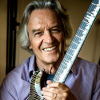
About John McLaughlin
Tags
PREVIOUS / NEXT

Become a Sustaining Member

Since 1995, All About Jazz has championed jazz as an art form and supported the musicians who create it. Over three decades, it has grown into one of the world's leading jazz resources, serving hundreds of thousands of readers, musicians, presenters and industry professionals each month.
Help Build the Future of All About Jazz
Your support helps us continue building All About Jazz for the next generation—expanding our editorial coverage, preserving jazz history, developing new community features and creating better ways to discover the music and the people behind it.
Become a sustaining member for as little as $20 per year and you'll immediately enjoy an ad-free experience along with access to subscriber features and future articles for a full year.
Together, we're not simply sustaining All About Jazz—we're building its future. Thank you for being part of the journey.