Home » Jazz Articles » Interview » Kamau Daaood: The Words of a Man
Kamau Daaood: The Words of a Man

I think once the music had the tendency to create thinkers and artists, different ways of looking at the world, and depth of character, depth of thought.
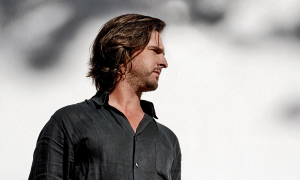
 At the Watts Jazz Festival, An Army of Healers heats up a late summer day in south central LA. with troopers like Kharon Harrison, Bobby Bryant, Jr., Trevor Ware, Derf Reklaw, Nate Morgan, and the soaring vocals of Dwight Trible. Leading the band, a man with a voice like a baritone sax solo, more Pepper than Mulligan, with an R&B rasp to his tone. Kamau Daaood easily holds his own, the words building imagistic phrases flashing pictures to the mind's eye, journeying back to reinforce the original idea, just like a saxophone solo. Now a veteran performer, one of his first readings found him unexpectedly leading the Pan Afrikan People's Arkestra at the request of Horace Tapscott.
 Asked to move to New York and join the Last Poets at the age of 18, Daaood refused and like Tapscott made "Act Locally" a reality to the improvement of his community. His protean jazz saturated lines have shared podiums with the likes of Gil Scott Heron and Amiri Baraka, and besides his CD Leimert Park , he's appeared on CDs by Dwight Trible and Derf Reklaw. This mid-fifties grandfather held a 20's trendy Temple Bar crowd enchanted performing with the dynamic Build An Ark, which he shrugs off when I mention it, ascribes it to sincerity. "I tell old school stories with a bebop tongue to the hip hop future. I see new rainbows in their eyes as we stand in the puddles of melted chains," he says on Leimert Park. His third book, The Language of Saxophones: Collected Works , comes out in April from San Francisco's City Lights Press. Kamau Daaood reconnects us to the current of words as Word.
AAJ: So, you grew up in LA?
Kamau Daaood: Yeah, homegrown. Actually, I was born in Santa Monica. My father was going to UCLA at the time. But I was raised in Los Angeles, went to Manual Arts High School, Washington High School, Southwest College.
AAJ: Was there jazz in the house?
KD: Music was a fixture in our house, constantly coming out of the speakers. None of my family were musicians. When my father got around a piano there were certain things he could pick out. I guess, just like any other home during that time, you had the radio and the record player. Mostly vocals, you know, Dinah Washington, Brook Benton, Arthur Prysock, a lot of that stuff. Most of the folks around my parents' age listened to a lot of Jimmy Smith.
There's a few albums I've found and kept because I remember my people had them around. I remember this thing with Sonny Rollins, Dizzy Gillespie, and Sonny Stitt, released on Verve, I think. It had that tune, "After Hours" on there and that was one of the tunes my dad liked to pick out on the piano. Just music, man.
AAJ: Did you take to literature early on?
KD: Not really. Well, I guess it would be considered early. I had a friend in junior high school that opened my ears to some other kind of stuff, because he was into Kahil Gibran and he hipped me to it. And, I was accidentally put in a creative writing class. LA Unified couldn't get all the kids in one classroom, so they sent me over to this creative writing class instead of regular English class. That teacher's name was Mr. Siegel. The way he taught it, he made it fun. Come to think of it, even In elementary school I enjoyed writing stories, because I could write stories and make people laugh. You got to read your story in front of the class, and based upon what the story's about you can always find a way to get people giggling, get away with stuff you don't normally get away with on paper. That was the roots of writing.
I didn't get more serious into writing until the latter years of high school. And it was really a way of discovering self worth. I would write, and I was even writing poetry at that time, and people saw value in it. I had gym teachers read something that I wrote, and say, "Man, why are doing all this other stuff? You should be concentrating on this. This is really good." My classmates used to enjoy what I wrote, too. Really, during that time I was on another plane in terms of where my head was at, just young and in the streets. It was a way of identifying myself with something I could do that had value to people.
I was introduced to the Watts Writer's Workshop around that time, probably '67. I saw this program on television and heard this writing and could feel it. It wasn't like the kind of literature that was shared with us in the classroom. There was another edge to it that made a lot of sense. I could hear the music in it. I could hear things that related to me. And then I heard a radio ad on one of the local soul stations that talked about a branch of the Watts Writer's Workshop opening up on the westside, westside of Los Angeles at that time, I mean of the black community, which is pretty much this area [Leimert Park]. So, I went to one of the workshops and that was my door in. I was about 17.
The next major experience I had was seeing Amiri Baraka at the community center here in Los Angeles. He really married the whole concept of the music which we were so much into. We used to save our lunch money, hustle up our little money and buy records on the weekend, whatever Trane was coming out with, Archie Shepp records, all that kind of stuff.
When you think about what we were listening to at such a young age, and the concepts that were being espoused on the records themselves, on the back of the albums, read that material, the political stuff in there, and the spiritual content of the music at the time, and I compare that to the music that kids are subjected to today, in terms of the depth at the core of the music, we were very fortunate to live in that time. Living through that deepened us, and that's one of the problems I see with the youth and what they do. Basically, it's because what they've been fed. Even though there's a lot of rhythmatic sophistication, and talent and skill, I question a lot of the depth in terms of the human spirit and yearnings that they put forth.
Of course, I'm not saying that as a blanket statement. There's a lot of young people that are really doing exceptional work, exploring, and creating, and really pushing some great energy. But, that genre as a mass leaves a lot to be desired in terms of content.
AAJ: Were a lot of your peers listening to Shepp and Trane?
KD: It was pretty common. It became almost like another language. Later, in my travels, you could anywhere in the United States, and because we all listened to that same music you could tune into guys in other cities. You understood certain things because you understood that music. A camaraderie, or brotherhood existed from the unspoken language that was in that music.
There was a whole thing about radio programming then. People played that kind of music, they weren't afraid to play things that were different, things that were serious. Now, there's been a real paradigm shift in terms of what's happening. I think once the music had the tendency to create thinkers and artists, different ways of looking at the world, and depth of character, and depth of thought. Somewhere in the mid-70's, probably around the disco period, there was a whole shift in radio programming and I think it was conscious in terms of the corporate interests. They just want people to buy stuff, to go to work and buy stuff. The quality of individual life, and the growth of families and communities, and the flowering of that kind of spirit is not really important to them as people begin to look more and more like things rather than human beings.
Coming right after the sixties and all the upheaval with all the different liberation movements, from Black Liberation to the Feminist Movement, and the Gay Movement, the Chicano, the multiculturalism, the mind expansion/exploration with the drug scene, there was a time that things were really out of control for the powers that be. It's just my opinion, that a lot of care and time was taken in think tanks to figure out the twenty, thirty, fifty year plans, how that kind of stuff could be turned around, so society would be much more manageable and go forth in ways that would be very profitable to that small percentage of privileged society, what they call the old money. When they turned the radios off and plugged in that constant 4/4 beat, drummed it into everybody, it's because they weren't interested in thinkers. That's the way I see it.
AAJ: You remember Clear Channel's list of banned songs from a few years ago that included John Lennon's "Imagine?"
KD: It's a very beautiful song, man. It gets people to pondering, to imagine. There's just such a polarization now in terms of outlooks, and depending on what you're being fed conceptually, people stand very strongly behind what they think they believe in.
AAJ: Do you write much outside of poetry?
KD: There's a very undisciplined side to me. There have been many times I wanted to be in music. But because of the discipline required to deal with the music, it was very difficult for me to get over the hump. With free verse poetry there were very few rules for me. I could write without having to conform to rules and to structure. If I picked up a horn, you learn your scales, you learn your chords, your long tones, you learn to read, you do all that stuff and after awhile you have a base to work from. Literature allowed me a way of writing without having to be responsible. There was no authority that was going to deal with me unless I really began to approach academia.
AAJ: How long does it take you to put together a poem like "Leimert Park" or "Tears?"
KD: It doesn't really work that way for me. My processes are not linear, even though it may appear like that. As you go through your path you gather skills along the way, you begin to discover things about writing, and you collect images and you begin to get s sense of the power of words and their placement. After years, it just becomes a part of your being. It's like stream of consciousness, but the skills you gather help to order that stream of consciousness as it flows through you.
AAJ: How long were you with the Watts Writer's Workshop?
KD: I was in and out of the Workshop for a couple of years, but it was more in the relationships I cultivated while I was in the Workshop. A lot of the older writers, and the more respected writers that came out of the Workshop had actually gone on by the time I got there. Writers like Quincy Troupe, Ojenke. who's a legendary figure in Los Angeles, and one of the major influences on the whole Watts Writer's Workshop, as well as writers like Eric Priestly, and K. Curtis Lyle. The Watts Prophets was formed and developed in the Workshop, Otis, Amde, and Richard. The school they rose from was a little different from the school that centered around Ojenke and Quincy. They were pioneers in what we call rap today. Very street oriented lyrics, very heavily rhyme influenced. So, it was quite natural that the young kids, when they branched off into what they would do, how they would find them as champions, like the Last Poets on the east coast.
The other school that developed was image laden work that basically also attached itself to jazz music and also the sermonic tradition of the old preachers. And part of that influence came through Ojenke's line, because Ojenke's father the Rev. Saxon was a preacher. So, a lot of the intonation and vocal gymnastics that Ojenke would use to read his work came out of that sermonic tradition.
AAJ: Have you always read your work?
KD: Poetry for me has always been more off the page than on the page. I have my first real book coming out in April next year, on City Lights press. Partially because that's never been my focus, my focus has always been performing the work with music. I guess there was always a concern that my work would not do as well on the page, as it did as an instrument of performance. There was a fear that had me shelter my work from putting it out there in that way. I don't feel that way now, but that was a concern of mine.
AAJ: Did you send stuff out?
KD: After awhile, you keep sending your stuff out, you don't get the grants, you don't get the money, after while you stop sending it out. All the little literary journals that no one really sees but academia. I learned a lot from being in the Pan Afrikan People's Arkestra with Horace, and just how important a voice can be to a community, serving the community. So, after time goes on and you're speaking where babies are born, at people's funerals, at all the rallies, in the schools, and the libraries, and the churches, and the prisons, and doing that kind of work, it's really a different approach than putting it on a page, and having it in bookstores and libraries, and reading on college campuses. I think all that has its place, and I wish I had spent more time and concentration on the literary aspect, because I think it would have made my life a little easier in terms of having doors opened. Because basically this society is product driven, and if you don't have something to work the marketplace, people don't know who you are, they just don't know your work.
 It wasn't until I did the CD ( Leimert Park ) back in the late nineties that me being able to work and move in the world became easier. Really, a quantum leap took place just by putting product in the marketplace and having a national publicist, and a record company behind you, and doing that kind of thing. All that's important.
There was a record that came out of Watts around the same time the Last Poets were doing their thing. I had the opportunity to be on that but I had an attorney check out the contract and it was basically selling myself into slavery. Others did the record, and later on in life, it did open doors. There was that documentation, and if your work's not documented...And I think that's one of the big, big differences between the Los Angeles area and the east coast. By putting out books and records they institutionalized the artist and people knew who they were. I hear so many people that don't realize the wealth and the richness that has grown and blossomed in Los Angeles. But, it's basically because, where are the books? Where are the records? With the exception of the stuff that Tom Aurbach did with Nimbus records, who really documented LA's underground music/art scene? No one did it. So, we didn't really have the administrative types that were promoting and pushing us. I guess people were waiting around for someone to do it, and it never got done. I think that's one of the biggest flaws of the Los Angeles area. When I started doing the cd, people started treating me like a new artist, and here I was doing this stuff for damn near thirty years.
AAJ: I know you did that Harvey Kubernick collection, Jazz Speak , did you ever hear any of his other LA spoken word anthologies like English as a Second Language , or Neighborhood Rhythms ?
KD: Harvey was trying to get me to do stuff a long time before that. He offered to put me on a couple of those compilations. I have been very suspicious of business entities, and it's taken me a long time to trust others coming from an environment that was not my environment. It would have been to my benefit had I had the confidence to move in a larger space than I operated in. It was more important to get the work out there, than to think I was going to lose something or be exploited. You have to learn that, get out and deal with it. There's a point where paranoia is a healthy thing in an environment where traditionally black artists and their product, and the ownership of that product and control of that product, basically there's a terrible history. One of the things the sixties taught us was to gain as much control over what we did as possible. Unfortunately, so many of us were holding back from doing stuff with others, but we weren't doing it ourselves.
Harvey was really visionary in the sense of spoken word, seeing it coming and trying to do something with it early on.
AAJ: How did you meet Horace Tapscott?
KD: There was a radio program called "Greg's Refresher Course." It came on every Saturday. I have yet to hear a show that moved me like that show moved me. The dj was Aman Kufahamu. He was playing the music that we wanted to hear, on KUSC. I actually stayed home on Saturdays, man, during the day to listen to his program. I think I even have a couple of tapes where I taped the whole program, somewhere on reel to reel. They're probably so brittle they'll turn to dust. He used to announce that Horace Tapscott, and Bobby Bradford, and John Carter had this organization, the Society for the Preservation of Black Music. And their whole thing was to put on these concerts, last Sunday of the month concerts, and let the cats playing with them at the time play.
So, one day I happened to be at the bus stop, and I was hitchhiking. You could do that back in the day without fear of being chopped up into little pieces and fed to a poodle or another human being. Anyway, a cat pulled up in a white Jaguar and saw me. And I get into this Jag and it was Aman Kufahamu who gave me a flyer about the show.
Sometimes the Arkestra would play, sometimes it was little groups from out the Arkestra, Bobby Bradford and John Carter would play, Azar Lawrence as a kid would play, Herbert King Baker, the pianist who tragically died at the age of 17, Roberto Miranda, all these cats would play there. I was like a groupie, I followed them around there. They taped all the concerts, it's part of the Pan African Arkestra's archive. After the concerts, they'd go over Linda Hill's, a pianist and vocalist with the Arkestra and go listen to these tapes, socialize, do what they do. I got invited over there and got to crack the inner circle and mingle a little bit.
On John Coltrane's birthday I was at the park and had some of my poetry with me. One of the cats really in the inner circle was Ted Jones, Lena Horne's son. He saw me in the audience with this poetry and he told Horace and they invited me onto the stage to read my poetry at this concert, around '70. Here I am, one of the first times I read my stuff publicly with a 14-21 piece band behind me playing John Coltrane's "Equinox." After that I was drafted into the Arkestra as the Word Musician.
AAJ: How'd you hook up wiith Billy Higgins?
KD: I met Billy in the '80's. I'd heard about him all my life. Half the music I listened to, Billy was playing on. I was on staff at the Watts Art Center and the city was going to honor him. They asked me to write a poem to help dedicate that day and energy to him, so I wrote this piece called, "the Last Song," and another artist named Carlos Cobbs had done a visual piece for Billy based around the poem, and it was presented to him. After that, we struck up a friendship, but I feel it was more of a mentorship. There were things I was struggling with on a personal level, and Billy was the friend that helped me with it.
Billy started coming out to the Watts Towers and I'd bring my little super scope Marantz tape recorder, and it would just be me and him. He would play and I would recite my poetry. It was good for both of us, because much of what Billy brought with him were not his drums, but his folk instruments, like his guitar and little instruments that gave him a chance to shed and it gave me the opportunity to be with one of the greatest drummers in the world.
 AAJ: So, how did you guys take that to the World Stage?
KD: Well, there was another venue at the time in Leimert Park, small venue, smaller than the World Stage. It was run by drummer Carl Barnett, who at the time was working a lot with Freddie Hubbard and Horace Silver. Small venue, about forty chairs, small stage, and I think it was a loft kind of vibe with Carl staying upstairs. Carl didn't really have the time, because he was on the road so much, to really manage the place, it was difficult for him to maintain it. And Billy when he was in town, he would help him with it, support it in ways he could. Some nice things did happen down there, but it wasn't long lived. So Billy told me if I ever saw anything to let him know to see what we could do to get some stuff happening. And I just happened to be over in Leimert Park one day, and I saw this empty space, and the vibe I envisioned music and poetry happening there. So, I inquired about it. At the time, another group with Tootie Heath and two other people were looking at the space, and they actually got the space. But then they found out they couldn't do any retailing out of the space, so they let it go and it fell back into Billy's hands. The first people to have keys for it, I went and got a key, and gave one to Billy and one to Horace Tapscott.
On the day we go the lease, they were putting all of Carl Burnett's chairs out in the alley to be hauled away. old theater seats, and his stage. We paid someone with a truck $25 to put al the chairs in the World Stage, and Carl's stage. Then, a couple days later, the artist next door, Rameses, visual artist in the village already, had a baby grand piano in his space. He can't play piano, it's just sitting there, so he let us use his piano. He took the legs off the piano and put it on his son's skateboard and wheeled it into the World Stage. So, we started off with a stage, chairs, and a baby grand piano. So the Spirit was behind us, it was supposed to happen, because that's what the community needed. We were the first to present performance art to the Leimert Park area, and to invite people to come out of their houses to commune at this point. We were followed about a year or so by Richard Fulton's 5th St Dick's, and he opened the area up even more. Then Marla Gibbs got the Vision Theater. later the dance collective.
There were already visual artists there, Rameses, Museum in Black, but it was the performing artists that brought people back during a time when were being smashed with the idea that our communities were unlivable and our streets weren't safe. When the artists began to come out, then the brave ones came out, pretty soon you got the whole community coming out. Richard put tables on the outside of 5th St. Dick's and invited people to come. And then you started seeing people at 3 o'clock in the morning sitting out there playing chess from all over the city, sipping on coffee in the middle of the night. It really made a statement to this thing, you know, drugs are everywhere, and driveby shootings are everywhere, and this scary, scary scary South Central.
AAJ: You're no longer involved with the day to day at the World Stage?
KD: This summer it was 15 years I've been involved with the Stage, and I find myself having different needs. I find myself at a different place creatively. I resigned as creative director. One, because there were so many other things pulling on me at some point I stopped being effective as I needed to be. You end up holding the consciousness of a place together and if you're not all there it begins to show. So, I made a choice to spend more time with my own creative work, and try to work on some kind of plan for this end game. The World Stage was a full time job without pay for fifteen years. Folks don't realize the kind of sacrifices people made down there, from Billy, and myself, and Don Muhammed, who was the manager down there for a long time, to the present members of the board, and the executive director of the center, and all the instructors, what kind of energy they put out year after year just to see that art and the potential for the development of art is here in the community.
We've been fortunate to get small amounts of support from places like National Endowment for the Arts, California Arts Council, which now pretty much defunct, corporate support, small ones that have helped us with our programs and which we're very thankful for. But for the most part, it's been the volunteer work of the staff, the volunteer work at a pittance for the artists that come through there, and community support that has kept us there for the last 15 years. I really see it as a model for success and inspiration that we can do so much with so little for so long. Now you know the story.
AAJ: Do you read without a band?
KD: It's a different dynamic. In reading with music you have an interaction that takes place where you have this variable you must respond to. It's interesting where the interaction takes you. You have to be grounded in what you're doing, at the same time be open to go with change. There's risk involved. A lot of times very exciting things happen because of the dynamics of working with other spirits, and to think of the word in the same context as a soloist, or another instrument in doing a piece. When you perform solo, you have a freedom to handle a piece any way you want to handle it. Nothing's stopping you from whispering a word or shouting a word or plying silence.
AAJ: Do you have more performances planned?
KD: What trying to do now is stacking up concepts, performance wise. I have some music I've written some lyrics to that I want to be able to do with Dwight Trible, and other concepts with different configurations of music, instrumentations. I've been doing some things with the younger generation. I just did something with dj Mumbles, I like his spirit and what he's doing. Things are getting busy, but we're supposed to get together with dj Madlib who did that work remixing a lot of the old Blue Note stuff. I've listened to a lot of his stuff and really like what he's doing. The focus right now is the book coming out in April on City Lights Press.
AAJ: What's the name of the new book?
KD: The Language of Saxophones: Selected Works. There's work in there from four decades. It's about that sound, that commonness, that language that goes above where we might find ourselves, and shows where we all are at together, trying to get on that page. That's what you strive for: to touch people and connect, so you're fortunate to do that. Spirit wins.
Photo Credit
Greg Allen
< Previous
Focus Point
Comments
Tags
For the Love of Jazz
 All About Jazz has been a pillar of jazz since 1995, championing it as an art form and, more importantly, supporting the musicians who create it. Our enduring commitment has made "AAJ" one of the most culturally important websites of its kind, read by hundreds of thousands of fans, musicians and industry figures every month.
You Can Help
To expand our coverage even further and develop new means to foster jazz discovery and connectivity we need your help. You can become a sustaining member for a modest $20 and in return, we'll immediately hide those pesky ads plus provide access to future articles for a full year. This winning combination will vastly improve your AAJ experience and allow us to vigorously build on the pioneering work we first started in 1995. So enjoy an ad-free AAJ experience and help us remain a positive beacon for jazz by making a donation today.

Giveaway

Days remaining: 6