Home » Jazz Articles » Compare & Contrast » Charlie Rouse: Hail The Individual
Charlie Rouse: Hail The Individual

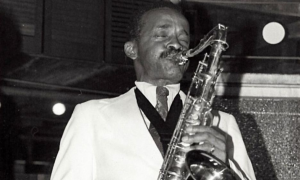
 Charlie Rouse was the victim of some unstated critical consensus, which always seemed to mask the fact that he found his own way in the eye of the bebop hurricane. Guilty as he was of being neither John Coltrane nor Sonny Rollins at a time when such giants were more common, he was a tenor saxophonist who carved out his own niche, and in so doing found his personal resolution of the possibilities that bebop offered. In short, he did his own thing, and he does it effectively on both Bossa Nova Bacchanal and Social Call.
On the face of it the former of these titles might seem like an attempt at hopping aboard a passing bandwagon, recorded as it was at a time when the gentle melancholy of bossa nova struck a chord with an audience well beyond that of the core audience for jazz, and lured in no small part perhaps by Stan Getz's somnolent way with the idiom. Rouse's individuality was however of a different order to Getz's, and throughout the album it has the unexpected effect of highlighting the rhythmic emphasis of his playing, which might well have been in the forefront of Thelonious Monk's thoughts when he gave Rouse the gig with his quartet. Here Rouse's craggy individuality is compromised not a bit, a point which is emphasised by "One For Five" the additional track recorded in a more familiar hard bop setting in the company of Freddie Hubbard.
 Social Call , recorded in the company of fellow bop veteran Red Rodney in trumpet in January of 1984, finds both men playing more reflectively than they did in the heyday of the idiom. The date is a late flowering of the bop message at a time when it was still relatively fresh -albeit deeply unfashionable- and the rhythm section of Albert Dailey, Cecil McBee and Kenny Washington is state of the art.
The fact that both Rouse and Rodney were in at the beginning seems to raise the bar a notch or two. Rodney in particular seems to have purged his playing of the grating exuberance that was often the mark of early bebop trumpeters, and his music is a lot more considered. Exhibiting a similar depth in his own playing, it's clear that one of Rouse's primary considerations at this stage was time; he allows himself all the time in the world here, and his playing is more telling as a result.
Jazz has never been about the relentless pushing on towards some ill-defined -or indeed indefinable- point, but what the passing of time has revealed is the importance, if not the primacy, of the individual voice as an essential requirement for enduring music. Throughout his lengthy career Charlie Rouse embraced that philosophy and his work always had the kind of depth that escaped critical consensus.
Bossa Nova Bacchanal - Blue Note 7243 5 93875 2 9
Social Call - Uptown UPCD 27.50
About Charlie Rouse

Tags
PREVIOUS / NEXT

Become a Sustaining Member

Since 1995, All About Jazz has championed jazz as an art form and supported the musicians who create it. Over three decades, it has grown into one of the world's leading jazz resources, serving hundreds of thousands of readers, musicians, presenters and industry professionals each month.
Help Build the Future of All About Jazz
Your support helps us continue building All About Jazz for the next generation—expanding our editorial coverage, preserving jazz history, developing new community features and creating better ways to discover the music and the people behind it.
Become a sustaining member for as little as $20 per year and you'll immediately enjoy an ad-free experience along with access to subscriber features and future articles for a full year.
Together, we're not simply sustaining All About Jazz—we're building its future. Thank you for being part of the journey.