Home » Jazz Articles » Building a Jazz Library » Best Live Rock Recordings: 1969-1979
Best Live Rock Recordings: 1969-1979
Critic's Note
While not directly jazz-related, this top ten list of the best live Rock recordings has been banging around in my head for several years just waiting for a chance to get out. As part of the bargain, I will follow up this series with one that addresses the best ten live Jazz recordings in the estimation of the All About Jazz stable of critics. But in the meantime, please indulge me. I think live music is the surest expression of the talent and invention of the performer. It often can be the best or the worst an artist has to offer the listening public. When Rock music is performed well live, it can approximate Jazz in the respect that they both employ improvisation to make the music sound fresh and new.This endeavor began as a single article, but has since expanded into a monthly series. I will begin our journey with a brief introduction, and then I'll consider the first of ten live Rock recordings. The coming months will bring the remainder of the best live Rock music top ten, followed by a top ten of the best live Jazz recordings (culled from the opinions of the All About Jazz critics staff).
Live Music is Better
Live recordings have always been hit-or-miss propositions. In live music recorded for release, the performers take an artistic risk that can either result in an historic performance where musical standards are set—or end in an uninspired fulfillment of a contract, where money and time are both wasted. I have always found live releases exciting events. Every live recording offers such opportunity for sublime musical enjoyment that the anticipation and potential for greatness make me forget every bad live recording I ever bought. (And there have been many of those.) When everything clicks on a live recording, elevating the performance to special event status (like The Allman Brothers at Fillmore East), the album validates and justifies consideration as a superior document to studio recordings.What makes great live Rock recordings are the same things that make all great Jazz performances: risk, unpredictability, and improvisation. A great live album contains surprises, like the playful Dixieland break halfway through "Dixie Chicken" on Little Feat's Waiting for Columbus; or Stephen Stills' thrillingly angry solo piano performance on "49 Bye-Byes/For What It's Worth" from Four Way Street. Exceptional live recordings also feature performances so impassioned and so urgently propelled that the listener fears they may spin out of control at any moment. Examples can be found on any Neil Young live recording, but specifically on Live Rust's "Like a Hurricane"; and also during J. R. Cobb's bass solo on "Another Man's Woman" from the Atlanta Rhythm Section's Are You Ready?
What makes poor Rock live recordings is just the opposite of what makes them great: safety, predictability, and rote performance. Some live recordings may just as well have been recorded in the studio (The Eagles Live and Fleetwood Mac Live come to mind). The performances on these records are identical to studio releases, right down to the arrangement and solos. This leads to an uninspired performance, an additional live album killer. Second or third live recordings by some groups often lack the inspiration of the first (for example: the Allman Brothers Band, the J. Geils Band, the Rolling Stones, etc.). Verboten for decent live recordings are audience sing-a-longs. This kind of thing sinks the otherwise promising Tom Petty and the Heartbreakers' Pack Up the Plantation: Live (a truly wretched live recording) and Bruce Springsteen's Live 1975-1985. Nothing wrecks a great live recording more than a sing-along. Sing-a-longs should be saved for "Kumbaya" around the campfire.
What follows is not an altogether unbiased list of the ten best live Rock recordings, plus a list of five runners-up. The live recordings chosen for this list feature the inspiring characteristics described above and, with a few exceptions, document a single event (or a single tour). I have restricted this list to mainstream Rock recordings. Thus I will not consider exceptional live recordings such as Bob Marley's Live and Babylon by Bus, James Brown's Live at the Apollo, B.B. King's Live at Cook County Jail, or Johnny Cash's At Fulsom Prison/San Quentin. I have listed these ten albums in approximately the order I value them as historic documents. Of course, my critical judgment remains subjective and I may end up changing my mind.

1. At Fillmore East
Allman Brothers (1971)
2. Waiting for Columbus
Little Feat (1978)
3. Rock of Ages
The Band (1972)
4. Four Way Street
CSN&Y (1971)
5. Before the Flood
Bob Dylan & the Band (1974)
6. Live Rust
Neil Young (1979)
7. Get Yer Ya Yas Out
The Rolling Stones (1969)
8. Mad Dogs...
Joe Cocker (1970)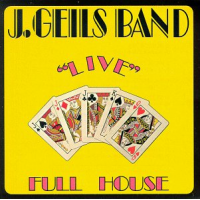
9. Full House
J. Geils Band (1972)
10. At The Fillmore
Derek & the Dominoes (1970)View the Best of the Rest...
About Allman Brothers Band

Tags
PREVIOUS / NEXT

Become a Sustaining Member

Since 1995, All About Jazz has championed jazz as an art form and supported the musicians who create it. Over three decades, it has grown into one of the world's leading jazz resources, serving hundreds of thousands of readers, musicians, presenters and industry professionals each month.
Help Build the Future of All About Jazz
Your support helps us continue building All About Jazz for the next generation—expanding our editorial coverage, preserving jazz history, developing new community features and creating better ways to discover the music and the people behind it.
Become a sustaining member for as little as $20 per year and you'll immediately enjoy an ad-free experience along with access to subscriber features and future articles for a full year.
Together, we're not simply sustaining All About Jazz—we're building its future. Thank you for being part of the journey.