Home » Jazz Articles » Profile » Chick Corea: A Deep Dive
Chick Corea: A Deep Dive

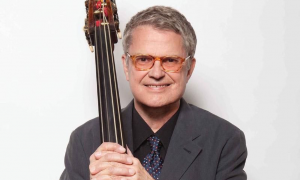
Courtesy chickcorea.com

No musician has used the fusion concept with more variety, intelligence and unimpeachable taste than Chick Corea.
—Len Lyons, jazz author and critic
Corea is one of the major pioneers of fusion, and his far-ranging influence since the 1960s includes post-bop, Latin, free-form and avant-garde jazz, as well as classical. He is a rarity in his proficiency and distinctiveness on both piano and synthesizers, and is one of the first players to fully exploit the potential of electronic instruments.
"No musician has used the fusion concept with more variety, intelligence and unimpeachable taste than Chick Corea," wrote Len Lyons, a longtime jazz author and critic, in his book "The 101 Best Jazz Albums." Downbeat magazine calls him "jazz's most protean and unpredictable character."
Players influencing Corea include Mozart, Beethoven, Art Tatum, Thelonious Monk, Bill Evans and, most of all, Bud Powell. He ranks with Herbie Hancock and Keith Jarrett as the most influential keyboardists of the modern era, extending beyond countless pianists to unexpected performers such as banjo fusion pioneer Bela Fleck and even rapper D.J. Jazzy Jeff (Will Smith's partner when the actor was known as the Fresh Prince).
Career highlights include collaborating with Miles Davis on Bitches Brew (Columbia, 1969), considered by many to be the first successful rock-fusion album, and forming the landmark 1970s fusion band Return To Forever. "Spain," "La Fiesta" and "Now He Sings Now He Sobs" are among his many well-known compositions.
His trademark style is a colorful lyricism filled with dominant chords, chromatic and diminished scale runs, and rapid-fire phrasing. He's also renowned for unique electronic voicings, experimental techniques such as plucking the strings of his piano and a percussion-like approach to many pieces.
"I made a lot of headway technically and musically with my piano playing when I realized that I could regard the piano as a terrific percussion instrument," he wrote in a Music Teacher magazine article, listing a number of drummers as major influences. "Eighty-eight tuned drums! My fingers like 10 drumsticks!"
Some critics say Corea's career features dry spells—lengthy at times—evident in poorly conceived and/ or market-driven "technical bombast." His vast discography contains a surprisingly high number earning poor to mediocre reviews. About 40 percent score six or lower on a scale of one to 10 in today's two largest jazz CD guides—and that figure is somewhat deceptive due to a string of positive reviews in recent years. On the other hand, fewer than 5 percent of Corea's albums get such scores in listener reviews at Amazon.com, with the lowest ratings often going to his more critically acclaimed work.
Corea was born Armando Anthony Corea on June 12, 1941, in Chelsea, Mass., and began playing piano at age 4 (a recording of him playing "I Don't See Me in Your Eyes Anymore" at the age of 8 exists on the out-of-print Music Forever And Beyond boxed set). His father was a professional trumpet player and his enormous collection of jazz played a large role in shaping the younger Corea's future. He moved to New York and, after studying briefly at Columbia University and Julliard, began performing in 1962 with Latin jazz musicians Mongo Santamaria and Willie Bobo, plus players such as Blue Mitchell, Herbie Mann and Sarah Vaughan during the next few years.
His first studio recording came in 1962 on Santamaria's Go, Mongo! and in 1964 he recorded his first original composition, "Chick's Tune," on Mitchell's A Thing To Do. The latter is a straight-ahead performance, with only faint traces of the complex harmonies that eventually dominated his music.
Corea's voice became stronger on his 1966 debut as a leader, Tones For Joan's Bones , a hard-bop album with a modal McCoy Tyner influence. The pianist's first widespread critical acclaim came on 1967's Now He Sings, Now He Sobs, a trio album with bassist Miroslav Vitous and drummer Roy Haynes that finds Corea experimenting more with free jazz. It was the beginning of perhaps the most innovative part of his career, lasting through much of his early fusion work during the 1970s.
He got his chance to play with Davis in 1968 when the trumpet player fired Herbie Hancock for getting food poisoning during his honeymoon. Drummer Tony Williams recommended Corea as a replacement due to his rising reputation as an avant-garde performer. Davis, in the early stages of his rock/fusion phase, wanted someone to play electric piano, which Corea was somewhat reluctant to do.
"I made the best of it, but felt as though I was at a disadvantage because the quality of instrument was not really that of an acoustic instrument," Corea said later. "It was kind of a toy, sort of. So I started to try to get a sound out of it, fooling around with attachments that distorted the sound."
Corea recorded the landmark Bitches Brew and subsequent In A Silent Way albums with Davis before forming the avant-garde group Circle with bassist Dave Holland, saxophonist Anthony Braxton and drummer Barry Altschul in the early 1970s. But in 1971 "the second great discovery of my life"—Scientology and the works of L. Ron Hubbard—prompted Corea to seek a more structured musical setting aimed more at reaching an audience than sophistication. The association sometimes proved troubling in future years, with the German government at times banning him from performing there and protesters appearing at shows in other countries.
He joined bassist Stanley Clarke to form Return To Forever. The initial focus was Latin music, with woodwind player Joe Farrell joining Brazilian vocalist Flora Purim and percussionist Airto Moreira as the group's other members. Their albums Return To Forever and Light As A Feather generally remain the most critically acclaimed of those by three different Return To Forever incarnations, with the latter earning a Grammy nomination for the song "Spain."
Guitarist Bill Conners and drummer Lenny White joined Corea and Clarke in 1973 as Return To Forever became a fusion quartet, based at least somewhat intentionally on guitarist's John McLaughlin's highly popular but then-defunct Mahavishnu Orchestra. The influence is obvious on songs like "Space Circus" from their Hymn Of The Seventh Galaxy album, a generally less polished but more intense album than those following.
Al DiMeola replaced Conners for the quartet's subsequent albums. The first, Where Have I Known You Before? , also features Corea's first synthesizer work, refuting skeptics who said a personal voice wasn't possible on such instruments through a combination of soloing prowess, pitch sliding and note-bending. In 1975 No Mystery won a Grammy for best jazz instrumental performance and 1976's Romantic Warrior became the group's most popular by achieving gold record status.
But the acclaim and growing commercial success were accompanied by a healthy dose of criticism. At the simplest level, jazz fans found too much rock in the music and rock fans found too much jazz. Also, many fusion fans and critics said certain albums were clinched, undisciplined, insincere or just lousy—although which albums were praised and panned varied widely due to the shifting of styles and personnel.
The divide can be seen on the final Return To Forever studio album, 1977's Musicmagic. Corea dropped the electric guitar, expanded the instrumentalists into a 13-piece ensemble with a string section and added vocals—including his own—to many of the songs. The album was a big seller and some hail it as a complex transition to Corea's subsequent individual work, but it is also widely attacked as commercial light pop with a grating sound.
Criticism is also frequent on Corea's individual albums, recorded with increasing frequency as Return To Forever neared its final breakup. But again there is little consistency, as some albums hailed as his finest work are blasted by others as among his worst, based often on whether the constantly changing themes are accepted as sincere or contrived. Fans of 1976's My Spanish Heart , for instance, call it a stellar tribute to Corea's heritage made more daring by his rare use of a large ensemble, critics call it a clinched and lackluster performance by an ill-chosen group of players.
Similar comments are made about other eclectic albums from this period such as The Leprechaun and The Mad hatter. But a handful of more straight-ahead efforts such as 1972's Crystal Silence , a collaboration with vibraphonist Gary Burton with a strong chamber presence, are generally well-acclaimed. Other such recordings included a series of solo piano improvisations for the ECM label and a concert with Herbie Hancock.
Straight-ahead performances were more prevalent in Corea's playing during the first half of the 1980s as, perhaps not coincidentally, a public backlash to '70s-era fusion emerged. Albums such as Live In Montreux, Three Quartets and Trio won widespread acclaim as Corea joined with players like Joe Henderson, Michael Brecker, Eddie Gomez and Roy Haynes. The irony was a drop in sales and magazine reader polls that consistently ranked him as one of the top keyboardists of the 1970s.
"In the late '70s, on the basis of RTF's fusion sales record, he was given what Corea called a 'big-time advance' by Warner Brothers," according to 1998 article in Culture Kiosque magazine. "But while the company was expecting a sort of RTF2, he was by then interested in making acoustic chamber jazz. The first two records under the deal did not sell well."
"When a record doesn't make its money back, if that goes on for awhile, then a musician is going to feel like his product is no good," Corea said in the interview, noting he and Warner broke off an agreement to record four more albums. "The financial reality tends to invalidate the musical value. Eventually it puts the musician in a frame of mind where he uses his energy trying to make music that isn't really his."
Corea made his second major splash on the fusion scene in 1986 with the Elektric Band, comprised of players and styles he has worked with with at least intermittently ever since. The emphasis was often compositional rather than improvisational, with less adventurous songs and fewer solos than the Return To Forever bands. The synthesizer-drenched music is also dated, but less so than Corea's 1970s fusion.
The group dominated contemporary jazz sales charts and all but the last of their six albums received Grammy nominations or awards. They didn't impress all critics and straight-ahead fans—the group's self-titled debut initially got a one-star review in Downbeat —but some revised and raised their ratings in retrospect (one Downbeat reviewer eventually gave it four out of five stars).
"(It was) not that much of a compromise at all," said saxophonist Eric Marienthal, who joined the group following the album's release, in an interview years later. But "because it wasn't Chick Corea playing acoustic piano and playing 'hip' music, a lot of people just didn't care for it."
Other members of the group included bassist John Patitucci, drummer Dave Weckl and guitarist Frank Gambale, with all four sidemen becoming successful lead artists in their own right. Corea also worked some of his fusion-oriented themes into a traditional setting by releasing trio two albums with Patitucci and Weckl as the Akoustic Band, earning another Grammy nomination and an award in the process.
Corea has released perhaps his best and most diverse work since the breakup of the Elektric Band in 1991, shifting consistently from traditional to fusion to experiments in classical music, with a corresponding change in personnel for the albums and tours. Part of the diversity is due to his co-founding of Stretch Records in 1992 with producer Ron Moss, which the pianist says allow him greater freedom in issuing recordings by himself and other musicians. It also allowed him to issue unreleased and little-known previous recordings, which sometimes fell victim to a rocky relationship with the music industry.
Highlight recordings from recent years include an all-star sextet tribute on 1997's Remembering Bud Powell , a live performance of his first original symphonic work on 2000's Corea.Concerto , and the 2003 Rendezvous In New York reunion concert with many former sidemen to celebrate his 60th birthday. That year he also reunited the Elektric Band for a concert tour and the 2004 studio album To The Stars.
The broad approach is likely to continue for Corea, who has been nominated for nearly 50 Grammy awards and won more than 10 as of 2004, as freedom remains one of his main points of emphasis in his musical and spiritual life. Such efforts, he says, are a natural rather than deliberative process.
"'Style' is what the listener sees after it's all put together and gliding along," he wrote in response to a fan's question about his abililty to shift between a wide range of genres. "Style is never something which I consider while creating a composition or a band or a performance. Like, if it rains, you put on a raincoat and a hat—and that's your style that day. If the sun's out you put on your sunglasses—and that's your style that day."
Recordings
Considering Corea's influence and productivity, it is somewhat remarkable he has no albums considered to be consensus top-tier "classics" in the realm of Miles Davis' Kind Of Blue , John Coltrane's Giant Steps or even Herbie Hancock's Maiden Voyage. Indeed, esteemed New York Times jazz critic Ben Ratliff doesn't include a single album on which Corea plays -much less leads—in his book "Essential Library Jazz" detailing the writer's top 100 picks.That's not to say he doesn't have his share of four-and five-star releases, and certainly some observers include various albums in their "must-have" rankings. But those albums often vary and there is sharp disagreement about early albums most likely to be considered landmarks.
Corea's versatility and progression in playing styles over the years means non-completists will likely want to learn about and hone in on certain works and eras. His first decade of recording from the mid 1960s to '70s is generally the most adventurous, his subsequent work into the '90s ranges from commercially oriented fusion to near-legendary traditional sessions, and recent years has seen him tilt more toward traditional and experimental projects earning the most consistent critical acclaim.
The best purchase for first-timers may be the 2003 double CD Rendezvous In New York. This live performance celebrating Corea's 60th birthday is not his most acclaimed album, but is an upper-rung title featuring him in a series of reunion concerts with various ensembles from throughout his career. Other potential first or early purchases include Chick Corea: Jazz Masters 3 for a good overview of his early days, Return To The Seventh Galaxy for his 1970s fusion, Remembering Bud Powell for traditional jazz and Inside Out for his 1980s and '90s fusion.
 Tunes For Joan's Bones
aka Inner Space
1966
Corea's debut album as a leader is largely a hard-bop session with a McCoy Tyner presence to it, but nonetheless is an enjoyable performance—especially for fans interested in Corea's development. The original album is hard to find and Inner Space is missing some songs (with others featuring flutist Hubert Laws added , but a reissue CD combining Bones with bassist Miroslav Vitous' Mountains In The Clouds is available.
 Now He Sings, Now He Sobs
1967
Corea's breakthrough album contains only five songs, but eight additional tracks are on the reissued CD currently available. The trio session features bassist Miroslav Vitous and drummer Roy Haynes, and all but two of the compositions are originals by the pianist. Corea possesses a distinctive voice on this blend of hard bop and free jazz, but is still developing his eventual signature style. Among the more notable moments are his solo on the opening "Steps—What Was," which contains the foundation of his subsequent famous song "Spain," and his one-at-a-time free-form exchanges with Vitous on "Gemini."
 A.R.C.
1971
This trio album featuring bassist Dave Holland and drummer Barry Altschul isn't as avant-garde as the recordings they issued as the group Circle (which also includes saxophonist Anthony Braxton , but is a solid jazz outing—some argue the last for several years as he entered his Return To Forever phase.
 Piano Improvisations (Vol. 1 and 2)
 1971
These solo performances of originals and standards are Corea's attempt to reach a wider audience, with both albums earning mixed critical and commercial success. One or both are worthwhile for collectors in particular, since they are markedly different in character than his other recordings of the period.
 Crystal Silence
1972
This collaboration with vibraphonist Gary Burton, one of several such pairings, is an upper-echelon choice among both fans and criticis. It features a strong modern chamber presence and is generally low-key in tempo, but has an intensity and depth missing from many of Corea's fusion recordings. Highlights include the nine-minute title track, reinterpreted from the first Return To Forever album, and the opening "Senor Mouse."
 Return To Forever
1972
The group's first album is generally considered its best, although as with a lot of other Corea's work this is sometimes (heatedly debated. The music is Latin rather than the fusion and critics say a poor performance by Flora Purim on vocals distracts from what otherwise would be strong compositions. A definite buy for collectors; others should compare it to latter RTF albums such to see which incarnation they favor most.
 Light As Feather
1972
This actually ended up being the first album by Return To Forever available to the public, as the group's self-titled debut wasn't released until 1975. It shares many of the same strengths and weaknesses, but is less improvisational and finds Clarke providing a more commanding presence on bass. It is also, true to its name, lighter in spirit than its predecessor. Some complain this album is indeed "light," sacrificing the artistry of earlier Corea albums in an attempt to be commercially appealing. A double-CD reissue adds more than an hour of previously unreleased music.
 Hymn Of The Seventh Galaxy
1973
Guitarist Bill Conners and drummer Lennie White became the new accompanying players and the focus shifted to rock-oriented fusion with this release. Some consider this RTF's best fusion, others lean toward 1974's Where Have I Known You Before , 1975's No Mystery or 1976's Romantic Warrior where Al DiMeola replaces Conners on guitar. All are quirky and dated, and the names of many popular tracks in themselves hint at their eclectic dance-like nature: "Captain Sensor Mouse," "Theme To The Mothership" and "Captain Marvel," among others. Still, the musiciansmanship is hard to deny, even if certain themes turn off some listeners, and these rank along with Weather Report's albums as must-have items for anyone following fusion from the 1970s onward.
 My Spanish Heart (1976
 This 17-member ensemble set is a classic example of Corea's ability to divide critics. Consider these excerpts from today's two best-known jazz reference texts: One says it proves Corea "was up to any task he chose at this point in time...compositionally and intellectually at the top of his game;" the other blasts it as a "strained" album that "gives every impression of having been got up for the tourists." A maybe for casual types, a better choice for collections who can debate if it's a true exploration of his Spanish heritage or a dated over-synthsized mess.
 Return To Forever Live
1978
This double-length album got tepid reviews and has mediocre sound quality, but is a worthwhile pickup for RTF fans if only to hear the players stretching out in some of the marathon selections. Stanley Clarke burns his bass strings on "So Long Mickey Mouse," then delivers a virtuoso acoustic solo on "The Moorish Warrior and Spanish Princess." that goes from Baroque to the flat-out rock of his hit "School Days." Saxophonist Joe Farrell is particularly impressive on the relatively straight ahead "Serenade." Corea performs well throughout and, if not always in top form, his closing "Spanish Fantasy" sends the audience home in style.
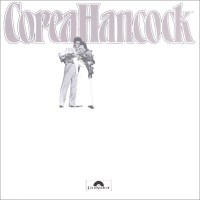 Corea/Hancock
1978
Another album earning wildly mixed reviews, with electronic keyboard pioneers performing an acoustic concert of mostly original songs. Three of the six selections are 14 to 19 minutes long and there are elements of classical composition within the marathon tracks. Critics say there is far too much aimless noodling and too little musicsmanship between the performers.
 Live In Montreux
1981
An excellent straight-ahead concert album, due in no small part to saxophonist Joe Henderson as part of an all-star quartet that also includes Roy Haynes on drums and Gary Peacock on bass. Haynes, who maintains his usual quiet fire throughout, ends the performance with a high-energy extended solo on "So In Love."
 Three Quartets
1981
An overlooked acoustic album with saxophonist Michael Brecker, bassist Eddie Gomez and drummer Steve Gadd performing four lengthy originals that include tributes to Duke Ellington and John Coltrane. Generally considered no worse than an average all-star collaboration, some consider it one of Corea's finest. A reissued CD adds four shorter tracks.
 Touchstone
1982
An unusual album with songs ranging from a conventional sextet to a one-time reunion with his Return To Forever quartet. Interesting because of the diversity, but none of the performances stand out as remarkable in their respective genres.
 Children's Songs
1983
This solo collection of mostly short songs with simple themes is another love-it-or-hate-it affair, with critics saying there is little development in the pieces. Fans say it captures a wide and pleasing variety of melodies and moods.
 Trio Music: Live In Europe
1984
Some say Corea's reunion with Miroslav Vitous and Roy Haynes contains more insight and energy on 1981's Trio Music , but many others consider this live set to be an overlooked gem. The concert features a blend of originals, standards and one classical piece.
 The Chick Corea Elektric Band
1986
This album initially got a one-star review from Downbeat , but history has been kinder to the debut of a group marking Corea's return to electronic fusion during the late 1980s and early '90s. It marks the beginning of his long association with bassist John Patitucci and drummer Dave Weckl, and the collaboration with the latter on "Rumble" is a shining example of the frenetic interplay to come in future years. A handful other songs such as "No Zone" and "Sidewalk" feature catchy melodies that remain crowd-pleasing favorites. The overall canvas is colorful, but what's lacking are distinctive hues from the individual players.
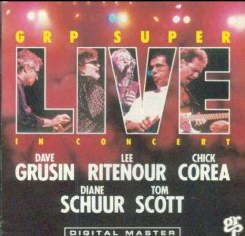 GRP Super Live In Concert
1990
Fans of the Elektric Band will find this double CD worth searching for because the entire second disc is Corea's band performing major hits from their early albums. The live versions are vastly superior to the studio cuts—among the highlights are Mariental's burning sax solo on "Time Track," and Corea and Patitucci lighting things up on the 18-minute "No Zone." Everyone in the band is in a comfort zone by now that is matched only by the best moments of their pinnacle studio album "Inside Out.". It is currently out of print, but not difficult to find inexpensive used copies.
 Inside Out
1990
The Elektric Band generally is considered a good, not great, stretch in Corea's career, but this album is a definite highlight for fans and those into reasonably eclectic modern fusion. The compositions are generally the strongest, if not most commercial accessible, Corea wrote for the band and everyone gets plenty of chances to stretch out in a settling they obviously had become familiar with. Of particular note is the 20-minute, four-part "Tale Of Daring" at the end of the album—a four-minute piano and drum battle between Corea and Weckl on part three is a staggering display of frenzied interaction nearly worth the price of the album by itself.
 Alive
Alive1991
A love-it-or-hate-it outing, as Corea forms his Akoustic Band with Patitucci and Weckl and infuses a hefty fusion presence into a set of standards and originals in a "live" set. Incredibly high energy outing, especially during the first half, and fans of Weckl will find some of his most intense work ever on the opening "On Green Dolphin Street" and Corea's "Humpty Dumpty." Critics say—with some justification -there's little intellectual heft.
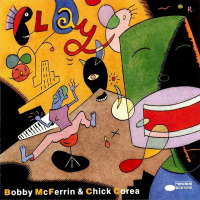 Play
Play1992
This Grammy-winning live session with vocalist Bobby McFerrin is another polarizing album, either loved as a fun-spirited performance or hated as shallow and misguided. Corea isn't breaking any new ground here, so the appeal largely depends on how much the listener wants to hear McFerrin use his voice to supply bass and rhythm parts to standards like "Spain" and "Blue Bossa." Average everything out and the result is two top-notch performers having an OK day—enough to make it a worthwhile listen. The pair collaborate again with an orchestra in 1996's The Mozart Sessions and Corea delivers some interesting improvisational moments, but the overall results are more straightforward and less interesting.
Return To The Seventh Galaxy1996
A double-CD featuring, in theory, highlights from the first two Return To Forever groups plus about 40 minutes of previously unreleased music. It's a very good choice for listeners new to RTF or who are looking for more after purchasing their first album, but those with a more complete collection may not find the additional material worth the expense.
 Native Sense
1997
This generally well-regarded reunion with Gary Burton resulted in another Grammy award. Most of the songs—some old, some new—are lengthy and both players show they have a lot of ideas left to share with each other. Particularly noteworthy are a harmonically complex "No Mystery" and an unusual bop treatment of Thelonious Monk's "Four On One."
 Remembering Bud Powell
1997
Probably the safest bet for a quality traditional jazz outing, as there is little disagreement it ranks among his top ventures into that field. The sextet tribute to one of Corea's mentors features a top-tier cast—including sax players Kenny Garrett and Joshua Redman, plus a reunion with Haynes—each of whom add their own modern touches to Powell's work. That's both the strength and weakness of the album; an up-tempo version of "Oblivion," for example, is a fascinating take on Powell's original, although one critic calls it "almost antagonistic."
 Origin: Live At The Blue Note
1997 and A Week At The Blue Note
1998
These are good, not great, performances by a new sextet of players brought in by Corea. The high-energy acoustic sessions deserve consideration from fans largely because it is the pianist's only easily available boxed set as of summer 2004. Listeners can audition the single CD without fear before deciding if they're interested in the six-disc set, since each features different performances.
 Corea Concerto
1999
A radical—but highly noteworthy and Grammy winning—live performance of Corea's first original symphonic work, featuring the London Philharmonic Orchestra and his Origin group performing a Mozart-inspired concerto and perhaps the definitive version of "Spain." Corea plays with as much passion here as any of his albums, most everyone else is equal to the task, and in short this is as fine a blend of of classical and jazz as anyone can reasonably expect to hear.
 Past, Present And Futures
2001
This trio album with two other members of Origin is one of Corea's strongest jazz efforts in recent years. He is aided greatly by bassist Avishai Cohen, who plays with a depth and freshness equal to the best of anything else found in Corea's discography. Corea elevates his game as well, showing great creativity across a wide range of songs without retreating into comfort food riffs or novelties to catch the ear. Can easily be a starting point for listeners wanting to hear Corea in a mainstream setting.
 Rendezvous In New York
2003
Corea hosted his own "This Is Your Life" for his 60th birthday with a series of reunion performances in New York, portions of which are featured on this double CD. It's a bit uneven in quality, but still worthwhile for fans and "single album" new listeners wanting a more contemporary overview of his work. DVD versions of specific performances were planned at the time of this writing.
 To The Stars
2004
Corea reunites his Elektric Band for a collection of songs based on one of L. Ron Hubbard's writings, resulting in a set of high-energy fusion mixed with some synth-heavy space-like themes. In many ways it feels like no time has elapsed since the group's breakup more than a decade ago, with the players weaving dense but always interesting canvases out of Corea's compositions. It is an above-average album, but a lack of noteworthy solos is disappointing.
About Chick Corea

Tags
PREVIOUS / NEXT

Become a Sustaining Member

Since 1995, All About Jazz has championed jazz as an art form and supported the musicians who create it. Over three decades, it has grown into one of the world's leading jazz resources, serving hundreds of thousands of readers, musicians, presenters and industry professionals each month.
Help Build the Future of All About Jazz
Your support helps us continue building All About Jazz for the next generation—expanding our editorial coverage, preserving jazz history, developing new community features and creating better ways to discover the music and the people behind it.
Become a sustaining member for as little as $20 per year and you'll immediately enjoy an ad-free experience along with access to subscriber features and future articles for a full year.
Together, we're not simply sustaining All About Jazz—we're building its future. Thank you for being part of the journey.