Home » Jazz Articles » Book Review » Cuba and its Music: From the First Drums to the Mambo
Cuba and its Music: From the First Drums to the Mambo

African groups in Cuba, which Sublette traces to four distinct regions on the dark continent, kept a lot of their culture and traditions intact through the formation of cabildos, something like 'town councils,' for blacks of related ethnic groups.
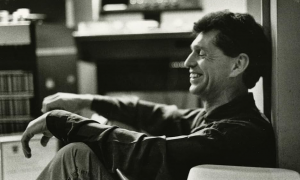
 Ned Sublette
 Cuba and its Music: From the First Drums to the Mambo
Chicago Review Press
672 pages
2004
ISBN 1556525168
It's worth pausing now and then to appreciate the fact that our understanding of music and culture is a direct product of our exposure to that music and culture. But with the heavy impact of politics and the market on our outlook, we're bound to lose touch with vital parts of the human experience. Nowhere is this more true than with the music of Cuba, which has since the (most recent) revolution been cut off from the United States and much of the world, after spending hundreds of years in intimate cultural proximity. The history of music in Cuba is inextricably intertwined with events in this country, but we're thousands of miles away from understanding those relationships in contemporary culture.
The other aspect of Cuban music that makes it seem mysterious to outsiders is that it's heavily imbued with folkloric elements, much of it having been passed from generation to generation through word of mouth (and instrument). The central role of secretive Afro-Cuban religions like santeria, palo, Abakuá, and vodú in the rituals and customs of drumming makes it virtually impossible for the curious to get a first-hand glimpse of the music in its native form.
With Cuba and its Music , New York musician, producer, and musicologist Ned Sublette takes on the mammoth task of piecing together a story for outsiders (and especially Americans). He's well aware of the enormity of his mission:
Afro-Cuban culture didn't happen in history, exactly, because for a long time nobody was writing it down. It happened parallel to history, or perhaps, in another kind of history: the oral tradition that still lives today in Cuba and reveals itself in religion, story, song, dance, family knowledge, and pieces of language, all the way back to the slave ships, and before.
Amazingly enough, the almost 700 (big hardcover) pages of Cuba and its Music don't even stretch past 1952. But that's a wise choice on Sublette's behalf, because the African and European roots of Cuban culture go back for centuries. There's already plenty to talk about.
In putting together this study, Sublette touches on religion, language, politics, economics, and a number of other related topics that tangle together to yield the twisty threads of Cuban music. You have to remember that Cuban music as we know it is a product of people whose ancestors were not originally from Cuba, and so their European and African (mostly) roots play a dominant role in anchoring its development.
For a long time Havana was the gateway to the New World, and the influx of European colonists and African slave labor alike proceeded in waves across the sea. That has important implications for music. For example, the ships that passed through the port of Havana were held together by hard wooden pegs called clavijas, from which were derived/invented the musical instrument known as the claves.
Sublette argues that the slaves of North America were fundamentally different from those of Cuba in that they were bred, rather than imported. The sugar trade formed the backbone of the Cuban economy, and the harsh working conditions meant that new slaves had to be imported all the way through 1873, when the last slave ship arrived in Havana, over fifty years after other New World areas stopped the trade.
African groups in Cuba, which Sublette traces to four distinct regions on the dark continent, kept a lot of their culture and traditions intact through the formation of cabildos, something like "town councils," for blacks of related ethnic groups. Despite prohibitions on the use of African drums (which lasted well into the 20th century), underground music flourished, along with plenty of inventive deviants, who would play boxes and furniture instead in order to comply with the rules. The first public (nonceremonial) performance on batá drums took place in 1936.
Spanish colonists brought their own musical traditions to the New World, including guitars, European dance forms, and styles of lyrical performance. It's no accident that the Cuban beans and rice dish is known as moros y cristianos ("Moors and Christians"), because the Iberian peninsula was under Moorish occupation for quite some time before it became Spain as we know it today. (And thousands of manuscripts were summarily burnt as the Arabic language was banned in 1525.)
North African music, which emphasizes single melody lines, metric rhythm, melismatic delivery, and erudite lyrics, can be differentiated from the music of sub-Saharan West Africa, which is polyphonic, polyrhythmic, syllabic, and relatively simple in its use of words. Both made independent contributions to the Afro-Cuban musical identity.
The word for musician in Wolof (a language spoken in Senegal) is "cat," and the word "hepi" translates as "one who knows," so it's not a big leap to "hep-cat" and "hip," words that are still used today. The Kikongo word "lu-fuki" apparently translates to "strong body odor," which is not far from the slang word "funky." The word "mambo" translates variously to "matter, affair, story," (and especially) "song"; the musical style by that name became popular in the middle of the 20th century. The Spanish word "rumba" was bastardized upon being Anglicized to "rhumba," which came to refer to just about any dance music of Afro-Cuban origin; according to Sublette, 60% of Arthur Murray's dance instruction business during one year of the Great Depression came from the rhumba.
Sublette spends quite a bit of time emphasizing the role of prostitution in the development of (musical) culture, and it's fair to say that Havana's role as a shipping hub meant a lot of sailors would need to stop regularly for some action. "The city continued, as always, dancing, gambling, and screwing; by 1885 there were two hundred registered brothels in Havana." The arrival of putas francesas (French whores) in the 20th century brought innovations to the business, including oral and anal sex, according to the author, but at all times "live music was essential to the gaiety of the fleshpot," or so we're led to believe.
Down the road, Mexico's "cine de prostitutas" became popular around the time the mambo blew up out of Mexico City. But the American experience was something different: "In New York, the mambo king was Machito, not Pérez Prado; but even so, it was the success of Pérez Prado's records that sparked the mambo boom. He was unable to play in New York because of union regulations..." Mexico had its own thriving version of Afro-Cuban music, typified by "La Bamba," a Veracruz son jarocho derivative that served as a campaign song for President Miguel Alemán.
The intersection of Afro-Cuban music with jazz was a fertile place for expansion. Dizzy Gillespie was the most prominent jazz musician to Latinize his music; but the influence was already being felt by the birth of the ragtime era. (Compare "The Entertainer" to the danzón and you'll see they're not so different. And look closely at the first published blues, W.C. Handy's "Memphis Blues," and you'll see it has a tango rhythm.) Jelly Roll Morton insisted that "if you can't manage to put tinges of Spanish in your tunes, you will never be able to get the right seasoning, I call it, for jazz."
A large part of the reason for the overlap between American and Cuban popular music (remember that jazz was once a form of popular music) was economic. It may come as a surprise, but there was no dedicated recording studio in Cuba until Panart released its first 78 in 1944; that meant that New York was as often as not the site for Cuban recording artists to make it on wax. Havana was also for a very long time an important Caribbean playground for Americans, especially during Prohibition and during the rise of organized crime and gambling. Some of the most important groups in the island's history were affiliated with casinos; the Las Vegas revue was modeled after Havana shows.
In both countries, bands of mixed race were not frequent until mid-century, so the Afro-Cuban drumming tradition (which had been covertly maintained in the New World) would have to wait for integration to manifest itself properly in a mixed race context. But by October of 1939, when Benny Goodman added Fletcher Henderson and Charlie Christian to his big band, Downbeat reacted with a cover story asking "Should Negro Musicians Play in White Bands?" (The answer, of course, quickly became moot as the demographics of the industry changed.)
Sublette spends a great deal of time with blind Cuban tres player Arsenio Rodriguez and his innovations. By the time he was first heard on record in the late '30s, the danzón orchestra had given way to smaller units of six and seven playing a form of music called son. Rodriguez made his own customized changes to the composition and style of son music, notably the addition of a second trumpet, piano, and congas. The latter addition, which would come to define Afro-Cuban ensembles as a distinct identity, was as much practical as musical; because he was blind, Rodriguez needed his brother Kike to help him get around, and "since the only thing Kike knew was the conga, he put him on the payroll of the band, playing conga."
The conga reached new ears through the efforts of Chano Pozo, who was responsible for the first "authentic barrio-style rumbas" on record, which were laid down during recording sessions in New York in winter of 1947, where Chano and the other three drummers in the all-rhythm group were paid in booze. Chano Pozo also first played with Dizzy Gillespie in 1947 at Carnegie Hall. During the performance of "Cubana Be, Cubana Bop," he played a conga solo with an Abakuá chant, making a massive formal imprint in the name of Afro-Cuban music. Chano Pozo "created the role of the conga soloist," which admittedly didn't open the floodgates wide, but his efforts to mesh African-American and Afro-Cuban styles did not go unnoticed, and the conga player would find a role in (Latin) jazz for decades to come. When Chano was blown away in a bar at the age of 33, he received a front-page obituary in Downbeat.
The advent of radio and eventually television spelled changes for both performers and audiences of Afro-Cuban music, as did advances in recording technology. Sublette spends some time talking about the different Cuban radio and television stations (the first Havana TV station went on air in 1950), and they provided a stable platform for musicians to reach new ears. But he reaches comedic heights when discussing a more political scenario: the last broadcast by presidential candidate Eduardo Chibás. Chibás, who didn't know he was running overtime, shouted, "People of Cuba, wake up! This is my last knock on the door!" and proceeded to shoot himself in the belly. Unfortunately the broadcast had already cut to commercial and the dramatic gesture was lost to the listening public. His self-assassination stunned the country, nonetheless... but it wasn't the first time a politician had done something utterly stupid.
Cuba and its Music winds down with the American recognition of Batista's government on March 27, 1952; two pages later, the coda leads off with the words "to be continued..." Presumably once he catches his breath, Sublette will be assembling a second volume devoted to Cuban music since the '50s. He devotes a few pages in the book to Fidel Castro's political education, and it's obvious that there's much more to be said on that subject:
Though no subject inspires more polemic and more violent disagreement than Fidel Castro, everyone, pro and con, can agree on one point: he never had the least bit of feeling for, or understanding of, music.
Stay tuned, I guess.
Despite its encyclopedic range, Cuba and its Music stays on target all the way through. It's hard not to imagine that everyone who reads this book will come home with many pearls of wisdom, as I did. The richness and diversity of Cuban music and its New World relatives is striking. It would have been nice to have been able to consult a few handy maps (of Africa, Spain, and Cuba) to keep places straight; similarly, a glossary of terms would have made a difference in organizing the Spanish words that appear throughout. But those are small complaints easily treated by an atlas and a good dictionary, so there's no need to dwell on them.
Cuba and its Music is more or less required reading if you want to know the subject well. Take your time to absorb all this information; it's not a small matter. But Ned Sublette's global perspective is exactly what's needed to make sense of Afro-Cuban culture, not just from an American standpoint.
Other Chicago Review Press books reviewed at AAJ:
- The First Rasta: Leonard Howell and the Rise of Rastafarianism
- Music is the Weapon of the Future: Fifty Years of African Popular Music
Visit Chicago Review Press and IPG Books on the web.
About Ned Sublette
Tags
PREVIOUS / NEXT

Become a Sustaining Member

Since 1995, All About Jazz has championed jazz as an art form and supported the musicians who create it. Over three decades, it has grown into one of the world's leading jazz resources, serving hundreds of thousands of readers, musicians, presenters and industry professionals each month.
Help Build the Future of All About Jazz
Your support helps us continue building All About Jazz for the next generation—expanding our editorial coverage, preserving jazz history, developing new community features and creating better ways to discover the music and the people behind it.
Become a sustaining member for as little as $20 per year and you'll immediately enjoy an ad-free experience along with access to subscriber features and future articles for a full year.
Together, we're not simply sustaining All About Jazz—we're building its future. Thank you for being part of the journey.