Home » Jazz Articles » Album Review » The Plunge Trio: Plunge
The Plunge Trio: Plunge


The pieces seem to move effortlessly through rhythmic and melodic constructs; "Exhibit A" begins with a more insistent rhythmic figure, but nothing ever lasts for long with these pieces, as the players respond to each others' suggestions. "Can-Can" is looser, with Hjorth and Nilsson flitting around the time but never quite settling into it. "Credo" is another loose-time piece, with Andersson's melodic ideas flowing effortlessly over Hjorth's contrapuntal bass lines, while "Bommen" is a darker work, with dramatic cymbal swells and light drum rolls creating a textural backdrop for Andersson's more constructed soprano theme and Hjorth's ascending bass figure.
Something about the way Andersson, Hjorth and Nilsson interact brings to mind the freer pieces on Dave Holland's classic Conference of the Birds. As free as things get, there is always the sense that the trio, like Holland, Braxton, Rivers and Altschul before them, is moving towards something. Sadly, completely free improvisation all too often comes across as a group of players more interested in their own concerns than those of the collective, but Plunge understands that no one player's interests should dominate. Plunge is truly a collective concept, with each member keenly intent on responding to the musical ideas around them. Nowhere is this more clear than on the album's closing track, "Now What?," where Andersson sets the initial tone for Hjorth and Nilsson, who ultimately find their way into a clear harmonic and rhythmic figure that spurs Andersson to deliver his most tuneful work of the set.
Surprisingly accessible, even at their most extreme, the members of Plunge are clearly concerned with creating something out of nothing. And while many free players look for the sharp edges and the acute angles, Plunge instead looks for the rounded corners and the smoother sides. For those who think that free playing is too extreme, too "out there," Plunge argues otherwise, that it is possible to play totally unstructured music that still maintains a sense of order and development.
Track Listing
Exhibit A; Can-Can; Credo; Plums; Ebonology; Solace; Well Done, Dear; Bommen; Now What?
Personnel
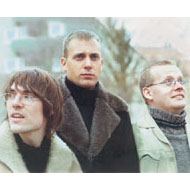
The Plunge Trio
band / ensemble / orchestraAndreas Andersson (baritone and soprano saxophones), Mattias Hjorth (double-bass), Peter Nilsson (drums)
Album information
Title: Plunge | Year Released: 2004 | Record Label: Kopasetic Productions
About The Plunge Trio
Tags
PREVIOUS / NEXT


Become a Sustaining Member

Since 1995, All About Jazz has championed jazz as an art form and supported the musicians who create it. Over three decades, it has grown into one of the world's leading jazz resources, serving hundreds of thousands of readers, musicians, presenters and industry professionals each month.
Help Build the Future of All About Jazz
Your support helps us continue building All About Jazz for the next generation—expanding our editorial coverage, preserving jazz history, developing new community features and creating better ways to discover the music and the people behind it.
Become a sustaining member for as little as $20 per year and you'll immediately enjoy an ad-free experience along with access to subscriber features and future articles for a full year.
Together, we're not simply sustaining All About Jazz—we're building its future. Thank you for being part of the journey.