Home » Jazz Articles » Live Review » Going the Distance: March-April 2004
Going the Distance: March-April 2004
 Miles Davis was a boxing fan because he could relate to it in two ways: boxing (like jazz) is a remarkably honest sport, and boxing (like jazz) is a remarkably rough business. The work of great boxers, like the work of great jazz musicians, speaks for itself. Boxers and jazz players share a mutual mandate: transcending human limitation. Fight fans live for such resilience. Jazz fans are the same.
Jazz and boxing share tales of redemption and destruction. The elements of brutality and grace dignify human performance, whether that happens in a ring or on a stage. Most of the greatest tales are borne in the margins of our understanding. Those who excel in boxing and in jazz learn to test and redefine the limits of that understanding.

 Sunday, February 16, 1986 : when 19-year-old Mike Tyson shattered Jesse Ferguson’s nose with a savage upper cut, Ferguson’s mission was redefined. Jesse lasted for over two more torrential minutes of Tyson’s violence. After the fifth round, Ferguson sat in his corner at a 45-degree angle and sucked wind while his training staff told him to get out alive. Although Ferguson was disqualified in the 6th round, Jesse remained true to his commitment. Jesse Ferguson hung in as long as he could. He did his best.
For a time, Mike Gerard Kirkpatrick Tyson was simply the greatest fighter in boxing. Upon being floored by Tyson’s power, the sports world buzzed with the historic mantra: “nobody will ever beat him!”
In this edition:
- Round 1: Matthew Shipp On Boxing
- Round 2: Knockout
- Round 3: Broken and Bloodied
- Round 4: Picture This
- Round 5: The Ear Sandwich
- Round 6: “Sure, Let’s Have A Go”
- Round 7: Training Camp
- Round 8: The Rope-A-Dope
- Round 9: Slugging
- Round 10: Going the Distance
- Oscar Peterson and Guy Lombardo (posthumously) were the first inductees to the Juno Awards Hall of Fame in 1978 .
- Oscar Peterson’s autobiography, A Jazz Odyssey: My Life In Jazz (Continuum Books), has been translated to German. Review .
- Jeri Brown – Firm Roots
- Ranee Lee – Maple Groove
- Denzal Sinclaire – Denzal Sinclaire
- Holly Cole – Shade
- Carol Welsman – The Language Of Love
- Metalwood – Chronic
- D.D. Jackson – Suite For New York
- Great Uncles Of The Revolution – Blow The House Down
- Francois Bourassa Quartet – Indefinite Time
- Michael Kaeshammer – Strut
- Guido Basso – Lost In The Stars
- Mike Murley/David Occhipinti – Duologue
- One Take – Volume One
- Sandro Dominelli Quintet – Cafe Varze Jazz
- John Stetch – Standards
- Production Notes
- Biographies: cast and filmmaker
- Theatrical Trailers
- Ian McDougall Sextet: Nights in Vancouver
- Brian Lynch Quartet: fuschia/red
- Lost and Found
- 'Til Times Get Better
Round One: Matthew Shipp On Boxing:
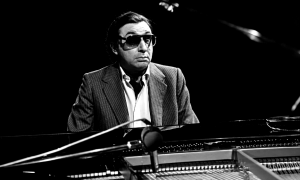
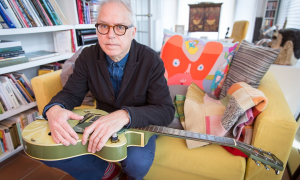
 Friday, October 3, 2003 : The Matthew Shipp Trio performed the world premiere of a free jazz improvisation that visually and aurally linked jazz to boxing. The trio featured Shipp on piano, William Parker on bass and Guillermo E. Brown on drums. The performance took place in conjunction with “The Squared Circle: Boxing in Contemporary Art” exhibition in Minneapolis, Minnesota.
Down to: Round Two: Knockout
Combinations , a film by Patrick A. Gaucher, is a knockout of poetry, motion and song. The 38-minute film contains numerous forms of videography and verbal recital: “...the combination of grace, intelligence and cunning that both disciplines require if one contends to succeed....” The film was commissioned to accompany the Matthew Shipp trio performance. If the live show was anything like the film, it was spellbinding.
Combinations needs to be seen and heard and that may be its greatest achievement. Matthew Shipp’s improvisations unite with purely visual sequences of boxing in a manner that defines why many call organized pugilism the sweet science. It has grace, dignity and danger, just like a jazz solo. Combinations will be shown at the Concertgebouw Brugge in Belgium this June and at The Flynn in Vermont (date to be determined). Other exhibitions are planned.
Contact Patrick Gaucher for information on the production and broadcast of Combinations.
Matthew Shipp’s poem on jazz and boxing.
Photo Credit:
Matthew Shipp by Cynthia Fetty
Round Two: Knockout: Monday, December 11, 1978 : George Chuvalo scored a second-round knockout of George Jerome to retain the Canadian heavyweight championship. Although his career did not propel him to world championship, Chuvalo produced a power puncher’s record. George fought for 23 years and documented 73 wins, 64 of them coming by way of knockout. George seldom, if ever, took a step back. George Chuvalo should be remembered for his ability to survive outside the ring. He and his first wife, Lynne Sheppard had five kids: Mitch, Steven, George Lee, Jesse and Vanessa. Three of Chuvalo’s sons – Jesse, Steven and George Lee – wound up shooting heroin in the basement of the family home. George, the father, seemed to be the last to know. The Chuvalo family's private battle defines tragedy. In 1985, Jesse Chuvalo died of a self-inflicted gunshot to the head. In 1993, George Lee Chuvalo was found dead in a flophouse with a needle sticking out of his arm. Chuvalo’s wife, Lynne, fatally crawled inside a bottle of pills in reaction. In 1996, Steven Chuvalo shot up so hard that he had no time to light a cigarette before the heroin stopped his heart. Surely, George Chuvalo could have succumbed as they did. Canadians cherish George Chuvalo for positively responding to devastating damage. Today, George campaigns for public awareness about the dangers of chemicals. His program, Fight Against Drugs , has been heralded across Canada. In 1998, George received Canada’s highest civic honour, the Order of Canada, for helping drug addicts to heal. Canada’s 2004 National Jazz Awards were held in Toronto on February 24. Winners: Part One: Album of the Year: Denzal Sinclaire: Denzal Sinclaire (Verve) Electric Group of the Year: Metalwood (Maximum Jazz/Universal) Trombonist of the Year: Rob McConnell Clarinetist of the Year: Phil Nimmons Smooth Jazz Artist of the Year: Warren Hill Saxophonist of the Year: Mike Murley Musician of the Year: Molly Johnson Composer of the Year: Molly Johnson Bassist of the Year: Dave Young International Musician of the Year: Diana Krall Label of Year: Justin Time Keyboardist of the Year: Dave Restivo Part Two : Canada’s National Jazz Award winners. Speaking of Knockouts...: The Vancouver benefit was the first such duet for Diana and Elvis since the two were secretly married at Elton John's British estate last December. Since 1998, Diana Krall has raised more than $500,000 for the leukemia and bone marrow transplant programs at Vancouver General Hospital. Patrons of the leukemia program had exclusive rights to the 600 tickets, which sold out in two days and netted up to $1,000 apiece. The gig took place at the Fairmont Hotel. This time, Thigpen comes ashore with a new release, Scantet #1 (Stunt Records). The album unites Thigpen with world-class players from Scandinavia: Jens Winther on trumpet, Thomas Franck on tenor sax, Kasper Villaume on piano and Jesper Bodilsen on bass. Ed composed five of the album’s ten songs. The native of Chicago is remembered for his long tenure in the Oscar Peterson Trio. Oscar once told Gene Lees: ”Ed Thigpen was a reflective yet complete percussionist. He wasn't really a drummer, he was a percussionist. He had that feeling all the time that it wasn't just drums that he was sitting at. He sees his drums as a complete, not instrument, but orchestra. Ed Thigpen has a touch on the drums that you seldom hear." Ed Thigpen now lives and works out of Copenhagen, Denmark. Photo Credit: Round Three: Broken and Bloodied: Sometimes, power is enough. The impact of this fight is best underscored by the damage suffered by both men. In 64 pro fights, Marvin Hagler had never been cut; Hearns bloodied him inside of two rounds. In the process, Thomas Hearns broke a bone in one of his hands and tried to fight on. It is only fitting that when one hurt the other, the knockout came faster than light. Nobody heard ABC’s Al Michaels call the blows. The bout was shown on “closed circuit” (remember that day and age?) at Vancouver’s Pacific Coliseum to a crowd of about 8,000 jubilant fans. Each blow brought collective groans that may well have been heard in Las Vegas. As the scrap intensified, we all screamed and punched the darkness with intent to injure. Seldom have Vancouverites punched the air with similar intensity all the way out to the parking lot 20 minutes after the fight’s conclusion. Michaels later stated: "At the end of the first round of that fight, I remember thinking, 'Could there ever have been a better round in the history of boxing?'" It was a great night: for us and for the sport. The 2004 Juno Awards take place in Edmonton (Alberta) on April 4. Here are the jazz nominees: Contemporary Jazz Album of the Year: Traditional Jazz Album of the Year: 23-year-old Laila Biali is a Vancouver jazz pianist and composer. She pursues her studies at Humber College. Laila has already performed in eight countries around the world. Kelowna’s Liam O'Neill plays drums. He is pursuing music studies at Montreal’s McGill University and he hopes to achieve a Master’s degree. Brandon Kams is only 16 and already he wants to attend the University of B.C. to perfect his alto sax playing. Kams was awarded the Galaxie Rising Star in the category of “Best Young Jazz Musician.” Life is slowly reforming at L’Espace Debreuil. Organizer Régis Painchaud has received a final report on the inspection of the premises and the City of Vancouver is proceeding to reinstate the facility for operation. Jazz will again reverberate the walls at 1435 Granville Street. This mess was a misunderstanding gone awry. After issuing an eviction notice for New Year’s Eve 2003, media and arts lovers united to oppose the move. The City responded swiftly then and has apparently continued to be responsive on this issue. In February, two architects and a building inspector detailed information that Painchaud claims they did not previously possess. Late last month, the City issued its written report. Now, the area will be rezoned and permitted so that arts events can continue at L’Espace Debreuil. Jazz events will recommence once zoning has been officially approved and the lease is signed. Background on this story (“A Question of Values”). The film’s most poignant point comes in the form of a metaphorical question: what’s left when the music is over? Similarities between the Bleek Gilliam Quintet and the legendary Spinal Tap (Mach II): DVD Extras: Round Five: The Ear Sandwich: ”Former heavyweight champion George Foreman said that boxing is like jazz in that only a miniscule portion of the audience knows what is going on. For every move in the ring, there is a countermove. Outside that circle, there are literally no rules at all.” — from Flesh and Blood: A Journey into the Heart of Boxing by Jim Christy Tyson should have listened. Colman is a throwback to performance values that are lost on some players of the newest jazz generation. Prior to the first set, Kenny arranged chairs and otherwise made sure to acknowledge our presence – a show of the ultimate respect for the audience that was paying the freight. Kenny motioned for patrons to take a specific seat upon entering the lounge, all the while versifying and improvising. Colman’s return marks the first time in five years that he has spent the winter on Canada’s West Coast. At this time of year, he usually sings in Cancun, Puerto Rico, Florida and Antigua. No matter where he sings, Kenny Colman clearly loves what he does. Compositions by Musicians comprises an optimistic ensemble sound of jazz tradition that survives over time. The album was recorded live at Blue Wave Studios and the club feel comes through in the performance. This record comes as close as possible to experiencing club jazz without the club. Foster, Black, Gannon and Worst cohere beautifully in arrangement of moments that act as the inspiring aural background to joy. Fans of swing and bop will like this record. Lorraine Foster has practiced her craft exclusively in Canada. She was born in Toronto (a.k.a. “The Big Smoke”), but Lorraine moved to Montreal to start a family. Like most smart Canadians, however, Foster moved to Vancouver. She began playing with the Dal Richards Orchestra in 1991. Eclipse seeks to redefine musical ideas in multiple contexts. The quintet beautifully enhances the sensitive vocalizations long associated with Hammett-Vaughan’s work. Kate wisely encourages the band to sizzle in morphology on “All or Nothing At All.” The remaining 70 minutes extends that framework and Kate Hammett-Vaughan must be commended for selflessly rejuvenating previously-written material. In the shadows produced by Eclipse , listeners will find musical truth. Highlights include two Joni Mitchell songs, “For the Roses” and “Cold Blue Steel and Sweet Fire.” The title track, “Eclipse” by Charles Mingus, possesses pastoral beauty in this form. “Tatamagouche Tango” features some lovely vocal and sax improvisation. Holistically, this record is a lovely aesthetic trip. Eclipse will be released in early April. Other recent releases on Maximum: Round Six: ”Sure, Let’s Have A Go”: Tommy Burns: Friday, February 23, 1906. Tommy Burns went 20 rounds with Marvin Hart to win the heavyweight championship of the world. Burns lost the title nine months later to “Philly” Jack O’Brien. Burns benefited, however, from the second chances that were often granted in that era. Tommy went 20 more rounds with O’Brien to win back the title in 1907. Tommy Burns defended his title 11 times in less than two years. Burns was a character. Tommy once travelled to the Yukon Territories to visit a mine that he had won in a poker bet. While he was there, Burns fought “Klondike” Mike Mahoney to a draw. Tommy’s flare for the spontaneous caused officials to shorten his rounds against Joe Grim to one minute because Burns fought naked (and won in three). Tommy took his belt around the world before returning to fight in Canada in 1911. Burns’ most famous opponent was the great Jack Johnson, who handed Tommy a 14-round loss on Christmas Day (1908) in Rushcutter’s Bay, Australia. From 1900 to 1920, Tommy Burns threw 528 rounds worth of fist. Tommy’s body now lays to rest in a cemetery in the Vancouver suburb of Burnaby. There is no headstone. Photo Credit: Tommy Burns courtesy National Archives of Canada Schizophrenia is a treatable biochemical brain disorder. The disease hits only one in 100 people but ten percent of those afflicted commit suicide. Schizophrenia usually emerges between the ages of 15 and 25 – an extremely difficult ailment to handle at that point in a young life. Auditory hallucinations can occur with schizophrenia; imagine what it must be like to hear more than you are playing. Research is helping. Doctors are experimenting with a process called repetitive transcranial magnetic stimulation (rTMS). Yale University researchers report that 52 per cent of patients who undergo rTMS, for nine days, report improved health for at least 15 weeks. Tom Harrell has released 18 records in the last 19 years. Last September, Original Jazz Classics re-released Sail Away. The album was recorded in 1989 with guest appearances by Cheryl Pyle, John Abercrombie, Joe Lovano and Dave Liebman. On this album, Crash features Smith on the B3 Hammond, Cory Weeds on alto saxophone, Jerry Cook on tenor saxophone, Dave Sikula on guitar, Mark Humeniuk on bass and Bernie Arai on drums. The Doctor Is In will be the ninth release by the locally-owned Cellar Live label. Sekoya has been featured on arts television shows recently. Channel M’s “Worldbeats” featured an interview with vocalist Amalia Townsend in early February. Townsend left her post in the Maximum Jazz promotion department late in 2003 to dedicate her time and energy exclusively to the band. Sekoya also features: Jack Duncan on percussion, Nino di Pisquale on drums, Chris Gestrin on keys and Kent Wallace on trumpet. Round Seven: Training Camp: — Cus D’Amato: trainer/manager, 1939-1985 Cus is remembered as the man who out-thought those whom he could not out-box. D’Amato guided the career of Joe Louis for 30 years before becoming a father figure to a young, tough kid named Mike Tyson. Cus D’Amato mentored young Mike and eventually adopted Tyson. Under D’Amato’s guidance, Mike Tyson annihilated every opponent he faced. Tragically, Cus died just before “Iron” Mike became the youngest man ever to win the heavyweight championship of the world. Most boxing observers believe D’Amato’s death sent Mike Tyson on the downward spiral that has since consumed him. Mike Tyson may be remembered as the man whose mind destroyed his career more than any opponent’s punch – something that D’Amato likely would have remedied had he lived long enough. Mentors: the lifeblood of boxing and jazz. May their legacies live on. I want to learn The Rope-A-Dope Spring Equinox: March 20: Elegy (For Bill Evans, 1929-1980): Music your hands are no longer here to make Now you know the source of sound, My life you found, and many other lives — Bill Zavatsky ”The man of virtue makes the difficulty to be overcome his first business, and success only a subsequent consideration.” —Confucius (551 BC - 479 BC) Warner's New Normal: Unconfirmed reports suggest that Warner Jazz may be on the chopping block. The rumour is part of a larger restructuring of the Warner Music Group. On March 1, Edgar Bronfman Jr. bought the company for $2.6 billion. One day later, Warner announced that it would lay off 20 percent (five thousand people) of its workforce within the month. Three top executives have been given leave of their duties: Sylvia Rhone, CEO of Elektra; Val Azzoli, CEO of the Atlantic Group, and Ron Shapiro, president of Atlantic Records. No details of Canadian job losses are available at this time. The Warner Music Group consists of numerous record labels: Atlantic, Elektra, Lava, Maverick, Nonesuch, Reprise, Rhino, Sire, Warner Bros. and Word. Alma-Universal Deal: Peter Cardinali, president of Alma Records, is celebrating expansion of the label he started in November 1992. This February 16, Cardinali shook hands to confirm that the Universal Music Group (UMG) will now distribute records by Alma artists. Although these occasions are replete with back-slapping, this is a good deal. It’s not the only one. This year, Sony Music is expanding to send Alma albums to Germany, Austria, Switzerland, Italy, France, Spain and Benelux. JVC Victor will distribute the label’s records in Japan, while Burnside Distribution will handle Alma in the United States. Alma Records is set to release the newest record from Michael Kaeshammer on March 16. Strut has already been nominated for Best Contemporary Jazz Album of the Year in Canada. Photo Credit: Music-Internet Connections: British Columbians have a special place in their hearts for Telus. When the Alberta company bought the old BC Telephone Company, Telus promised a marked improvement in all things related to phones. Unfortunately, cutbacks of monumental proportion plunged Telus into disrepute – not only with its customers, but with Canada’s federal regulator, the Canadian Radio-Television and Telecommunications Commission (CRTC). In response to a mass of complaints, the CRTC recently ordered Telus to clean up its act. On February 14, Telus reported a fourth quarter profit of $49.6 million, compared to a loss of $139.2 million for the same period a year ago. The company says its mobile phone subsidiary, Telus Mobility, was largely responsible for the capital turnaround. At this writing, Puretracks features over 175,000 songs. Music is transferred in a Windows Media format. The Telus-Puretracks partnership is the first of its kind in Canada. Round Eight: The Rope-A-Dope: ”It's a lack of faith that makes people afraid of meeting challenges, and I believe in myself.” — Muhammad Ali In the face of defeat, the great ones find victory. Success lies within. You have to be there and you have to go through it. Ask any fighter. Ask any survivor. Up and Coming: Lori Paul’s first record, Now Or Never (Passionfruit Records), is a nice collection of smooth jazz. Lori Paul’s voice casts its spell with the combination of muscle and aesthetic savvy. The commerce behind the sound of Now Or Never takes nothing away from the integrity of the music within. This record grooves in a mainstream that makes one nod happily. Lori Paul has played at the Vancouver International Jazz Festival since 1998 and her name has been placed on marquees beside headliners such as B.B. King, Tower of Power and the Powder Blues. Cory Weeds, owner of The Cellar has returned from a trip to New York City. No doubt, he has paved the way for more cats to come west this year. The Cellar has logged in with some anticipated events in the next couple of months. Benny Golson headlines the club April 23-25. Ed Thigpen comes to town on Saturday, March 27 with local players Oliver Gannon on guitar, Jodi Proznick on bass and Tilden Webb on piano. The big band from the University of British Columbia will cram the Cellar stage on Thursday March 11. The club is trying an open-vocal format for Monday evenings in March. Russell Malone and Benny Green brought their duo sets to the club on March 3 and 4. Jimmy Durante Smiles: Sweet Papa Lowdown releases its third record, One of Your Smiles , at O'Doul's on the March 13 weekend. The record features Jeff Shucard on guitar and vocals, Lloyd Arntzen on clarinet and Dan Smith on slide guitar and mandolin. The band continues to pay homage to Jimmy Durante's hard driving jazz piano of the 1920s. Sweet Papa Lowdown's previous releases: Round Nine: Slugging: — Jim Lampley: ringside blow-by-blow Saturday, May 18, 2002 : “Irish” Mickey Ward badly hurt Arturo “Thunder” Gatti with a vicious blow to the ribs, and Gatti had insufficient time to recover before the ninth round bell. Ward went to work on the body, hammering Gatti to a knee. The referee counted his fingers to Arturo and a knockout seemed imminent. :28 : “He’s not going to be able to recover.” :30 : Gatti gets to his feet. Both fighters dispense with strategy and try to be the first to fall the other. It is a race of brutal attrition determined by the fury of two wills in one ring. 1:00 : Mickey Ward retreats from throwing a hailstorm of punishment. Gatti hasn’t gone down. Mickey learns the hard way: Arturo Gatti becomes more dangerous when he’s hurt. 1:25 : Gatti battles back, landing thunderous punches to Mickey Ward’s body and head. For the first time in the round, Ward backs up. 2:00 : both men trade haymakers. Gatti can’t see out of his right eye. Ward bleeds profusely from the other. The two lean on each other to remain upright. 2:20 : “Irish” Mickey surges with another flurry – most of the blows landing on Gatti’s chin. Arturo throws all he can. Sweat sprays from the ring. 2:35 : Mickey Ward damages Arturo Gatti with blows that have been known to kill mere mortals. The magic moment happens: referee Frank Cappuccino (a boxing legend in his own right) determines that the greater purpose will crown the winner. Cappuccino will not end this brawl on a technicality. 2:58 : “GATTI’S GONNA SURVIVE THE ROUND!!!” In the ninth round, Arturo Gatti and Mickey Ward combined to land 110 punches. On average, one or the other landed a power shot every 1.6 seconds – for three minutes. In these minutes, the will of a determined few redeems the sport. Although Mickey and Arturo fought two more times, neither fight quite lived up to the stunning savagery of this night. Canada’s National Jazz Award Winners: Part Two: Vocalist of the Year: Heather Bambrick Jazz Journalist of the Year: Geoff Chapman Broadcaster of the Year: Ross Porter Festival of the Year: Festival du jazz Montreal Violinist of the Year: Hugh Marsh Arranger of the Year: Rob McConnell Big Band of the Year: Rob McConnell Tentet Acoustic Group of the Year: Kollage Instrumentalist of the Year: Don Thompson Guitarist of the Year: Jake Langley Drummer of the Year: Terry Clarke Round Ten: Going the Distance: What a professional career . Lennox Claudius Lewis won 93 percent of his fights and knocked out 73 percent of his opponents. Lewis lost only two of 18 title fights in his career. Lennox carves his name beside Gene Tunney and Rocky Marciano as only the third fighter in history to retire as a heavyweight champion. He leaves the sport with a professional record of 42 wins, two losses and one draw. Dedication: Frank’s warped sense of humour defined him on-air. Fong ended his hourly newscasts with stories of levity that have been crushed under the weight of modern journalistic negativity. Here is a gem that Frank delivered with straight intonation: “Are you sick and tired of continually having stuff break down? Well a Florida guy has solved that problem when it comes to self-pleasure. Steve Ritchie has unveiled his latest invention. It’s the world’s first dishwasher-safe sex toy. Now the device is made out of hand-blown Pyrex glass and comes in a variety of sizes that can cost you as much as $379 (USD). Sure it may sound pricey. But Ritchie claims the glass is so hard, it can be used as a hammer. “If spanking and such appeals to you, you may want to enjoy one of his earlier inventions. The whip light has all the pleasures of being spanked, but (with) no pain.” Thursday, May 4, 2000 : I wrote: “One day, many moons from now, Frank won’t have to extro such gems with a weather forecast.” 1,380 days later : Frank declined further anti-rejection treatment for his failing, transplanted heart. Thursday, February 19, 2004 : at 36 years of age, Frank succumbed to a more peaceful, less painful way. I am told he had no reservations about the decision; he died as he wished. Frank Fong: R.I.P.
Monday, September 15, 1958. It doesn’t get much better than a first-round KO. Toronto’s George Chuvalo knocked out James J. Parker to win the vacant Canadian heavyweight title.
 Sadly, George Chuvalo is also known for his losses. George’s first infamous loss came in 12 rounds to Floyd Patterson in February 1965. Chuvalo got a heavyweight title shot but lost to Muhammad Ali (pictured here) in 15 rounds. “The judges voted for Ali,” writes George, “but he had to be taken to the hospital afterwards while I went dancing with my wife.”
.jpg) “Everybody becomes an icon of their own insecurities,” says George’s surviving son. Mitch Chuvalo has theorized that his family suffered from unendurable pain and depression.
“Everybody becomes an icon of their own insecurities,” says George’s surviving son. Mitch Chuvalo has theorized that his family suffered from unendurable pain and depression.
 Diana Krall knows no bounds when it comes to cancer. On March 5, the BC-born vocalist teamed with husband Elvis Costello and Sir Elton John for an exclusive fundraising performance in support of the Vancouver General Hospital leukemia program. Krall's mother, Adella, was treated at VGH before dying of leukemia in May 2002.
 Legendary drummer Ed Thigpen brings history and wisdom to Vancouver for two performances: March 26 at Capilano College and March 27 at The Cellar. Ed, still brushing at age 74, last visited Vancouver 38 years ago to play the Hotel Vancouver with Ella Fitzgerald.
Ed Thigpen courtesy of Ed Thigpen Productions .
 The Coastal Jazz & Blues Society has announced that Oscar Peterson will open the 19th Vancouver International Jazz Festival on Friday, June 25 at the Orpheum Theatre. Peterson’s first West Coast concert in two decades will feature Niels Henning-Orsted Pedersen on bass, Ulf Wakenius on guitar and Jeff Hamilton on drums.
 Monday, April 15, 1985 : "Marvelous" Marvin Hagler and Thomas "The Hit Man" Hearns, both world-class boxers, staged a war that historians have simply called, "The Fight." Hagler knocked out Hearns in the third round.
Vocal Jazz Album of the Year:
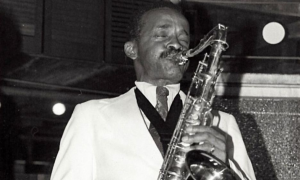
 Congratulations to the young jazz players who have won prizes from the 2003-2004 Fraser MacPherson Music Scholarship Fund. The competition commemorates the late saxophonist (pictured here) by awarding $2,000.00 annually to three of the brightest young jazz stars.
Round Four: Jazz Film Review: Mo’ Better Blues : Mo’ Better Blues is director Spike Lee’s attempt to bring jazz into a main stream of understanding. Although Canadians may not directly relate to issues of race and New York City culture, this film hilariously and effectively characterizes the elements that make musicians play, and keep playing.
1.) Members of both bands have punctuality problems.
2.) ”Significant others” are not allowed in the dressing room but somehow end up there anyway.
3.) Management challenges (a.k.a. the artists get screwed).
4.) Ambition is counterproductive.
5.) “I’m quitting the band.”
6.) “You’re fired.”
7.) Violence clarifies issues.
8.) Clarity leads to the band’s demise.
9.) The band’s demise leads to a reunion.
10.) In the end, family is the most important thing.
 Evander Holyfield first introduced Mike Tyson to the flaws in his own character. In the first of two famous fights, Holyfield held on while Tyson tried to knock him out. Other fighters had not survived that strategy. Evander did, and he made Tyson fight longer than he ever had before. In the 11th round, “Iron” Mike boiled over and began to foul Holyfield into disqualification. It didn’t work. Holyfield scored a technical knockout.
 Saturday, June 28, 1997 : The sequel permanently established Mike Tyson as a living example of how to lose. After throwing forearms and head butts through two rounds, “Iron” Mike could not contain his rage. Tyson bit Holyfield’s ears – not once, but twice. Referee Mills Lane disqualified Tyson in the third round. The Nevada State Athletic Commission stripped Mike Tyson's license to fight in Las Vegas. Years later, Judge Lane would disclose: “I told Mike, ‘Get out of the ring.’”
 Kenny Colman can still fill a dance floor with his reprisals of jazz standards. He did just that on Valentine’s Day at The Gallery Lounge on Burrard. This gig was a slice of tradition, supported and enjoyed by an audience befitting of jazz from the swing and big band eras.
 Lorraine Foster debuted her new release, Compositions by Musicians (Jazzlink 1239-1), on February 15. The record contains 12 compositions and a veteran cast of local players: Foster on vocals, Miles Black on piano, Rene Worst on bass and Oliver Gannon on guitar.
 Vancouver’s Kate Hammett-Vaughan is preparing her next quintet record, Eclipse , for release on the Maximum Jazz label. Kate sings to the sounds produced by Chris Gestrin on piano, Jim Pinchin on tenor saxophone, Andre Lachance on bass and Tom Foster on drums.

Born: Friday, June 17, 1881. Chelsey, Ontario.
Died: Tuesday, May 10, 1955. Vancouver, BC.
 Tom Harrell is an inspiring example of human endurance. Harrell brought his distinct trumpet work to The Cellar at the end of January. The 57-year-old hard bopper is respected for his great musical ability; he must be admired for so successfully managing mental illness.
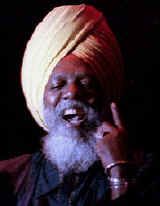 Dr. Lonnie Smith is teaming with Vancouver’s Crash for the release of a new record, The Doctor Is In , this May. The album was recorded at The Cellar when Dr. Smith appeared at the inaugural Central City Jazz and Blues Festival.
 Sekoya’s debut goes national later this year with the electro group’s first CD (released on Maximum/Universal) and a summer tour. The band has been making a positive impression for at least a year with appearances at local festivals.
  ”And the truth is, fear is an aspect to a fighter. It makes him move faster, be quicker and more alert. Heroes and cowards feel exactly the same fear. Heroes just react to it differently.”
 Warner Jazz has reissued a classic, Bill Evans: You Must Believe in Spring , with three bonus tracks. Evans delivers a beautifully sensitive trio performance with Eddie Gomez on bass and Eliot Zigmund on drums. The new issue includes “Without A Song,” “Freddie Freeloader” and “All of You.”
Still breaks against my ear, still shakes my heart.
Then I feel that I am still before you.
You bend above your shadow on the keys
That tremble at your touch or crystallize,
Water forced to concentrate. In meditation
You close your eyes to see yourself more clearly.
The element bone and muscle penetrate
Hoping to bring back beauty.
Hoping to catch what lies beyond our reach,
You hunted with your fingertips.
Which traveled through your hands upon their journey.
Note by note we followed in your tracks, like
Hearing the rain, eyes closed to feel more deeply.
We stood before the mountains of your touch.
The sunlight and the shade you carried us
We drank, tasting our bitter lives more sweetly
From the spring of song that never stops its kiss.

Barry Rodan Telus has announced a partnership with Puretracks to provide high-speed online music commerce. Songs can be purchased for as low as 99 cents per track. Complete albums can be bought for as low as $9.99 per record.
 Wednesday, October 30, 1974 : Muhammad Ali stood in his corner and looked across the ring at his worst nightmare, the unbeatable: George Foreman (pictured here). To everyone's shock, Ali insulted Foreman with a punch that has no business in such a moment (the right hand lead), and George laid a furious beating on Muhammad for the whole first round. To everyone's surprise, Ali survived. Renowned writers Norman Mailer and George Plimpton would later recount when Muhammad truly won the fight: in the last 20 seconds of the break between rounds one and two. Ali rested his hands on the ropes, and nodded – almost to himself. Muhammad identified a dangerous tactic; Ali recognized that he could douse Foreman’s stamina with rage. Muhammad determined that George would work himself into the position of prey.
 Muhammad Ali’s “rope-a-dope” devastated his opponent. Ali duped Foreman into falsely believing that he had hurt Muhammad enough to score a quick knockout. George pummelled Muhammad for three more rounds. When Foreman was exhausted, Ali struck. Muhammad Ali found a way that could not have been imagined (even by his trainers) until he stared at his own demise.
 Lori Paul’s next record, tentatively titled Vanity Press , is planned for release this summer. The record will include Paul’s version of The Guess Who’s “Undun,” complete with a new solo laid down by Canada’s Randy Bachman (formerly of Bachman-Turner Overdrive).
 “We told you it might be a candidate for fight of the year. We didn’t know it would be a candidate for fight of the century!”
— Larry Merchant, ringside
— Jim Lampley
 Generations of fighters have battled beyond their capabilities. The sport of boxing has ravaged many pugilists who simply could not, or would not, understand when to leave the ring and live on. It is one of the saddest elements of the sweet science. Multitudes of jazz players have suffered similarly. It seems to be endemic to the human condition.
 Lennox Lewis learned to box in Kitchener, Ontario. Under the guidance of coach Arnie Boehm, Lewis punched his way to an amateur record of 85 wins and 9 losses. Referees prematurely stopped the fight 59 times. Most Canadian fans remember how Lennox Lewis won gold for our country by knocking out American Riddick Bowe at the 1988 Olympics in Seoul, Korea. Lewis turned pro the following year. Lennox last fought on Canadian soil in 1990.
 Saturday, June 8, 2002 : Lennox Lewis surgically destroyed boxing’s modern bully. In the disgrace of a previous victory, Mike Tyson chided Lennox to fight by declaring: "I want to eat your children!" In accepting the challenge, Lewis replied: "Mike Tyson will eat my right hand." Lennox delivered. By the eighth round, “Iron” Mike lay on the canvas, eyes rolling back in his head. He did not rise to referee Eddie Cotton’s count. Lennox so embarrassed the toughest fighter of his generation that, in the post-fight interview, a humbled Tyson wiped blood out of his eyes and told Lewis, “you are the champion.”
Friday, February 6, 2004 : Lennox Lewis retired from professional boxing with five words: “Let the next era begin.” In effect, broadcaster Frank Fong did the same. I once met Frank in order to prepare a story about his work with Vancouver radio station CKNW (980 AM). News quickly took a back seat to health as Frank discussed the success of his first heart transplant. At the age of 32, he knew life was a limited time offer, and it seemed to awaken Frank to the smallness of things that seem so big to many of us.
Tags
PREVIOUS / NEXT


Become a Sustaining Member

Since 1995, All About Jazz has championed jazz as an art form and supported the musicians who create it. Over three decades, it has grown into one of the world's leading jazz resources, serving hundreds of thousands of readers, musicians, presenters and industry professionals each month.
Help Build the Future of All About Jazz
Your support helps us continue building All About Jazz for the next generation—expanding our editorial coverage, preserving jazz history, developing new community features and creating better ways to discover the music and the people behind it.
Become a sustaining member for as little as $20 per year and you'll immediately enjoy an ad-free experience along with access to subscriber features and future articles for a full year.
Together, we're not simply sustaining All About Jazz—we're building its future. Thank you for being part of the journey.