Home » Jazz Articles » Interview » Jim Ridl: Door Openings
Jim Ridl: Door Openings


In true jazz tradition, Jim's music tells a story and expresses a myriad of nuanced emotions. At the same time, Jim thrives on spontaneous musical expression and experimentation whose only purpose is to stretch the limits of what's possible. His CDs, such as Blues Liberations, Five Minutes to Madness and Joy, and his latest release, Door in a Field, are thoroughly listenable while simultaneously evoking musical puzzles, paradoxes, and complexities that leave the listener challenged and looking for sometimes non-existent parallels. On a personal level, Ridl remains, even after over twenty years on tour and establishing residence on the East coast, a homespun, "laid back," and gentle native of the North Dakota heartland, natural, candid, and trust-inspiring. As a musician he is forthright, energetic, and inventive while also something of a "funny riddle" (to paraphrase John Denver) who combines his own unique ideas and sounds with tradition-bound formats such as the blues, and even classical themes. When listening to Jim, I have come to expect the unexpected and am never let down. Gerry Mulligan, when asked for his analysis of singer/pianist Blossom Dearie's style, could only say, "Blossom is Blossom." Similarly, while he is very complex and imaginative, and his music stimulates deep thought and analysis, ultimately "Jim is Jim." His music is unique and always metamorphosizing, like footprints in the sand, which, as soon as they are covered over by the wind and waves, are replaced by a new set of footprints, new personae and ideas, as Jim's agile fingers form a new tracing over the keyboards.
Therefore, I was delighted, and admittedly challenged, when Jim accepted my invitation to interview him for All About Jazz. Since his music seems to me to reflect so much of Jim as a person, I elected to interview the "real" Jim in his own environment. So, on a clear, crisp day in the middle of winter, I drove to his home in the Princeton/Trenton area of New Jersey, easily accessible to Philadelphia and New York, cities where he frequently performs and records, yet in a pleasantly remote "1950's" suburban area with echoes of a simpler way of life. Coming into his very comfortable living room, with its upright piano, and interesting furnishings and wall hangings that reflect the artistic sensitivity of his wife, Kathy, I am greeted by Pekoe, an orange striped feline, who checks me out and then continues to leap onto various objects, which became a counterpoint to our entire interview, which we conducted in Jim and Kathy's bright and cheery kitchen over several refills of coffee.
All About Jazz: Let's start with the notorious desert island question. If you were going to be on a desert island, which recordings would you take with you?
Jim Ridl: Miles Davis' Kind of Blue would be one. Classically, I'd take some Bach, either piano or choral works. I'd have to have some vocal things. I think I'd want to take some recordings of my wife singing and playing, some we've done together and some she's done by herself.
AAJ: I know that your wife, Kathy, plays the viola...
JR: She plays viola and bass, and she sings, too. We met in music school back in Denver. So I'd probably bring a recording of hers. Maybe some Oscar Peterson. It's almost as if it's the earlier stuff that I identify with. Then, also, some rock, some roots, something from the seventies that I grew up with in high school-some Jimmy Hendriks.
ORIGINS AND EARLY MUSICAL EXPOSURE
AAJ: You're into rock?
JR: Oh, yeah. I grew up with it. I love the music. I didn't play rock much, but I'm the youngest of five siblings and grew up with their listening to it too.
AAJ: Did you start out with classical piano training?
JR: I took basic piano lessons at my Catholic school for about three years, and then I quit. My father didn't like that. Then I continued playing by ear, and I composed a bit. In high school, I took about two years of classical piano. At 15, I got a jazz piano teacher. So I come to the classical piano secondly, not primarily.
AAJ: Would you describe yourself as self-taught?
JR: Oh, yeah. What I heard on the radio. What my older brothers taught me.
AAJ: How did you become interested in jazz?
JR: My father had a few recordings, like Duke Ellington, and some of Andre Previn's jazz oriented stuff. Whatever we heard-like the big band sounds-I liked. I liked all kinds of piano, country, jazz. My piano instructor had himself studied at a teacher's college in my home town. He also had a duet going with a guitarist. My little town of Dickinson, North Dakota had a fine teacher's college, and my teacher was from Canada.
AAJ: Who was that teacher?
JR: Keith Traquair. He performed at the only little club in town. My father liked his playing and asked him if he would teach me.
AAJ: Where is Dickinson?
JR: It's in the southwestern part of the state, west of Bismarck.
AAJ: So Keith Traquair was your first jazz teacher. Now, in the liner notes for your album, "Five Minutes of Madness and Joy," you list your seminal piano teachers. You've already mentioned Keith. I'll now list the others, and I'd like you tell me briefly a bit about each. First, Sister Rebecca.
JR: She was my very first teacher. She taught music at the Catholic elementary school. Well, I learned some tunes, but she pretty much scared me! She was cool, but-well she didn't hit me with the proverbial ruler, but she was very strict. Yet I did learn a few things. I don't think, though, that intimidation is the best way to teach.
AAJ: Would you send her one of your CDs to show how far you've come?
JR: I would if I could locate her. I haven't seen her in many years, of course.
AAJ: Another teacher was Phyllis Harris.
JR: She was my classical teacher in high school. A wonderful lady. Terrific, kind, and friends with Keith Traquair. She was very helpful. I didn't learn all of the repertoire because I didn't read music very well at all! Consequently, I couldn't absorb a lot of the classical literature. But she was great! Unfortunately, I lost track of her after I finished high school.
AAJ: What about Rob Mullins?
JR: I've just been in contact with him, actually. After Keith, at age 17, I met Rob at a jazz camp. He just really opened up my world. He was primarily a jazz player. He showed me all kinds of things with free improvisation, pianistic things, etc. He's out in Los Angeles, now. At that time, he resided in Denver, and I eventually moved there and took some lessons with him. Nowadays, he's doing well as a composer.
AAJ: So Rob was your first mentor in jazz?
JR: No, Keith was the first. Hearing Keith play is what made me want to be a jazz musician. Later, when I met Rob, it was just on another level with jazz, and it propelled me even further.
AAJ: Is Keith available on recordings? Or was he primarily a local performer?
JR: He eventually moved to Dallas and worked in the country music scene. I think he did a few recordings. I've asked him for some, but he's been a bit shy about sending me anything.
AAJ: Zoe Erisman?
JR: She was my classical teacher in college and very important as well. She developed my classical technique. I studied with her for two years. She was terrific-she really kicked my butt! When I first auditioned for her, she didn't accept me as a student because I was slow at reading the music. I could improvise well, and read chord changes, but for a semester I had to work on the piano literature, and then she accepted me. She was very cool. That was at the University of Colorado at Denver. In fact, after many years, I'm going there in April to perform at an alumni concert. ( more information )
AAJ: Then, finally, Bud Poindexter.
JR: Yeah, Bud resides in Denver, but I've not seen him since the late eighties. He was an adjunct teacher at the University. I studied with him for a year. He was a real jazz personality. He always had his briefcase with him, and at lessons he'd pop it open, and he'd have an ash tray and his smokes. I was playing well by then already, but he just worked with me and taught me many tunes, and he told me, "Jim, it's a two-five-one world, man!!!" [refering to the most common chord progression-Eds.] He was a very nice guy and very helpful.
AAJ: How did it come about that you left Denver and the west to go into the wider world?
JR: From Denver, I hooked up with a group called Rare Silk. This was in the early eighties. I played with them for two years, and we got signed to Polydor. It was the first touring for me. We played in New York, in the Village, also at Carnegie Hall, the Kool Jazz Festival. We played at clubs all over the country, and went overseas once. While traveling, Kathy and I found that we loved New York and wanted to be closer to it.
AAJ: Kathy was from the West?
JR: She was born in Oklahoma, and then her parents taught at Westminster Choir College for many years. She comes from a musical family. She went to high school in Skillman, New Jersey.
AAJ: So that's how, eventually, you came to live here in Central New Jersey.
JR: It was five after Rare Silk, maybe 1989-90. Prior to that, we lived in Germany for six months. Kathy's sister and brother-in-law were opera singers there, and we stayed with them. I developed some fine musical relationships in Germany. I went back there and played in the early nineties.
AAJ: Who were the musicians?
JR: Michael Kersting and Thomas Stabenow. Michael's a great drummer and Thomas is a wonderful bassist in Munich. And then there is a terrific guitarist in Stuttgart, Lothar Schmidtz.
AAJ: And the two opera singer relatives of Kathy?
JR: Julia Kemp, her sister, and Julia's husband, Guy Rothfuss. They moved back to the U.S. a few years ago, live in Abington, PA, and teach at Westminster Choir College.
AAJ: Aside from your early teachers, which jazz musicians have had the greatest influence on you?
JR: Above all, Oscar Peterson. I love his album, We Get Requests. I wore it out on vinyl, and eventually got the CD. He was a real inspiration. Following that, Chick Corea, Keith Jarrett, Herbie Hancock, McCoy Tyner, some Thelonious Monk, Red Garland. Another early influence along with Oscar was Erroll Garner. Awesome playing. Beyond that, in the wider world of jazz, John Coltrane, Miles Davis. Then the avant-garde, jazz rock, etc.
AAJ: I'm surprised you haven't mentioned pianist Bill Evans. On your CD, A Door in a Field, his influence seems strong.
JR: Oh, yeah. He's been a very big influence of mine. Absolutely. But I didn't get hip to Bill Evans until college, and I still have only a few of his recordings.
AAJ: What about the first cut on A Door in a Field? "Sun on My Hands." It reminded me stylistically of Bill Evans.
JR: There's that minor mode, that delicate touch....
AAJ: His playing was what I'd call "parsimonious:" just what is necessary, always a meaning in every turn of phrase, nothing wasted.
JR: That kind of feeling was more or less intentional on my part. But I also like to play aggressively and "go nuts!" But lately, I've wanted to use fewer notes and say what I want to say without overblowing. So that's in "Door in a Field."
THE PHILADELPHIA SCENE AND ONWARDS
AAJ: Tom Lawton, a fellow pianist of yours, first turned me on to your music and told me you played in Philly often. Forgive me for not realizing that until very recently. Of course, All About Jazz originates primarily from the Philadelphia area, though it's an international website in every respect. But what can you tell us about your "Philly Jazz" experience?
JR: I have to say, between New York and Philly, I'm certainly more associated with Philadelphia, and I've played with a lot of Philly musicians, but I'm not a tried and true "inside of the scene Philadelphia musician." For example, I love Ortlieb's Jazzhaus , but I never really got on that scene a whole lot. It's straight ahead jazz. I played for many years with Denis DeBlasio, and we have an ongoing connection. George Rabbai, Darryl Hall, although he's in New York now. Glenn Ferracone. I do some playing at Vincent's at their Thursday night event. [10 E. Gay St; West Chester, PA 19380; 610-696-4262-for those who want to check it out. (EDS).] Paul Kleinfelter, the bassist. J. D. Walters is in the Philly area. These are some guys I've worked with.
AAJ: But you don't consider yourself part of the Philly scene as such?
JR: I am and am not.
AAJ: I see you're lined up to play with John Swana at Chris' Jazz Café.
JR: He's one of the first people I met in Philly. It's so nice to play with him. Steve Bescrone is one of the first people I met out here too. And Mike Boone. Byron Landham.
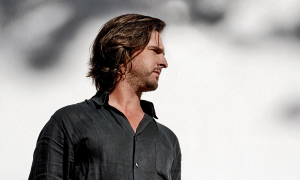
AAJ: To change the subject, I just want to check out something. On your website Jim Ridl Homepage , I see that you call your publishing company "Little Ridl Music" and you have a photo where you look just a trifle like the great pianist Michel Petrucciani, who was diminutive in physical stature, though a musical giant. Is that connection intended?
JR: Interesting! No, I never thought of that. But, come to think of it, I did get to meet Michel, when I was on tour with Rare Silk, and he was a really nice guy. He even bummed a cigarette from me! It's a nice memory actually. That was in Washington, DC at a festival that included Art Blakey, Freddie Hubbard, and Buster Williams, where Michel was playing piano. This is a cool aside-that they were playing Monk's "Epistrophy" and Michel was the only one reading the music for that. When Freddie finished his solo, he casually walked around to Michel and took the music away! As if to say, "It's OK-you're one of us now-don't be so insecure!" I thought it was a wonderful lesson. It was very spontaneous.
AAJ: So there's that brief connection between you and Petrucciani, like two strangers passing in the night.
JR: Do you need any more coffee?
AAJ: Yeah, thanks. [At this point, Jim and Kathy's tiger-striped orange cat, Pekoe, leaps on the kitchen table and directly in front of me. His presence was felt throughout the remainder of the interview ? Jim refills my cup, and then we continue.]
THE MARTINO "DUETS" CONNECTION
AAJ: Let's explore your collaboration with guitarist Pat Martino . I reviewed your Duet performance at the Tin Angel, and loved it. The audience was electrified. I hope the two of you will seriously consider doing a recording. You've done duet work with Pat, and also Denis DiBlasio.
JR: Denis and I made a recording around 1995. But not so many duet gigs. Denis does have another duet recording in mind for us, however.
AAJ: The duet venue is not often done. It's very difficult to work without a rhythm section. The exposure and demands to generate a flow of ideas can be great. Some of the duet work by other musicians that I've listened to frankly haven't impressed me. But I thought you and Pat are phenomenal together. I wonder what made the two of you come to work with each other, and why you chose to do duets rather than incorporate a rhythm section?
JR: Those things have a specific answer because it is unique, two people playing. If it's chordal instruments like guitar and piano, it's going to be different from two linear instruments, two horns. I met Pat some years ago at Café Borgia in Philadelphia while playing a gig. He happened to come in with a friend. I'd heard about Pat in college, and I knew a bit about his brain aneurysm. So when he came in, I went "Oh that's cool, Pat Martino." Kevin McConnell, the bassist on the gig introduced me to Pat. He really liked my playing, and we exchanged numbers. In the fall of 1992, I went to his home in Philly, and we played duets on his original music. I was blown away by his playing. Before that, I was more into Pat Metheny and George Benson, but when I heard Pat, it was like Wow! That sound, that attack, that feel was heavy duty! It was great, and we had a good chemistry. He's one of the greatest musicians I've played with, but at the same time, he's not gonna tell you what to play. He's very "talky" about music, but he's more like "old school": If you've got something to say, say it! If you got something to play, play! But if you're gonna be half way about it, I won't like it, and you'll know I won't like it!" He won't say that, but you'll feel it! Pat's got a big aura and a big vibe, so you'll feel it in a variety of ways!
We established a nice connection and continued to play at his house in 1993, but nothing really transpired. He wasn't playing publicly at that time. I stayed in touch. As he got things together again after his crisis, I just thought I'd let him do his thing, and not force myself on him. The next thing I know, in January of 1994, he calls me and says, "Well, I'm gonna do a recording, and I want you on it." With Marc Johnson, bass, and Sherman Ferguson, who played with Pat for many years, on drums. The album was "Interchange." I was thrilled. My first real jazz recording. I worked with Pat on the music, helping him polish up his own stuff. We just went in and did the session, and went home! It was a classic jazz recording: no rehearsal, mostly first takes. It was at Systems Two in New York City. It was cathartic. I remember driving home and crying with joy, it felt so great.
AAJ: That was a milestone, a thrilling experience.
JR: Absolutely. To record with Pat, and also Mark Johnson, who had played with Bill Evans, and Sherman. I learned a lot from that experience.
AAJ: And after that recording, how did the duet performances come about?
JR: I think we did our first duets on gigs with the quartet. We'd do that tune, "Before You Ask," as a duet. Eventually, it led to us deciding to do some duet performances.
AAJ: What is the difference musically and personally in doing duets versus working with a rhythm section?
JR: Well, with a duet, each player has to create the rhythm to propel it, which is usually done by the rhythm section. Specifically with Pat, the function falls on me to continue the motion when he's soloing and when he's playing the melody. If I don't do that, it doesn't work as well. Other players prefer it more open and freer. Pat has these burning, propelling lines, and if that's not backed up, it's weird, and it weirds him out, and he doesn't like it.
At the same time, our duet performances have evolved to where he's also become more active behind me in my soloing. I really appreciate that, because I'm not a left hand bass line player. The big thing in duets is the rhythmic factor. The exception might be ballads, where you can kind of swim, but not in anything that's "up tempo."
IMAGES, FEELINGS, ATTITUDES
AAJ: To become a bit more philosophical and psychological, I've talked with Pat a good deal recently, and a keynote of his philosophy of life, which is so consistent with his music, is his emphasis on the "now," on living in the present moment. His memory loss and his spiritual seeking seem to have fostered that "here and now" approach to living, although for Pat it may also be his natural way of being. His music is very "right now:" every moment, every beat, is of absolutely equal importance.
By contrast, my impression, from your music, your liner notes, your website, is that for you, memory is very important. You live and work in time recollected, time now, and time anticipated-past, present, future. For example in your latest CD, A Door in a Field, you have associations to the blues, growing up in North Dakota, suggestions of many influential musicians, liner notes and poetry about your father. Your music and liner notes also reflect loyalty to your origins and influences. Jazz is both about the here and now, and also about memory and what you value to bring into the future. I wonder if this rings true to you-the influence of the past recollected, for instance.
JR: Yes, and I would say especially with this recording, A Door in a Field, which ties directly to my roots in North Dakota. It's clearest for me when I compose. Compositionally, I'm very often thinking very programmatically, something visual, something in literature, a memory or reverence to something in my past. I start with the music, with the now, but I find that "Oh, this is developing in a certain way." And I go, "OK, now I get the connection" that, for example, this is about my roots, and I start tying that in.
AAJ: I was very struck by the image of "a door in a field." What does that mean to you?
JR: It's a porthole, a doorway into something open, that I can do anything I want with-I can go into this area, come back out.
AAJ: [spotting Pekoe jumping up on a window sill]: Like your cat! [Laughter ?]
JR: And in another way, too, I would relate it to my father and his passing. I could think, he went through that door, but he's still here in a way, because he was in that field on the farm. It's just a thought of mine-I don't know if it relates to the music itself. The "door in a field" image says that I can do anything I want musically. In the next recording, the music can be different.
[Pekoe gets a bit hyperactive and disrupts the interview for a minute.]
AAJ: What's the significance of your cat's name?
JR: It's Pekoe, like the tea, because of her orange color.
AAJ: So Pekoe likes to be free. And you're giving yourself permission to be free as a musician.
JR: With this recording, I wanted it to be more about the music, less about the piano. That's very intentional. Interestingly enough, many of the positive comments I've been getting have been about the music, not so much the piano playing. I don't need to be in this as much. It's not about me with keys.
AAJ: Five Minutes to Madness and Joy, by contrast, is very intensely about the piano.
JR: Exactly.
AAJ: Door in a Field is haunting, evocative, imagistic.
JR: That's cool to hear. Pianistically, it's difficult technique-wise to be able to suggest a lot with very little playing. Bill Evans had tons of technique, but not flashy. The beauty you would hear when he'd play a seven note chord, and you could hear every tone in that chord, and it represents a color quality-that requires a wonderful technique.
AAJ: And soul.
JR: So soulful. I love people who play like that. Chet Atkins wasn't flashy, but what a great musician.
AAJ: Music becomes art and poetry. That's what I feel about A Door in a Field -it has a quality of painting pictures, impressionistic. Furthermore, your composition on the other CD, Five Minutes to Madness and Joy, is based on Walt Whitman's poem "One Hour to Madness and Joy." I have the poem here. It's a beautiful poem.
JR: [Turning to Pekoe]: What are you doin' up there?! Come on, get up! Git! Git! [Pekoe refuses to obey.] Oh well, we won't worry about it. [Laughter ?]
COMPOSITIONS
To put "Five Minutes to Madness and Joy" in context, initially, it was part of a set of five pieces commissioned by a church in Trenton: "Five Pieces for Discerning the Soul of Trenton." The church was doing research about what was going on spiritually in Trenton, and, after I did a jazz service, the pastor asked me to compose something. So, "Five Minutes" was one of those pieces. I read poetry to get something to draw from. I read some Maya Angelou, Walt Whitman "Leaves of Grass." I was looking for the pulse of those poets-their being very spiritual, "inside the people" kind of writers. When I read "One Hour to Madness and Joy," it fit so well with a piece I was already working on.
AAJ: Could you cite a few lines from the poem that fit into the composition.
JR: Sure...
"One hour to madness and joy! O furious! O confine me not! (What is it this that frees me so in storms? What do my shouts amid lightnings and raging winds mean?) O to drink the mystic deliria deeper than any other man! O savage and tender achings! (I bequeath them to you my children, I tell them to you, for reasons, O bridegroom and bride.)"
It goes on to a different context. But it told me about having two disparate emotions at the same time, where you're nuts with joy and you're just crazy about what you're doing! I felt that what I was doing musically had a craziness about it, but it's no so dark, or so aggressive that you're only going to get madness out of it. Instead, it's cool, it has all this energy.
AAJ: It's intoxicating.
JR: Intoxicating is a good word for it.
AAJ: What are the other pieces of "Five Pieces for Discerning the Soul of Trenton"?
JR: There was the Shaker song called "The Gift": "Tis a gift to be simple...." That closes the composition. I also took a poem of my older brother, who is a wonderful poet, and set that to music. It was a classical art song in the context of DiBlasio's quartet of sax, piano, bass, and drums, with voice. It tied into certain spiritual and emotional aspects of the city of Trenton, with some words and a bit of description by me. The program notes made the connections to Whitman, etc.
AAJ: Is there a recording?
JR: I have a personal recording. Maybe I'll make you a copy.
AAJ: I understand that "Five Minutes to Piano and Joy" was actually performed by a big band.
JR: That was at the BMI Composer's Workshop in New York. It has a history. The reason it's called "Five Minutes" is because we weren't allowed to write a composition longer than five minutes!
AAJ: "Ocean Sojourn for Piano and Orchestra." Performed by the Denver Symphony.
JR: That was a dream since I was a kid. I wrote it when I was a senior in college. It was a tone poem dedicated to my Norwegian grandparents, homesteading in North Dakota. It's seventeen minute piece. No breaks, but three movements. I have a personal recording of it.
AAJ: "Bernstein on Broadway" and "Cole Porter/Stephen Foster Songs" sound a bit out of context for you.
JR: That last piece was commissioned by the opera singers Julia and Guy Rothfuss. They wanted something lighter to perform. "Bernstein on Broadway" emerged from a request from Bob Thick at the Off Broadstreet Theater in Hopewell, NJ. I arranged Bernstein's music sort of as jazz pieces, but used classical performers-five voices, piano, bass, and drums. Broadway-style voices and players. They did a great job, and it was great to get that deep into Bernstein's music.
AAJ: Do you ever think of doing an album of standards?
JR: Yeah. In fact, my wife Kathy has suggested that. But I have so much original music in my head that it's a difficult choice.
THE BLUES INFLUENCE
AAJ: Some critics have pointed out that you are heavily influenced by traditional blues music. Obviously in Blues Liberations. But also A Door in a Field appears to have a blues texture. Would you consider it accurate to say that your recent work reflects a blues emphasis, a blues structure?
JR: Ah, no actually! Except for "Blues Liberations." I'm certainly influenced by the blues, but I don't know beans about the history of the blues. In "Blues Liberations" I spent much time improvising with a blues inflection and feeling. On the whole, though, it's very non-traditional, except sometimes I play some I-IV-V progressions. But it's more about a feeling I could bring to it as a jazz player and not a blues artist.
AAJ: What I'm really suggesting is that blues themes and progressions are one venue that jazz musicians choose as part of their evolution. Others might, of course, include be-bop ("I Got Rhythm" progression), modal (Miles Davis), and, for some, like James Moody, going over into dissonance or even serial structures. I just want to get a sense of how you work structurally, how you feel your way into a composition or an improvisation.
JR: I certainly do that. But what I don't do is go to a lot of blues recordings if I want to play the blues. That's the last thing I want to do. If I have a piece that's classical, heavily baroque, I'll listen to a baroque composer, but I don't want to get so influenced that it's overdoing it. A little bit of listening and reading is helpful. For instance, with A Door in a Field, I wanted to create things that are simpler, with some blues influence and inflection. Not structures, but certain "bends." I listened back in my mind to some country music: Floyd Kramer, Charlie Rich, and I was just in that feeling for a while. But in Jim Ridl Trio Live, that's just about blowing, like a couple of standards, and we just really stretch. And that was on purpose.
COMMENTS FROM REVIEWERS AND CRITICS
AAJ: I'm trying to get a sense of how musicians operate internally, but it's difficult to achieve that, because much of it isn't expressible in words. OK, now let's turn to some items from critics you quoted in the liner notes for your albums:
"Although largely a melodic player, [Ridl] doesn't shy away from dissonance."
JR: Absolutely. I agree.
AAJ: "He's also a player who is not afraid to show that he has a sense of humor."
JR: Yeah. It would be nice if I showed it more often. But I do like humor in music.
AAJ: "Jim Ridl certainly comes up with original ways to build on ideas that can be traced to blues playing, albeit usually in a pretty abstract way... Ridl doesn't sound like anybody that comes to mind, which is a good sign, but it makes his playing hard to describe."
JR: Yeah, I remember that one. That's cool, because my goal is to keep honing my voice. But "hard to describe," I think that means what kind of category I can be put in. I suppose that's difficult in ways. But, I wouldn't say it's difficult to describe what they hear, but to put it in a box might be.
AAJ: Perhaps he's referring to Jim Ridl's unique way of playing. That's a compliment.
JR: Cool. That's nice to hear.
AAJ: "The harmonic sense is advanced and probably owes something to Europeans like Bartok." Is that accurate?
JR: To a certain degree, Bartok, and plenty of other influences as well. Some Stravinsky, some atonal music, Chopin, Beethoven, Bach, all kinds of things.
AAJ: The same critic from Jazz Times says "I am also reminded of Abdullah Ibrahim's more adventurous work."
JR: I know his playing. He's been on the scene since the late '50's. I really don't exactly know what kind of explorations he's done. I don't have many of his recordings.
AAJ: To quote another comment: "Pianist Jim Ridl demonstrates impressive technical skills, finding cool colors in his "madcap" dashes through the keys. A frequent Pat Martino sideman, he seems to bring up the enigmatic guitar master on the intricate opener "Blue Azzara," which refers to Martino's birth name." Do you agree with his assessment of Martino as "enigmatic"?
JR: Yeah. I think Pat in certain ways can be hard to pin down. In other ways, he's perfectly obvious. Like his music, he is complexity and simplicity intertwined. But in another way, his playing is always "Pat"-it's always his distinctive sound.
AAJ: Am I right, that when the two of you are performing together, you're not particularly puzzled by what he's doing?
JR: I agree. Pat always plays at an extremely high level and he'll always come up with something new at some point. But Pat's vocabulary is uniquely his own, and he keeps weaving what he knows so brilliantly.
AAJ: Another reviewer's comment, this one from the Philadelphia Inquirer: "Ridl has done it again... The interesting aspect of all of the pieces on 'Blues Liberations' is that they are based upon blues changes, either by implication or by a W.C. Handy type of moving left-hand stroll." Is that an accurate depiction?
JR: Yeah, that's a good point. Of course, there's a lot going on with my improvisations. But the truth of the matter is that I don't know Handy's playing especially well.
AAJ: From All About Jazz: "Taking something old, something new, something borrowed, and something blue, Jim Ridl accomplishes something uncommon on 'Blues Liberations' that seems painfully obvious. He investigates the multitudinous forms of the blues. Ridl's avenues of approach involve discrepant and sometimes contradictory routes as they converge at the ultimate source of the music." Mostly, the reviewer is very flattering, but what do you suppose he means by "painfully obvious"?
JR: Well, the "something old,..." etc. was taken from my own liner notes. The "painful" part, I don't know. Does he mean there's too much? There's nineteen pieces, seventy minutes of music. It goes a lot of different places. That was the intent. A certain freedom,"liberations."
THE IMPACT OF PERSONAL EXPERIENCE ON THE MUSIC
AAJ: Charlie Parker said, "If you haven't been through it, it won't come out of your horn."
JR: That's a great one.
AAJ: Are there particular experiences you've been through, that are reflected in your music, jazz being an expression of our humanity?
JR: Probably some very intense and difficult experiences have inspired me to write some music. Often, that happens. Like the loss of my dad. Although all the music in A Door in a Field was written before he died, and he heard it. But-I think, for example, the ballad "Sun on My Hands," I knew that my father was not feeling well. The piece isn't about his health, rather it is about the sun on his hands, the patina of it, wonderful things about him physically, and how he was out on the farm. That's what that's about, but there's a lot going on with him that's hard, that's difficult, and so that influenced how I play, how I write, and how I improvise. When I compose and improvise, like the tune "The Nearness of You," I can certainly think of my father or someone else who passed away. I definitely have a sense of reflection. There's always a bit of bittersweet and pathos in my music.
And joyful things too. Not that I write a lot of "up" music, but I do write things that just make you feel good, but not attached to any deep emotion or event.
AAJ: I suppose some things are taken too seriously. The poet T.S. Eliot tired of the deep interpretations the critics ascribed to his poems. Yet it is interesting to see how your feelings about your father come into your music.
JR: Especially in the last couple of years prior to his death. I had a number of wonderful dreams about him. The tune "Sweet Clover," it's this beautiful tall grass. And I had a dream I was out on the farm, on a bike, and I could feel this sweet clover on my hand. I could think of him there because he dug that tune. He'd snap his fingers to it!
AAJ: Your father was into music?
JR: He just loved it-he didn't play. Not terribly diverse in his tastes. He grew up in the big band era. He loved swingin' music like Oscar Peterson, Andre Previn, and even that tune by Donny Hathaway and Roberta Flack, "Where is the Love?" He had a really nice feeling for the music.
AAJ: I'm recalling the early musical exposure of guys like Uri Caine, whose parents played klezmer recordings, and John Swana, whose mother was a choral singer, and his father often played jazz records. The influences start very early in life.
< Previous
Spicy Paprikash
Next >
Skip Heller: Fakebook
Comments

Tags
For the Love of Jazz
 All About Jazz has been a pillar of jazz since 1995, championing it as an art form and, more importantly, supporting the musicians who create it. Our enduring commitment has made "AAJ" one of the most culturally important websites of its kind, read by hundreds of thousands of fans, musicians and industry figures every month.
You Can Help
To expand our coverage even further and develop new means to foster jazz discovery and connectivity we need your help. You can become a sustaining member for a modest $20 and in return, we'll immediately hide those pesky ads plus provide access to future articles for a full year. This winning combination will vastly improve your AAJ experience and allow us to vigorously build on the pioneering work we first started in 1995. So enjoy an ad-free AAJ experience and help us remain a positive beacon for jazz by making a donation today.

Giveaway

Eligible winners: 15
Days remaining: 13
Days remaining: 13