Home » Jazz Articles » Album Review » J.D. Allen: Pharoah's Children
J.D. Allen: Pharoah's Children

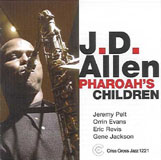
As a saxophonist, Allen is indebted to inspirations such as Wayne Shorter, Joe Henderson, George Coleman, and the previously mentioned Warfield. At the center of his sound are a firm attack and fluidity in both register extremes that speaks of an acknowledged technical prowess. As a writer (he penned all eleven of the album’s cuts), Allen takes as a jumping off point the work of the Miles Davis quintet circa 1966. Many of the pieces are limited in melodic content, jumping directly to often incendiary solo moments from the saxophonist and pianist Orrin Evans, all spurred on by a rhythm section of Eric Revis and Gene Jackson. Most of the tracks clock in at six minutes or less and fall under two major categories: up-tempo ‘burn outs’ or dark and mysterious ballads. Up-and-comer Jeremy Pelt is heard to great advantage on three selections, and one could argue that it might have been a good idea to have him available throughout.
In the end, it might have served Allen better to pare down the selections to a smaller number and develop each one more fully. As such, it would become easier to distinguish one composition from another. Regardless, hats off to both Criss Cross and Allen for taking some risks. One can be sure that we’ll be hearing more from this talented youngster in the future.
Track Listing
Our Man Revis, Queen Elisabeth, Mademoiselle Blackman, So Get Rid of the Midgets and Send in the Giants, The Annex, The Bitter Pill, Mr. O.E., Pharoah's Children, House of Eugene, Action Jackson, Question.
Personnel

JD Allen
saxophone, tenorJ.D. Allen: tenor sax; Jeremy Pelt: trumpet (1, 3, 11); Orrin Evans: piano; Eric Revis: bass; Gene Jackson: drums.
Album information
Title: Pharoah's Children | Year Released: 2003 | Record Label: Criss Cross
About JD Allen
Tags
PREVIOUS / NEXT

Become a Sustaining Member

Since 1995, All About Jazz has championed jazz as an art form and supported the musicians who create it. Over three decades, it has grown into one of the world's leading jazz resources, serving hundreds of thousands of readers, musicians, presenters and industry professionals each month.
Help Build the Future of All About Jazz
Your support helps us continue building All About Jazz for the next generation—expanding our editorial coverage, preserving jazz history, developing new community features and creating better ways to discover the music and the people behind it.
Become a sustaining member for as little as $20 per year and you'll immediately enjoy an ad-free experience along with access to subscriber features and future articles for a full year.
Together, we're not simply sustaining All About Jazz—we're building its future. Thank you for being part of the journey.