Home » Jazz Articles » Live Review » IAJE 2004: A Mammoth Undertaking
IAJE 2004: A Mammoth Undertaking
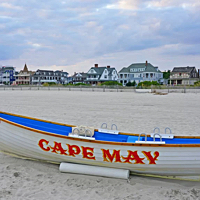
IAJE is a mammoth undertaking, and the 2004 edition Jan. 21-24 in New York City was the biggest yet...
Yes, the IAJE is a mammoth undertaking, and the 2004 edition Jan. 21-24 in New York City was the biggest yet: more than 300 events, including concerts all day long and into the wee hours, lectures, panel discussions, clinics, workshops, reunions of alumni from college jazz studies programs around the country, and lots more. Attendance was about 8,000 ... musicians, educators, record makers, promoters, producers, publicists and all manner of other types involved in the music business ... including writers.
My purpose was primarily to hear lots of jazz. How often can you catch Dave Brubeck, Billy Taylor, Michel Camilo, Dave Holland, David Sanchez, the Heath Brothers with Clark Terry, The Vanguard Jazz Orchestra, Paquito D'Rivera, Bobby Watson, Nicholas Payton's Sonic Trance, Phil Woods with Kenny Barron and dozens more in one location?
A highlight was the naming of six jazz masters by the National Endowment for the Arts, an annual ceremony at IAJE. The honorees ... each getting a $25,000 fellowship ... were Herbie Hancock, Chico Hamilton, Jim Hall, Nancy Wilson, composer/arranger Luther Henderson and longtime jazz writer Nat Hentoff. He's the first critic to be recognized by the NEA for helping spread the message about the joy of this music.
The NEA isn't the only distinguished organization helping to promote jazz. The Smithsonian Institution was at IAJE touting its effort to make every April Jazz Appreciation Month. National Public Radio, Lincoln Center, Kennedy Center and BET on Jazz were on hand, too, rallying to the cause of preserving and promoting the music and making sure young people are exposed to it so that there will be audiences in the future.
Panel discussions of interest to fans such as myself, as well as to those in the music industry, are an integral part of the conference. I attended two of these back to back one afternoon that were notable for well-qualified speakers, and for the sharp contrast in tone. One discussion brimmed with good feeling, the other bristled with ill will as the topic of racism in jazz was explored.
Jazz festival innovator George Wein led an hour of reminiscences on the history of his Newport Jazz Festival, which reaches the ripe old age of 50 this August. It was a lovefest, as musicians Brubeck, Marian McPartland and Camilo, jazz scholar and writer Dan Morgenstern and Boston club owner Fred Taylor shared recollections and audience members chimed in with their own favorite moments.
Wein said his conviction early on that jazz people constitute one big family, and that a festival would bring them together, got him started. That spirit was evident from the outset, said Morgenstern, recalling the hugs and high-fives backstage at Freebody Park as musicians who were seldom able to catch others' acts took part in the annual "reunions."
Highlights from past Newport Jazz Festivals include:
Paul Gonsalves' 27-chorus solo during the Ellington orchestra's "Diminuendo and Crescendo in Blue," which brought the crowd to near-pandemonium in 1956 and revived Duke's career. You had to earn a standing ovation in those days, Wein said, "unlike today at rock concerts when they stand as though they had buzzers on their seats."
Louis Armstrong playing encore upon encore until finally, wearily, signaling the set's end by playing "The Star Spangled Banner." At which author James Baldwin, a backstage guest, turned to Morgenstern and confided: "It's the first time I've ever liked that song."
Mahalia Jackson's midnight gospel set in 1958. It started raining and the singer expressed amazement when no one in the crowd got up to seek shelter. "You make me feel like a star," she remarked. Then she sang "Lord, Didn't It Rain," and Wein recalled that the rain stopped. But take it from one who was there, sans umbrella: It started up again.
Brubeck had his own backstage moment. During a "piano night" program he was slated to follow Thelonious Monk. "I decided to play the weirdest thing I'd written to date," which was "Theme from Mr. Broadway." Descending from the stage, Monk greeted him, saying, "I liked that."
Newport's less auspicious moments were touched on as well. In 1960, riots forced the town to cancel the festival, even as Charles Mingus, bassist, composer and agent provocateur, set up his own alternative festival in a Newport watering hole. "He was upset," said Wein, "because I'd hired him for several festivals but not this one... you can't bring back the same people every year." Wein said he went to authorities to plead that the rump fest be allowed to go on, and it did.
The 1971 debacle also got a positive spin from Wein. Rock festivals were being canceled left and right because of anti-war violence and drug use, and thousands of young people descended on Newport, asserting that music should be free. They crashed the gates, trashed the stage. Wein voiced admiration for the 20,000 jazz fans who left the park quietly, resignedly.
Town fathers evicted the jazz festival after that, then allowed it back starting in 1980, and this year a highlight will be a benefit to help preserve the storied city's many landmarks.
Wein said festivals are "PR for jazz," and succeed by drawing crowds to see and hear well-known pop, rock or crossover acts; these crowds are then exposed to the real thing and some of them become fans.
"Racial considerations in jazz journalism" was the topic at an ensuing discussion organized by the Jazz Journalists Association. I was surprised that a couple of hundred people jammed the room, many of them eager to fulminate on racism in general, and in jazz in particular.
Being white, in my 60s and on the fringes of jazz journalism, I was taken aback at the harsh tone of this audience, comprising blacks, whites and Latinos. My own observation at the half-dozen festivals I attend yearly around the country has been that race relations in jazz are pretty good. Many, if not most, bands are integrated, as are audiences, and mutual respect seems to prevail on and off stage. But it was clear from the questions and statements and diatribes hurled at the dais that beneath this seemingly pacific surface lies a turbulent sea of lingering bitterness and sense of unfair treatment among minorities against the white jazz establishment ... including the writers.
Among the issues the panel was asked... often ordered... to account for:
- Why are most jazz writers white, and why are practically all jazz clubs, radio stations, jazz publications, record manufacturers, etc., in white hands?
- Why do some writers devote undue coverage to up-and-coming white artists ... the so-called "flava of the month club" ... while ignoring equally or more deserving black or Latino talent?
(answer: writers have to satisfy editors who often care less about the music than about selling magazines to the target audience, often young white adults.)
- Why isn't jazz promoted in schools, as it once was. (answer: budget cuts)
- Why were there no women on the panel (the seven men did include three blacks, two whites, a Latino and an Asian Indian). (answer: a woman panelist canceled last-minute).
It was an eye-opening experience for me, and in one way a disheartening one: One of the two musicians on the panel insisted that jazz writers or critics wouldn't be needed at all if only audiences would just listen for themselves and make up their own minds about what is worthwhile. And no one... myself included... rebutted him to try to explain why the role of writers is important.
Like most fans, I love this music, whether it's made by blacks or whites or people of whatever color. I'm aware ... who couldn't be ... of the injustices blacks have suffered over the years in jazz. They've been exploited, their music ripped off. But I believe such treatment is much less prevalent today, and that journalists who have called to the world's attention the greatness of artists from Armstrong, Ellington, Tatum and Basie to Parker, Davis and Gillespie to current giants like Marsalis, Rollins and Peterson, have assisted in that progress.
Tags
PREVIOUS / NEXT

Become a Sustaining Member

Since 1995, All About Jazz has championed jazz as an art form and supported the musicians who create it. Over three decades, it has grown into one of the world's leading jazz resources, serving hundreds of thousands of readers, musicians, presenters and industry professionals each month.
Help Build the Future of All About Jazz
Your support helps us continue building All About Jazz for the next generation—expanding our editorial coverage, preserving jazz history, developing new community features and creating better ways to discover the music and the people behind it.
Become a sustaining member for as little as $20 per year and you'll immediately enjoy an ad-free experience along with access to subscriber features and future articles for a full year.
Together, we're not simply sustaining All About Jazz—we're building its future. Thank you for being part of the journey.